Lockheed Martin will update electronic warfare and radar warning receiver software used by Canada’s CH-148 Cyclone maritime helicopters under a $9.76 million U.S. Navy contract aimed at resolving documented software and system problems.
The Naval Air Systems Command (NAVAIR) awarded the company a $9,755,583 contract combining firm-fixed-price and cost-plus-fixed-fee arrangements. The work covers updated AN/ALQ-230 electronic support measures and radar warning receiver operational flight program software, along with software for Canada’s Mission Data Load Tool.
The contract, designated N0001927C1010, is funded through Foreign Military Sales. Work is expected to continue through October 2030, according to the contract announcement.
The award focuses on software development, testing, installation, documentation and training. It does not specify new hardware installations, additional aircraft deliveries or changes to the Cyclone’s weapons configuration.
Software updates target documented system problems
The contract addresses reported software and system issues affecting the electronic warfare equipment fitted to Canada’s CH-148 Cyclone fleet.
Electronic support measures, or ESM, are designed to detect and help characterize electromagnetic emissions. Depending on the system and its configuration, this information can help an aircraft crew identify potential radar threats and understand the electromagnetic environment in which it operates.
A radar warning receiver serves a related but distinct purpose. It alerts aircrew to radar emissions that may indicate surveillance or targeting activity, helping them assess potential threats and respond according to established procedures.
The contract identifies the AN/ALQ-230 electronic support measures and radar warning receiver operational flight program software as upgrade targets. However, the announcement does not disclose the specific faults being corrected, the software changes involved or any resulting improvement in detection or warning performance.
The distinction matters because a software update can address faults, improve system behavior or correct compatibility problems without necessarily introducing a new operational capability.
The work also includes software for Canada’s Mission Data Load Tool. Mission data supports the configuration and operation of relevant mission systems, although the contract announcement does not detail the tool’s functions, the data it handles or the changes planned under this award.
Together, these efforts are intended to address documented problems in the existing systems rather than establish a publicly defined new electronic warfare capability.
Why the upgrade matters for the CH-148 Cyclone
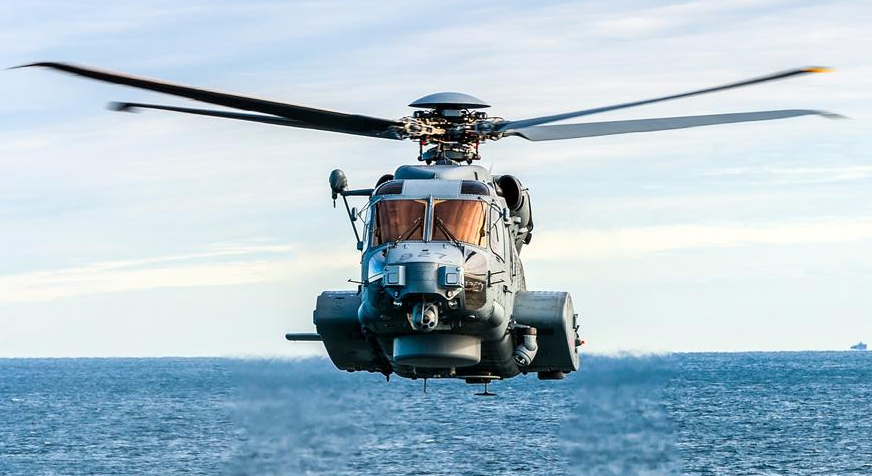
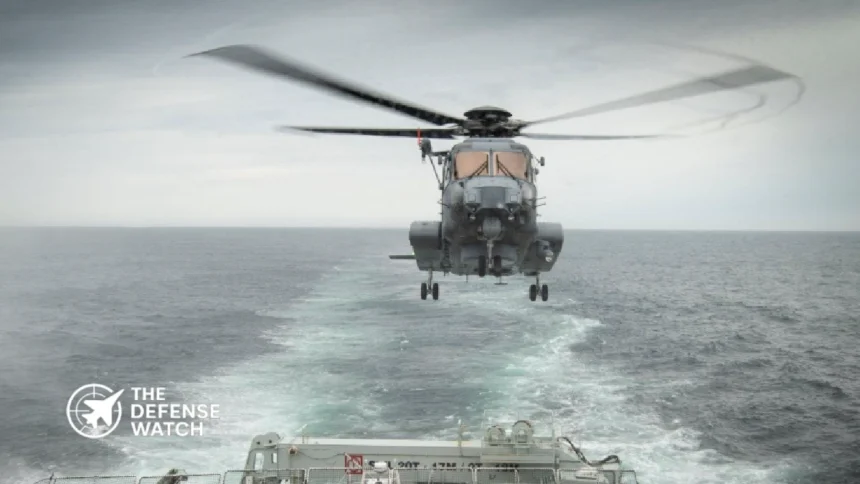
Canada’s CH-148 Cyclone is a maritime helicopter operated by the Royal Canadian Air Force in support of the Royal Canadian Navy. Based on the Sikorsky H-92 platform, it performs anti-submarine warfare, anti-surface warfare, surveillance, search and rescue, and utility missions.
According to Canada’s Department of National Defence, the Cyclone program includes the helicopters, logistical support, spare parts, modifications to Halifax-class frigates and training infrastructure. The aircraft are intended to operate alongside Canadian naval forces, including from embarked shipboard deployments.
Electronic warfare systems contribute to that mission by helping crews recognize and assess electromagnetic threats. This is particularly relevant when maritime helicopters operate in environments where shipborne and land-based radars may be present.
The contract does not establish that Canada’s Cyclones currently face a specific new threat or that the upgrade responds to a particular military operation. Its stated purpose is to address documented software and system trouble reports.
Nevertheless, maintaining the reliability of electronic support and warning systems is an important part of keeping a modern military aircraft operational. Software faults can affect how onboard systems process information, display warnings or interact with other equipment.
For a maritime helicopter, such problems can have implications beyond the individual aircraft. The Cyclone is part of a wider naval aviation system that depends on coordination among aircraft, ship crews, maintenance personnel and mission-support infrastructure.
Corrective software work can therefore help sustain existing capabilities, although the Navy has not publicly quantified the expected operational benefits of this contract.
Contract work will be concentrated in New York
Lockheed Martin’s facility in Owego, New York, will perform the majority of the work.
The announced distribution is:
- Owego, New York: 97 percent
- Ottawa, Canada: 1 percent
- Halifax, Canada: 1 percent
- Patuxent River, Maryland: 1 percent
The geographic breakdown places most of the effort at Lockheed Martin’s Owego operation, which supports airborne mission systems and related defense electronics.
Canadian participation in Ottawa and Halifax, together with U.S. Navy involvement at Patuxent River, provides for work distributed across the two countries. The contract announcement does not identify the specific tasks assigned to each location.
All $9,755,583 in Foreign Military Sales funding will be obligated at the time of award, according to the announcement. The contract was not competitively procured.
The funding arrangement identifies the award as a U.S.-administered defense sale supporting a Canadian military requirement. The announcement does not provide a separate Canadian cost breakdown or identify any additional options or future contract values.
The October 2030 completion date also indicates that the effort extends beyond a short-term software correction. However, the available information does not establish a schedule for individual software releases, aircraft installations or fleet-wide completion.
How the award fits into Canada’s wider Cyclone program
The software contract sits within a longer effort to deliver and sustain the CH-148 fleet.
Canada originally planned to procure 28 Cyclone helicopters to replace its CH-124 Sea King maritime helicopters. The acquisition program uses a phased approach, with aircraft receiving successive capability configurations as the program progresses.
Canada’s official procurement page reported in July 2025 that 27 Cyclones had been delivered, following the loss of one aircraft in April 2020. The program also includes continuing support and capability improvements beyond the original aircraft acquisition.
The fleet’s development has involved more than the introduction of new aircraft. Software, mission equipment, training, maintenance and ship integration all contribute to the ability to operate the helicopters effectively.
That broader context helps explain why a contract worth less than $10 million can matter to a much larger aviation program. The award is not a new helicopter procurement, nor does it establish a major redesign. It addresses specific software and system issues within an existing fleet.
The announcement also does not establish whether this work is connected to other Cyclone software changes or previously reported aircraft safety modifications. Those efforts should be treated separately unless the responsible authorities confirm a direct relationship.
What remains undisclosed
Several details needed to assess the upgrade’s precise operational effect have not been made public.
The U.S. Navy announcement does not specify the number of aircraft that will receive the updated software, the exact faults being corrected, the software release schedule or whether the changes will introduce additional functions.
It also provides no revised performance figures for the AN/ALQ-230 system, no new radar warning receiver specifications and no indication that the contract includes new electronic warfare hardware.
These omissions limit conclusions about the scale of the capability change. The confirmed objective is to develop, test and implement software updates that address documented problems, with supporting documentation and training.
For Canada’s Cyclone fleet, the award is primarily a sustainment effort. Its value will depend on whether the updated software resolves the identified issues and can be integrated successfully across the relevant aircraft and mission systems. Publicly available contract information does not yet establish the size of any resulting improvement in operational performance.