
- Home
- Defense Systems
- Radar and Jamming Systems
- AN/ALQ-99 Tactical Jamming System
AN/ALQ-99 Tactical Jamming System
Defense Systems Full Specifications
1. General Information
| Name / Designation | AN/ALQ-99 Tactical Jamming System |
| Manufacturer | Multiple contractors |
| Country of Origin | United States |
| Type / Role | Airborne electronic attack and tactical jamming system |
| Operational Domain | Air |
| Status | Legacy system, being replaced progressively by Next Generation Jammer |
2. Technical Specifications
| Frequency Band | Multiple bands, dependent on transmitter configuration |
| Antenna Type | Mission-configured jammer pod antennas |
| Antenna Aperture / Size | Not publicly disclosed |
| Power Output | Not publicly disclosed |
| Detection Range | Not publicly disclosed |
| Tracking Range | Not publicly disclosed |
| Target Tracking Capacity | Not publicly disclosed |
| Elevation Coverage | Not publicly disclosed |
| Azimuth Coverage | Not publicly disclosed |
| Beam Steering | Configuration dependent; detailed method not publicly disclosed |
| Pulse Repetition Frequency (PRF) | Not publicly disclosed |
| Resolution | Not publicly disclosed |
| Update Rate | Not publicly disclosed |
| Clutter Rejection / ECCM | Electronic counter-countermeasure capabilities have evolved through upgrades, detailed parameters not publicly disclosed |
3. Functional Capabilities
| Primary Functions | Airborne electronic attack, radar jamming, communications jamming, suppression of enemy integrated air defenses |
| Target Types | Hostile radar and communications systems |
| Integration / Networking | Integrated with aircraft electronic warfare architecture |
| IFF Capability | Not publicly specified for the ALQ-99 jammer itself |
| Data Link / Networking | Aircraft-level integration and mission systems |
| Weather & Terrain Resistance | Designed for airborne military operations; detailed environmental limits not publicly disclosed |
| Mobility / Mounting | External aircraft carriage |
4. Physical & Operational Characteristics
| Dimensions | Configuration dependent; complete dimensional data not publicly disclosed |
| Weight | Configuration dependent; exact public figures not established |
| Power Requirement | Pod-generated electrical power using ram-air turbine generation |
| Cooling System | Not publicly disclosed |
| Operating Temperature Range | Not publicly disclosed |
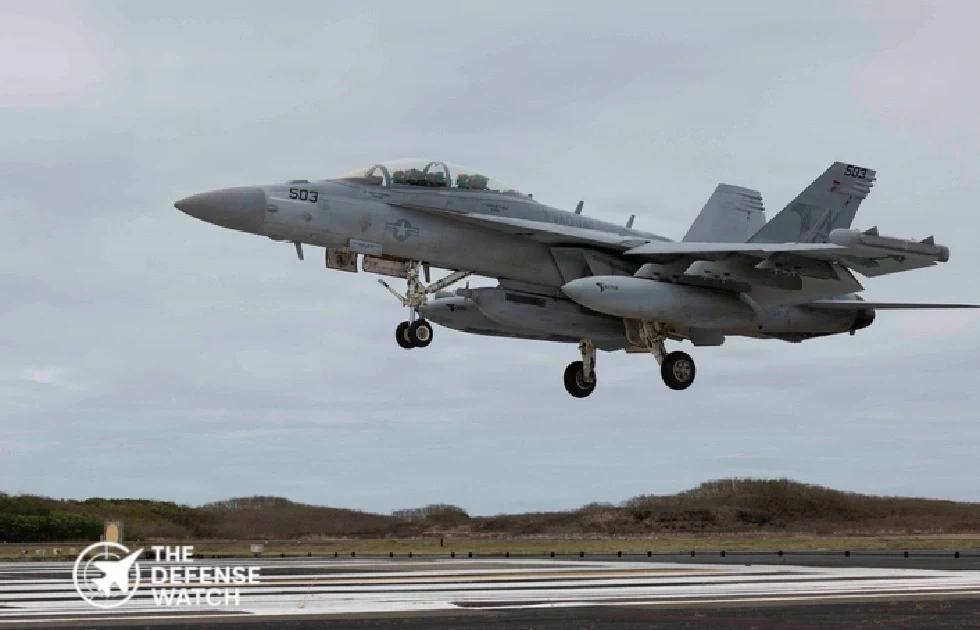
| Deployment Platform | EA-6B Prowler and EA-18G Growler |
| Crew Requirement | Operated as part of a specialized electronic warfare aircraft and crew |
5. Software & Processing
| Signal Processor Type | Not publicly disclosed |
| Processing Speed | Not publicly disclosed |
| AI / Automation Features | No publicly documented AI capability for the legacy ALQ-99 system |
| Data Output / Interface | Integrated with aircraft electronic warfare systems |
| Software Upgradeability | System has received multiple upgrades during service |
6. Operational History
| Year Introduced | 1971 |
| Users / Operators | U.S. Navy |
| Notable Deployments | EA-6B Prowler operations; EA-18G Growler deployments beginning in 2010 |
| Successor / Predecessor | Successor: Next Generation Jammer family; predecessor: not applicable as a direct replacement designation |
7. Export / Compliance Data
| Export Availability | Not offered as a conventional commercial system; foreign availability is controlled by U.S. government policy |
| ITAR / MTCR Status | Applicable U.S. export-control requirements; specific classification not publicly established here |
| Cost Estimate | No reliable complete-system public unit price identified |
PROS
- Proven airborne electronic attack capability
- Designed to counter radar and communications threats
- Modular transmitter and antenna architecture
- Integrated with the EA-18G Growler
- Extensive operational history and upgrade experience
CONS
- Aging legacy architecture
- Significant external carriage requirements
- Detailed performance data are largely restricted or undisclosed
- Requires specialized electronic warfare aircraft and crews
- Being replaced progressively by the Next Generation Jammer family
The AN/ALQ-99 Tactical Jamming System is a U.S. airborne electronic attack system designed to disrupt hostile radar and communications systems. Rather than carrying conventional kinetic weapons, the ALQ-99 uses electronic energy to interfere with adversary sensors and communications networks, supporting suppression of enemy integrated air defenses.
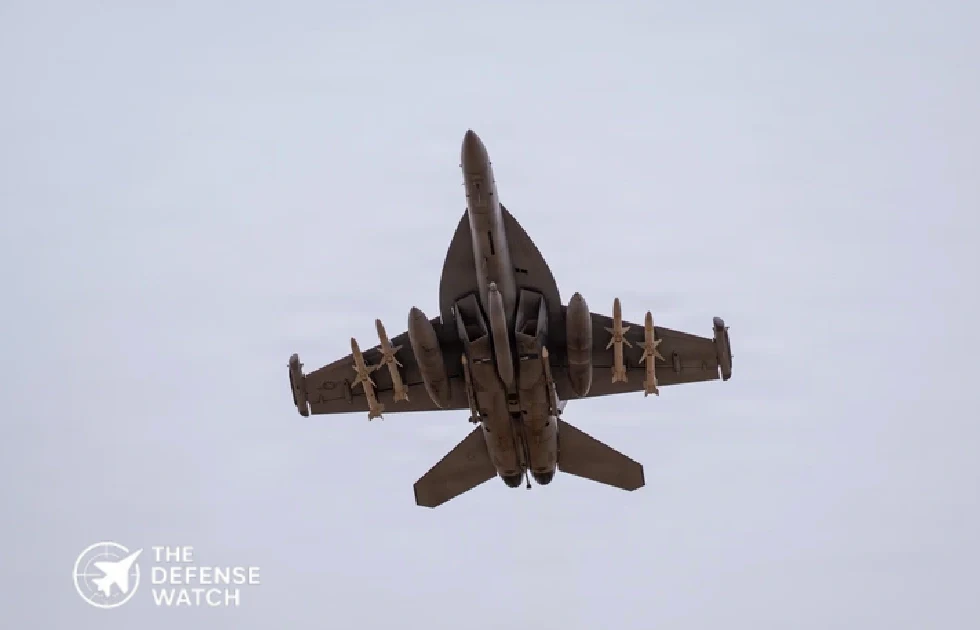
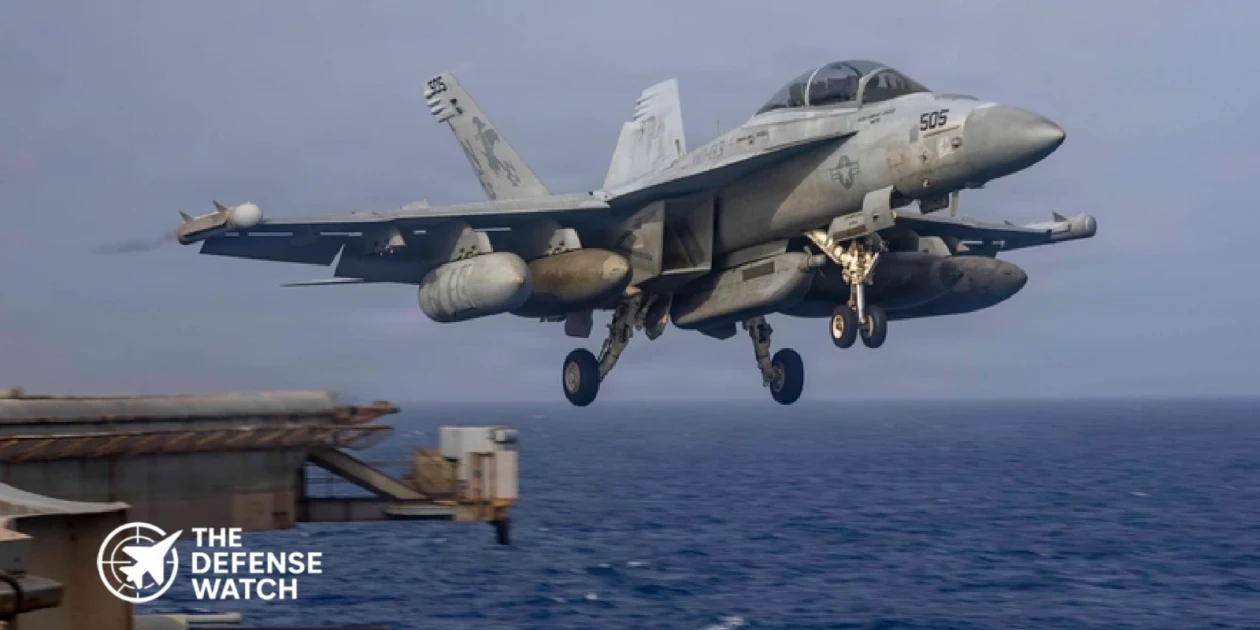
The system is carried externally as jammer pods. Each pod contains a ram-air turbine generator, two selectable transmitter modules, associated antennas, and a universal exciter. The architecture allows transmitters and antennas to be configured for different frequency ranges and mission requirements. The EA-18G Growler can carry up to five ALQ-99 pods, with two under each wing and one under the fuselage.
The ALQ-99 first achieved operational capability in 1971 aboard the EA-6B Prowler. It later became part of the EA-18G Growler electronic warfare suite, with the Growler deploying the system operationally in 2010. The system has received multiple upgrades during its service life.
Manufacturer
The ALQ-99 is a U.S. government program involving multiple contractors rather than a single publicly identified manufacturer for the complete system. The U.S. Navy and Naval Air Systems Command manage the capability. Its operational integration is associated primarily with the EA-6B Prowler and EA-18G Growler.
Speed and Range
The ALQ-99 is a pod-mounted electronic warfare system and therefore does not have an independent flight speed or standalone operational range. Its performance depends on the aircraft carrying it, transmitter configuration, electromagnetic environment, and mission profile. Public U.S. Navy sources do not provide a single maximum jamming range for the complete system.
Cost/Price
A reliable public unit price for the complete AN/ALQ-99 system is not available. Costs vary according to pod configuration, transmitter modules, upgrades, sustainment, and integration requirements. The system should not be assigned a specific retail or procurement price without authoritative contract documentation.
FAQs
What is the AN/ALQ-99?
The AN/ALQ-99 is an airborne electronic attack and tactical jamming system used to disrupt hostile radar and communications systems.
What aircraft carries the ALQ-99?
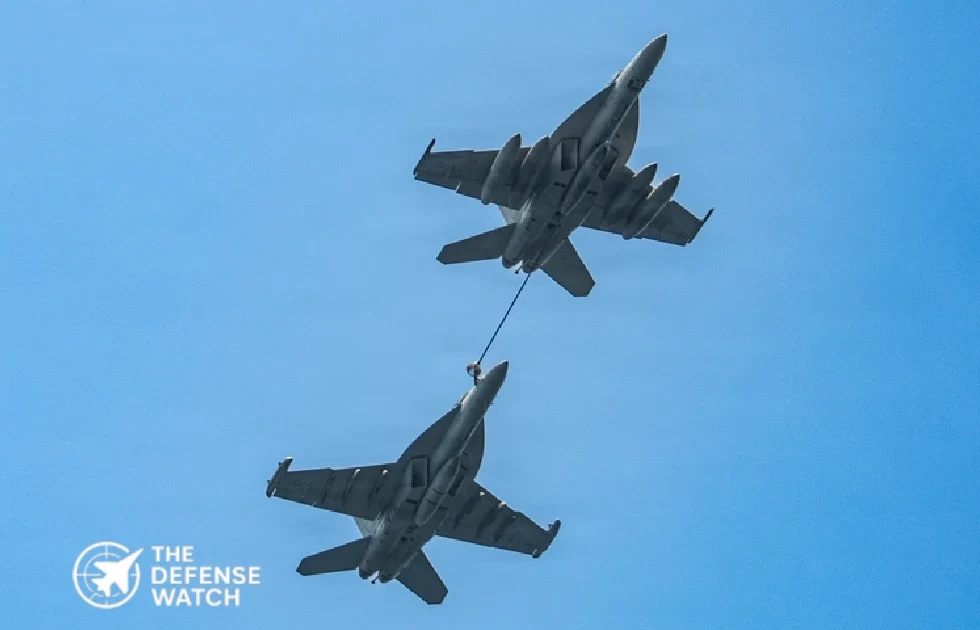
The system was used extensively on the EA-6B Prowler and is integrated with the EA-18G Growler. The Growler can carry up to five ALQ-99 pods.
What does the ALQ-99 do?
It provides electronic jamming against radar and communications targets, helping suppress enemy integrated air defense systems.
Is the ALQ-99 being replaced?
Yes. The Next Generation Jammer family is being introduced to augment and ultimately replace the legacy ALQ-99 on the EA-18G Growler.
Does the ALQ-99 use AESA radar?
The ALQ-99 should not be described as an AESA radar system. Newer Next Generation Jammer systems use electronically scanned array technology, while the ALQ-99 is a legacy jammer architecture based around transmitter modules, antennas, and a universal exciter.
Disclaimer Note
The information provided on TheDefenseWatch.com is for general informational purposes only. While we strive to ensure the accuracy, completeness, and timeliness of our content regarding defense and aerospace products, technologies, and specifications, we cannot guarantee that all information is 100% accurate or up-to-date due to the evolving nature of military technology and classified data.TheDefenseWatch.com does not warrant the reliability, suitability, or availability of the information for any specific purpose. Users are advised to consult official sources, such as manufacturers, government publications, or defense agencies, for precise and verified data before making decisions based on our content.We are not affiliated with any defense manufacturers, governments, or military organizations mentioned. Opinions, reviews, and ratings reflect expert analysis but are subjective and should not be considered endorsements. TheDefenseWatch.com is not responsible for any errors, omissions, or consequences arising from the use of this website’s content.External links are provided for convenience and do not imply endorsement. TheDefenseWatch.com reserves the right to update or modify content without prior notice. By using this website, you agree to our Privacy & Cookies Policy.
New Arrivals



Popular Comparisons
-
 J-10C vs JF-17 Thunder: Which Fighter Is More Capable?
View Comparison →
J-10C vs JF-17 Thunder: Which Fighter Is More Capable?
View Comparison → -
Tejas vs Gripen: Key Differences and Capabilities
View Comparison →
-
Tejas vs MiG-21 Bison: How India Replaced Its Iconic Supersonic Fighter
View Comparison →
-
F-35 vs F-16: Stealth, Sensors and Combat Roles
View Comparison →
-
Tejas Fighter Jet vs F-16 Fighting Falcon: Capability Compared
View Comparison →
-
Rafale Fighter Jet vs F-16 Fighting Falcon : Which Fighter Has the Edge?
View Comparison →
-
Su-57 Fighter Jet vs J-20 Fighter Jet: Stealth and Air Combat Compared
View Comparison →
-
Mirage 2000 vs Tejas Mk1A: Legacy Combat Power vs Indigenous Modernization
View Comparison →
-
Rafale Fighter Jet vs F-22 Raptor: Which Air Dominance Fighter Has the Edge?
View Comparison →
-
Tejas Fighter Jet vs. Rafale Fighter Jet: India’s Indigenous Fighter Meets France’s Proven Multirole Combat Aircraft
View Comparison →


- DIA 2026 Space Report Warns China May Field Orbital Directed-Energy Weapons by Late 2020s

- Boeing Advances Second MQ-25 Stingray Toward Testing for U.S. Navy
- Saab Unveils Sea Giraffe AMB D Radar With 250-Kilometer Air Surveillance Range
- Most Advanced Fighter Jet in the World in 2026: F-22 vs. F-35 vs. J-20
- Lockheed Martin Wins $88.6 Million Navy Contract for Radiant Mercury Systems
- Pentagon Uses Department of War Name to Reinforce Message to Adversaries
- Israel’s Military Chief Reportedly Opposed Pre-Election Strike on Iran
- Canada Receives First Two F-35 Fighters as Review of 72 Aircraft Continues
- Lockheed Martin Completes $3.45 Billion Ultra Maritime Acquisition
- Lockheed Martin Advances Ramjet-Powered PrSM Increment 4 Missile






Fighter Jets
-
 F-100 Super Sabre
-
North American F-86 Sabre
-
Northrop YF-23 Fighter
-
Rafale F5 Fighter
-
SU-57 Felon Stealth Fighter
-
Boeing F/A-XX Fighter
-
JF-17 Thunder Fighter Jet
-
F-47 Fighter Jet
-
MIG-31 Fighter Jet
-
J-10CE Fighter Jet
-
Chengdu J-10 Fighter Jet
-
Chengdu J-10C Fighter Jet
-
Gripen E Fighter Jet
-
Tejas Mk1A Fighter Jet
-
Tejas Mk‑2 Fighter Jet
-
F-16V Viper Block 70 Fighter Jet
-
F-15EX Eagle II Fighter
-
F-15E Strike Eagle Fighter
-
F/A-18E/F Super Hornet Fighter Jet
-
Saab Gripen F Fighter Jet
-
JAS 39E/F Gripen Fighter Jet
-
JAS 39 Gripen Fighter Jet
-
F-35A Lightning II Fighter Jet
-
F/A-18F Super Hornet







Recent Compares
-
J-10C vs JF-17 Thunder: Which Fighter Is More Capable?
View Comparison →
-
Tejas vs Gripen: Key Differences and Capabilities
View Comparison →
-
Tejas vs MiG-21 Bison: How India Replaced Its Iconic Supersonic Fighter
View Comparison →
-
F-35 vs F-16: Stealth, Sensors and Combat Roles
View Comparison →
-
Tejas Fighter Jet vs F-16 Fighting Falcon: Capability Compared
View Comparison →
Latest Defense Systems
10 Compares Defense Systems
-
J-10C vs JF-17 Thunder: Which Fighter Is More Capable?
View Comparison →
-
Tejas vs Gripen: Key Differences and Capabilities
View Comparison →
-
Tejas vs MiG-21 Bison: How India Replaced Its Iconic Supersonic Fighter
View Comparison →
-
F-35 vs F-16: Stealth, Sensors and Combat Roles
View Comparison →
-
Tejas Fighter Jet vs F-16 Fighting Falcon: Capability Compared
View Comparison →
-
Rafale Fighter Jet vs F-16 Fighting Falcon : Which Fighter Has the Edge?
View Comparison →
-
Su-57 Fighter Jet vs J-20 Fighter Jet: Stealth and Air Combat Compared
View Comparison →
-
Mirage 2000 vs Tejas Mk1A: Legacy Combat Power vs Indigenous Modernization
View Comparison →
-
Rafale Fighter Jet vs F-22 Raptor: Which Air Dominance Fighter Has the Edge?
View Comparison →
-
Tejas Fighter Jet vs. Rafale Fighter Jet: India’s Indigenous Fighter Meets France’s Proven Multirole Combat Aircraft
View Comparison →
- DIA 2026 Space Report Warns China May Field Orbital Directed-Energy Weapons by Late 2020s
- Boeing Advances Second MQ-25 Stingray Toward Testing for U.S. Navy
- Saab Unveils Sea Giraffe AMB D Radar With 250-Kilometer Air Surveillance Range
- Most Advanced Fighter Jet in the World in 2026: F-22 vs. F-35 vs. J-20
- Lockheed Martin Wins $88.6 Million Navy Contract for Radiant Mercury Systems