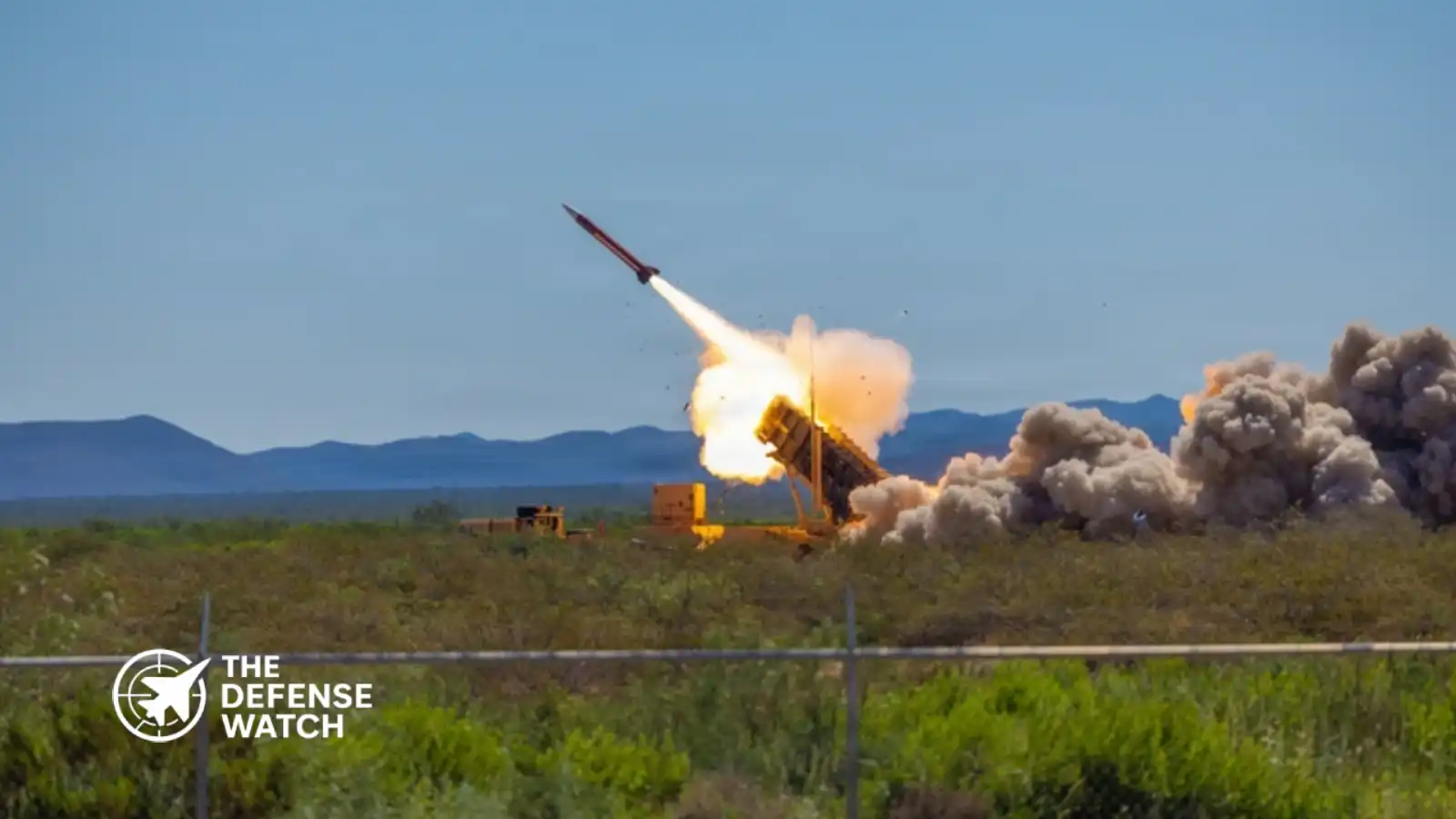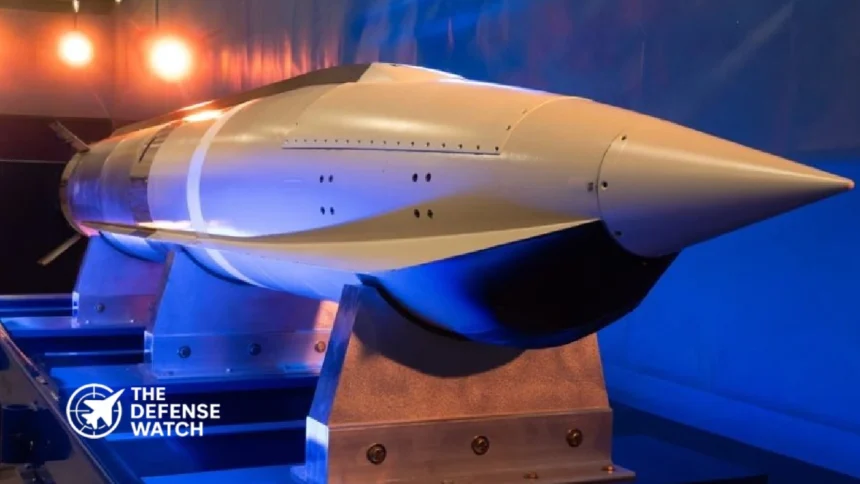
Lockheed Martin is pursuing a longer-range version of the U.S. Army’s Precision Strike Missile (PrSM), with a propulsion design intended to extend the weapon’s reach beyond 1,000 kilometers while retaining compatibility with existing mobile rocket artillery launchers.
The program has moved into a broader competition. On September 29, 2026, the U.S. Army awarded prototype development agreements to five companies: Lockheed Martin, RTX, Anduril, Castelion and Mach Industries. Each will develop a competing missile design intended to meet the Army’s extended-range and moving-target requirements.
Lockheed Martin’s earlier propulsion testing provides a look at one technical approach under development. In June, the company and propulsion partner L3Harris Technologies reported completing a ground test demonstrating the transition from rocket-booster propulsion to ramjet operation. The test was part of Lockheed Martin’s Increment 4 development effort, but it does not establish that the design has met its full flight-performance requirements.
The competition is important because the Army wants a ground-launched weapon capable of engaging targets at substantially greater distances than the baseline PrSM. It also wants to attack moving maritime targets and relocatable land targets, requirements that make guidance, propulsion, target tracking and launcher integration central to the program.
Why the Army Wants a Longer-Range PrSM
The Precision Strike Missile is intended to replace the Army Tactical Missile System, or ATACMS, while providing greater range and allowing more missiles to be carried within the existing launcher system.
The baseline PrSM is designed for engagement ranges exceeding 400 kilometers. Lockheed Martin’s published product information lists a range of 60 to more than 499 kilometers, although actual employment depends on the missile variant, mission and other factors. Increment 4 has a more demanding objective: reaching targets at ranges of at least 1,000 kilometers.
That distance changes how the Army could use ground-based precision fires. Mobile launchers equipped with longer-range missiles could operate farther from threatened areas while reaching targets that previously required different weapons or launch platforms.
The Army has also identified operations in the Indo-Pacific as a relevant planning consideration. In a region characterized by long distances, dispersed forces and extensive maritime approaches, ground-launched missiles could complement aircraft and naval strike systems.
However, greater range alone does not guarantee a successful strike. The Army must also establish reliable target detection, identification and tracking, particularly when the intended target is a moving ship or a land system that can relocate before the missile arrives.
The Increment 4 competition therefore concerns more than propulsion. It seeks a weapon that combines extended reach with the ability to engage targets whose positions can change during an operation.
How Lockheed Martin’s Booster-to-Ramjet Approach Works
Lockheed Martin’s June 3 announcement described a test in which its developing missile demonstrated a transition from rocket-booster propulsion to ramjet operation at an L3Harris propulsion facility. The company characterized the test as a major risk-reduction milestone ahead of planned flight testing.
The underlying engineering challenge is straightforward to describe but difficult to execute reliably.
A ramjet is an air-breathing engine that uses the forward motion of the vehicle to compress incoming air. Unlike a conventional rocket, it does not carry all the oxygen required for combustion. This can offer propulsion advantages over a suitable portion of a missile’s flight, but a ramjet generally requires the vehicle to reach an appropriate operating speed before it can function effectively.
A rocket booster can provide the initial acceleration needed to establish those conditions. The missile must then transition to sustained ramjet propulsion without losing the flight stability or engine conditions required for continued operation.
That transition is a critical part of the design. Demonstrating it in a controlled ground test provides evidence that the propulsion system can perform one of its essential functions. It does not, by itself, validate the complete missile’s range, guidance, structural performance, accuracy or ability to defeat defended targets.
Lockheed Martin said its proposed configuration was intended to deliver a range exceeding 1,000 kilometers. That figure should be treated as a development objective or company-stated capability, rather than a publicly demonstrated operational range.
The distinction matters because the Army is conducting a competition rather than simply accepting a manufacturer’s advertised performance claims. Flight testing and subsequent evaluation will determine how well the competing designs meet the service’s requirements.
Five Companies Are Now Competing for Increment 4
The Army’s September 29 awards established a five-company prototype competition. The participants are developing solutions against a common operational requirement, but the service has not publicly disclosed enough technical detail to support a complete comparison of their missile designs.
The competitors are:
- Lockheed Martin: The incumbent PrSM developer, with an Increment 4 effort that has included booster-to-ramjet transition testing with L3Harris.
- RTX: A major missile and propulsion supplier participating in the new competition.
- Anduril: A defense technology company entering the prototype competition.
- Castelion: A missile developer competing to meet the Army’s extended-range requirement.
- Mach Industries: A defense technology company selected to develop a competing prototype.
The new agreements follow earlier Increment 4 development work. Lockheed Martin and an RTX-Northrop Grumman team received development awards in 2023, but the Army subsequently established the current five-company competition. The latest awards provide a new framework for prototype development and competitive evaluation.
The Army plans an initial competitive flight demonstration and down-selection in fiscal 2027. Companies whose designs demonstrate sufficient maturity may qualify for follow-on agreements and another competitive flight demonstration in fiscal 2028.
These milestones create a demanding schedule. The competitors must progress from development and ground testing to flight demonstrations while showing that their systems can satisfy the required range, target engagement and launcher integration conditions.
Lockheed Martin’s previous work may provide useful technical experience, but it does not guarantee selection. The outcome will depend on the performance of the proposed system and the Army’s evaluation criteria.
Existing Launchers Are a Central Requirement
The Army’s requirement to use existing launchers is an important part of the Increment 4 design challenge.
The M142 High Mobility Artillery Rocket System (HIMARS) and the M270 Multiple Launch Rocket System provide established platforms for ground-based precision fires. Lockheed Martin’s baseline PrSM is designed for compatibility with both launcher families. The Army also wants Increment 4 to use the M142 HIMARS, with potential for future extension to other launch platforms.
Maintaining launcher compatibility could reduce the need to develop an entirely new ground-launch system. It could also allow the Army to build on existing operator training, maintenance arrangements and deployed force structures.
Nevertheless, compatibility is not automatic simply because two missiles use the same launcher family. The Army and contractors must address physical fit, launch conditions, fire-control integration, safety, handling and other system-level requirements.
A longer-range missile may also impose different demands on propulsion, thermal management, structural design and flight control. The final system must balance these engineering considerations against the requirement to operate from established launch platforms.
The Army’s modular open-systems approach is another relevant consideration. An architecture that supports defined interfaces and future upgrades can help the service adapt the weapon over time, although the degree of flexibility available will depend on the design and the integration work required.
Moving Maritime Targets Add a Different Challenge
The ability to engage moving maritime targets distinguishes Increment 4 from a mission focused solely on fixed land installations.
A fixed target can be assigned coordinates before launch. A moving vessel presents a different problem because its position can change while the missile travels toward the engagement area. Effective employment therefore depends on a reliable process for detecting and identifying the target, updating its location and providing the missile with the information required for an engagement.
The weapon’s onboard guidance and terminal-seeker arrangements are important, but the full engagement chain also depends on external sensors, communications, command systems and the timeliness of targeting information.
The Army has identified moving maritime and relocatable land targets as requirements for the Increment 4 prototypes. The available public information does not establish the final seeker configuration, demonstrated accuracy or effectiveness of any competing design against a defended moving vessel. www.army.mil
For operations in the Indo-Pacific, this capability could support land-based forces seeking to threaten maritime movements from dispersed positions. It could complement naval and air-launched weapons by adding another source of strike capability.
It would not replace those systems. Aircraft and ships provide different combinations of mobility, persistence, payload and targeting flexibility. A ground-launched missile’s contribution depends on where launchers can operate, how targets are located and whether commanders can maintain a reliable targeting chain.
Longer range also creates operational trade-offs. The Army must consider missile cost, available inventory, resupply requirements and the risk that an adversary will detect or target launchers and supporting infrastructure.
What the Competition Will Need to Prove
The next phase will test whether the competing designs can turn their stated capabilities into demonstrated performance.
For Lockheed Martin, the propulsion transition test is evidence of progress on one technical challenge. The more demanding question is whether the complete missile can meet the Army’s requirements under flight-test conditions.
Three issues will be particularly important.
First, range must be demonstrated alongside other requirements. A missile reaching the required distance would not automatically satisfy the Army’s target engagement, launcher compatibility or operational requirements.
Second, moving-target performance must be evaluated as part of the complete system. Propulsion and aerodynamic performance are only part of the problem. The missile also needs the guidance functions and supporting targeting information necessary to engage the intended target.
Third, the design must be suitable for procurement and sustained operations. The Army will need to consider manufacturing maturity, reliability, integration, maintainability and the ability to produce enough missiles to support operational demand.
These factors will help determine whether a prototype can progress toward a fieldable weapon. The Army’s phased competition allows it to compare multiple approaches before committing to a final design.
No public information cited here establishes a final Increment 4 winner, a confirmed production quantity or an operational fielding date for the new variant.
For Lockheed Martin, the opportunity is to extend an established Army missile program into a more demanding long-range mission. For the Army, the competition offers a way to test different technical approaches while seeking a missile that can reach distant targets without requiring an entirely new launcher fleet.
The decisive measure will be demonstrated performance against the Army’s requirements, not range claims alone.