Canada Receives First Two F-35 Fighters as Review of 72 Aircraft Continues
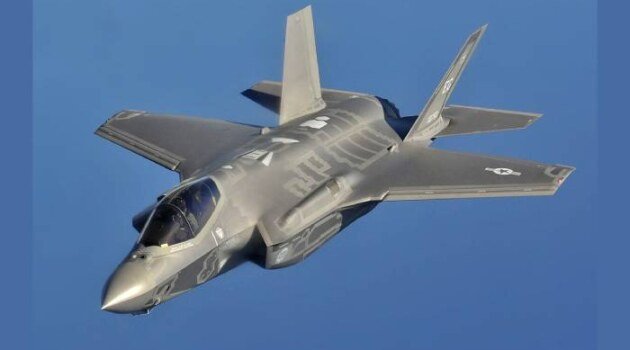
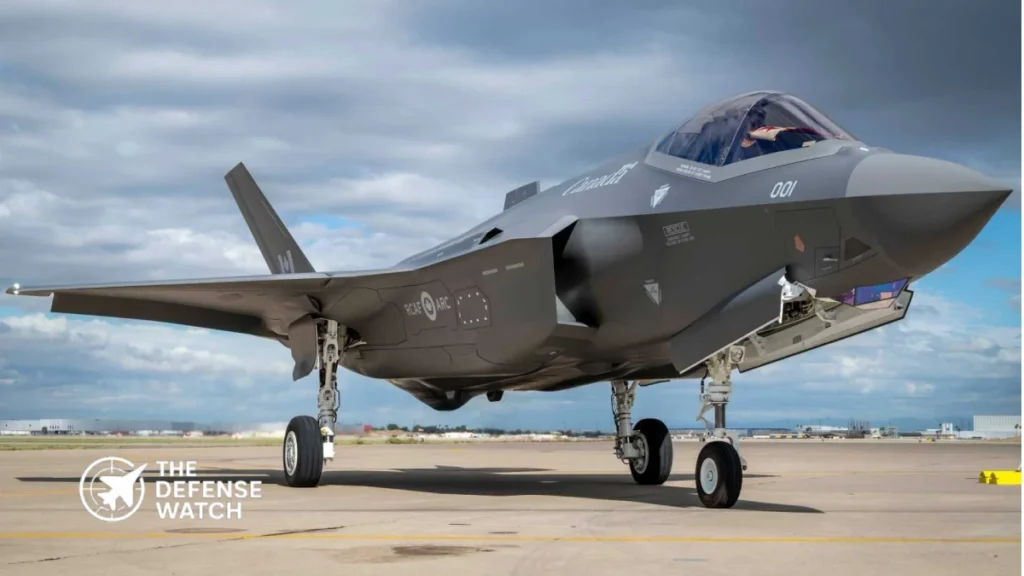
Canada has accepted its first two F-35A Lightning II fighter aircraft at Luke Air Force Base in Arizona, beginning the delivery phase of a program intended to replace the Royal Canadian Air Force’s aging CF-18 Hornet fleet. The milestone arrives while Prime Minister Mark Carney’s government continues reviewing whether to proceed with the full planned purchase of 88 aircraft.
The Royal Canadian Air Force (RCAF) accepted the two aircraft on October 22, 2026, according to reporting by The Canadian Press. The fighters will initially remain in the United States as Canada prepares its personnel for the new aircraft and completes the infrastructure required to operate them at home.
The distinction between accepting aircraft in the United States and introducing them into service in Canada is important. The first deliveries are part of a longer transition involving pilot training, maintenance arrangements, secure facilities and the development of the operational support system required to sustain the aircraft.
Meanwhile, Ottawa’s procurement review leaves the future size of Canada’s F-35 fleet unresolved. The government must weigh the aircraft’s operational requirements against rising project costs, infrastructure delays and questions about the country’s long-term defense industrial priorities.
First Aircraft Will Support Training in Arizona
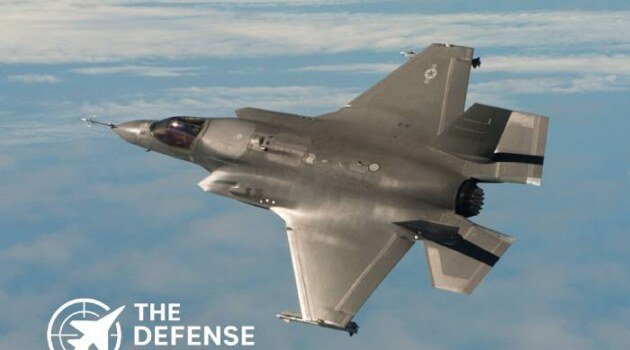
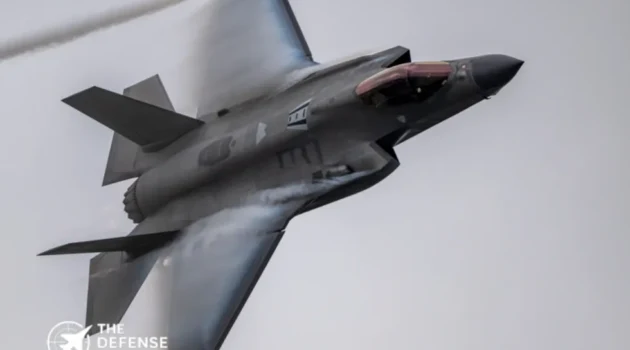
The two aircraft are Canadian F-35A variants, designated CF-35A in Canadian government documentation. They belong to the conventional takeoff and landing version of the Lightning II family, rather than the short-takeoff and vertical-landing F-35B or carrier-based F-35C.
Canada’s published acquisition plan calls for the first eight aircraft to be stationed at Luke Air Force Base, Arizona, where Canadian pilots will train alongside personnel from other F-35 operators.
The arrangement allows Canada to begin preparing aircrew and maintainers before the domestic facilities needed for the aircraft are fully available. The Canadian government has identified 2028 as the expected year for the first aircraft to arrive in Canada, with initial operational capability planned for 2029 to 2030.
The October delivery therefore does not mean the RCAF can immediately deploy the new fighters from Canadian bases for operational missions.
The transition requires more than aircraft acceptance. Personnel must learn to operate and maintain the platform, while ground infrastructure, secure information systems, technical support and mission planning arrangements must be established.
These requirements are particularly important for a fifth-generation fighter, whose operational effectiveness depends on integrating sensors, mission data, communications, maintenance and support systems rather than relying on the aircraft alone.
Why Canada Is Reviewing the Remaining 72 Fighters
Canada selected the F-35A in January 2023 after a competitive procurement process. The original plan called for 88 aircraft to replace the CF-18 fleet and support Canada’s continental defense responsibilities and commitments to NATO. The government finalized its agreement with the United States and Lockheed Martin, with Pratt & Whitney supplying the aircraft’s engine.
In March 2025, Prime Minister Mark Carney directed the government to review the acquisition. Official Canadian defense documents published in 2026 continued to describe the review as ongoing while preparations for introducing the F-35 proceeded.
The central question is whether Canada should continue with the planned 88-aircraft fleet or reconsider the number and composition of its future fighter force.
The first 16 aircraft have generally been treated as the initial portion of the acquisition, while the remaining 72 are the focus of the current debate. However, the precise contractual and financial consequences of changing the program would depend on the government’s decisions and the terms of its existing arrangements.
A possible alternative discussed in Canadian reporting is a mixed fleet that includes Sweden’s Saab Gripen alongside the F-35. Such an arrangement could change the balance between aircraft capability, acquisition costs, operating expenses and domestic industrial participation. However, the government has not announced a final decision to adopt a mixed fleet.
The issue is not simply whether one fighter is better than another. Canada needs an aircraft or fleet capable of meeting its operational requirements across a vast territory, including northern approaches, while maintaining interoperability with the United States and other NATO allies.
Any alternative would have to be assessed against those requirements, as well as the cost and practical difficulty of supporting two different fighter types.
Rising Costs Add Pressure to the Decision
The financial case for the acquisition has become more complicated since the original agreement was announced.
Canada’s Office of the Auditor General reported in June 2025 that the estimated cost of the Future Fighter Capability Project had increased from C$19 billion in 2022 to C$27.7 billion in 2024.
The auditor general attributed the increase partly to foreign exchange fluctuations and rising infrastructure costs. The report also warned that the C$27.7 billion estimate excluded other requirements for full operational capability, including essential infrastructure upgrades and advanced weapons, which could add at least C$5.5 billion.
Those figures require careful interpretation. The C$27.7 billion estimate covered more than the purchase price of the aircraft, including associated equipment, infrastructure and other elements of the project. It should not be treated as the unit price of the fighters.
The audit also identified delays in constructing facilities at Cold Lake, Alberta, and Bagotville, Quebec. The two new fighter squadron facilities were expected to be completed in 2031, more than three years behind schedule, according to the report.
The auditor general further identified a shortage of qualified pilots and weaknesses in project coordination as risks to the timely introduction of the new aircraft.
These findings matter because reducing the number of aircraft would not necessarily reduce the program’s total costs in direct proportion.
Canada has already committed resources to initial aircraft production, training preparations, infrastructure and other supporting elements. Some of those costs would remain even if the eventual fleet were smaller.
Conversely, continuing with all 88 aircraft would require the government to address the reported cost growth and ensure that infrastructure and personnel are ready when the fighters arrive.
The procurement review must therefore consider both the cost of acquiring the aircraft and the expense of operating a sustainable fighter capability over several decades.
The F-35’s Role in Canadian Air Defense
Canada’s fighter fleet serves two closely connected purposes: protecting national airspace and contributing to the defense of North America through the North American Aerospace Defense Command, or NORAD.
The CF-18 has performed these roles for decades, but its eventual replacement is necessary to sustain the RCAF’s ability to respond to aerial threats and meet allied commitments.
The F-35A offers a different approach to fighter operations from the legacy Hornet. Its low-observable design, integrated sensors and information-sharing capabilities are intended to help pilots detect, assess and respond to threats in contested airspace.
Those features could be relevant to missions involving advanced air defenses, long-range surveillance and coordination with other allied aircraft and command systems. Their practical value, however, depends on training, mission planning, software support, weapons integration and access to the wider systems needed to conduct operations.
For Canada, the aircraft’s potential contribution extends beyond individual combat missions. A modern fighter fleet must operate within a broader network of radar systems, command centers, tankers, surveillance aircraft and allied forces.
The F-35’s ability to exchange information with other compatible platforms could support those missions, although the specific operational benefits will depend on how Canada configures and employs its aircraft.
The government must also account for the geographic demands of Canadian defense. Operating across the Arctic and other remote regions places particular importance on basing, maintenance, communications, logistics and the availability of support personnel.
A new fighter can improve the capabilities available to the RCAF, but it cannot independently solve these wider operational challenges.
Canadian Industry Has a Stake in the Outcome
The acquisition also affects Canada’s aerospace and defense industries.
Canada has participated in the international Joint Strike Fighter program for years, allowing domestic companies to compete for production and support work associated with the aircraft.
In May 2026, Canada’s Department of National Defence reported that more than C$5.2 billion in contracts had been awarded to over 110 Canadian companies involved in the F-35 production and supply chain. It also reported that 37 Canadian companies held active F-35 contracts, mostly related to production.
The economic implications of changing the aircraft order extend beyond the immediate purchase.
A smaller fleet could affect future demand for some forms of support, sustainment and industrial activity, although the scale of any impact would depend on the contracts involved and the work retained by Canadian suppliers.
Canada has also taken steps toward developing domestic maintenance capacity. In November 2024, the government identified L3Harris MAS in Mirabel, Quebec, as a strategic partner to investigate the requirements for an F-35 air vehicle maintenance, repair, overhaul and upgrade facility.
That work illustrates the distinction between participating in aircraft production and building the ability to support the fleet throughout its service life.
For the government, industrial participation is one element of the procurement decision, alongside military capability, cost, delivery schedules and long-term sustainment requirements.
What the Delivery Does and Does Not Resolve
The acceptance of the first two aircraft establishes that Canada’s F-35 program has entered a new phase. Training and preparations for eventual domestic operations can now progress with the initial aircraft available in Arizona.
It does not settle the question of whether Canada will purchase all 88 fighters.
The published acquisition schedule envisages the first aircraft arriving in Canada in 2028, followed by a gradual introduction of the fleet. The auditor general’s report identified 2033 to 2034 as the target period for full operational capability, while the government’s project page lists a broader 2032 to 2034 range for that milestone.
Those targets remain dependent on the successful completion of training, infrastructure, support and other implementation requirements.
The procurement review introduces a separate uncertainty: the final size of the fleet and the possibility of changes to Canada’s planned fighter mix.
For now, the two aircraft in Arizona provide an initial foundation for the RCAF’s transition. The more consequential decision for Canada’s long-term air power remains whether the government will retain the full 88-aircraft plan or choose a different approach to replacing the CF-18.