Executive Summary:
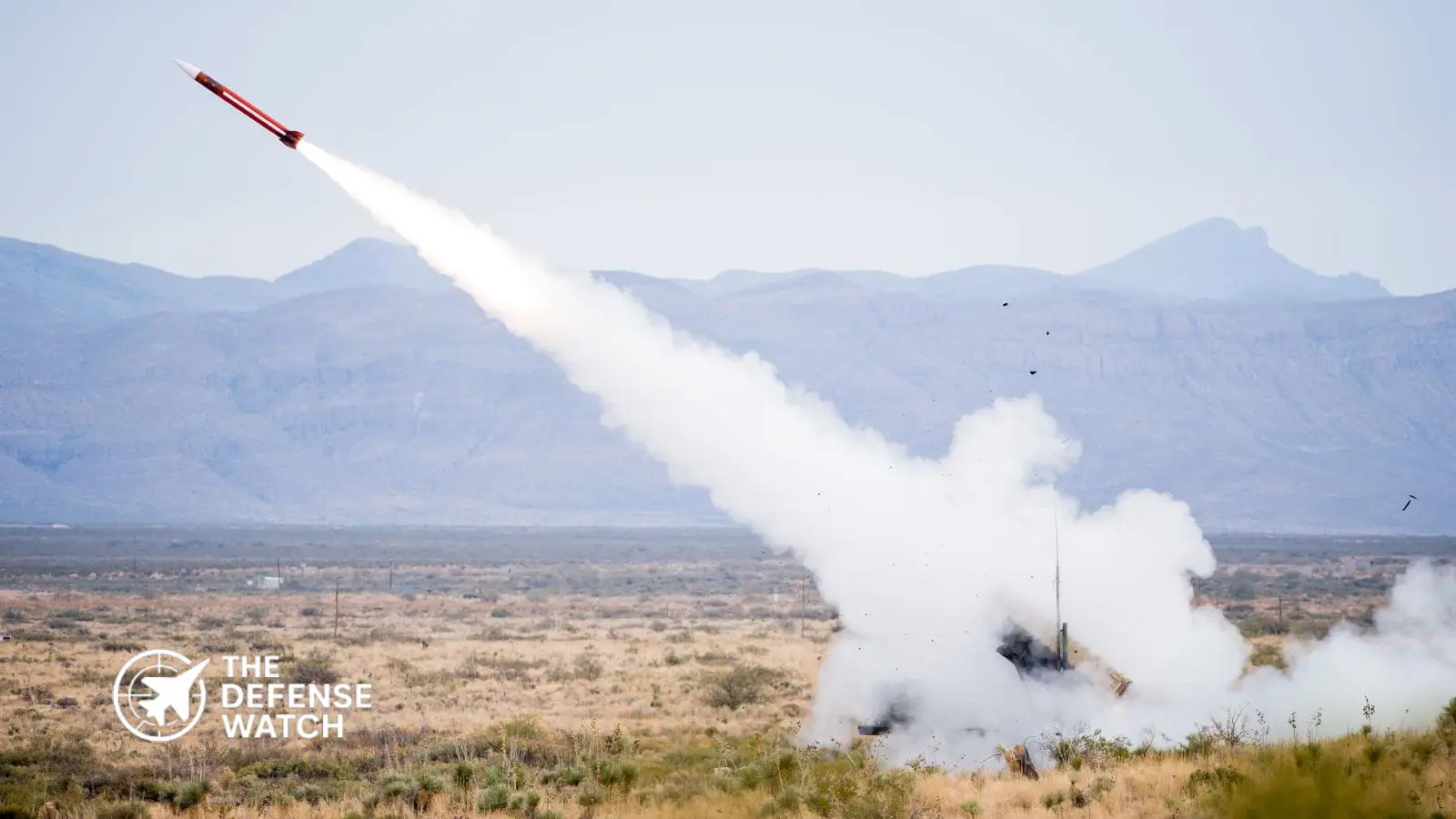
RTX Corporation has been awarded a $441.6 million contract modification to procure PATRIOT GEM-T interceptors for Operation Epic Fury. The program strengthens U.S. Army air and missile defense capacity against evolving aerial threats. The award reflects continued reliance on upgraded legacy systems to meet near-term operational demands.
Contract Details and Program Scope
The U.S. Army has issued a $441,600,000 modification to an existing contract (W31P4Q-23-C-0036) awarded to RTX for the production of PATRIOT Guidance Enhanced Missile-Tactical (GEM-T) interceptors.
Key details include:
- Contract value: $441.6 million
- Award date: April 30, 2026
- Completion date: September 30, 2026
- Production location: Chambersburg, Pennsylvania
- Funding source: Fiscal 2026 special funds
- Contracting authority: Army Contracting Command, Redstone Arsenal
The modification brings the total cumulative contract value to $441.6 million, indicating this action represents the full funded scope under the current agreement.
PATRIOT GEM-T: Role and Capabilities
The GEM-T interceptor is an upgraded variant of the legacy PATRIOT PAC-2 missile, optimized for enhanced performance against aircraft and certain ballistic missile threats.
Key Technical Advantages
- Improved proximity fuze for better lethality against fast-moving targets
- Enhanced guidance system for increased interception accuracy
- Greater effectiveness against cruise missiles and tactical ballistic missiles
- Cost-effective upgrade compared to newer hit-to-kill interceptors
Unlike more modern kinetic interceptors, GEM-T uses a blast-fragmentation warhead, making it particularly effective against aircraft and drone swarms.
Comparison: GEM-T vs PAC-3 Interceptors
| Feature | PATRIOT GEM-T | PAC-3 MSE |
|---|---|---|
| Range | Medium (up to ~160 km vs aircraft) | Shorter but optimized for ballistic threats |
| Payload | Blast-fragmentation warhead | Hit-to-kill kinetic interceptor |
| Status | Operational, upgraded legacy | Advanced, currently deployed |
| Key Technology | Proximity fuze, guidance upgrade | Active radar seeker, direct impact |
Strategic Context: Responding to Modern Threats
The procurement aligns with growing demand for layered air defense systems amid increasingly complex threat environments.
Operation Epic Fury is understood to support contingency planning involving:
- Cruise missile proliferation
- Unmanned aerial system (UAS) saturation attacks
- Tactical ballistic missile threats from near-peer adversaries
Recent conflicts have demonstrated that mixed interceptor inventories, combining legacy and advanced systems, provide flexibility and cost efficiency.
Why GEM-T Still Matters
- Faster production timelines compared to newer interceptors
- Lower unit cost enables bulk procurement
- Proven performance in operational environments
The continued investment suggests the U.S. Army is prioritizing inventory depth and readiness alongside modernization.
Industrial and Operational Implications
Production in Pennsylvania reinforces the domestic defense industrial base, while the rapid funding obligation indicates urgency in delivery timelines.
For RTX, the award underscores its central role in sustaining the PATRIOT ecosystem, which remains one of the most widely deployed air defense systems globally.
Outlook
As air and missile threats evolve, the U.S. Army is expected to maintain a hybrid approach, balancing next-generation systems with upgraded legacy interceptors like GEM-T.
This contract signals that even as advanced systems expand, reliable and scalable solutions remain critical to immediate defense needs.