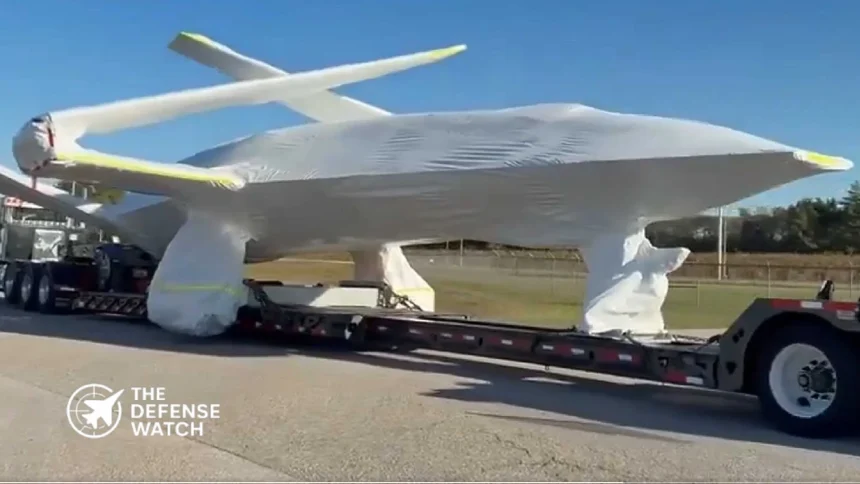
Boeing has moved its second MQ-25A Stingray to MidAmerica St. Louis Airport in Mascoutah, Illinois, where the aircraft will undergo final assembly before ground testing. The move advances development of the U.S. Navy’s first operational carrier-based unmanned aircraft, designed to take over aerial refueling duties currently assigned to some F/A-18E/F Super Hornets.
Boeing announced the transfer on October 26, with the development reported by Army Recognition on October 27. The aircraft has not yet been reported to have completed its first flight, and Boeing has not announced a date for the start of ground testing. The transfer is an assembly milestone, not evidence that the second aircraft is ready for carrier operations.
For the Navy, the program addresses a longstanding problem in carrier aviation: fighter aircraft must sometimes serve as airborne tankers to extend the range of other aircraft. A dedicated unmanned refueling platform could return more Super Hornets to strike and other combat missions while extending the effective reach of the carrier air wing.
Why the Navy needs a dedicated drone tanker
Carrier-based fighter aircraft operate within demanding limits on fuel, payload, and mission distance. The farther a strike package must travel, the more important aerial refueling becomes, particularly when aircraft need to preserve fuel for maneuvering, combat, or recovery aboard the carrier.
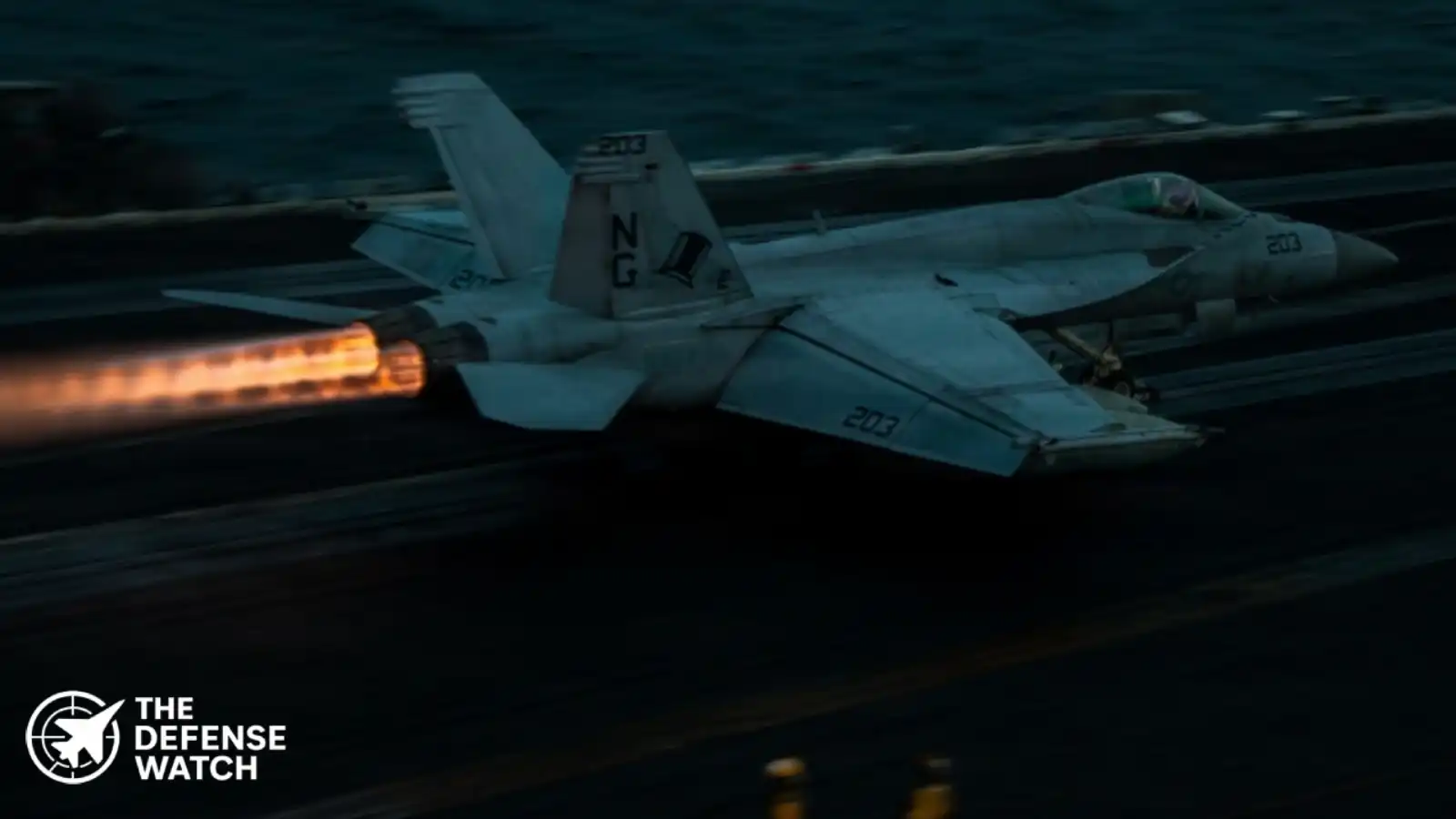
The Navy currently relies in part on the buddy-refueling method, in which an F/A-18E/F Super Hornet carries external fuel tanks and a refueling pod to transfer fuel to another aircraft. This provides flexibility but uses an aircraft, its flight hours, and maintenance resources for a support role rather than a primary combat mission.
The MQ-25A is intended to assume that tanker function. By operating as an unmanned aircraft, it could provide fuel without requiring another crewed fighter to perform the refueling mission.
The result would not be a replacement for the Super Hornet. Instead, the two aircraft would perform different jobs within the same carrier air wing, with the MQ-25 supporting the range and endurance of crewed aircraft.
The operational benefit will depend on how reliably the drone can deliver fuel, how many sorties it can generate, and how effectively it fits into the carrier’s launch, recovery, and maintenance schedules. Moving the second aircraft toward testing is one step toward answering those questions, not proof that the Navy has already achieved the intended operational gains.
What the second aircraft adds to the test program
The second MQ-25A will join a development effort that has moved from initial flight demonstrations toward production and broader system testing.
The first operational MQ-25A completed its maiden flight on April 25, 2026, at MidAmerica St. Louis Airport. According to Boeing and the Navy, the approximately two-hour flight tested basic flight controls, engine performance, handling characteristics, and the aircraft’s interaction with the ground control system.
During a subsequent flight on July 10, Boeing reported that the aircraft completed additional checks, including landing gear cycles, while using updated vehicle management and mission computer software. Those tests were intended to support further expansion of the aircraft’s flight envelope.
The second aircraft’s move toward ground testing adds another airframe to the development process. However, the public information available does not establish which specific tests it will undertake first, when it will fly, or how its test schedule will compare with that of the first aircraft.
The distinction matters because an unmanned tanker requires more than a successful flight. The aircraft, its command-and-control equipment, and the procedures used to operate it must work together under the demanding conditions of carrier aviation.
The Navy’s Unmanned Carrier Aviation Mission Control System, which includes the MD-5 ground control station, provides the command-and-control infrastructure for the aircraft. The broader program also covers integration with carrier operations, including deck handling, taxiing, launch, and recovery.
From development to low-rate production
The MQ-25 program has also entered an important procurement phase.
In May 2026, the Navy approved Milestone C, allowing the program to move into the production and deployment phase. This decision enabled low-rate initial production while development and testing continued.
On September 14, the Navy announced its first low-rate initial production contract for three MQ-25A aircraft. The contract also provides funding for advance procurement of long-lead components supporting three aircraft in the next production lot. Initial deliveries from the first lot are expected to begin in 2029.
The Navy’s stated program of record comprises 76 aircraft, including four engineering development and manufacturing aircraft and five system demonstration test articles. Seven test aircraft were reported to be in production at Boeing’s St. Louis operation and its dedicated MQ-25 facility in Mascoutah.
These figures describe the wider program, not the number of operational tankers currently available to carrier air wings. Production orders, aircraft under assembly, and aircraft that have completed operational testing are different categories.
The Navy is pursuing production while development continues, a common acquisition approach intended to support delivery before every test activity has finished. However, it can also create risks if testing identifies problems that require design or software changes to aircraft already being built.
The Congressional Research Service has examined the program’s development history and the Navy’s plans for carrier-based unmanned aviation. Separately, the Government Accountability Office’s 2026 weapon systems assessment identified schedule delays and the potential for additional cost or delay if concurrent testing and production require changes to the aircraft.
That context makes the progress of additional test aircraft important. The program must demonstrate that it can move beyond initial flight milestones and deliver a reliable system that the Navy can operate and maintain at sea.
The key requirement: refueling at operational distances
The Navy’s development objective is for the MQ-25 to transfer at least 14,000 pounds of fuel at a distance of 500 nautical miles from the carrier. This is a program requirement, not a performance result demonstrated by the second aircraft’s transfer to Mascoutah.
Meeting that objective would help the Navy support aircraft operating farther from their carrier without relying as heavily on fighter aircraft for refueling. It could also give commanders greater flexibility when planning long-range missions and managing the recovery of aircraft returning from operations.
The MQ-25’s significance extends beyond fuel delivery. Introducing an unmanned aircraft into a carrier air wing requires the Navy to integrate remote command and control, flight-deck procedures, maintenance, communications, and aircraft scheduling into an already complex operating environment.
Boeing has also been developing software intended to support manned-unmanned teaming. In October 2026, the company reported testing this software on surrogate aircraft during the Emerald Flag exercise at Eglin Air Force Base, Florida. The tests demonstrated command-and-control communications over Link 16, but the demonstration used other aircraft rather than an operational MQ-25A. Further testing and integration will be needed before the capability can be fielded on the Stingray.
This work points toward a future in which crewed aircraft and unmanned support platforms coordinate more closely. However, the MQ-25’s immediate priority remains aerial refueling, and its usefulness will ultimately depend on demonstrated performance and dependable integration with carrier operations.
Carrier operations remain the decisive milestone
The move of the second MQ-25A toward ground testing is a tangible step in Boeing’s effort to deliver the Navy’s unmanned tanker. It also provides another opportunity to advance a program that must satisfy demanding flight, software, and carrier-integration requirements.
The next milestones to watch are the start of ground testing, the second aircraft’s first flight, progress in the wider flight-test program, and preparations for carrier qualification. Boeing has not publicly established a specific schedule for the second aircraft’s first flight.
The Navy’s production plans indicate that it is preparing for eventual fleet introduction, with initial deliveries from the first low-rate production lot expected in 2029. Until the aircraft completes the necessary testing and carrier integration, however, the number of Super Hornets it can release for combat missions remains a planned benefit rather than an operational result.