Executive Summary:
The U.S. government is holding discussions with Ford Motor and General Motors on supporting production of Tomahawk cruise missiles and Patriot air defense missiles. The initiative reflects a broader effort to expand America’s defense industrial base, replenish missile stockpiles, and increase manufacturing capacity through commercial industry partnerships.
U.S. Government Explores Ford And GM Support For Tomahawk And Patriot Missile Production
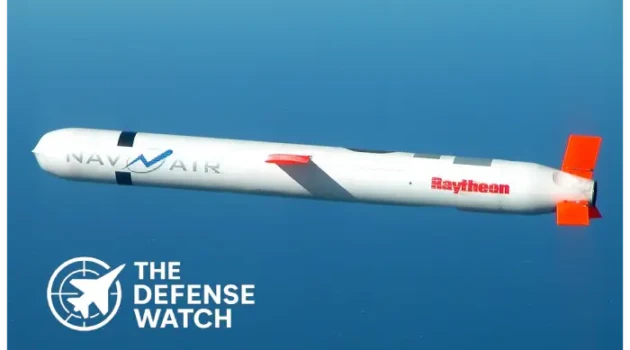
The Tomahawk missile production effort could soon receive support from two of America’s largest automakers as the U.S. government explores ways to rapidly expand defense manufacturing capacity.
Citing recent developments and government discussions, officials are in talks with Ford Motor Company and General Motors about leveraging commercial manufacturing expertise to help increase production of critical missile systems, including the Tomahawk land attack cruise missile and Patriot air defense interceptors.
The discussions come as Washington seeks to rebuild missile inventories after years of sustained weapons deliveries to allies and increased operational demands across multiple theaters. Reuters previously reported that senior Pentagon officials have been meeting with executives from major manufacturers to determine whether commercial production capacity could supplement traditional defense contractors.
Expanding America’s Defense Industrial Base
The initiative reflects a broader shift in U.S. defense acquisition strategy that emphasizes industrial capacity as a strategic asset.
Rather than relying solely on traditional defense primes, the Pentagon is examining whether established automotive manufacturers can contribute advanced manufacturing expertise, supply chain management, robotics, and high-volume production methods to missile programs.
President Donald Trump recently stated that automakers with available factory capacity could potentially participate in producing Patriot missiles and Tomahawk cruise missiles through partnerships with defense companies. Both Ford and General Motors have confirmed discussions regarding defense opportunities, although neither company has announced finalized missile production agreements.
This approach mirrors historic examples in which U.S. industry rapidly expanded military production during periods of heightened national security demand, although today’s requirements involve highly specialized components, precision manufacturing, and extensive certification processes.
Why Missile Production Is Becoming A National Priority
Demand for long-range precision strike weapons and integrated air defense systems has risen sharply in recent years.
The Tomahawk missile production program supports U.S. Navy surface combatants, submarines, and newer land-based launch systems, providing long-range precision strike capability against high-value targets.
Meanwhile, Patriot PAC-3 interceptors remain among the world’s most sought-after air defense missiles, protecting against ballistic missiles, cruise missiles, and aircraft. The system has become increasingly important for both U.S. forces and allied nations facing evolving missile threats.
(adsbygoogle = window.adsbygoogle || []).push({});Growing operational requirements, combined with foreign military sales and support for allies, have placed considerable pressure on existing production lines. Defense analysts have repeatedly identified missile manufacturing capacity as one of the principal constraints on sustaining long-term military readiness.
Existing Defense Contractors Remain Central
Although Ford and GM may contribute manufacturing capacity, primary responsibility for missile design, integration, and final production remains with established defense companies.
RTX’s Raytheon business manufactures the Tomahawk cruise missile, while Lockheed Martin produces the Patriot PAC-3 Missile Segment Enhancement interceptor. These companies have already signed long-term agreements with the Pentagon to significantly increase annual missile output over the coming years.
The potential role of automakers would likely focus on manufacturing components, subassemblies, production tooling, logistics support, or other industrial processes rather than complete missile integration.
Such collaboration could help reduce production bottlenecks while allowing defense contractors to concentrate on sensitive technologies and final system assembly.
Manufacturing Expertise Could Accelerate Output
Modern automotive manufacturing offers capabilities that could benefit defense production, including automated assembly lines, digital quality control, advanced robotics, and efficient supply chain management.
Ford and General Motors already possess extensive experience with precision manufacturing, large-scale procurement networks, and lean production techniques.
General Motors also operates GM Defense, which has expanded its military business in recent years through tactical vehicle programs and partnerships with the Department of Defense. Leveraging commercial production practices may enable faster scaling of selected missile components without compromising military quality standards.
However, adapting automotive facilities for missile-related work would still require significant investment, security measures, workforce certification, and compliance with stringent defense manufacturing regulations.
Strategic Implications
The proposed collaboration highlights a broader evolution in U.S. defense industrial policy.
Rather than treating defense production as the exclusive domain of traditional contractors, policymakers increasingly view the wider American manufacturing sector as a reserve industrial capability that can strengthen resilience during periods of elevated demand.
This strategy also seeks to reduce supply chain vulnerabilities, shorten production timelines, and improve surge capacity for critical munitions.
If agreements ultimately move forward, they could represent one of the most significant integrations of commercial automotive manufacturing into advanced missile production in decades.
While discussions remain preliminary, the initiative underscores the Pentagon’s determination to ensure sufficient production capacity for some of America’s most strategically important precision weapons.