(adsbygoogle = window.adsbygoogle || []).push({});Executive Summary:
The U.S. Navy has demonstrated advanced underwater drone capabilities designed to strengthen anti-submarine warfare and maritime surveillance operations. The trials come as NATO allies increase monitoring of Russian submarine activity and critical undersea infrastructure in the Baltic region, highlighting the growing role of autonomous systems in future naval operations.
U.S. Navy Underwater Drones Gain Strategic Importance In Baltic Operations
The U.S. Navy underwater drones program is taking on greater significance as NATO forces confront an increasingly complex maritime security environment in Northern Europe.
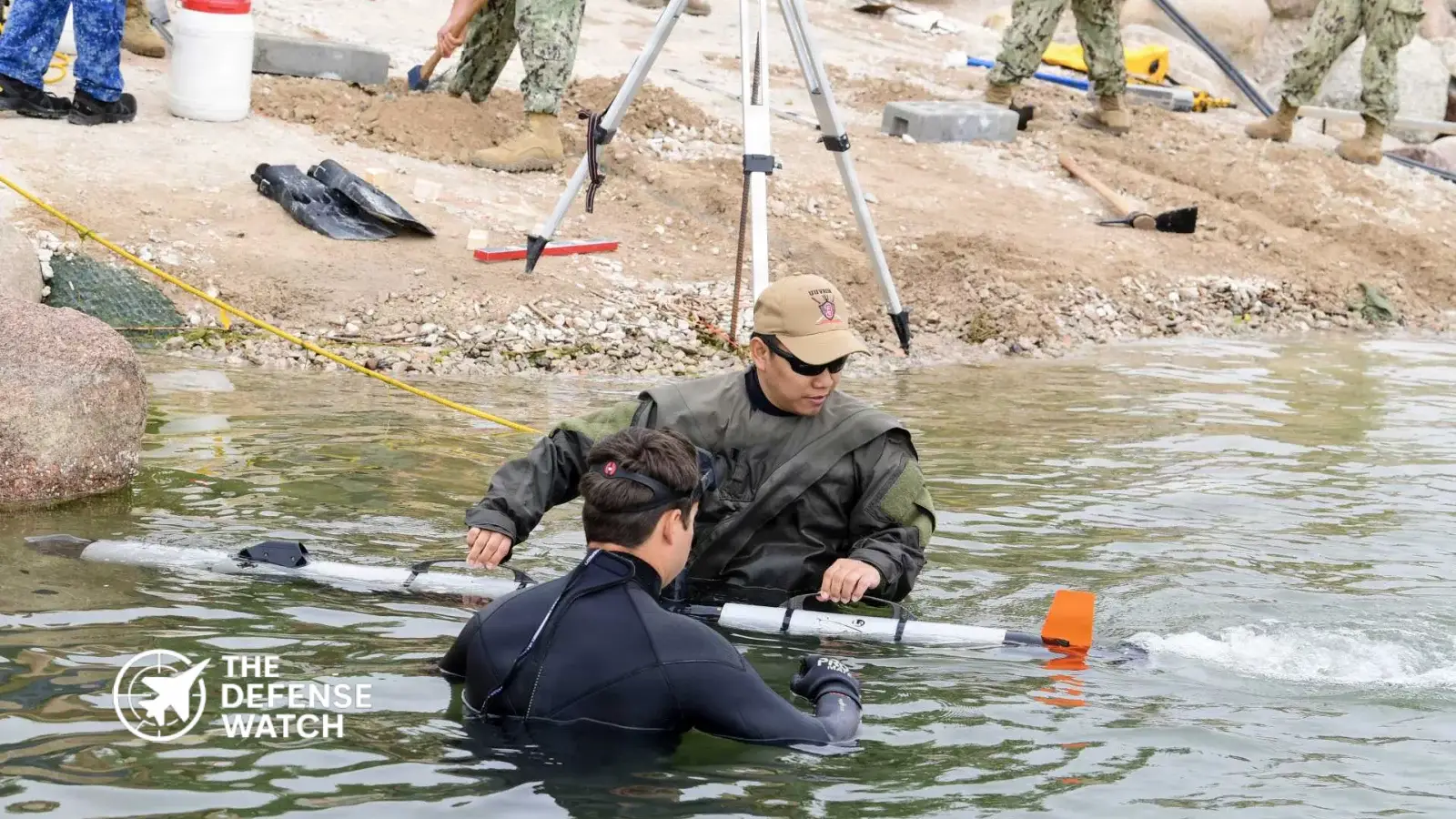
The U.S. Navy recently demonstrated advanced unmanned underwater systems capable of conducting surveillance, reconnaissance, and anti-submarine warfare missions. The trials were conducted against a backdrop of heightened concern regarding Russian naval activity in and around the Baltic Sea.
The demonstration reflects a broader shift in naval strategy, where autonomous underwater vehicles are becoming essential tools for tracking submarines, monitoring maritime chokepoints, and protecting critical undersea infrastructure such as communication cables and energy pipelines.
As underwater threats become more difficult to detect using traditional methods alone, naval planners are increasingly integrating autonomous platforms into operational concepts.
Autonomous Systems Expand Anti-Submarine Warfare Capabilities
Modern unmanned underwater vehicles provide several advantages over conventional manned platforms.
These systems can remain submerged for extended periods, operate in contested environments, and gather intelligence without exposing sailors to risk. Equipped with advanced sensors, sonar systems, and autonomous navigation technologies, they can patrol vast areas of ocean while supporting manned naval forces.
The U.S. Navy has steadily expanded investment in robotic and autonomous systems across multiple domains. Recent exercises with allied nations have included deployments of unmanned surface vessels, underwater drones, and autonomous sensor networks designed to improve maritime awareness.
The growing emphasis on underwater autonomy reflects a wider transformation occurring across global naval forces, where persistent surveillance and distributed sensing are becoming critical operational requirements.
(adsbygoogle = window.adsbygoogle || []).push({});Russian Submarine Activity Remains A Key Concern
The Baltic Sea has emerged as one of NATO’s most strategically sensitive maritime regions.
Military officials and regional naval commanders have repeatedly highlighted increased Russian submarine operations and broader concerns about undersea security. Reports from Northern European defense officials indicate that Russian submarine activity has remained a consistent feature of the regional security environment, prompting expanded anti-submarine warfare exercises and surveillance efforts.
At the same time, concerns about potential threats to underwater infrastructure have grown following several incidents involving damaged communication and energy cables across European waters.
For NATO, maintaining awareness beneath the surface has become as important as monitoring activity in the air and on the sea surface.
Why Underwater Drones Matter More Than Ever
The significance of underwater drones extends beyond traditional anti-submarine missions.
Autonomous underwater vehicles can inspect critical infrastructure, map the seabed, identify suspicious activity, and provide early warning of emerging threats. Their ability to operate discreetly and continuously makes them particularly valuable in regions such as the Baltic Sea, where geography and environmental conditions can complicate submarine detection.
Recent technological developments across multiple navies demonstrate growing confidence in unmanned undersea operations. The U.S. Navy and allied forces have conducted testing involving launch and recovery of underwater drones from submarines, while defense companies continue developing longer-range autonomous systems for surveillance and offensive missions.
These advancements suggest future naval operations will increasingly rely on networks of manned and unmanned platforms working together to create a more comprehensive maritime picture.
(adsbygoogle = window.adsbygoogle || []).push({});Analysis: A Shift Toward Persistent Undersea Surveillance
The latest demonstration underscores a larger strategic trend rather than a single technology showcase.
For decades, anti-submarine warfare depended primarily on submarines, maritime patrol aircraft, surface combatants, and fixed sensor networks. Today’s security environment is driving navies toward more distributed and autonomous approaches.
Underwater drones offer a relatively cost-effective method of expanding surveillance coverage without requiring additional crewed vessels. They can fill gaps in maritime awareness, monitor critical areas continuously, and complement traditional anti-submarine assets.
For the United States and NATO, the Baltic region serves as a testing ground for many of these emerging concepts. As Russia continues to maintain an active submarine presence and as concerns over undersea infrastructure security persist, autonomous underwater systems are likely to become an increasingly visible component of allied maritime strategy.
The demonstration therefore represents more than a technology milestone. It signals how future naval competition may increasingly be shaped beneath the surface, where autonomous systems, advanced sensors, and persistent surveillance networks will play a central role in maintaining maritime security.
Feature Image Suggestion: U.S. Navy unmanned underwater vehicle deployed during anti-submarine warfare testing alongside NATO maritime forces in European waters.