

(adsbygoogle = window.adsbygoogle || []).push({});Executive Summary:
The United States has approved a potential $1.98 billion Foreign Military Sale to Kuwait for advanced counter-unmanned aerial systems supplied by Anduril Industries. The package combines kinetic interceptors, electronic warfare systems, surveillance towers, and command-and-control software designed to strengthen Kuwait’s defenses against emerging drone threats.
US Approves Anduril Counter-Drone Sale To Kuwait
The United States has approved a potential $1.98 billion Anduril counter-drone sale to Kuwait, marking one of the largest counter-unmanned aerial system (C-UAS) transactions announced in the region in recent years. The proposed Foreign Military Sale includes a layered suite of detection, tracking, electronic warfare, and interception capabilities intended to improve Kuwait’s ability to counter current and future unmanned aerial threats.
According to notifications issued by the U.S. Department of State and reported by defense industry sources, the principal contractor will be Anduril Industries, the California-based defense technology company known for autonomous defense systems and advanced counter-UAS solutions.
What Is Included In The Deal?
The proposed package centers on several of Anduril’s flagship counter-drone systems.
Included equipment comprises:
- Roadrunner-Munition (Roadrunner-M) interceptors
- Anvil-Kinetic counter-drone platforms
- Launch systems and support equipment
- Lattice command-and-control software
- Long Range Sentry Towers with fire control
- Mobile and maritime Sentry Tower variants
- Pulsar electronic warfare systems
- Menace tactical operations centers
- Training, logistics, engineering, and sustainment support services
The package combines both electronic and kinetic defeat mechanisms, allowing operators to detect, identify, track, disrupt, and physically neutralize hostile drones across multiple operational environments.
(adsbygoogle = window.adsbygoogle || []).push({});Roadrunner-M And Anvil Form The Core Of Kuwait’s Counter-UAS Capability
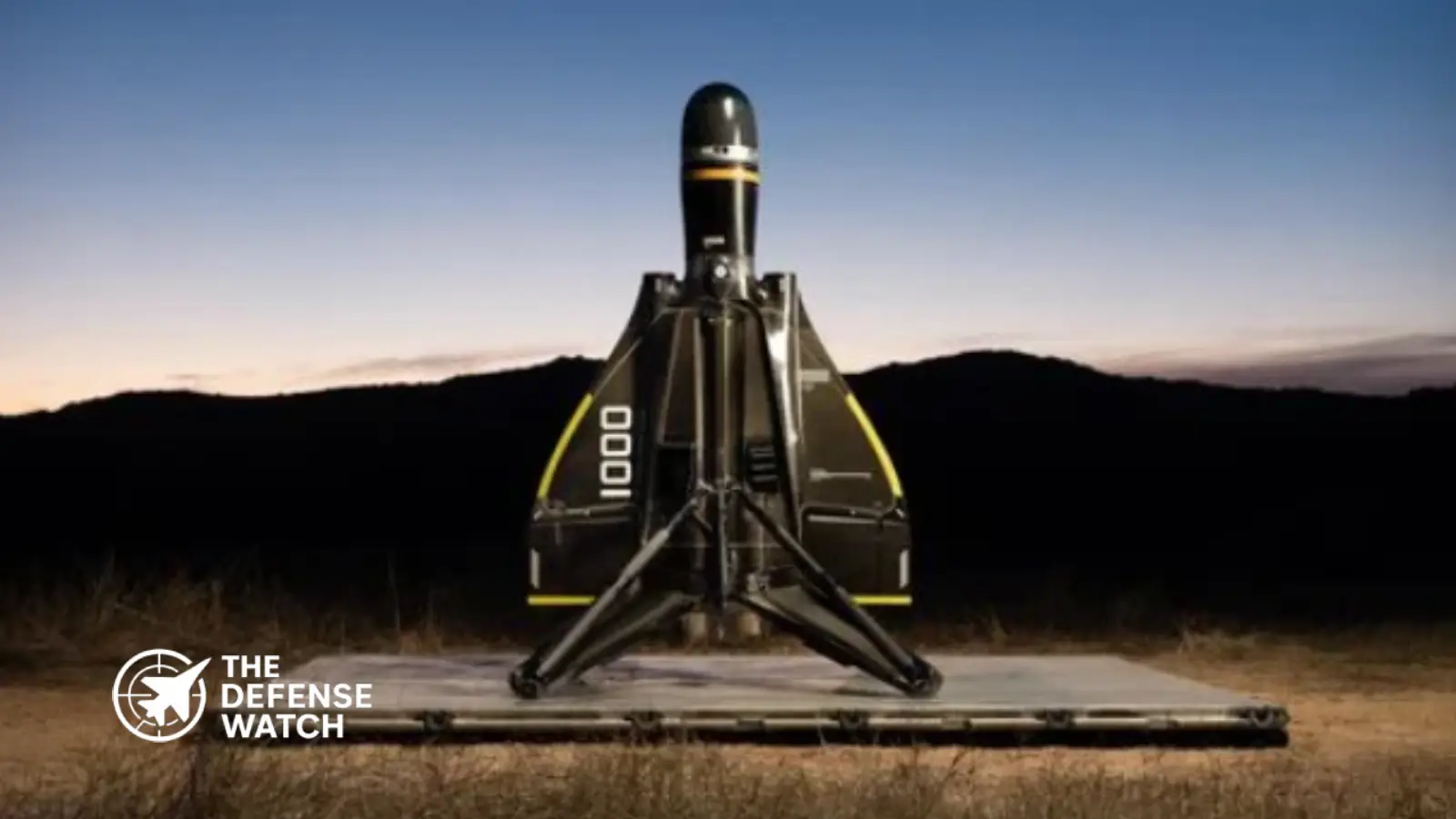
One of the most notable elements of the sale is the inclusion of the Roadrunner-M interceptor. Introduced by Anduril in 2023, the vertical takeoff and landing interceptor uses twin turbojet engines to engage aerial threats at high subsonic speeds. The munition-equipped variant carries an explosive payload designed to destroy hostile airborne targets. A distinctive feature of the system is its ability to recover and land if an interception is not required, potentially reducing operational costs.
The package also includes the Anvil-Kinetic system, an electrically powered interceptor drone designed specifically to engage and defeat smaller unmanned aircraft. Unlike traditional missile-based solutions, Anvil uses direct kinetic impact to neutralize targets, offering a cost-effective option against low-cost drone threats.
Why The Deal Matters
The approval highlights the growing importance of counter-drone technologies in modern defense planning. Across the Middle East, military forces increasingly face threats from inexpensive unmanned systems capable of conducting surveillance, targeting infrastructure, or carrying explosive payloads.
Kuwait’s planned acquisition reflects a broader regional trend toward layered air defense architectures that combine radar, sensors, electronic warfare, and autonomous interceptors. Traditional air defense systems were largely designed to defeat aircraft and missiles. Small drones present a different challenge because they are cheaper, harder to detect, and often deployed in large numbers.
The U.S. State Department stated that the proposed sale would support American foreign policy objectives while enhancing the security of a major non-NATO ally in the Middle East. Officials also assessed that the sale would not alter the fundamental military balance in the region.
Analysis: A Shift Toward Integrated Counter-Drone Networks
Beyond the dollar value, the proposed Kuwait package illustrates how modern counter-UAS programs are evolving.
Historically, many counter-drone solutions focused on standalone jammers or individual interceptors. The Anduril architecture instead emphasizes an integrated network in which sensors, electronic warfare systems, autonomous interceptors, and command software operate as a unified ecosystem.
The inclusion of Lattice command-and-control software, Sentry surveillance towers, and Pulsar electronic warfare systems suggests Kuwait is seeking a comprehensive defensive network rather than isolated equipment purchases. This approach aligns with emerging military requirements worldwide, where operators need to detect and engage multiple drone threats simultaneously.
The deal also demonstrates the growing role of technology-focused defense firms in air defense modernization. Companies such as Anduril are increasingly competing alongside traditional defense contractors by offering software-driven, rapidly deployable systems tailored for emerging threats.
For Gulf nations facing an increasingly complex security environment, investments in integrated counter-drone capabilities are becoming as important as conventional missile defense systems.
Strategic Implications For The Middle East
The proposed Anduril counter-drone sale to Kuwait underscores how unmanned systems have become a central factor in regional security calculations. As drone technology proliferates across state and non-state actors alike, countries are investing heavily in layered defenses capable of protecting military installations, critical infrastructure, airports, and population centers.
If finalized, the deal would significantly expand Kuwait’s ability to detect and defeat hostile drones while strengthening defense cooperation between Kuwait and the United States.
