Executive Summary:
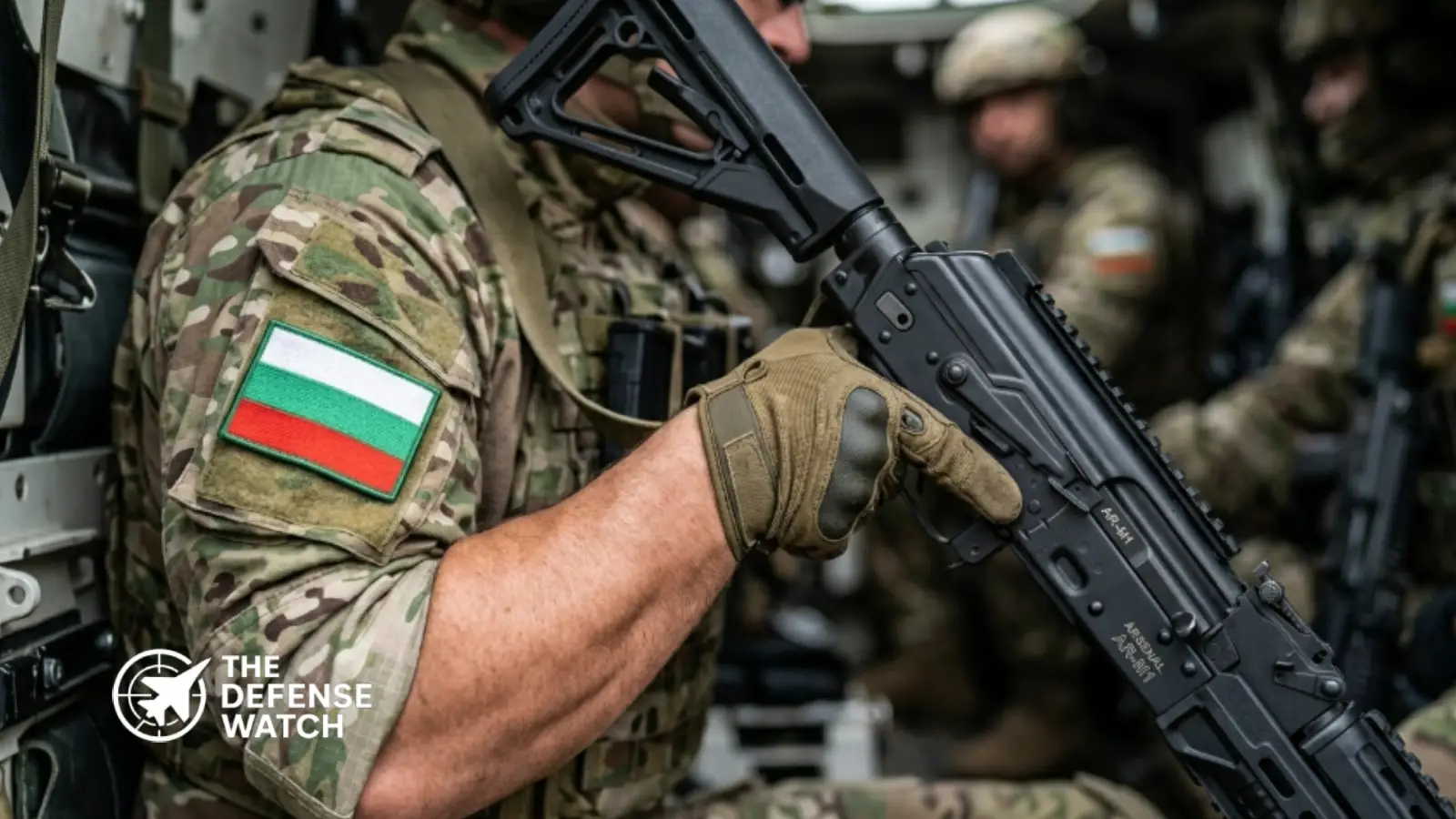
Bulgaria’s new government has announced it will no longer provide weapons to Ukraine, marking a significant change in Sofia’s approach to the war. Defense Minister Dimitar Stoyanov said future arms deliveries are not planned and called for negotiations between Moscow and Kyiv. The move highlights evolving political dynamics within a NATO and EU member state that had previously expanded military assistance to Ukraine.
Bulgaria Halts Military Aid To Ukraine
Bulgaria arms to Ukraine policy has undergone a significant shift after the country’s newly appointed Defense Minister, Dimitar Stoyanov, stated that Sofia will no longer provide weapons to the Ukrainian military.
Speaking while outlining his ministry’s priorities, Stoyanov said additional weapons deliveries are not planned and argued that the conflict should be resolved through negotiations rather than continued battlefield escalation. The announcement was reported by Bulgaria’s state news agency BTA and confirmed by multiple international media outlets.
The decision comes only weeks after a new Bulgarian government led by Rumen Radev took office. Radev, previously president of Bulgaria, has long advocated for a negotiated settlement to the war and has often expressed skepticism about military aid as a solution to the conflict.
A Sharp Change From Previous Support
The announcement represents a notable departure from Bulgaria’s policy during 2024 and 2025.
During that period, Sofia supplied Ukraine with a range of military equipment, including anti tank missiles, armored vehicles, mortars, anti aircraft guns, howitzers, and infantry weapons. Those transfers reflected a broader effort by NATO and European partners to strengthen Ukraine’s defense capabilities against Russian forces.
Earlier in the war, particularly during 2022 and 2023, Bulgaria avoided direct government to government military exports to Ukraine. However, Bulgarian-produced weapons and ammunition reached Kyiv through third party European intermediaries, allowing Sofia to maintain political flexibility amid domestic divisions over support for Ukraine.
The latest decision appears to end both symbolic and direct state-backed military assistance, although no announcement has been made regarding commercial defense exports conducted through private industry channels.
Security Cooperation Agreement Remains In Place
Despite the halt in weapons transfers, Bulgaria has not withdrawn from its broader security relationship with Ukraine.
In March 2026, the two countries signed a 10 year bilateral security cooperation agreement covering defense industrial collaboration, intelligence sharing, and energy security initiatives. The agreement also supports plans for an energy corridor capable of transporting substantial natural gas volumes toward Ukraine.
No indication has been given that the new government intends to cancel or suspend that agreement.
This distinction is important because it suggests Sofia is separating direct military aid from longer term strategic cooperation. While weapons deliveries may stop, other forms of defense and security engagement could continue.
What The Decision Means For NATO And Europe
Bulgaria’s decision is unlikely to alter the overall trajectory of Western support for Ukraine on its own. Compared with larger military contributors such as the United States, Germany, the United Kingdom, and Poland, Bulgaria’s assistance has been more limited in scale.
However, the move carries political significance because Bulgaria occupies a strategic position on NATO’s southeastern flank and along the Black Sea region. As a NATO and European Union member, changes in Bulgarian policy are closely watched by allies assessing long term European support for Ukraine.
At the same time, Sofia has continued to emphasize its commitment to NATO defense obligations. The government recently announced plans to gradually increase defense spending toward 5% of GDP by 2030, exceeding the alliance’s traditional spending benchmark.
That suggests the government’s decision should not be interpreted as a retreat from NATO membership or European security commitments. Instead, it reflects a narrower policy shift focused specifically on military assistance to Ukraine.
Growing Debate Across Europe
The Bulgaria Ukraine military aid debate reflects broader discussions occurring across Europe as the war enters another year.
Some governments continue advocating expanded weapons deliveries to strengthen Ukraine’s battlefield position. Others increasingly emphasize diplomatic efforts and negotiations aimed at ending the conflict. Bulgaria’s new leadership has clearly aligned itself with the latter approach, arguing that a negotiated settlement offers the most viable path forward.
Whether other European governments adopt similar positions remains uncertain. For now, Bulgaria’s announcement adds another layer to the ongoing debate over how NATO and EU members should balance military support, deterrence, and diplomacy in response to the war.
Conclusion
Bulgaria’s decision to stop providing weapons to Ukraine marks one of the most notable defense policy changes by a NATO member in 2026. While Sofia intends to maintain broader security cooperation with Kyiv, the suspension of future arms transfers signals a different strategic approach under the country’s new government.
The move underscores how domestic political changes can influence military assistance policies, even among NATO and EU allies, while highlighting the continuing debate across Europe over the future direction of support for Ukraine.