

atOptions = { ‘key’ : ‘e7d18db8b7513fb2a224cf4c3f18bbf0’, ‘format’ : ‘iframe’, ‘height’ : 90, ‘width’ : 728, ‘params’ : {} };Executive Summary:
Britain plans to acquire a new generation of Norwegian-designed mine hunting motherships to support autonomous mine countermeasure and undersea warfare operations. The move strengthens Royal Navy modernization efforts while deepening UK-Norway defense cooperation and enhancing NATO’s ability to protect critical maritime infrastructure in the North Atlantic.
Britain’s mine hunting motherships program is entering a new phase as the UK Ministry of Defence moves toward acquiring Norwegian-designed offshore support vessels capable of deploying autonomous mine countermeasure and undersea warfare systems. The initiative reflects the Royal Navy’s broader transition away from traditional crewed minehunters toward unmanned maritime operations designed for increasingly contested environments.
The planned acquisition follows expanding defense cooperation between the United Kingdom and Norway under the Lunna House Agreement, which aims to strengthen joint maritime security, Arctic operations, and protection of critical undersea infrastructure across NATO’s northern flank.
A New Generation Of Mine Hunting Platforms
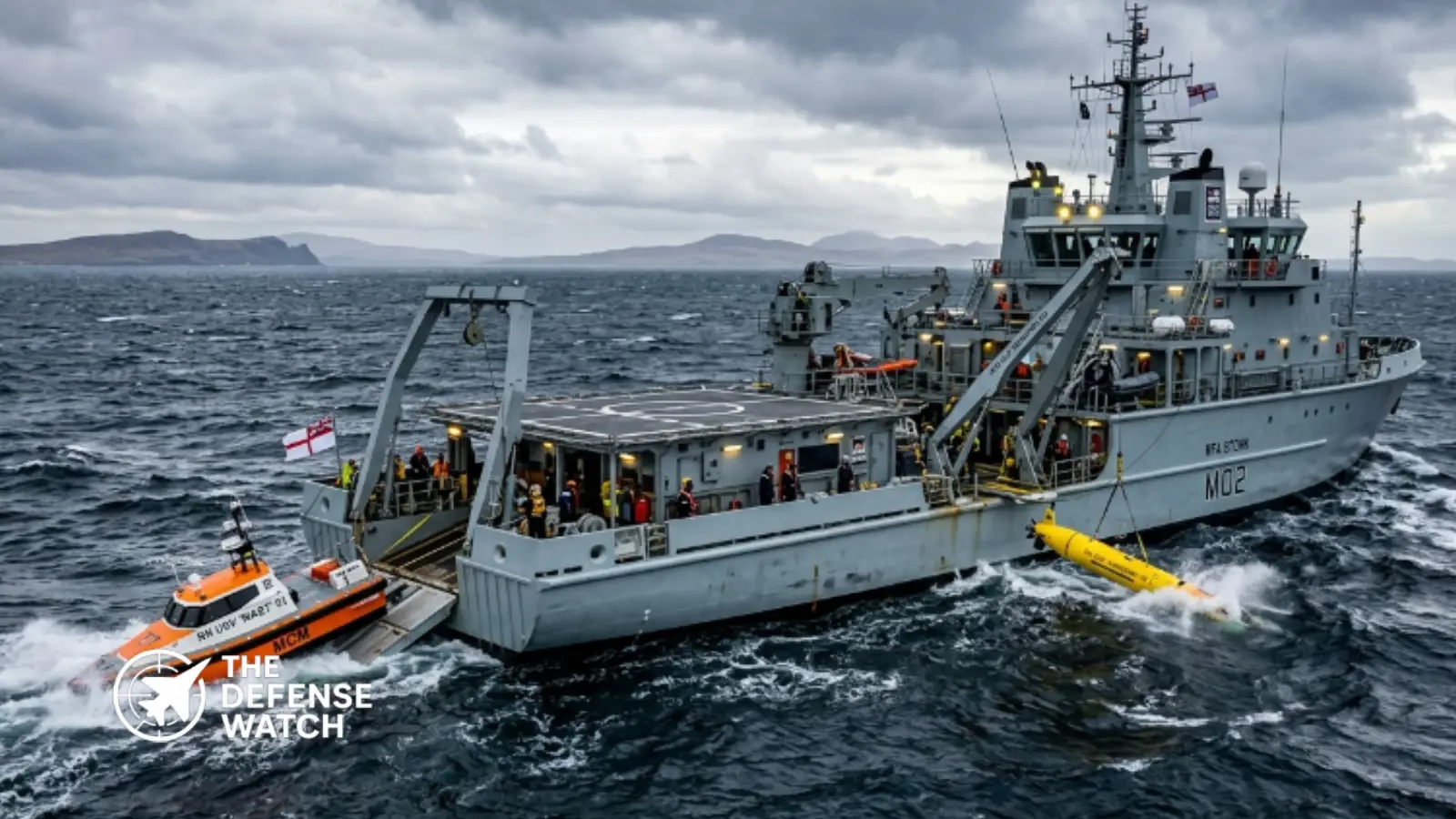
Unlike conventional mine countermeasure vessels, the new ships are designed to operate as offshore support vessels, or motherships, carrying and deploying a variety of autonomous systems rather than conducting mine clearance directly.
These platforms are expected to support:
- Uncrewed surface vessels (USVs)
- Autonomous underwater vehicles (AUVs)
- Remotely operated mine disposal systems
- Undersea surveillance equipment
- Modular mission payloads for future naval operations
This concept allows sailors to remain farther from minefields while autonomous systems perform detection, classification, identification, and neutralization tasks.
The approach reflects an industry-wide shift toward distributed maritime operations that reduce operational risk while improving endurance and flexibility.
Norwegian Design Provides A Ready Starting Point
The UK Ministry of Defence has previously examined the Kongsberg C2 Vanguard design as the basis for its future Mine Hunting Capability Offshore Support Vessel program.
Earlier feasibility work evaluated whether the commercial offshore vessel design could be adapted into purpose-built military platforms offering improved survivability, larger mission bays, and dedicated launch and recovery facilities for autonomous systems.
Recent developments indicate Britain now intends to join Norway’s broader standardized vessel program rather than pursue an entirely independent design effort, potentially reducing development risk while increasing interoperability between allied navies.
Why These Motherships Matter
The Royal Navy has already begun replacing legacy mine countermeasure vessels with autonomous technologies.
Current transition efforts include RFA Stirling Castle, which serves as an operational mothership supporting remotely operated mine hunting equipment. The new Norwegian-designed vessels would represent purpose-built successors with greater endurance, survivability, and capacity for sustained expeditionary operations.
Original Analysis
The decision highlights an important change in naval procurement philosophy.
Rather than investing in highly specialized minehunters that perform a single mission, Britain is moving toward modular support ships capable of evolving alongside rapidly advancing autonomous technologies.
This approach offers several long-term advantages:
- Faster integration of new autonomous systems.
- Lower lifecycle modernization costs.
- Greater flexibility for multiple naval missions.
- Improved interoperability with NATO partners.
- Reduced operational risk for sailors.
As unmanned maritime technologies continue advancing, the value increasingly lies in adaptable host platforms rather than fixed mission-specific ships.
Protecting Critical Undersea Infrastructure
The North Atlantic has become an increasingly important operational theater following heightened concerns about the security of subsea communications cables, offshore energy infrastructure, and maritime trade routes.
British and Norwegian officials have emphasized that autonomous systems can improve persistent monitoring of seabed infrastructure while supporting mine countermeasure missions and broader undersea surveillance.
The Lunna House Agreement also expands cooperation in:
- Arctic military training
- North Atlantic patrols
- Naval strike missile integration
- Torpedo collaboration
- Joint operational planning
- Autonomous maritime technologies
Together, these initiatives strengthen NATO’s maritime posture across Europe’s northern approaches.
Strategic Importance Beyond Mine Warfare
Although mine countermeasures remain the primary mission, these offshore support vessels are likely to become multi-role assets.
Modern naval operations increasingly rely on autonomous vehicles for:
- Seabed mapping
- Intelligence collection
- Infrastructure inspection
- Environmental monitoring
- Anti-submarine support
- Maritime security operations
A modular mothership architecture allows future payloads to be integrated without redesigning the entire vessel, extending operational relevance over decades.
Original Analysis
The growing emphasis on autonomous motherships reflects a broader evolution across NATO navies.
Rather than replacing crewed warships, autonomous support vessels complement existing fleets by handling dangerous and repetitive tasks. This enables high-value combatants such as frigates and destroyers to concentrate on air defense, anti-submarine warfare, and power projection while specialized support ships manage unmanned operations.
The UK’s participation in Norway’s program also demonstrates an increasing willingness among European allies to pursue shared naval procurement where operational requirements overlap. Such collaboration can shorten development timelines, improve logistics compatibility, and reduce acquisition costs without sacrificing national capabilities.
Looking Ahead
The acquisition remains part of Britain’s wider Mine Hunting Capability modernization program, which seeks to replace traditional minehunters with autonomous systems operating from dedicated offshore support vessels.
As autonomous maritime technologies mature, these new motherships are expected to become central elements of Royal Navy mine countermeasure operations while supporting NATO efforts to safeguard critical undersea infrastructure and maintain freedom of navigation throughout the North Atlantic.
The program illustrates how future naval power will increasingly depend not only on frontline combatants but also on flexible support vessels capable of deploying growing families of unmanned maritime systems.
