

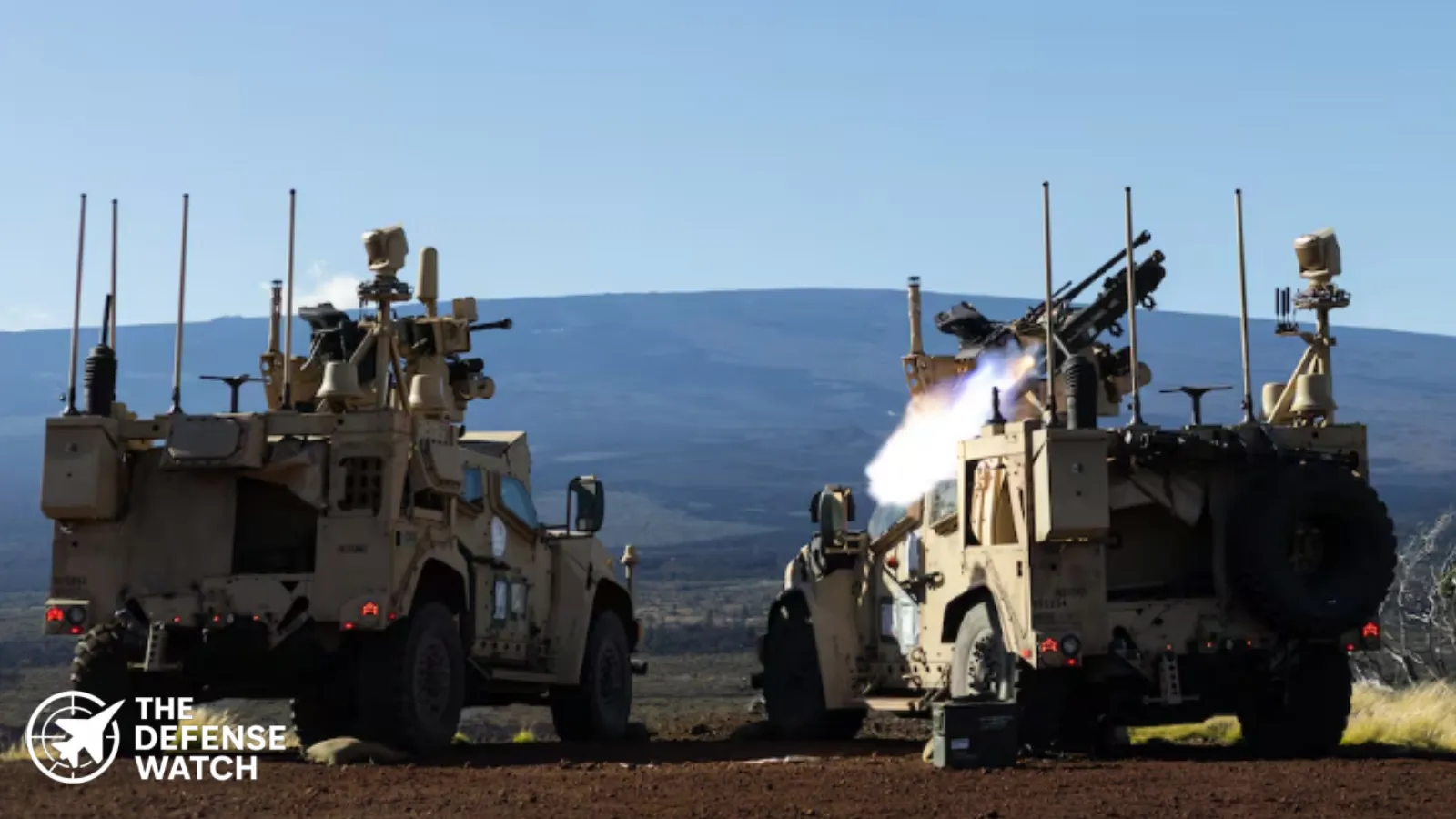
US Marines Launch Production of MADIS Counter Drone Vehicles
The United States Marine Corps has begun production of its new Marine Air Defense Integrated System, marking a key step in strengthening short range air defense against hostile drones. The system, known as MADIS, is now being built for operational units after several years of testing and evaluation. Production is taking place in the United States, with initial vehicles expected to reach Marine units in the near term.
The move reflects growing concern within the US military over the rapid spread of small unmanned aerial systems on modern battlefields. From surveillance missions to one way attack roles, low cost drones have become a persistent threat to forward deployed forces.
Growing Drone Threat Drives Urgent Need
Small drones have played a major role in recent conflicts, particularly in Eastern Europe and the Middle East. These systems are difficult to detect, fly at low altitudes, and can be launched in large numbers. Traditional air defense systems were not designed to counter such targets, leaving gaps in protection for ground forces.
For the Marine Corps, which often operates from austere and forward locations, the threat is especially serious. Expeditionary bases, amphibious units, and maneuver forces need mobile and layered air defense that can move with them.
The Marine Air Defense Integrated System was developed to meet this requirement. It provides a vehicle mounted solution that can detect, track, and defeat small drones and other low flying threats.
What Is the Marine Air Defense Integrated System
MADIS is built on the Joint Light Tactical Vehicle platform, giving it high mobility and protection. The system uses a combination of sensors, electronic warfare tools, and kinetic weapons to counter aerial threats.
Each MADIS vehicle is equipped with radar and electro optical sensors to spot drones at short range. Once detected, the system can jam control links or navigation signals. If electronic attack is not enough, the vehicle can engage targets with a chain gun or missiles.
This layered approach allows Marines to respond flexibly depending on the type of threat and rules of engagement. The Marine Air Defense Integrated System is designed to operate as part of a wider air defense network, sharing data with other sensors and command nodes.
Transition From Testing to Production
The decision to begin production follows a series of operational tests and user evaluations. Marine air defense units have been working with early versions of MADIS for several years, refining tactics and identifying improvements.
According to defense officials, feedback from these tests confirmed that the system meets operational needs and is ready for fielding. Production vehicles will include updates based on lessons learned during exercises and live fire events.
Initial production quantities are focused on equipping active duty Marine units. Over time, additional vehicles may be assigned to reserve components and deployed forces overseas.
Role Within Marine Corps Force Design
The Marine Corps has been reshaping its force structure under its Force Design initiative. This effort aims to prepare for future conflicts, particularly in contested maritime regions. Air defense against drones and cruise missiles is a key part of this plan.
MADIS fills a critical gap at the short range level. It supports Marine Littoral Regiments, expeditionary advanced bases, and maneuver units operating close to the enemy. By providing organic air defense, the Marine Air Defense Integrated System reduces reliance on joint or allied assets.
The system also supports naval operations. When Marines operate from amphibious ships or temporary shore bases, MADIS can help protect ships, logistics nodes, and command posts from aerial surveillance and attack.
Industry and Program Partners
Several US defense companies are involved in the MADIS program, supplying sensors, weapons, and electronic warfare components. The integration effort brings together proven subsystems into a single mobile platform.
Program officials emphasize that using existing technologies helped speed development and control costs. This approach also allows for future upgrades as new sensors or counter drone tools become available.
The Marine Corps plans to keep MADIS adaptable, with software updates and modular components that can evolve as drone threats change.
Strategic Impact and What Comes Next
The start of production signals that counter drone defense is now a core requirement, not a niche capability. As drones continue to spread among state and non state actors, systems like MADIS are likely to see heavy use.
Looking ahead, the Marine Corps is expected to expand training for air defense Marines and integrate MADIS into large scale exercises. Data sharing with Navy and joint force networks will also be a priority.
The Marine Air Defense Integrated System represents a shift toward mobile, networked air defense at the tactical level. Its production marks a significant milestone in adapting US forces to the realities of modern warfare.

6 comments
[…] S-300 family of surface-to-air missile systems has formed the backbone of Ukraine’s long-range air defense since the start of Russia’s full-scale invasion in 2022. Designed during the Cold War, the system […]
[…] Trackfire RWS is a stabilized, remotely operated system featuring integrated sensors and fire control. It supports multiple weapon types and offers precision engagement while on the move. The ARES configuration adds focused air response capability that may strengthen point defense against unmanned threats. […]
[…] The M1E3 prototype’s design shifts the crew into the hull and removes traditional turret crew stations. External cameras and sensors help provide situational awareness in place of legacy vision blocks. These changes align with broader efforts to reduce weight and improve survivability against modern threats. […]
[…] The low-rate initial production phase is expected to encompass 21 aircraft distributed across five lots, establishing the manufacturing foundation before full-rate production begins. […]
[…] cannot protect every commercial vessel, and most merchant ships lack the sophisticated sensors and weapons systems required to defend against modern asymmetric threats. The Pulling Guard system provides a middle-ground solution—self-contained defensive capability […]
[…] Southern Spear involves a broad range of US military components, including US Navy, US Marine Corps, and Marine Forces South. Naval Forces US Fourth Fleet oversees maritime operations, while […]