Executive Summary
The United States has approved the integration of the Integrated Battle Command System (IBCS) into Kuwait’s air defense network. The upgrade will link existing Patriot systems into a unified architecture to improve response against missile and drone threats. The move reflects growing concern over complex, multi-vector attacks in the Gulf region.
U.S. Clears Kuwait for IBCS Air Defense Network Integration
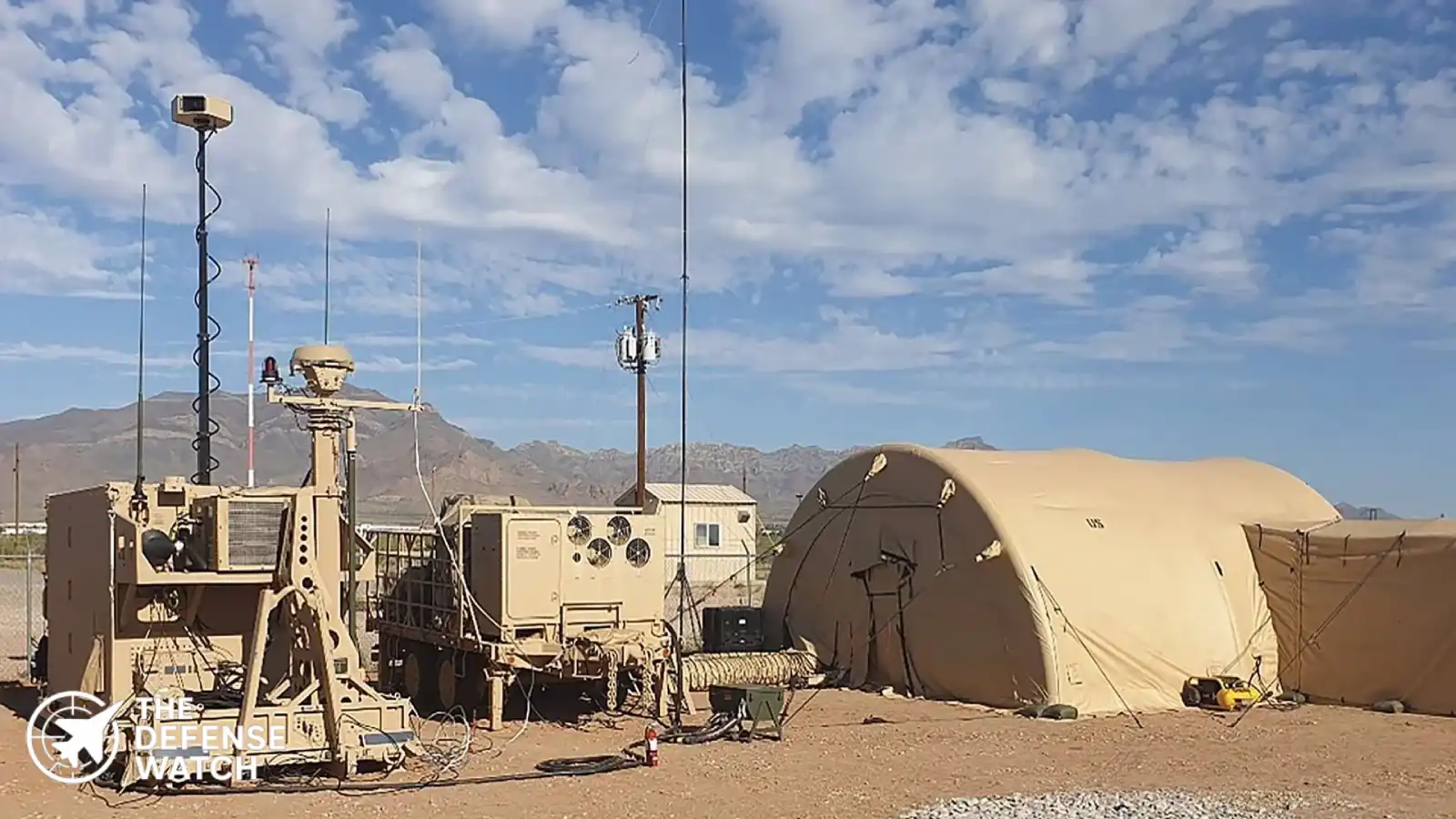
The U.S. government has approved Kuwait’s acquisition of the Integrated Battle Command System (IBCS), a next-generation command and control architecture developed by Northrop Grumman. The system will integrate Kuwait’s existing MIM-104 Patriot batteries into a unified, networked defense structure.
The approval, announced in 2026, is part of a broader U.S. effort to strengthen allied air and missile defense capabilities in the Gulf. Kuwait becomes one of the first regional operators to adopt IBCS, aligning its defenses with evolving U.S. Army doctrine.
What IBCS Brings to Kuwait’s Patriot Systems
IBCS replaces traditional, siloed air defense operations with a distributed network that connects sensors and shooters across the battlefield.
Key Technical Advantages
- Sensor fusion combines radar inputs into a single, real-time operational picture
- Any-sensor, any-shooter capability allows engagement using the most effective available interceptor
- Improved tracking of low-signature targets, including cruise missiles and drones
- Resilience against electronic warfare, with decentralized architecture
- Scalability, enabling integration with future systems beyond Patriot
This approach directly addresses emerging threats such as drone swarms and coordinated missile attacks, which can overwhelm traditional systems.
Comparison: IBCS-Enabled Patriot vs Legacy Patriot System
| Feature | IBCS-Enabled Patriot | Legacy Patriot System |
|---|---|---|
| Range | Extended via networked sensors | Limited to organic radar coverage |
| Payload | PAC-3 interceptors (network-optimized) | PAC-2/PAC-3 interceptors |
| Status | Approved for Kuwait, 2026 | Widely deployed globally |
| Key Technology | Networked command, sensor fusion, distributed targeting | Standalone battery operations |
Strategic Context: Countering Missile and Drone Threats in the Gulf
Kuwait’s adoption of IBCS reflects a wider shift in regional defense planning. Gulf states face increasing risks from:
- Ballistic missile proliferation, particularly from regional actors
- Low-cost drone swarms, which challenge traditional interception models
- Cruise missiles with low radar signatures, capable of evading legacy defenses
Recent conflicts have shown that isolated air defense systems struggle against layered attacks. IBCS addresses this by enabling coordinated, multi-layered responses.
The integration also enhances interoperability with U.S. and allied forces, a critical factor in coalition operations across the Middle East.
Program Significance and Future Outlook
The Kuwait IBCS program underscores the growing importance of network-centric warfare in air defense. By shifting from platform-based to system-of-systems architecture, the U.S. and its partners aim to maintain an edge against increasingly complex threats.
For Kuwait, the upgrade represents a significant modernization step. It strengthens national defense while aligning with U.S. regional security frameworks.
Further adoption of IBCS across allied nations is expected, particularly in regions facing high-density missile and drone threats.