U.S. Marines Demonstrate CH-53E Refueling Test Under Combat Conditions
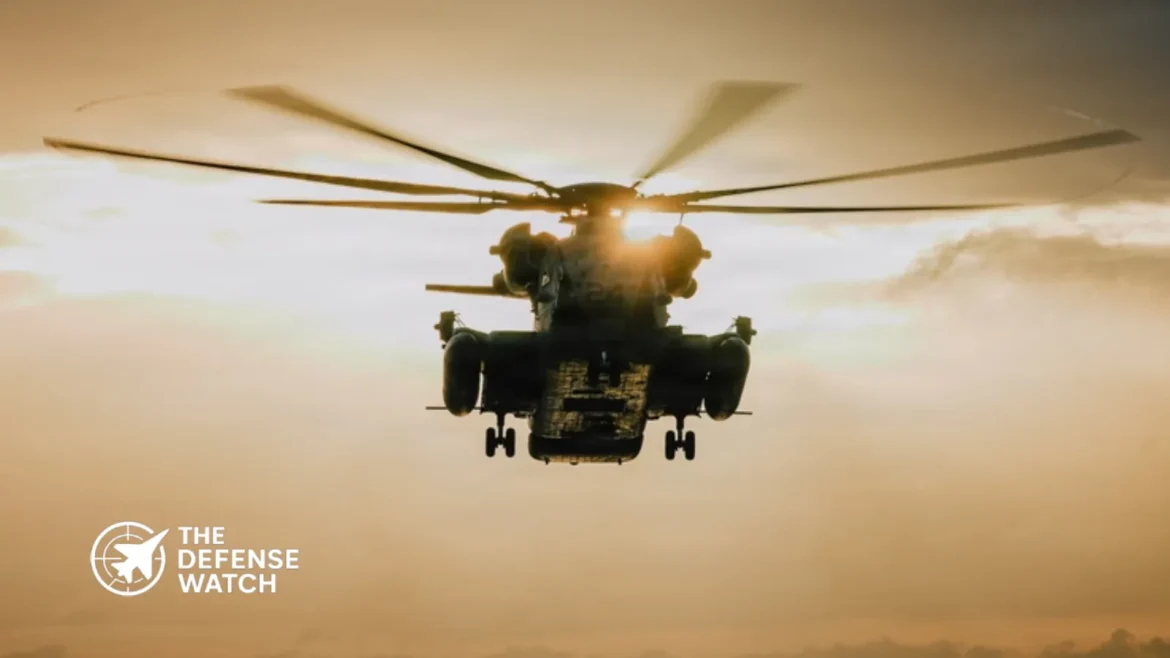
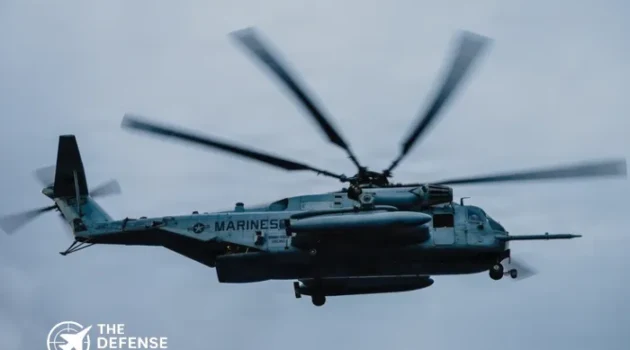
The CH-53E refueling test conducted by the U.S. Marine Corps marks a significant step in expanding heavy-lift aviation capability under realistic combat conditions. According to reporting by Army Recognition, Marines successfully executed aerial refueling while the CH-53E Super Stallion was simultaneously transporting two external vehicles, a complex maneuver rarely demonstrated at this scale.
This dual-operation test reflects a growing focus on operational endurance and logistics flexibility, especially in contested environments where traditional supply chains may be disrupted.
The ability to refuel mid-air while carrying heavy external loads directly enhances mission range, persistence, and survivability.
- U.S. Marines tested CH-53E aerial refueling while carrying two vehicles simultaneously.
- The exercise combined heavy-lift operations with extended-range refueling in a single mission.
- CH-53E Super Stallion is capable of lifting over 16 tons of cargo in external load operations.
- The test highlights expeditionary logistics capabilities under contested combat scenarios.
- The demonstration supports Marine Corps efforts to enhance mobility across dispersed battlefields.
Combining Heavy Lift And Aerial Refueling In One Mission
The CH-53E Super Stallion is already one of the most capable heavy-lift helicopters in the U.S. inventory. However, integrating aerial refueling into a live lift scenario introduces new operational complexity.
During the test, the helicopter maintained stability while connected to a tanker aircraft, all while managing the aerodynamic and weight challenges of carrying two vehicles via external sling loads.
This is not a routine task. External loads create drag and instability, which are further complicated during refueling due to precise positioning requirements.
By successfully completing this maneuver, Marine aviation units demonstrated improved coordination between aircrew, refueling assets, and ground logistics elements.
Operational Impact In Contested Environments
The CH-53E refueling test directly supports the Marine Corps’ evolving expeditionary doctrine, particularly concepts like Expeditionary Advanced Base Operations, often referred to as EABO.
In such scenarios, forces are expected to operate across dispersed and austere locations with limited infrastructure. Helicopters must deliver equipment, vehicles, and supplies over long distances without relying on fixed bases.
Aerial refueling enables:
- Extended mission range without landing
- Reduced vulnerability to ground threats
- Faster repositioning of combat assets
- Sustained operations in denied environments
This capability is especially relevant in the Indo-Pacific theater, where vast distances and limited basing options pose logistical challenges.
Why The CH-53E Still Matters Despite New Platforms
While the newer CH-53K King Stallion is gradually entering service, the CH-53E remains a critical platform in current Marine aviation operations.
The CH-53E refueling test underscores that legacy systems can still deliver advanced capabilities when paired with modern tactics and integration.
With a lifting capacity exceeding 16 tons and proven reliability, the CH-53E continues to play a vital role in:
- Amphibious operations
- Rapid troop and vehicle deployment
- Disaster response and humanitarian missions
Upgrades and training enhancements allow the platform to remain relevant even as next-generation systems are fielded.
Strategic Messaging And Readiness Signal
Beyond the technical achievement, the test sends a broader signal about U.S. military readiness.
Demonstrating the ability to sustain heavy-lift operations over extended distances shows that Marine forces can maintain operational tempo even under pressure.
It also reinforces interoperability between aviation units and aerial refueling assets, a key requirement for joint operations with the U.S. Air Force and Navy.
According to Army Recognition, the test aligns with ongoing efforts to refine combat logistics and improve responsiveness in high-threat environments.
Analysis: Closing The Logistics Gap In Modern Warfare
Modern warfare is increasingly defined by mobility and sustainment rather than just firepower.
The CH-53E refueling test highlights a shift toward resilient logistics, where forces must operate independently and adapt quickly to changing battlefield conditions.
Historically, logistics chains have been a vulnerability. Fixed supply points can be targeted, and long ground convoys are exposed to threats.
Aerial refueling combined with heavy lift changes that equation. It allows forces to bypass traditional choke points and maintain momentum.
This capability becomes even more critical in scenarios involving peer adversaries, where contested airspace and anti-access strategies could limit traditional resupply options.
In that context, the ability to move vehicles and equipment over long distances without landing is not just a tactical advantage, it is a strategic necessity.
Marines Equip Viper Helicopters with Long-Range Strike Weapons
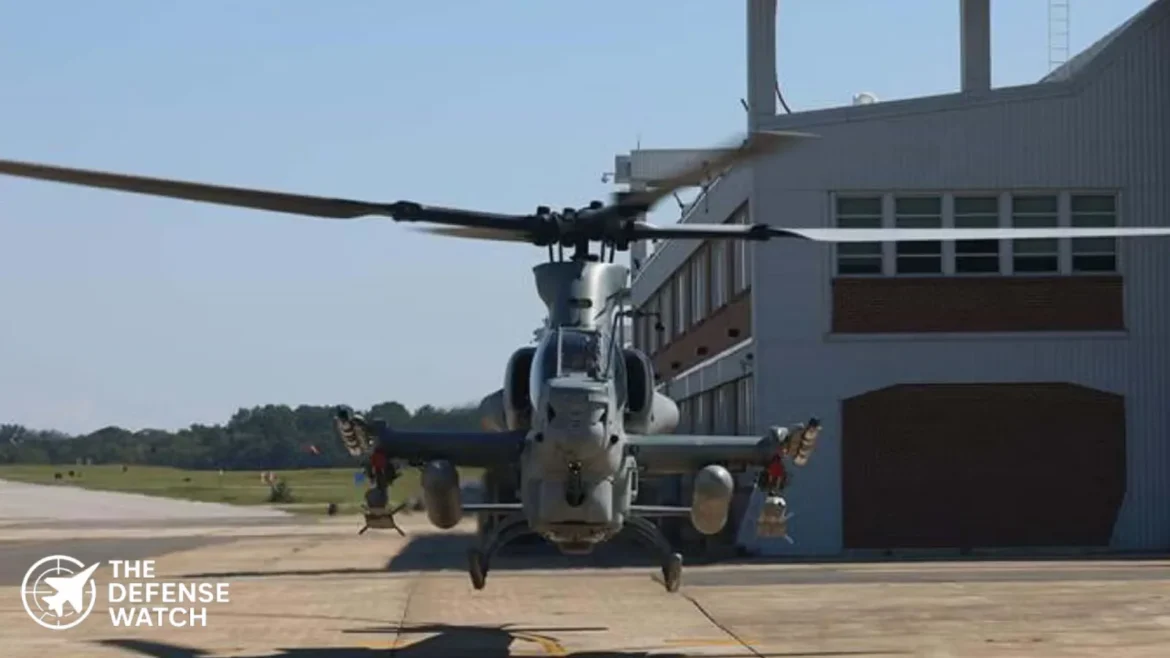
The US Marine Corps is moving to arm its AH-1Z Viper attack helicopters with long-range precision strike weapons under a new contract awarded by the US Navy’s Naval Air Systems Command (NAVAIR). The move marks a significant expansion of attack helicopter strike capability beyond the limits of existing systems like Hellfire and JAGM missiles.
(adsbygoogle = window.adsbygoogle || []).push({});Short-range rocket-launched missiles such as AGM-114R Hellfire and the Joint Air-to-Ground Missile (JAGM) typically operate at distances measured in tens of miles. The new systems aim to extend helicopter-launched strike reach to more than 200 nautical miles, giving Marines a striking option from outside many integrated air defenses.
L3Harris Wins Precision Attack Strike Munition Contract
On January 30, 2026, NAVAIR awarded L3Harris Technologies an $86.2 million contract under the Precision Attack Strike Munition (PASM) program to develop, test and deliver the Red Wolf long-range launched effects vehicle for Marine Corps rotary-wing platforms. The award was issued using Other Transaction Authority, a faster contracting method designed for prototyping and rapid capability maturation.
Under the agreement, L3Harris will supply missiles, support equipment, manuals, and training packages. Deliveries are expected to be completed by the end of fiscal 2027. While the total contract value is public, specific production quantities have not been disclosed.
What Red Wolf Brings to Marine Helicopters
Red Wolf is a launched effects vehicle intended to give the Marines’ AH-1Z Viper a true long-range precision strike option. Company and Pentagon sources say the system can engage targets at distances greater than 200 nautical miles with both kinetic and non-kinetic payloads. This is a substantial step beyond legacy helicopter missiles, which are typically limited to ranges under about 20 miles.
The PASM family, sometimes referred to as the “Wolf Pack,” includes the Red Wolf missile for kinetic strikes and the Green Wolf variant for electronic warfare and sensor disruption missions. Both are designed to operate in expeditionary and maritime environments, with Marines seeking a mix of effects while supporting carrier strike groups or amphibious operations.
Images released with the latest updates show the missiles mounted on AH-1Z Viper stub wings during testing, highlighting how these systems fit into the existing helicopter architecture without major airframe changes.
Context and Operational Impact
Marine Corps aviation leaders have long sought ways to extend rotary-wing strike power well beyond the short engagement envelopes of existing weapons. Tests dating back to 2024 showed prototypes of long-range attack missiles, sometimes described generically as Long-Range Attack Missiles (LRAM), being fired from AH-1Z platforms during live exercises.
(adsbygoogle = window.adsbygoogle || []).push({});The capability aligns with broader Pentagon efforts to provide distributed and affordable precision fires that can work inside complex anti-access/area-denial environments, especially in the Indo-Pacific region where extended reach is a priority.
The longer reach also offers new options for littoral strike and anti-surface warfare, giving Marine helicopter units a role in shaping battlespaces far from traditional close support tasks.
What Comes Next
With the Red Wolf now moving from demonstration to an acquisition program, Marines plan to integrate the weapons into operational units over the next several years. Formal fielding by 2027 means training, doctrine updates, and potential future upgrades will be key to unlocking the full capability.

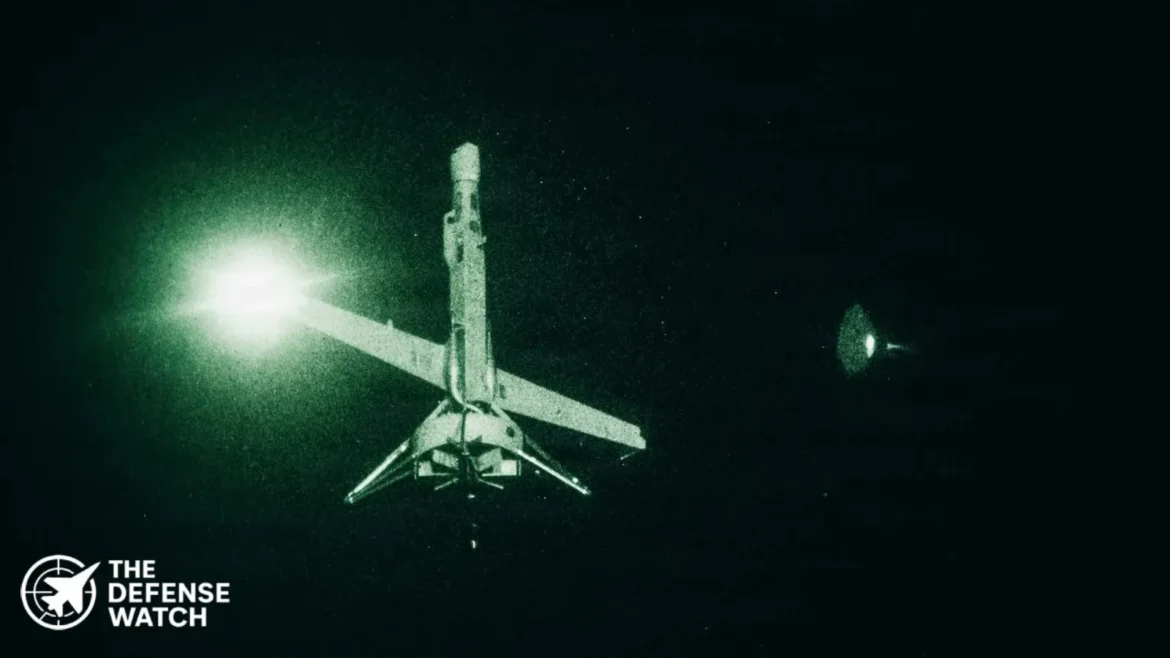
US Marines Test V-BAT Drone From Warship in Nighttime Intelligence Operations
The US Marines tested the V-BAT drone from an amphibious warship at night, using the vertical takeoff and landing UAV for maritime intelligence, surveillance, and reconnaissance (ISR) missions. The flight on January 23, 2026 showed how ship-launched drones can operate from confined decks without runways, opening new options for forward deployed naval forces.
(adsbygoogle = window.adsbygoogle || []).push({});Shipboard Test From USS Portland
Marine Expeditionary Unit Sailors and Marines launched a V-BAT vertical takeoff and landing unmanned aircraft system from the flight deck of the San Antonio-class amphibious transport dock USS Portland during nighttime operations in the Pacific Ocean. The 11th MEU’s flight was one of the first operational uses of this UAV type from an LPD-class ship.
The mission aimed to assess the drone’s performance under limited visibility and tight deck conditions, simulating real world scenarios where runway space is scarce or unavailable.
V-BAT Capabilities and Design
The V-BAT drone is a vertical takeoff and landing platform that transitions to fixed wing flight after liftoff. Its single-engine, ducted-fan design lets it lift off and land straight up and down, then fly efficiently for longer range and endurance.
At just over 10 feet long with about a 9-foot wingspan, the drone is compact enough for ship decks, expeditionary sites, or austere islands. It can fly up to eight hours and carry various payloads, such as high-resolution electro-optical/infrared sensors, synthetic aperture radar, and electronic warfare equipment.
Shield AI’s autonomy software gives the V-BAT navigation and target recognition capability even in GPS-denied or communications-contested environments.
Operational Context and Modernization
Marine Corps leaders aboard the Boxer Amphibious Ready Group see this nighttime test as part of broader efforts to integrate unmanned systems into distributed maritime operations. Concepts like Expeditionary Advanced Base Operations and distributed forces depend on persistent ISR to give commanders a shared picture of activity across dispersed units.
Using V-BAT from amphibious ships directly supports ship-to-shore command and control and helps bridge gaps between sea and land forces in contested areas. With tensions rising globally and potential near-peer competitors investing in anti-access strategies, timely intelligence and targeting data are critical for modern littoral operations.
Drone Integration on Naval Decks
Unlike conventional UAVs that need runways or catapult systems, the V-BAT’s vertical takeoff design reduces logistical burden. Marines and Sailors worked with embarked contractors and deck crews to demonstrate reliable launches and recoveries at night. The flights also involved real-time data links to other ships, showing the potential for a shared maritime sensor picture in complex operational settings.
(adsbygoogle = window.adsbygoogle || []).push({});This mission builds on earlier Marine and Navy experience with the V-BAT, including tests from ships like USS Harpers Ferry and USS Portland in past years. The success of this latest operation adds to the case for using compact VTOL UAVs to extend the reach of naval intelligence and reconnaissance.
What Comes Next
As the Corps and Navy evaluate lessons from this nighttime launch, they will refine shipboard handling, communications integration, and endurance planning for future missions. The effort reflects a larger shift toward organic ISR assets on amphibious and expeditionary vessels, helping Marine units operate with greater situational awareness in contested seas and littoral zones.

U.S. Marines AH-1Z Viper Live-Fire Flight Operations Boost Pacific Readiness
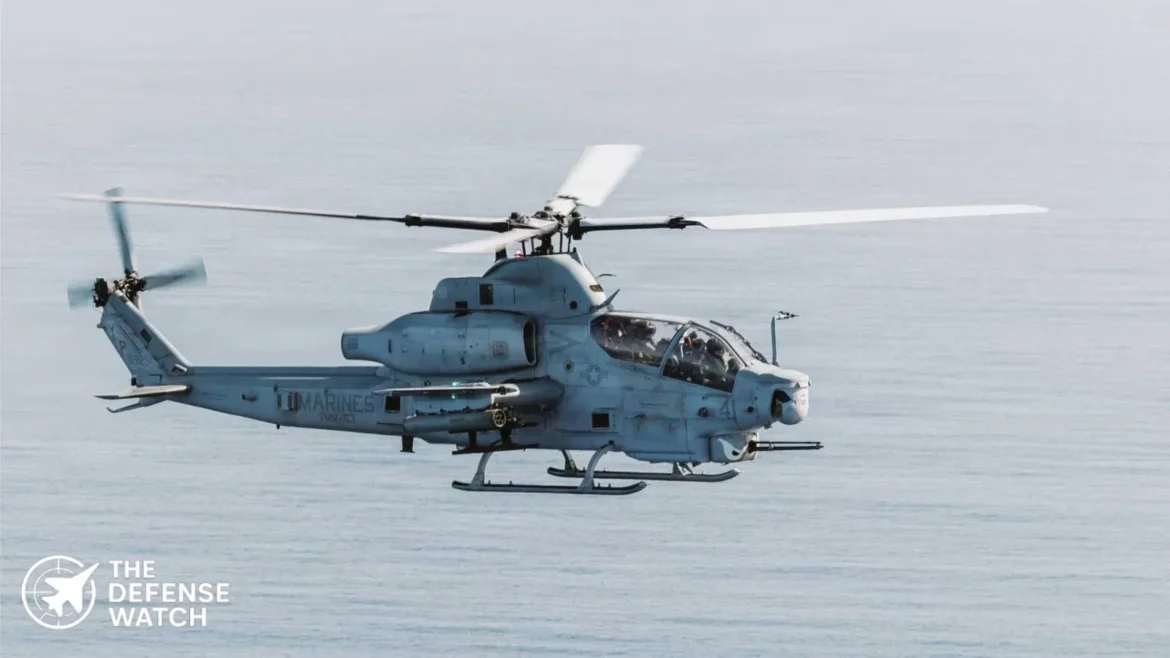
U.S. Marines AH-1Z Viper attack helicopters carried out live-fire flight operations as part of a Pacific deployment, reinforcing expeditionary and amphibious aviation capabilities with the 11th Marine Expeditionary Unit (MEU).
Marine Medium Tiltrotor Squadron 163 (Reinforced), the aviation element of the 11th MEU, flew AH-1Z Vipers from the USS Boxer Amphibious Ready Group in the U.S. 3rd Fleet area on January 23.
The training included weapons employment and integrated flight operations over the Pacific Ocean. It is designed to strengthen air-to-ground and close air support proficiency while operating from an amphibious assault ship at sea.
Advanced Attack Helicopter in Expeditionary Role
The AH-1Z Viper stands as the Marine Corps most advanced attack helicopter. It has a four-bladed composite rotor system, digital cockpit and helmet-mounted display, plus targeting systems that support all-weather operations.
The aircraft is armed with a 20 mm M197 cannon and a suite of precision weapons, including AGM-114 Hellfire missiles, Advanced Precision Kill Weapon System rockets, and AIM-9 Sidewinder air-to-air missiles.
These features make the Viper a flexible asset for close air support, armed reconnaissance and escort missions within Marine Air-Ground Task Forces and joint operations.
Integration at Sea
Conducting live-fire flight operations from amphibious ships tests the Marines ability to operate without fixed land bases. It also requires tight coordination between naval forces and Marine aviation, including deck handling, navigation and weapons employment at sea.
The exercise reflects ongoing efforts to preserve high levels of readiness in contested maritime environments, reinforcing Marine aviation’s expeditionary mission set.
Deployments like this help the 11th MEU project combat power across the Indo-Pacific. Marine leaders have said such training supports deterrence, alliance reassurance and rapid crisis response.
Strategic Context
The Marines have been increasing operational training in the Pacific as part of broader U.S. deterrence and readiness efforts. AH-1Z Vipers have recently fired new precision weapons in exercises such as Steel Knight 25, including the Joint Air-to-Ground Missile (JAGM), highlighting the platform’s evolving strike roles.
This Pacific live-fire operation joins recent Marine aviation activity in other regions, like air-to-air missile drills in the Caribbean, demonstrating a range of combat proficiency and interoperability with naval and joint forces.
US Marines Launch Production of MADIS Counter Drone Vehicles
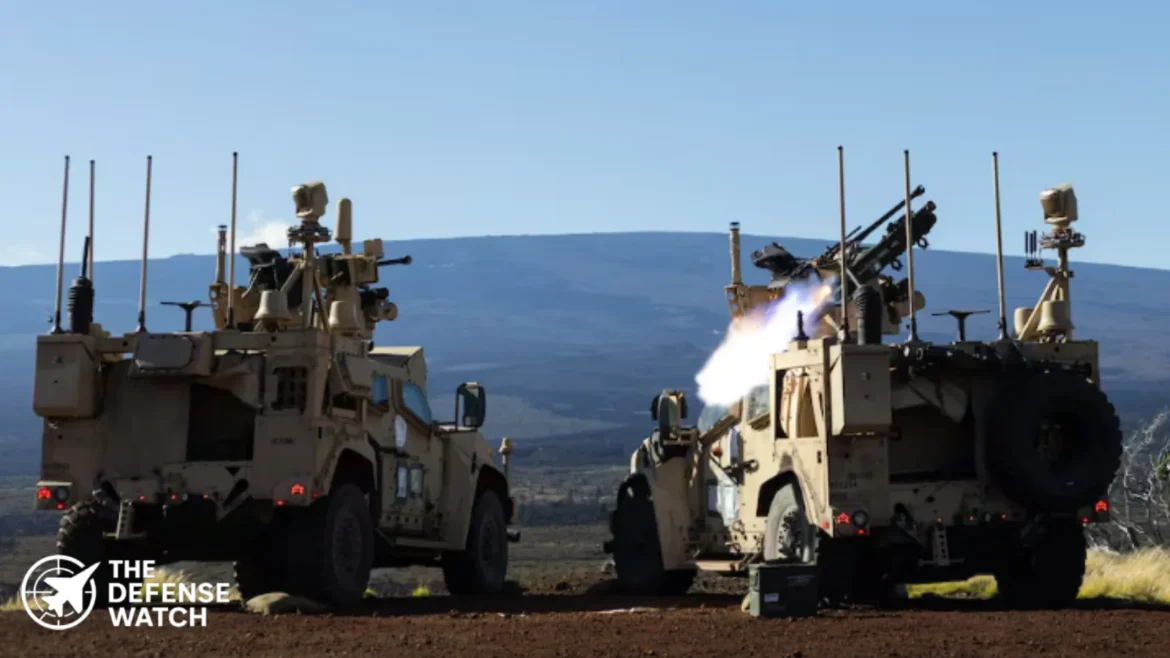
The United States Marine Corps has begun production of its new Marine Air Defense Integrated System, marking a key step in strengthening short range air defense against hostile drones. The system, known as MADIS, is now being built for operational units after several years of testing and evaluation. Production is taking place in the United States, with initial vehicles expected to reach Marine units in the near term.
The move reflects growing concern within the US military over the rapid spread of small unmanned aerial systems on modern battlefields. From surveillance missions to one way attack roles, low cost drones have become a persistent threat to forward deployed forces.
Growing Drone Threat Drives Urgent Need
Small drones have played a major role in recent conflicts, particularly in Eastern Europe and the Middle East. These systems are difficult to detect, fly at low altitudes, and can be launched in large numbers. Traditional air defense systems were not designed to counter such targets, leaving gaps in protection for ground forces.
For the Marine Corps, which often operates from austere and forward locations, the threat is especially serious. Expeditionary bases, amphibious units, and maneuver forces need mobile and layered air defense that can move with them.
The Marine Air Defense Integrated System was developed to meet this requirement. It provides a vehicle mounted solution that can detect, track, and defeat small drones and other low flying threats.
What Is the Marine Air Defense Integrated System
MADIS is built on the Joint Light Tactical Vehicle platform, giving it high mobility and protection. The system uses a combination of sensors, electronic warfare tools, and kinetic weapons to counter aerial threats.
Each MADIS vehicle is equipped with radar and electro optical sensors to spot drones at short range. Once detected, the system can jam control links or navigation signals. If electronic attack is not enough, the vehicle can engage targets with a chain gun or missiles.
This layered approach allows Marines to respond flexibly depending on the type of threat and rules of engagement. The Marine Air Defense Integrated System is designed to operate as part of a wider air defense network, sharing data with other sensors and command nodes.
Transition From Testing to Production
The decision to begin production follows a series of operational tests and user evaluations. Marine air defense units have been working with early versions of MADIS for several years, refining tactics and identifying improvements.
According to defense officials, feedback from these tests confirmed that the system meets operational needs and is ready for fielding. Production vehicles will include updates based on lessons learned during exercises and live fire events.
Initial production quantities are focused on equipping active duty Marine units. Over time, additional vehicles may be assigned to reserve components and deployed forces overseas.
Role Within Marine Corps Force Design
The Marine Corps has been reshaping its force structure under its Force Design initiative. This effort aims to prepare for future conflicts, particularly in contested maritime regions. Air defense against drones and cruise missiles is a key part of this plan.
MADIS fills a critical gap at the short range level. It supports Marine Littoral Regiments, expeditionary advanced bases, and maneuver units operating close to the enemy. By providing organic air defense, the Marine Air Defense Integrated System reduces reliance on joint or allied assets.
The system also supports naval operations. When Marines operate from amphibious ships or temporary shore bases, MADIS can help protect ships, logistics nodes, and command posts from aerial surveillance and attack.
Industry and Program Partners
Several US defense companies are involved in the MADIS program, supplying sensors, weapons, and electronic warfare components. The integration effort brings together proven subsystems into a single mobile platform.
Program officials emphasize that using existing technologies helped speed development and control costs. This approach also allows for future upgrades as new sensors or counter drone tools become available.
The Marine Corps plans to keep MADIS adaptable, with software updates and modular components that can evolve as drone threats change.
Strategic Impact and What Comes Next
The start of production signals that counter drone defense is now a core requirement, not a niche capability. As drones continue to spread among state and non state actors, systems like MADIS are likely to see heavy use.
Looking ahead, the Marine Corps is expected to expand training for air defense Marines and integrate MADIS into large scale exercises. Data sharing with Navy and joint force networks will also be a priority.
The Marine Air Defense Integrated System represents a shift toward mobile, networked air defense at the tactical level. Its production marks a significant milestone in adapting US forces to the realities of modern warfare.
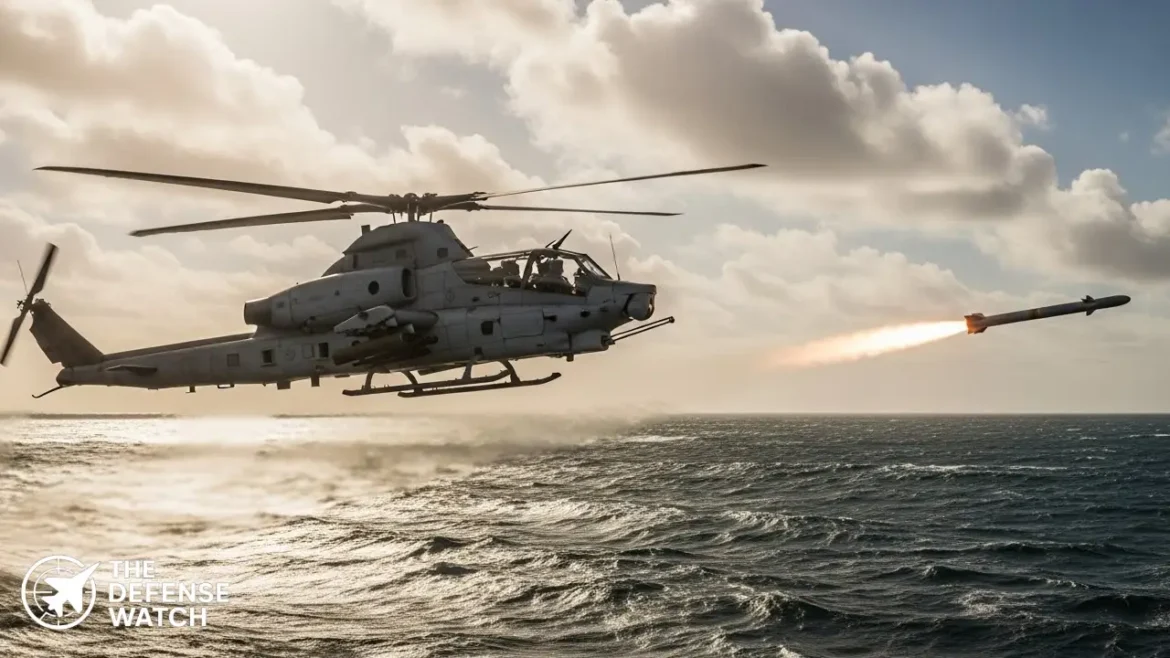
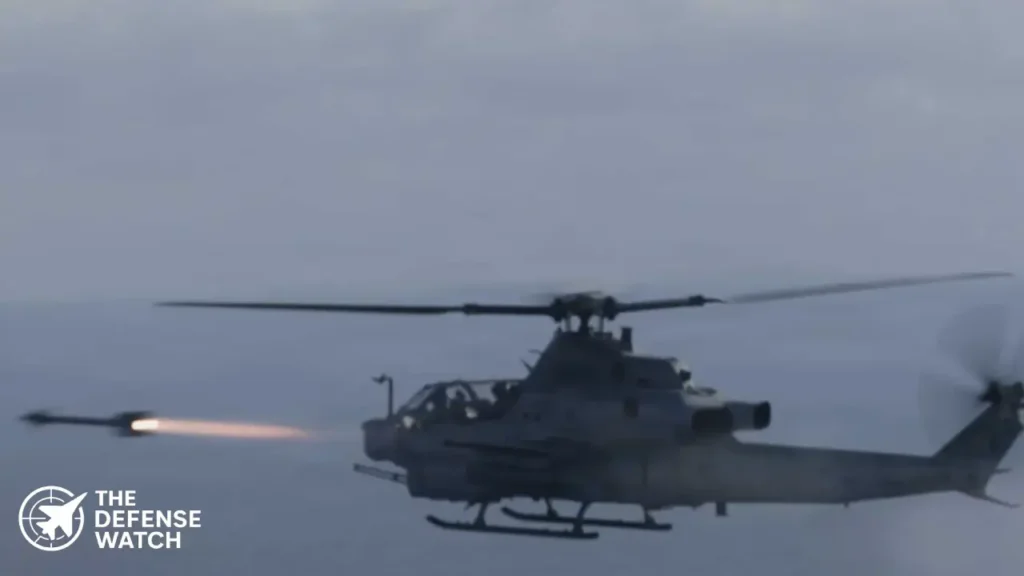
On November 25, 2025, an AH-1Z Viper attack helicopter of the 22nd Marine Expeditionary Unit (22nd MEU) launched an air-to-air missile during a maritime exercise over the Caribbean Sea. The strike — involving an AIM-9 Sidewinder — formed part of U.S. Southern Command’s ongoing Operation Southern Spear, aimed at strengthening regional maritime security and counter-narcotics operations.
Background: AH-1Z Viper and Evolving USMC Mission
The AH-1Z Viper — also known as “Zulu Cobra” — represents the most advanced rotary-wing attack platform in the U.S. Marine Corps’ arsenal. Built for expeditionary and ship-borne operations, the Viper features a four-blade composite rotor system, digital glass cockpit avionics, and modular weapon-pylon architecture that supports 20 mm cannon, unguided rockets, precision-guided missiles such as the AGM-114 Hellfire or JAGM, and, as demonstrated, the AIM-9 Sidewinder air-to-air missile.
Historically, the AH-1Z has focused on close air support, anti-armor, and maritime strike operations — predominantly targeting surface threats. But the Caribbean exercise this month underscores a broader tactical shift: adapting rotary-wing assets for hybrid threat scenarios, including potential aerial threats such as hostile aircraft or armed smuggling drones.
Meanwhile, Operation Southern Spear — the U.S. Southern Command’s regional initiative — aims to disrupt illicit trafficking networks and bolster maritime security across a corridor long exploited by transnational criminal organizations. The deployment of Marine aviation units, including attack helicopters, suggests the USMC is increasingly integrating high-end combat capabilities into what has traditionally been a law-enforcement-dominated mission set.
Details of the November 25 Launch
During the drill, AH-1Z Viper from the 22nd MEU fired an AIM-9 Sidewinder missile at a simulated target, under controlled conditions over the Caribbean Sea. The missile launch was conducted from a ship-borne platform — reportedly the amphibious transport dock USS Fort Lauderdale (LPD-28) — demonstrating the Marine Corps’ ability to project rapid-reaction air-to-air capability from sea-based assets.

Although no real-world engagement was reported, the training event illustrated the Viper’s readiness to address dynamic threats in a maritime-littoral context. Deploying a short-range infrared-guided missile like the Sidewinder allows the Viper to engage low-flying or maneuverable platforms — including potentially hostile aircraft, unmanned aerial systems, or unconventional aerial threats often associated with illicit trafficking operations. According to defense-industry sources, the AIM-9 Sidewinder offers a flight range of up to 15 kilometers and a top speed around Mach 2.3, carrying a 25-pound WDU-31B blast-fragmentation warhead effective against aerial targets.
USMC public affairs and U.S. Southern Command characterized the exercise as a planned component of Operation Southern Spear. While officials did not release specific metrics — such as the number of successful shots fired or interception probabilities — the event itself signals a doctrinal expansion: treating trafficker vessels or aircraft not merely as soft targets, but as potentially armed and evasive threats requiring credible multi-domain deterrence.
Strategic Context: From Littoral Strike to Hybrid Threat Response
The introduction of air-to-air missiles on Marine attack helicopters is a notable development in U.S. military aviation doctrine. Traditionally, helicopters like the AH-1Z have been optimized for ground-target destruction or close air support — roles where Hellfires, rockets, or cannon would suffice. The Sidewinder launch in the Caribbean suggests a broader recognition that modern maritime security challenges often include aerial or air-launched threats, such as smuggling aircraft, UAVs, and potentially hostile small aircraft operating in littoral zones.
This tactical evolution aligns with a broader USMC modernization push. Earlier in 2025, the Marine Corps confirmed plans to equip AH-1Z Vipers with a new long-range strike munition — part of the Red Wolf family — enabling over-the-horizon precision strikes potentially exceeding 200 nautical miles. That upgrade, designed to counter anti-access / area-denial threats, underlines the Viper’s shifting role: from frontline close support to a multi-domain strike asset capable of flexible mission assignments in contested environments.
What This Means for Caribbean Security and Regional Operations
The November 25 live-fire event demonstrates that the U.S. Marine Corps is not merely maintaining readiness, but actively adapting to evolving operational demands in the Western Hemisphere. For regional maritime security — historically dominated by Coast Guard and naval surface forces — the presence of attack helicopters capable of air-to-air and precision strike engagements complicates the operational calculations of criminal networks or potential adversaries.
For littoral states bordering the Caribbean, the recalibrated capability of USMC rotary-wing aviation may act as a deterrent against aerial trafficking, smuggling, or covert flights. It also signals to allied and partner nations that U.S. maritime security operations can extend beyond surface interdiction to include layered air defense and rapid reaction force posture.
What’s Next
In the near term, observers should watch for additional integration of high-end weapons systems — like Red Wolf — on AH-1Z platforms operating in the region. Further live-fire exercises or real-world interdiction missions under Operation Southern Spear may shed light on how often and how effectively such capabilities are employed.
Moreover, evolving regional dynamics — including shifting migration, trafficking routes, and potential contestation by external actors — could further drive demand for flexible, expeditionary, and multi-domain strike assets. If the Viper’s new role proves effective, we may see more Marine aviation deployments across littoral theaters beyond the Caribbean.