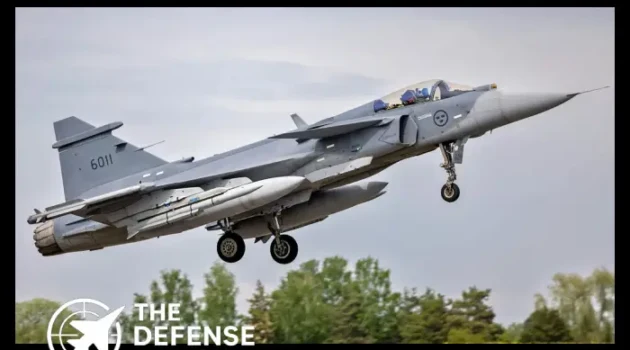
Executive Summary:
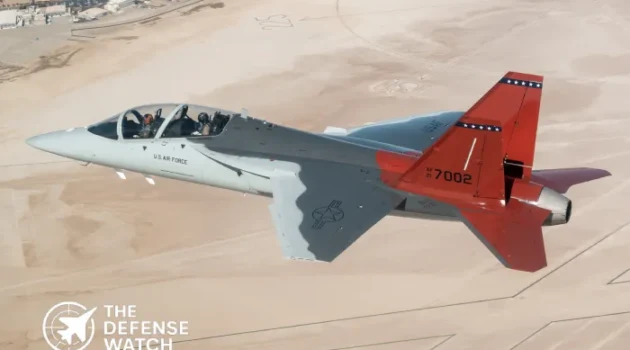
Saab expects production of the Boeing T-7A Red Hawk advanced trainer to accelerate following the U.S. Air Force’s Milestone C approval, which formally cleared the program to enter low rate initial production. The decision is expected to improve production stability at Saab’s Indiana manufacturing facility, which has experienced reduced activity while the aircraft completed development and testing.
Saab T-7A Red Hawk Production Enters A New Phase After Milestone C
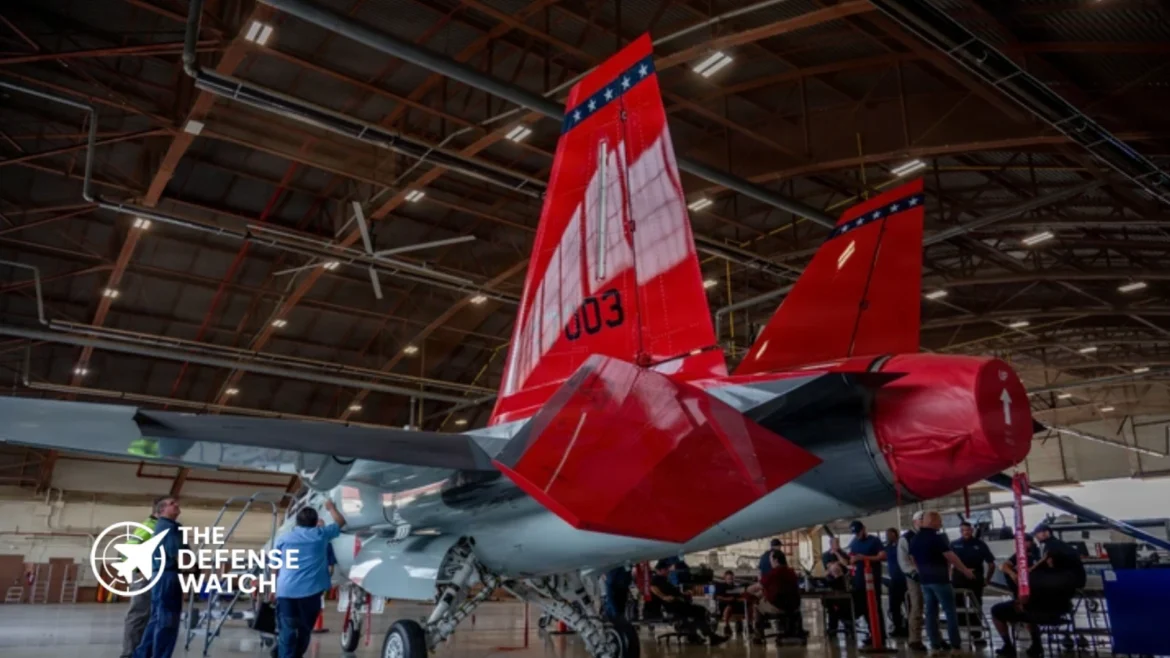
Saab’s T-7A Red Hawk production program is entering a more stable manufacturing phase after the U.S. Air Force approved Milestone C, allowing the advanced trainer aircraft to transition from development into low rate initial production. The approval, announced by the Air Force in May 2026, authorized Boeing to begin building the first production aircraft under a $219 million contract covering 14 aircraft, associated support equipment, simulators, and spares.
For Saab, which manufactures the aircraft’s aft fuselage at its West Lafayette, Indiana facility, the decision represents an important industrial milestone. Company executives have indicated that higher production rates are expected to support a multi year financial recovery for the U.S. operation after several years of lower than anticipated output during program delays.
The T-7A is being jointly developed by Boeing and Saab to replace the U.S. Air Force’s aging T-38 Talon fleet, which has served as the primary advanced jet trainer for more than six decades.
Indiana Factory Positioned For Higher Output
Saab invested heavily in its purpose built manufacturing facility in West Lafayette to support long term T-7A production. The site now serves as the exclusive production location for all production aft fuselage sections after manufacturing transitioned from Sweden to the United States.
Earlier program delays affected manufacturing schedules, resulting in lower factory utilization than originally planned. With Milestone C completed, Saab expects aircraft deliveries to gradually increase as Boeing begins assembling production aircraft.
According to previous Saab statements, the Indiana facility was designed specifically around advanced digital manufacturing techniques developed jointly with Boeing, allowing highly automated assembly and improved production precision.
What Milestone C Actually Means
Milestone C is one of the most significant decision points in the U.S. Department of Defense acquisition process.
Rather than representing full rate production, it authorizes Low Rate Initial Production (LRIP) after developmental testing demonstrates sufficient maturity.
For the T-7A program, the Air Force adopted an incremental production strategy that differs from many previous acquisition programs.
Milestone Significance Development Complete Major engineering and testing objectives achieved Milestone C Approval for Low Rate Initial Production Initial Production First 14 production aircraft ordered IOC Target Operational service beginning in 2027 Full Rate Production Expected after additional operational evaluation The Air Force has stated that each of the first three LRIP production lots will receive separate approval, allowing engineers to incorporate lessons learned before committing to larger production quantities. That phased approach is intended to reduce technical and manufacturing risk while maintaining delivery schedules.
Why The T-7A Matters To The U.S. Air Force
The Red Hawk represents a substantial modernization of pilot training.
Unlike the T, 38 Talon, which entered service during the Cold War, the T-7A was designed using digital engineering techniques and incorporates modern avionics, open architecture systems, and training capabilities intended to prepare pilots for fifth and future sixth generation aircraft.
The aircraft supports training for future operators of platforms including:
- F, 35 Lightning II
- F, 22 Raptor
- F, 15EX Eagle II
- B, 21 Raider
Its digital design also enables software updates and future capability enhancements more efficiently than legacy trainer aircraft.
Industrial And Strategic Importance
Beyond replacing the T-38, the T-7A has become an important example of how the Pentagon is attempting to modernize defense acquisition.
The program has faced challenges, including ejection seat redesigns, flight control software improvements, and schedule delays. Rather than immediately transitioning into large scale manufacturing, the Air Force adopted an incremental production strategy intended to reduce concurrency risk.
That approach reflects broader acquisition reforms emphasizing testing before large procurement commitments. While it slows initial production growth, it reduces the likelihood of expensive retrofits after aircraft enter service.
For Saab, sustained production at the Indiana facility also strengthens its long term U.S. industrial footprint. The company has invested significantly in domestic manufacturing capacity, positioning itself as a supplier within the American defense industrial base rather than solely as a foreign defense contractor.
Outlook For Production
With Milestone C complete, Boeing and Saab can now begin increasing production in line with Air Force procurement decisions.
Initial Operational Capability remains targeted for 2027, while the full program is expected to eventually replace hundreds of T, 38 trainers across multiple Air Education and Training Command bases.
Although production will expand gradually rather than immediately reaching full capacity, Saab’s Indiana facility is expected to benefit from more predictable manufacturing schedules and improved financial performance as additional production lots are approved.
Executive Summary:
Saab has secured a SEK 10.1 billion (approximately $1 billion) contract to deliver two GlobalEye airborne early warning and control (AEW&C) aircraft to an undisclosed Middle Eastern customer. Deliveries are scheduled for 2030, highlighting continued international demand for advanced airborne surveillance platforms capable of monitoring air, land, and maritime domains simultaneously.
Saab Secures New GlobalEye AEW&C Order From Middle East Customer
Saab has announced a new GlobalEye AEW&C contract valued at SEK 10.1 billion, covering the delivery of two aircraft to a customer in the Middle East. The Swedish defense company confirmed the order in an official statement, adding that deliveries are expected to begin in 2030.
The company did not identify the customer, citing national security considerations and the sensitive nature of defense procurement. Saab also stated that no additional information regarding the purchasing nation will be released.
The announcement represents another significant export success for Saab’s flagship airborne early warning platform, which has gained increasing attention as militaries seek broader situational awareness across multiple operational domains.
Saab Highlights Growing International Demand
Commenting on the agreement, Saab President and CEO Micael Johansson said the order demonstrates continued confidence in the platform’s operational performance.
“This order underscores our commitment to providing customers with mission-proven, multi-domain AEW&C capability. The increasing international interest in GlobalEye reflects its effectiveness and reliability in modern air defence operations.”
The contract further expands Saab’s backlog at a time when governments worldwide are investing heavily in intelligence, surveillance, reconnaissance (ISR), and integrated air defense capabilities.
What Is GlobalEye?
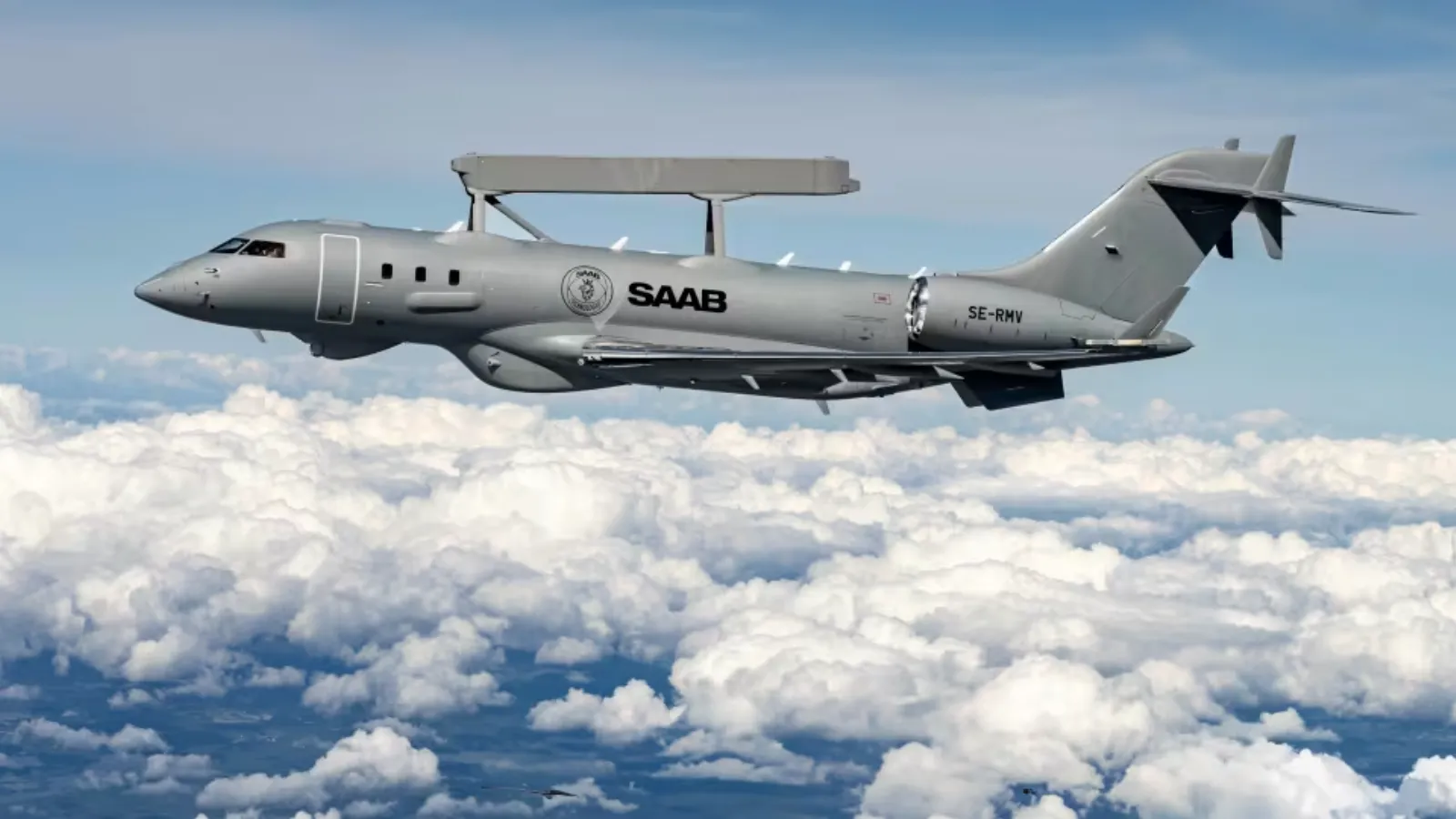
GlobalEye is Saab’s latest-generation Airborne Early Warning and Control (AEW&C) system designed to provide long-range surveillance across air, maritime, and ground environments from a single aircraft.
Built on the Bombardier Global 6000/6500 business jet platform, the aircraft combines multiple active and passive sensors with advanced mission systems to deliver persistent battlefield awareness.
Rather than focusing solely on airborne threats, GlobalEye is designed as a multi-domain surveillance platform, allowing military commanders to monitor aircraft, ships, cruise missiles, drones, and selected ground targets simultaneously.
Key Capabilities
Capability Details Platform Bombardier Global 6000/6500 Primary Radar Erieye ER Active Electronically Scanned Array (AESA) Mission Airborne Early Warning & Control (AEW&C) Surveillance Domains Air, Sea, and Land Detection Long-range air and maritime surveillance Mission Roles Air defense, ISR, command and control, maritime patrol support Delivery Timeline 2030 Multi-Domain Surveillance Supports Modern Air Defense
Unlike legacy airborne warning aircraft optimized primarily for tracking aircraft, GlobalEye integrates several sensors that can detect and identify threats across multiple operational environments.
The system combines:
- Erieye Extended Range AESA radar
- Maritime surveillance radar
- Electro-optical sensors
- Electronic support measures
- Advanced command-and-control mission systems
This sensor fusion allows military operators to generate a comprehensive operational picture and distribute real-time information to air defense networks, naval forces, and ground commanders.
The aircraft also supports network-enabled operations, enabling faster decision-making during complex military operations involving multiple services.
Why This Contract Matters
The latest order reflects a broader trend in global defense procurement.
Many countries are increasing investments in airborne early warning platforms as the proliferation of long-range missiles, unmanned aircraft systems, and electronic warfare capabilities places greater emphasis on early detection.
For Middle Eastern militaries, maintaining continuous awareness over large areas of airspace and maritime approaches has become increasingly important because of evolving regional security challenges.
Modern AEW&C aircraft significantly extend radar coverage beyond what ground-based radar installations alone can provide, particularly against low-flying aircraft, cruise missiles, and unmanned systems.
Strategic Importance For Saab
From Saab’s perspective, the contract strengthens one of its fastest-growing high-end defense product lines.
GlobalEye has become one of the company’s flagship export programs, complementing other major Saab systems including the Gripen fighter, Erieye airborne radar family, and advanced command-and-control solutions.
The new order also demonstrates that demand for specialized ISR aircraft remains strong despite growing investments in satellites and unmanned surveillance systems.
Airborne early warning aircraft continue to offer operational flexibility by rapidly repositioning surveillance coverage where commanders need it most, while providing direct support to tactical operations.
Operational Implications For Regional Security
The acquisition of two additional GlobalEye aircraft could substantially improve the purchasing nation’s ability to coordinate integrated air and missile defense operations.
In modern conflicts, airborne early warning platforms serve as airborne command centers that detect threats earlier than many surface-based systems, allowing interceptors and ground defenses additional reaction time.
Their value has increased as militaries confront:
- Long-range cruise missiles
- Low-observable drones
- Ballistic missile support operations
- Maritime security missions
- Joint coalition operations
For U.S. and allied defense planners, continued exports of interoperable airborne surveillance systems contribute to stronger regional air defense architectures and improve information sharing among partner nations.
Rather than replacing ground-based radar networks, platforms like GlobalEye extend sensor coverage, improve redundancy, and help close surveillance gaps over large geographic areas.
Outlook
Saab’s latest GlobalEye order reinforces sustained international demand for advanced airborne surveillance capabilities amid growing regional security concerns.
With deliveries planned for 2030, the aircraft will provide the undisclosed Middle Eastern customer with enhanced multi-domain situational awareness and strengthen its ability to support integrated air defense, maritime surveillance, and joint military operations.
As governments continue investing in networked command-and-control capabilities, platforms such as GlobalEye are expected to remain central components of future air defense strategies.
Executive Summary:
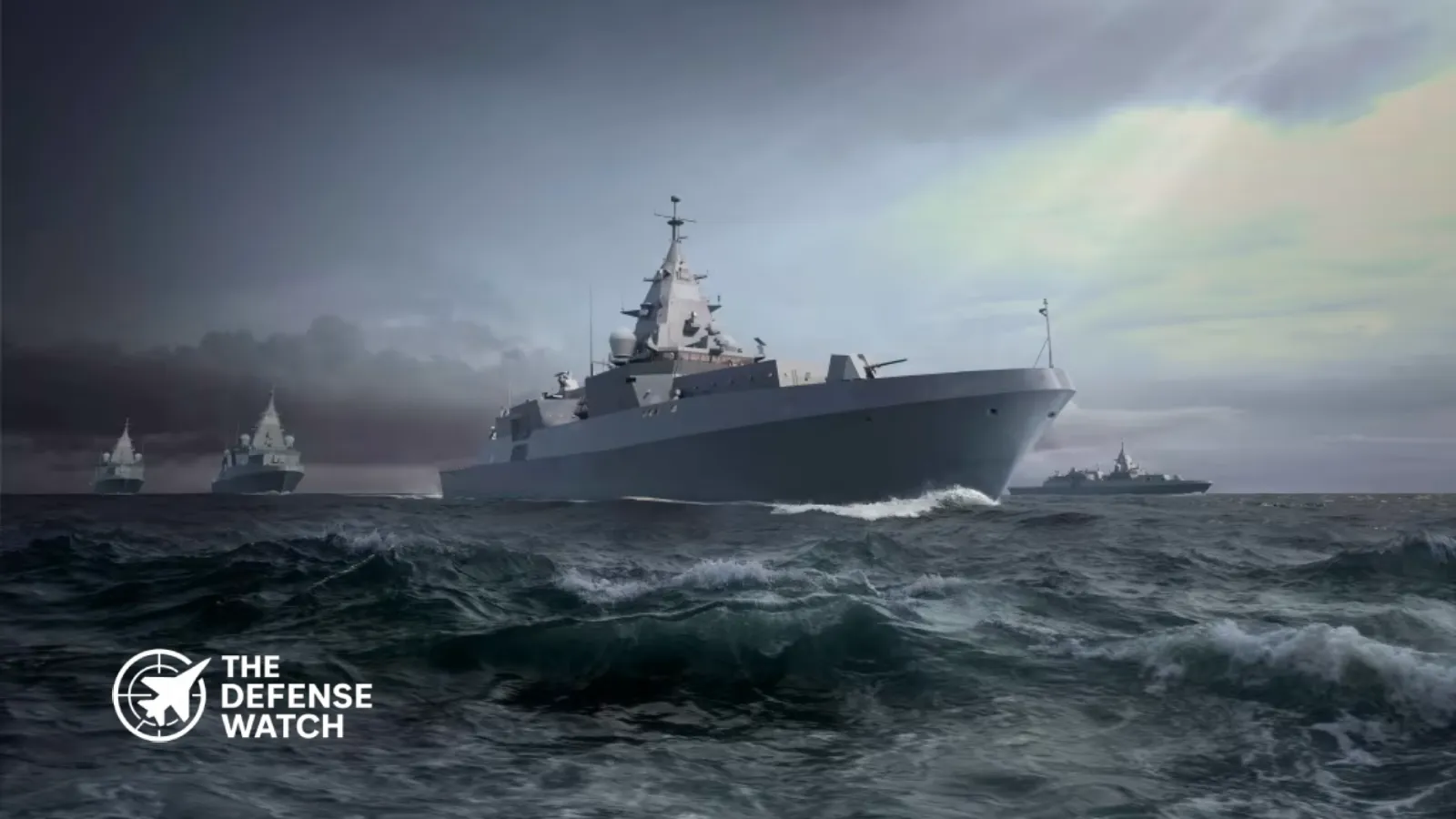
Saab has secured an approximately SEK 8.7 billion (about US$830 million) contract from Germany’s TKMS to equip four new MEKO A 200 DEU frigates for the German Navy. The agreement includes advanced combat management systems, radar sensors, composite superstructures, and an option for additional ships, significantly strengthening Germany’s future maritime air defense, anti submarine, and surface warfare capabilities.
Saab Secures Major Combat Systems Contract For Germany’s Next Generation Frigates
Saab has received a major German Navy contract valued at approximately SEK 8.7 billion (around US$830 million) to deliver and integrate advanced combat systems, radar sensors, and composite structures for four new MEKO A 200 DEU frigates. The announcement was made by Saab following the signing of an agreement with German naval shipbuilder thyssenkrupp Marine Systems (TKMS), the prime contractor for the program.
The deliveries are scheduled between 2029 and 2032, supporting Germany’s long term naval modernization strategy and strengthening the Bundeswehr’s maritime capabilities across the Baltic Sea, North Sea, and broader NATO operational areas.
Saab Will Supply The Frigates’ Core Combat Systems
Under the agreement, Saab will provide a broad package of mission critical systems that form the operational backbone of the new frigates.
The contract includes:
| System | Purpose |
|---|---|
| 9LV Combat Management System | Coordinates all combat operations aboard the ship |
| Fire Control System | Controls weapon engagement against air and surface threats |
| Sea Giraffe 4A Fixed Face Radar | Long range air and surface surveillance |
| Sea Giraffe 1X Radar | Lightweight multi mission surveillance and target tracking |
| Passive Sensor Suite | Electronic surveillance and threat detection |
| Composite Superstructure | Reduces weight while improving survivability and radar performance |
The agreement also contains an option allowing TKMS to expand Saab’s scope should additional frigates be ordered in the future.
Strengthening Germany’s Naval Air, Surface And Undersea Warfare
According to Saab President and CEO Micael Johansson, the contract reflects the company’s long standing partnership with Germany and will substantially improve the German Navy’s operational effectiveness.
The integrated combat system is designed to support three primary mission areas:
- Anti air warfare
- Anti submarine warfare
- Anti surface warfare
By combining advanced surveillance radars with Saab’s 9LV Combat Management System, the frigates will be able to detect, classify, track, and engage multiple threats simultaneously while coordinating with allied NATO naval forces.
The Importance Of The 9LV Combat Management System
The 9LV Combat Management System has become one of Saab’s flagship naval products and is currently deployed aboard multiple allied navies worldwide.
The system integrates:
- Radar inputs
- Electronic warfare sensors
- Weapons management
- Tactical data links
- Command decision support
- Fire control coordination
Rather than operating individual sensors independently, the combat management system fuses information into a single operational picture, allowing commanders to react more quickly to evolving threats.
This capability has become increasingly important as modern naval warfare involves simultaneous attacks from missiles, drones, aircraft, submarines, and surface vessels.
Sea Giraffe Radars Expand Situational Awareness
A key element of Saab’s delivery is the integration of two advanced radar systems.
Sea Giraffe 4A Fixed Face
The Sea Giraffe 4A is Saab’s long range AESA surveillance radar designed to provide continuous 360 degree coverage. It supports early warning against aircraft, cruise missiles, helicopters, unmanned systems, and surface contacts.
Its fixed face architecture eliminates the need for rotating antennas, improving update rates and enabling faster target tracking.
Sea Giraffe 1X
Complementing the larger radar is the compact Sea Giraffe 1X, a lightweight multi mission sensor optimized for detecting:
- Low flying aircraft
- Small drones
- Fast attack craft
- Sea skimming missiles
Together, these sensors provide layered surveillance that enhances the frigate’s ability to respond to complex maritime threats.
Why The Contract Matters Beyond Germany
While the agreement is a major industrial success for Saab and TKMS, its broader significance lies in NATO’s ongoing effort to modernize European naval forces amid a rapidly changing security environment.
European navies are investing heavily in:
- Integrated air and missile defense
- Anti submarine warfare
- Network centric naval operations
- Maritime surveillance
- Interoperability across NATO fleets
Germany’s new MEKO A 200 DEU frigates are expected to become among the country’s most capable surface combatants, replacing aging platforms while improving operational readiness for collective defense missions.
The inclusion of Saab’s combat management architecture also enhances interoperability with other NATO navies that already operate the 9LV system or compatible command and control networks. This simplifies joint operations, improves information sharing, and supports multinational maritime task groups.
Industrial Cooperation Between Saab And TKMS
The frigates will be constructed in Germany by TKMS, while Saab will provide high value combat systems and specialized naval technologies.
The cooperation highlights Europe’s increasingly integrated defense industrial base, where shipbuilders and technology providers combine expertise to deliver complex warships.
Composite superstructures supplied by Saab also contribute to lower vessel weight, improved structural durability, and reduced radar signature compared with traditional steel designs.
Program Overview
Item Details Customer TKMS (thyssenkrupp Marine Systems) End User German Navy Contract Value Approximately SEK 8.7 billion (about US$830 million) Ships Four MEKO A 200 DEU frigates Delivery Period 2029 to 2032 Major Systems 9LV Combat System, Fire Control System, Sea Giraffe 4A, Sea Giraffe 1X, passive sensors, composite superstructures Option Additional frigates may be included Strategic Outlook
The Saab contract represents one of the company’s largest recent naval awards and reinforces its position as a leading supplier of integrated maritime combat systems in Europe.
For Germany, the program supports long term naval modernization while expanding the fleet’s ability to conduct air defense, anti submarine warfare, and surface combat operations within NATO maritime forces. As European defense spending continues to rise, partnerships between companies such as Saab and TKMS are expected to play an increasingly important role in delivering advanced capabilities to allied navies.
Executive Summary:
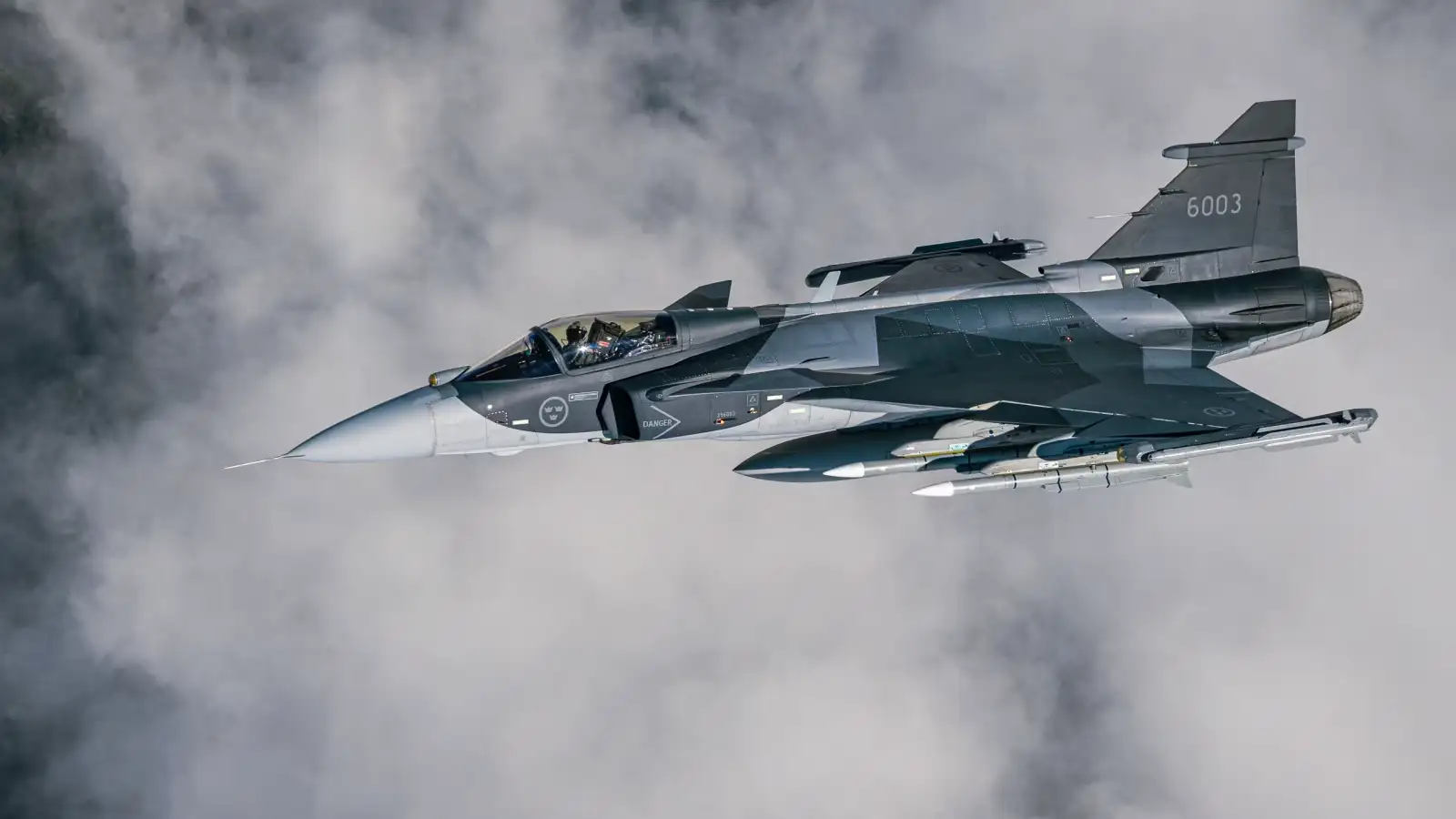
Sweden has placed an order with Saab for 16 Gripen E multirole fighter aircraft that will ultimately be transferred to Ukraine under a government backed procurement program valued at approximately SEK 24.6 billion (about US$2.6 billion). Deliveries are scheduled for 2029 through 2030, marking one of the most significant long term investments in rebuilding Ukraine’s future combat aviation capability.
Saab Gripen E Contract Marks Major Step In Ukraine’s Long Term Air Force Modernization
Saab has signed a contract with the Swedish Defence Materiel Administration (FMV) to supply 16 Gripen E fighter aircraft for Ukraine, representing one of the largest Western combat aircraft commitments announced for Kyiv since Russia’s full scale invasion. The agreement, valued at approximately SEK 24.6 billion (around US$2.6 billion), was announced by Saab and will be recorded in the company’s third quarter 2026 order intake.
According to Saab, deliveries to FMV are scheduled between 2029 and 2030, after which the aircraft will be transferred to Ukraine. The package includes the fighter aircraft, spare parts, associated equipment, and logistical support required to establish operational capability.
Saab President and CEO Micael Johansson said the agreement will provide Ukraine with a modern combat aircraft capable of significantly strengthening its air defense while supporting the country’s long term security.
I am deeply proud that Sweden and Saab can now enable the provision of Gripen E to Ukraine, bringing a world class fighter that will transform the Ukrainian Air Force’s capability, Johansson said in Saab’s official announcement.
Contract Includes Aircraft, Spare Parts And Support Equipment
The agreement covers substantially more than the aircraft themselves.
The procurement package includes:
Item Details Aircraft 16 Saab Gripen E fighters Contract Value Approximately SEK 24.6 billion (about US$2.6 billion) Customer Swedish Defence Materiel Administration (FMV) End User Ukrainian Air Force Deliveries 2029 to 2030 Included Items Spare parts, support equipment, associated systems The procurement through Sweden’s FMV allows Stockholm to manage acquisition and delivery before transferring the aircraft to Ukraine as part of its long term military assistance program.
Why The Gripen E Matters
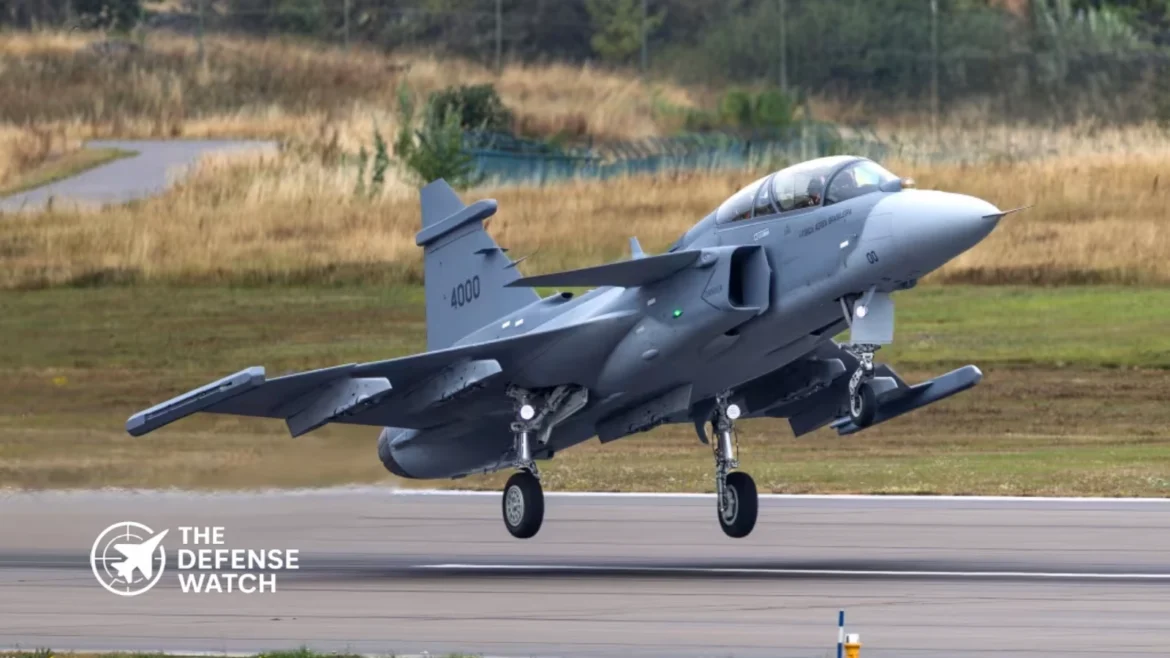
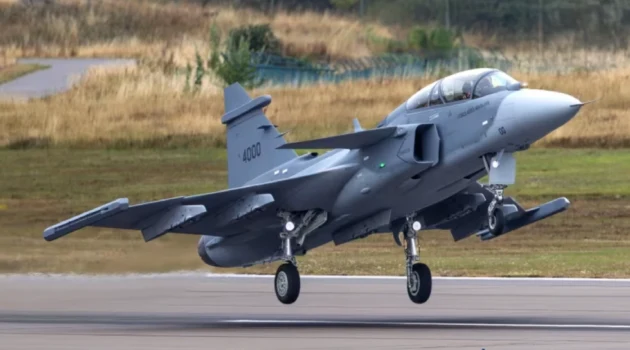
The Gripen E represents Saab’s latest generation multirole fighter and incorporates numerous improvements over earlier Gripen C and D variants.
Among its principal characteristics are:
- Active Electronically Scanned Array (AESA) radar
- Advanced electronic warfare suite
- Extended combat range
- Increased payload capacity
- Modern sensor fusion architecture
- Software driven open mission system
- Network enabled operations
Unlike many heavier Western fighters, the Gripen was designed from the outset to operate under dispersed conditions.
According to Saab, the aircraft can conduct missions from short runways, highways, and temporary operating locations, enabling continued operations even if major air bases come under attack.
This concept aligns closely with Sweden’s long standing doctrine of dispersed air operations developed during the Cold War.
Designed For High Availability In Contested Environments
A distinguishing feature of the Gripen family is its emphasis on rapid turnaround and simplified maintenance.
Saab states that the aircraft requires comparatively small maintenance crews while enabling quick rearming and refueling between sorties.
These characteristics become particularly valuable during prolonged high intensity conflicts where infrastructure may be degraded and maintenance resources remain limited.
The Gripen E’s software centric architecture also enables continuous capability upgrades without requiring extensive redesign of core aircraft systems, allowing operators to integrate new weapons and sensors more efficiently over the aircraft’s service life.
Strategic Implications For Ukraine
Although deliveries will not begin until 2029, the contract reflects planning beyond Ukraine’s immediate wartime requirements.
Rather than addressing today’s operational needs alone, the agreement contributes to building the future structure of the Ukrainian Air Force around modern Western aircraft capable of integrating with NATO compatible command, communications, and weapons systems.
The timeline also provides an opportunity for Ukrainian pilots, maintenance personnel, and logistics specialists to complete extensive training before aircraft enter operational service.
Transitioning from Soviet designed fighters to advanced Western platforms requires not only pilot conversion but also entirely new maintenance procedures, spare parts supply chains, mission planning software, technical documentation, and weapons integration.
Broader Significance For European Defense
The agreement carries importance beyond Ukraine.
For Sweden, it represents another demonstration of Stockholm’s expanding role as a supplier of advanced military capability following its accession to NATO.
For Saab, the contract secures a major production commitment for the Gripen E program while reinforcing the aircraft’s relevance in Europe’s evolving defense landscape.
From a broader industrial perspective, sustained Gripen production helps preserve European combat aircraft manufacturing capacity alongside other major fighter programs. Maintaining multiple design and production lines across Europe supports resilience, competition, and technological innovation within the continent’s aerospace sector.
Operational Considerations
Even after delivery, integrating a new fighter fleet is a multi year undertaking.
Ukraine will need to establish:
- Maintenance facilities
- Ground support infrastructure
- Spare parts inventories
- Pilot conversion programs
- Weapons integration
- Mission planning systems
- Technical training pipelines
Because the Gripen E is designed for interoperability with a wide range of NATO compatible weapons and data links, it offers flexibility for future capability expansion as Ukraine continues modernizing its armed forces.
Its dispersed operating concept could also improve survivability by reducing reliance on a limited number of large air bases that remain vulnerable to long range missile attacks.
Looking Ahead
The Saab contract signals that Western support for Ukraine increasingly extends beyond immediate battlefield requirements toward long term force development.
While the first aircraft will not arrive until the end of the decade, the agreement establishes the framework for introducing a modern fighter capability designed for sustained operations in contested environments. Combined with pilot training, logistical preparation, and future weapons integration, the Gripen E program is expected to become a key element of Ukraine’s long term air power modernization strategy.
Executive Summary:
Denmark has placed a permanent order for Saab’s Giraffe 1X radar systems after successfully employing the technology during major international security summits in Copenhagen. The purchase follows an emergency deployment in which Saab delivered operational systems within days, providing air surveillance and counter-drone coverage for critical civilian and military infrastructure. The acquisition highlights the growing importance of rapidly deployable radar systems for homeland security and protection against unmanned aerial threats.
Saab Secures Permanent Danish Order For Giraffe 1X Radar Systems
Saab has received a permanent order from Denmark for several Giraffe 1X radar systems following their successful deployment during high-profile security operations in Copenhagen.
According to Saab, the Danish Ministry of Defence Acquisition and Logistics Organisation (DALO) initially engaged the company ahead of major European security summits held in Copenhagen in October 2025. The radars were deployed to monitor both civilian and military infrastructure and provide enhanced air surveillance capabilities during the events.
After operating the systems for more than six months, Danish authorities elected to transition from temporary use to permanent ownership, purchasing systems that had previously been rented from Saab.
The order underscores increasing European demand for rapidly deployable counter-drone and low-altitude surveillance solutions amid a growing threat environment.
-
Rapid Deployment Supported Summit Security Operations
One of the most notable aspects of the deployment was the speed at which the systems became operational.
Saab stated that it delivered the initial Giraffe 1X systems just three days after receiving the request from DALO. The company credited close cooperation among Swedish and Danish authorities for enabling the accelerated deployment timeline.
During the summits, military and industry participants from several NATO nations supported security operations across Denmark. The Swedish Armed Forces deployed Saab’s anti-drone capabilities, which incorporate the Giraffe 1X radar as a core sensor component.
The systems provided continuous airspace monitoring and drone detection around multiple protected locations throughout the event period.
What Is The Giraffe 1X?
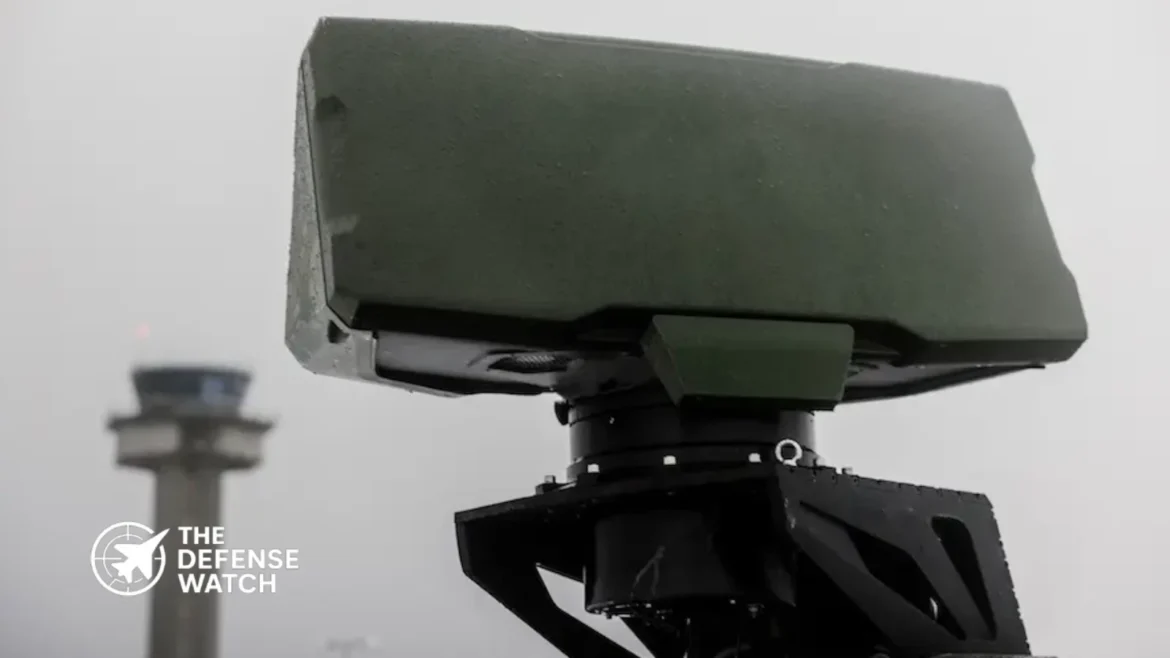
The Giraffe 1X is Saab’s smallest member of the Giraffe radar family but is designed to provide advanced three-dimensional air surveillance in highly mobile and expeditionary environments.
The radar was deployed in Saab’s Compact Radar Module (CRM) configuration, a self-contained system requiring minimal supporting infrastructure.
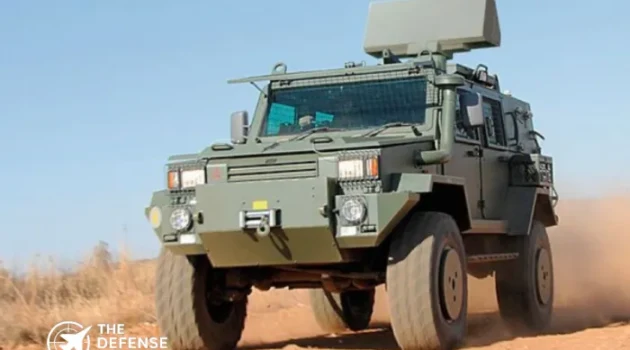
This configuration allows operators to rapidly relocate the radar between different platforms, including:
- Pickup trucks
- Tactical vehicles
- Fixed buildings
- Temporary security installations
- Mobile command posts
The modular architecture enables military and security forces to establish air surveillance coverage quickly during emergencies, major public events, military exercises, or critical infrastructure protection missions.
Key Giraffe 1X Capabilities
The radar is optimized for detecting and tracking a wide range of aerial threats, particularly those operating at low altitude.
Capability Description 3D Air Surveillance Provides range, altitude, and bearing data Drone Detection Tracks small unmanned aerial systems (UAS) Fast Refresh Rate Updates the full search volume every second Target Classification Identifies different categories of aerial targets Mobile Deployment Can be mounted on multiple platforms High-Clutter Performance Operates effectively in complex urban environments According to Saab, the radar can detect and track:
- Small UAVs and commercial drones
- Fixed-wing aircraft
- Rotary-wing aircraft
- Fast-moving missiles
- Rockets, artillery, and mortar (RAM) threats
The ability to identify small drones in cluttered environments is particularly relevant as military and civilian authorities face increasing risks from low-cost unmanned systems.
Why The Danish Acquisition Matters
The Danish purchase reflects a broader shift across NATO toward persistent counter-drone surveillance and rapid-response air defense networks.
Russia’s war in Ukraine has demonstrated how inexpensive drones can threaten military installations, logistics hubs, command centers, and critical infrastructure. As a result, European governments are investing heavily in sensors capable of detecting small aerial threats before they reach protected targets.
Unlike traditional air defense radars designed primarily for aircraft and larger missiles, modern counter-UAS operations require systems capable of tracking very small targets flying at low altitude and often within urban environments.
The Giraffe 1X addresses this requirement by combining mobility, rapid deployment, and high update rates in a compact package.
For countries such as Denmark, which must secure military facilities, ports, energy infrastructure, and major international events, deployable surveillance systems provide flexibility that fixed radar installations cannot always deliver.
Growing Demand For Mobile Counter-Drone Sensors
The acquisition also reflects a wider trend in NATO procurement priorities.
European militaries increasingly seek sensor networks that can be rapidly moved and integrated into layered air defense architectures. Mobile radars like the Giraffe 1X can fill surveillance gaps, support expeditionary operations, and contribute targeting data to broader command-and-control systems.
The Compact Radar Module concept further reduces deployment complexity by allowing operators to establish radar coverage without constructing dedicated infrastructure.
This capability is particularly valuable during temporary operations, disaster response missions, border security activities, and protection of major political gatherings.
As drone technology continues to proliferate, demand for rapidly deployable surveillance systems is expected to remain a key area of defense investment across Europe and the wider NATO alliance.
Strategic Implications For NATO Air Surveillance
The Danish order illustrates how counter-drone technologies are transitioning from event-specific security assets to permanent defense capabilities.
By converting rented systems into operational equipment, Denmark is strengthening its ability to maintain continuous surveillance of critical sites while improving resilience against emerging aerial threats.
For Saab, the order further validates the operational utility of the Giraffe 1X and highlights growing international interest in compact radar systems capable of supporting both military and homeland security missions.
As NATO members continue adapting to evolving air and drone threats, mobile radar systems are likely to play an increasingly important role in layered defense strategies across Europe.
Executive Summary:
Saab has unveiled the new Giraffe AMB D radar at Eurosatory 2026 in Paris, introducing the latest evolution of its long-serving Giraffe Air and Missile Defense radar family. The system combines a redesigned AESA radar array with a modern software-defined architecture to improve detection, tracking, mobility, and upgradeability against evolving airborne threats. The launch reflects growing demand among militaries for adaptable sensors capable of supporting both tactical and strategic air defense missions.
Saab Introduces Giraffe AMB D Radar At Eurosatory 2026
Saab has unveiled the Giraffe AMB D radar during the Eurosatory 2026 defense exhibition in Paris, presenting what the company describes as the next-generation development of its combat-proven Giraffe Airborne and Missile Defense radar family.
The new system builds upon more than two decades of operational experience with the Giraffe AMB platform, which has been fielded by numerous armed forces worldwide for air surveillance, counter-air operations, and air defense missions.
According to Saab, Giraffe AMB D combines a newly designed Active Electronically Scanned Array (AESA) radar with an updated software architecture and modern processing capabilities intended to enhance target detection, tracking accuracy, and operational flexibility.
Carl-Johan Bergholm, Head of Saab’s Surveillance business area, said the radar demonstrates how advances in sensor technology can improve capability while reducing system footprint and deployment requirements.
-
New AESA Architecture Designed For Greater Flexibility
At the core of the Giraffe AMB D is a redesigned AESA radar array that leverages modern digital processing technologies to expand surveillance performance.
Unlike traditional mechanically scanned systems, AESA radars electronically steer beams at extremely high speeds, allowing operators to detect, track, and classify multiple targets simultaneously while improving resistance to electronic interference.
Saab says the new radar has been engineered to support a broad range of missions across multiple operational environments. These include:
- Air surveillance
- Air defense command and control
- Counter-unmanned aerial system (C-UAS) operations
- Cruise missile detection
- Battlefield situational awareness
- Protection of military bases and critical infrastructure
The software-defined architecture is a significant component of the design philosophy. Rather than relying primarily on hardware upgrades, future capability improvements can be delivered through software updates, reducing lifecycle costs and enabling faster adaptation to emerging threats.
Enhanced Detection And Tracking Performance
While Saab has not publicly disclosed detailed performance specifications for the Giraffe AMB D, the company states that the radar provides extended detection capability and improved target tracking compared with previous configurations.
Modern air defense environments increasingly require sensors capable of tracking a diverse set of targets simultaneously. These include:
Threat Type Operational Challenge Small UAVs Low radar cross-section and slow speed Cruise missiles Low-altitude flight profiles Fast jets High-speed maneuvering Helicopters Terrain masking Rockets and artillery Short warning timelines Future autonomous systems High target density The combination of upgraded radar hardware and modern signal processing is intended to improve the radar’s ability to maintain accurate tracks across these varied threat categories.
This capability is becoming increasingly important as military forces confront more complex airspaces characterized by drones, loitering munitions, cruise missiles, and conventional aircraft operating simultaneously.
Mobility Remains A Key Design Requirement
A notable feature of the Giraffe radar family has been its emphasis on mobility, and Saab appears to have maintained that focus with the Giraffe AMB D.
The company says the new system delivers a reduced footprint while preserving operational capability. This approach aligns with lessons emerging from recent conflicts, where fixed radar installations have become increasingly vulnerable to long-range precision strikes.
Mobile radar systems offer several advantages:
- Faster deployment and relocation
- Improved survivability
- Reduced logistical burden
- Greater support for expeditionary operations
- Enhanced integration with maneuver forces
For NATO and partner nations pursuing dispersed operations concepts, mobile surveillance assets are becoming increasingly important components of integrated air and missile defense architectures.
Why The Giraffe AMB D Matters
The introduction of the Giraffe AMB D comes amid a period of significant investment in air and missile defense across Europe, North America, and the Indo-Pacific.
Recent conflicts have highlighted the growing challenge posed by inexpensive drones operating alongside advanced missiles and conventional aircraft. Air defense networks must now identify and track a wider variety of targets than at any point in recent decades.
This trend is driving demand for sensors capable of handling large volumes of data while maintaining accuracy against increasingly complex threats.
The Giraffe AMB D’s software-defined architecture reflects a broader shift occurring across the defense industry. Militaries are increasingly seeking platforms that can evolve through software enhancements rather than requiring costly hardware replacements every few years.
From an operational perspective, this flexibility may allow armed forces to respond more rapidly to emerging threats, including new drone technologies, electronic warfare tactics, and advanced missile systems.
For NATO members in particular, radar modernization remains a critical priority as alliance planners seek to strengthen integrated air and missile defense networks across Europe. Sensors such as the Giraffe AMB D could play an important role in providing early warning and target tracking information to command-and-control systems and interceptor platforms.
Saab Expands Its Air Surveillance Portfolio
The Giraffe AMB D further expands Saab’s established surveillance portfolio, which includes multiple radar variants designed for land-based air defense, naval applications, and short- to long-range surveillance missions.
The company’s radar systems have been deployed globally and are used by military operators for missions ranging from force protection to national airspace monitoring.
By combining proven operational experience with modern digital technologies, Saab is positioning the Giraffe AMB D as a future-ready solution capable of addressing both current and emerging air defense requirements.
As nations continue to modernize their sensor networks and air defense capabilities, systems offering mobility, upgradeability, and multi-domain awareness are likely to remain central to procurement strategies over the coming decade.
Executive Summary:
Airbus is increasingly looking toward Saab as a potential strategic partner after the collapse of the Franco-German Future Combat Air System (FCAS) fighter program. The development could reshape Europe’s sixth-generation combat aircraft landscape and influence future defense industrial cooperation across the continent.
Airbus Saab Partnership Emerges After FCAS Breakdown
The Airbus Saab partnership is gaining attention following the reported collapse of the Franco-German Future Combat Air System (FCAS), one of Europe’s most ambitious defense aviation programs.
According to Reuters, Airbus has been holding exploratory discussions with Swedish defense company Saab for at least six months. The talks have accelerated as France and Germany officially acknowledged that disagreements between industrial partners had become impossible to resolve within the FCAS fighter effort.
The FCAS program was originally designed to deliver a sixth-generation combat aircraft alongside advanced drones, networking systems, and a combat cloud architecture for France, Germany, and Spain. However, disputes over leadership and industrial responsibilities between Airbus and Dassault Aviation repeatedly delayed progress.
Why Saab Has Become An Attractive Option
Saab, best known for producing the Gripen fighter aircraft, is increasingly viewed as a credible partner for Airbus as Europe reassesses its next-generation combat aviation strategy.
Reuters reported that improved defense relations between Germany and Sweden have helped create momentum for deeper industrial cooperation. Airbus and Saab have already collaborated on unmanned technologies, providing a foundation for broader future projects.
Unlike larger multinational programs, Saab brings extensive experience in fighter design, systems integration, and defense innovation while maintaining a relatively flexible industrial structure. Sweden also remains one of the few European nations with an active domestic fighter aircraft development capability.
Saab has publicly stated that any future partnership would ultimately depend on political decisions, while maintaining an open approach toward collaboration with defense industry partners.
Airbus Keeps Other Options Open
While the Airbus Saab partnership appears to be gaining momentum, Airbus has not committed exclusively to a Swedish path.
Reuters reported that Airbus has also maintained high-level contacts related to the separate Global Combat Air Programme (GCAP), the multinational sixth-generation fighter initiative involving the United Kingdom, Italy, and Japan.
Industry executives have indicated that multiple partnership models remain under consideration as Germany seeks to preserve its role in future combat aircraft development. Airbus Defence and Space CEO Michael Schoellhorn recently acknowledged Saab as a potential partner while emphasizing that other options remain available.
Strategic Implications For European Air Power
The collapse of FCAS represents a major setback for European defense cooperation. Analysts note that the program’s failure highlights the challenges of aligning military requirements, industrial interests, and national priorities across multiple countries.
From a strategic perspective, the Airbus Saab partnership could offer Germany and Sweden an opportunity to preserve critical fighter aircraft expertise while avoiding some of the governance challenges that affected FCAS.
However, significant questions remain. Future combat aircraft programs require substantial financial investment, advanced propulsion technologies, sophisticated sensor integration, and long-term political commitment. Any new partnership would also need to address export policies, operational requirements, and production responsibilities.
A key consideration will be whether Europe ultimately converges around a smaller number of sixth-generation fighter programs or continues pursuing multiple competing initiatives, including France’s independent path, GCAP, and any future Airbus-Saab effort.
What Happens Next
The expected formal separation between Airbus and Dassault regarding the fighter component of FCAS could create greater freedom for Airbus to pursue alternative partnerships. Meanwhile, Germany continues to evaluate options for maintaining a domestic industrial role in next-generation combat aviation.
Although the FCAS fighter aircraft effort appears to have reached its end, elements of the broader program, including combat cloud networking systems and collaborative combat drone technologies, may continue under separate cooperative arrangements.
For Airbus, Saab, and European defense planners, the coming months could determine the future structure of Europe’s sixth-generation air combat ecosystem.
Analysis
The emerging Airbus Saab partnership reflects a broader shift in European defense procurement. Recent geopolitical tensions have increased pressure on European nations to field advanced combat aircraft while reducing dependence on external suppliers.
Rather than pursuing highly complex multinational programs with overlapping industrial interests, future partnerships may favor smaller coalitions built around complementary capabilities and clearer leadership structures.
If Airbus and Saab deepen their cooperation, the partnership could combine Germany’s industrial scale with Sweden’s fighter aircraft expertise, potentially creating a new center of gravity within Europe’s combat aviation sector. However, success will depend on whether political leaders can align long-term funding and operational requirements more effectively than previous multinational fighter efforts.
Executive Summary:
Saab has received a $22.4 million U.S. Army order under the BEST MAC framework to deliver Vehicle Tactical Engagement Simulation System (VTESS) Base Kits. The award supports modernization of the Army’s live training infrastructure, enabling realistic force-on-force exercises across tactical and non-tactical vehicle fleets while preserving compatibility with existing Tactical Engagement Simulation Systems.
The U.S. Army has awarded Saab a $22.4 million order under the Bridge to Evolution Synthetic Training Environment Tactical Engagement Simulation Systems Multiple-Award Contract (BEST MAC), reinforcing the company’s role as a key supplier of advanced military training technologies. The contract, announced through the Army’s Capability Program Executive Office for Simulation, Training, Test and Threats (CPE ST3), carries a potential value of $60.8 million over a 60-month period.
The award falls under Lot 2 of the BEST MAC program and covers delivery of Vehicle Tactical Engagement Simulation System (VTESS) Base Kits designed to support the Army’s Tactical Engagement Simulation Systems (TESS) modernization effort.
According to Saab, the systems will enable U.S. Army vehicles to participate in highly realistic force-on-force exercises while utilizing existing vehicle platforms and weapon systems.
Saab President and CEO in the United States Erik Smith stated that the VTESS kits provide a significantly improved and more soldier-friendly training capability while supporting evolving Army requirements.
Deep Technical & Strategic Context Analysis
The VTESS program represents a critical component of the U.S. Army’s broader modernization effort aimed at creating a fully integrated synthetic and live training environment. Tactical Engagement Simulation Systems have long served as the backbone of Army combat training, using laser-based technology to replicate battlefield engagements without the cost, risk, or logistical burden associated with live ammunition exercises.
VTESS builds upon legacy MILES (Multiple Integrated Laser Engagement System) architecture but introduces greater accuracy, improved reliability, enhanced data collection capabilities, and more sophisticated after-action review functions. Sensors mounted on combat vehicles detect laser strikes generated by weapon simulators, allowing units to replicate realistic combat effects and assess battlefield performance in real time.
The BEST MAC framework itself is part of the Army’s transition toward the Synthetic Training Environment (STE), a next-generation training ecosystem intended to combine live, virtual, constructive, and gaming-based training capabilities. By maintaining interoperability with legacy TESS equipment, VTESS reduces transition risks while enabling gradual modernization across the force.
Strategically, the program aligns with the Army’s emphasis on preparing for large-scale combat operations against near-peer adversaries. Recent exercises have highlighted the importance of realistic brigade and division-level maneuver training, particularly as armored and mechanized formations face increasingly complex battlefield conditions involving drones, electronic warfare systems, and precision-guided weapons. Advanced engagement simulation systems allow commanders to evaluate tactics, techniques, and procedures under realistic combat conditions without expending operational resources.
Contract Breakdown & Details
Contract Overview
- Contract Recipient: Saab
- Customer: U.S. Army
- Managing Organization: Capability Program Executive Office Simulation, Training, Test and Threats (CPE ST3)
- Program: Tactical Engagement Simulation Systems (TESS)
- Contract Vehicle: BEST MAC (Bridge to Evolution Synthetic Training Environment Tactical Engagement Simulation Systems Multiple-Award Contract)
- Contract Type: Firm Fixed Price
- Initial Award Value: $22.4 million
- Potential Total Value: $60.8 million
- Contract Duration: 60 months
What Saab Will Deliver
- Vehicle Tactical Engagement Simulation System (VTESS) Base Kits
- Laser detector training systems
- Vehicle-mounted engagement simulation equipment
- Force-on-force combat training capabilities
- Integration with existing Army TESS infrastructure
- Compatibility with tactical and non-tactical military vehicles
Key Capabilities
Realistic Combat Simulation
- Replicates battlefield engagements using laser-based technology
- Simulates direct-fire weapon effects without live ammunition
Enhanced Training Data
- Provides engagement tracking and performance assessment
- Supports detailed after-action reviews
Legacy System Compatibility
- Integrates with existing TESS equipment
- Enables phased modernization across Army formations
Improved Soldier Usability
- Reduced system complexity
- Greater reliability during large-scale training exercises
Why The Contract Matters
The award highlights the Army’s continued investment in readiness-focused training systems at a time when military planners are emphasizing preparation for high-intensity conflict scenarios. As combat training centers increasingly incorporate multidomain warfare concepts, advanced simulation technologies such as VTESS provide commanders with realistic and scalable tools for evaluating combat effectiveness.
For Saab, the contract further strengthens its position within the U.S. defense training and simulation market, where the company has established a significant presence through live training, instrumentation, and synthetic environment solutions supporting multiple branches of the U.S. military.
Executive Summary:
Swedish defense company Saab and Poland’s Polska Grupa Zbrojeniowa (PGZ) have signed a strategic naval cooperation agreement focused on submarines, surface vessels, and underwater systems. The partnership reflects growing European efforts to strengthen maritime security and industrial cooperation in the Baltic region amid rising regional defense pressures.
Saab And PGZ Naval Cooperation Expands European Maritime Defense Ties
Swedish defense company Saab and Poland’s state-owned defense group PGZ have signed a strategic naval cooperation agreement covering submarines, surface vessels, and underwater systems, marking a significant step in regional maritime defense cooperation.
The agreement, announced by Saab and reported by Defence Industry Europe, aims to deepen industrial collaboration between Sweden and Poland as NATO members continue expanding naval readiness in Northern and Eastern Europe.
The cooperation framework includes potential collaboration in naval platforms, underwater technologies, maintenance, and future modernization programs. Both companies indicated that the partnership is intended to support long-term capability development for regional maritime security operations.
Strategic Focus On Submarines And Underwater Warfare
A major focus of the Saab and PGZ agreement centers on submarine capabilities and underwater warfare systems. Saab is widely recognized for its submarine expertise through the development of the A26 Blekinge-class submarine program and advanced underwater technologies.
Saab has increasingly positioned itself as a key European supplier of naval systems, particularly in anti-submarine warfare, underwater surveillance, and maritime combat systems.
Meanwhile, Polska Grupa Zbrojeniowa continues expanding Poland’s domestic naval industrial base as Warsaw accelerates military modernization efforts across multiple domains.
The partnership could support Poland’s broader naval modernization plans, including future submarine procurement efforts and expanded indigenous shipbuilding capabilities. Although no procurement contract or financial value was disclosed, the agreement establishes a framework for future industrial and operational cooperation.
Baltic Security Environment Driving Maritime Cooperation
The Saab PGZ naval cooperation agreement comes amid heightened security concerns across the Baltic Sea region following Russia’s continued military activities near NATO borders and growing emphasis on maritime infrastructure protection.
European governments have increased investments in naval defense, anti-submarine warfare, and underwater monitoring capabilities after a series of incidents involving critical undersea infrastructure in the Baltic and North Sea regions over the past several years.
For Poland, maritime security has become increasingly important as the country modernizes its armed forces and expands defense spending. Warsaw has launched multiple modernization programs focused on air defense, armored forces, missile systems, and naval assets.
Sweden’s accession to NATO has also reshaped regional defense dynamics. Stockholm now plays a more integrated role in alliance maritime operations across Northern Europe, particularly in the Baltic Sea theater.
The Saab and PGZ partnership reflects a broader trend of European defense industrial cooperation designed to reduce reliance on non-European suppliers while improving interoperability among NATO members.
Industrial Cooperation Could Support Future Naval Programs
The agreement may create opportunities for future collaboration on naval shipbuilding, sustainment programs, combat management systems, and underwater technologies.
Saab has extensive experience integrating advanced naval combat systems onto surface combatants and submarines. The company’s portfolio includes naval radar systems, underwater sensors, torpedoes, and command-and-control solutions used by several NATO and partner nations.
PGZ, which oversees a large network of Polish defense companies, has sought greater participation in domestic and international naval programs. The group has played a central role in supporting Poland’s shipbuilding and defense manufacturing sectors.
While details remain limited, the cooperation framework suggests both companies are preparing for long-term collaboration tied to regional maritime modernization requirements.
Defense analysts view such partnerships as increasingly important as European states seek to accelerate procurement timelines, improve supply chain resilience, and strengthen domestic industrial capacity.
Growing European Defense Integration
The Saab PGZ naval cooperation agreement also highlights the growing importance of cross-border European defense partnerships amid rising geopolitical uncertainty.
Since Russia’s invasion of Ukraine, European NATO members have expanded defense spending and prioritized collaborative industrial projects to improve readiness and reduce capability gaps.
Naval defense has become a particularly important area of focus due to increased activity in the Baltic Sea, Arctic approaches, and North Atlantic maritime corridors.
The cooperation between Saab and PGZ aligns with broader NATO objectives aimed at improving regional deterrence, strengthening maritime domain awareness, and enhancing allied operational integration.
Although the agreement does not yet include confirmed production programs or platform acquisitions, it establishes a strategic foundation that could influence future naval procurement decisions in the region.
Why The Saab PGZ Partnership Matters
The agreement demonstrates how European defense companies are increasingly aligning industrial capabilities with evolving NATO operational requirements.
For Saab, the partnership strengthens its position in Central and Eastern European defense markets while expanding opportunities for naval cooperation with Poland.
For PGZ, the agreement offers access to advanced naval technologies and operational expertise at a time when Poland is rapidly modernizing its military forces.
The partnership also reinforces the strategic importance of the Baltic region, where maritime security, underwater infrastructure protection, and anti-submarine warfare are becoming central priorities for NATO planners.
As European governments continue increasing defense investments, partnerships such as the Saab PGZ agreement are likely to play a larger role in shaping future naval modernization programs across the continent.
Executive Summary:
Saab has introduced the Barracuda Poncho, a new lightweight camouflage solution designed to shield soldiers from thermal and UAV-based detection. The system expands Saab’s Barracuda camouflage portfolio as armed forces increasingly adapt to persistent drone surveillance on modern battlefields.
Saab Reveals Barracuda Poncho Camouflage System
Saab has unveiled the Barracuda Poncho, a new multispectral camouflage solution intended to improve soldier survivability against modern battlefield surveillance systems, particularly unmanned aerial vehicles (UAVs) equipped with thermal sensors.
The announcement comes as military forces worldwide continue adapting to rapidly evolving reconnaissance threats driven by drones, thermal imaging systems, and advanced battlefield sensors. Saab said the new poncho is designed to conceal individual soldiers across multiple environments while maintaining mobility and operational flexibility.
The Barracuda Poncho will be displayed at the Eurosatory 2026 defense exhibition in Paris.
Designed For Modern Battlefield Detection Threats
According to Saab, the Barracuda Poncho is intended to provide visual and thermal protection across woodland, rocky desert, and arctic environments. The system is part of Saab’s broader Barracuda family of camouflage and signature management technologies already used by military forces globally.
The lightweight design, weighing slightly above one kilogram, allows soldiers to wear and rapidly deploy the camouflage layer without significantly reducing movement or combat effectiveness.
A key feature of the system is its reversible configuration, enabling separate day and night operational modes. Saab stated that the poncho offers enhanced thermal protection during nighttime operations, when thermal imaging devices and drone-mounted infrared sensors are often most effective.
The company also developed a specialized arctic version designed to reduce visibility against ultraviolet detection systems commonly used in snow-covered environments.
Henning Robach, head of Saab’s Barracuda business unit, said the product responds directly to the growing prevalence of UAV-based surveillance on current battlefields.
He noted that soldiers can become exposed even during brief movement outside protected positions or vehicles, particularly under persistent drone observation.
Growing Importance Of Multispectral Camouflage
The launch reflects a wider shift in military modernization priorities as armed forces place greater emphasis on signature management technologies. Recent conflicts, particularly in Eastern Europe and the Middle East, have demonstrated how commercially available drones and military-grade UAVs can rapidly identify troop positions through thermal and visual signatures.
Traditional camouflage systems designed primarily for visual concealment are increasingly viewed as insufficient against modern sensor networks that combine infrared imaging, thermal optics, radar, and AI-assisted target recognition.
The Barracuda Poncho appears aimed at addressing that operational gap by extending multispectral concealment down to the individual soldier level rather than focusing solely on vehicles or fixed positions.
Saab’s existing Barracuda product line already includes camouflage systems for armored vehicles, shelters, and static military infrastructure. The new wearable solution expands the company’s approach toward dismounted infantry operations, where mobility and rapid concealment are critical.
UAV Surveillance Driving Infantry Adaptation
The increasing role of drones in modern warfare continues reshaping infantry tactics and equipment requirements. Small UAVs capable of live reconnaissance have significantly reduced the ability of troops to move undetected in open terrain.
Thermal imaging systems mounted on drones have further complicated concealment efforts, especially during nighttime operations. This has created growing demand for lightweight signature reduction systems that can be carried and quickly deployed by individual soldiers.
The Barracuda Poncho enters a defense market where several NATO and partner nations are actively evaluating next-generation camouflage technologies for infantry modernization programs.
Its introduction ahead of Eurosatory 2026 also positions Saab within a broader industry trend focused on survivability solutions linked to electronic warfare, counter-UAV operations, and multispectral concealment.
Saab Expands Signature Management Portfolio
Saab has continued investing in battlefield survivability technologies alongside its broader defense portfolio that includes combat aircraft, radar systems, naval platforms, and electronic warfare capabilities.
The company’s Barracuda division specializes in signature management solutions intended to reduce detection across visible, infrared, radar, and other sensor spectrums.
As battlefield transparency increases through drones and persistent surveillance systems, camouflage technologies are becoming more integrated into wider military modernization strategies rather than remaining a niche capability.
The introduction of the Barracuda Poncho highlights how infantry survivability requirements are evolving alongside the rapid expansion of UAV reconnaissance and thermal detection technologies.