Executive Summary:
Rheinmetall and Destinus are accelerating development of the RUTA Block 3 long-range strike system through their planned Rheinmetall Destinus Strike Systems joint venture. The 2,000 km-class cruise missile program is intended to expand Europe’s indigenous deep-strike capabilities while establishing scalable production capacity to meet growing demand from European and NATO customers.
Rheinmetall Destinus Strike Systems Advances RUTA Block 3 Program
European defense companies Rheinmetall and Destinus have outlined their long-term cruise missile strategy around the RUTA Block 3 program, a 2,000-kilometer-class precision strike system designed to support Europe’s growing requirement for sovereign long-range strike capabilities. According to company statements released in May and June 2026, the missile is being developed alongside plans for large-scale industrial production under the proposed Rheinmetall Destinus Strike Systems joint venture.
The initiative reflects a broader European effort to expand domestic missile manufacturing capacity amid heightened security concerns and lessons learned from recent conflicts. Rheinmetall and Destinus have repeatedly emphasized that industrial scale, not merely advanced technology, has become a defining requirement for modern deterrence and sustained military operations.
The joint venture, expected to be formally established during the second half of 2026, will be headquartered in Unterlüß, Germany. Rheinmetall will hold a 51% stake, while Destinus will retain 49%. The company will focus on cruise missiles and ballistic rocket artillery systems for European and allied customers.
RUTA Family Evolves From Operational Validation To Deep Strike
The RUTA program is being developed as a multi-block family of strike systems with increasing range and capability.
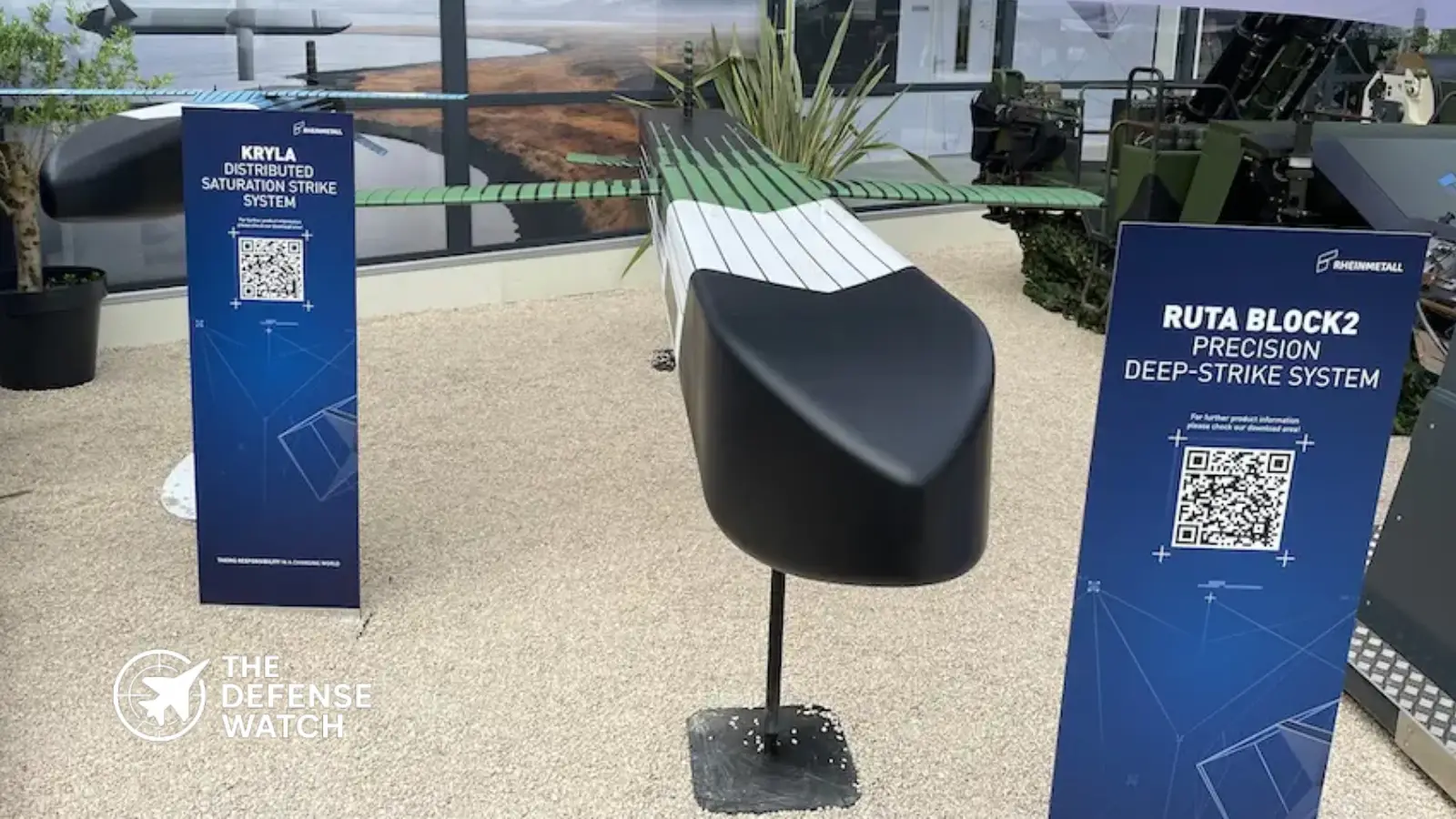
Variant Status Reported Range RUTA Block 1 Serial production Not disclosed RUTA Block 2 Flight testing and production ramp-up More than 450 km, with some reports exceeding 700 km RUTA Block 3 Development phase Approximately 2,000 km class According to Destinus, Block 1 is already in serial production in the Netherlands, while Block 2 is undergoing operational testing and is expected to enter expanded production during 2026. Block 3 is scheduled to begin flight testing in 2027.
The Block 3 variant is intended to represent a significant increase in range and strategic reach compared with earlier versions, moving the RUTA family into the category of long-range deep-strike systems typically associated with a limited number of Western cruise missile programs.
Key Technical Characteristics
While the system remains under development, Destinus has disclosed several planned design features.
Reported Specifications
- Approximate range: 2,000 km class
- Warhead: 250 kg class
- Propulsion: Next-generation Destinus T220 turbojet engine
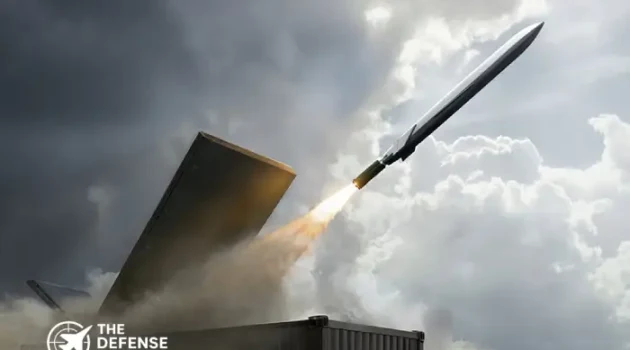
- Launch method: Standard ISO containerized launcher
- Deployment options:
- Land-based
- Maritime platforms
- Fixed-site installations
- Navigation:
- Autonomous operation in GNSS-degraded environments
- Advanced terminal sensing and guidance technologies under development
The containerized launch architecture is particularly noteworthy because it enables deployment from multiple platform types without requiring dedicated launch vehicles. Such flexibility could simplify logistics, increase survivability, and allow operators to disperse launch assets across wider geographic areas.
Industrial Capacity Emerges As A Strategic Priority
A central theme of the Rheinmetall-Destinus partnership is production scale.
Company executives have argued that modern conflicts increasingly reward nations capable of rapidly replenishing precision-guided munitions rather than relying on small inventories of expensive weapons. Rheinmetall and Destinus estimate that future European demand could reach thousands of strike systems annually as procurement programs expand.
Destinus currently reports production of more than 2,000 cruise missile systems annually across its European facilities. Rheinmetall’s contribution centers on qualification, manufacturing expertise, supply chain management, and serial production capabilities within Germany.
The industrial structure is expected to span three major hubs:
- Netherlands: Engineering, design authority, and primary missile development
- Germany: High-rate production, qualification, final integration, and delivery
- Ukraine: Operational testing support and component manufacturing
Why RUTA Block 3 Matters For European Defense
The RUTA Block 3 effort highlights a significant shift in European defense planning.
For decades, many European nations relied heavily on a relatively small number of advanced cruise missile systems, often produced in limited quantities. The war in Ukraine and growing concerns about long-term deterrence have exposed challenges associated with sustaining missile inventories during prolonged high-intensity conflict.
RUTA Block 3 appears designed to address three strategic requirements simultaneously:
Expanded Reach
A 2,000 km-class strike capability would provide European militaries with the ability to engage high-value targets far beyond current tactical missile ranges.
Industrial Scalability
Unlike traditional low-volume cruise missile programs, the RUTA concept is being developed from the outset with serial production in mind.
Greater Strategic Autonomy
The program supports ongoing European efforts to reduce dependence on non-European long-range strike systems and strengthen indigenous defense manufacturing capacity.
From a U.S. perspective, the initiative reflects a broader trend among NATO allies toward expanding domestic weapons production while maintaining alliance interoperability. The effort complements, rather than replaces, existing transatlantic defense relationships by increasing the volume of precision-strike systems available to allied forces.
Production Timeline And Next Steps
Rheinmetall has indicated that production activities at its Unterlüß facility could begin with RUTA Block 1 and Block 2 systems before the end of 2026. The planned joint venture is expected to provide the manufacturing foundation for eventual Block 3 production as the missile advances through testing and qualification.
Flight testing of RUTA Block 3 is currently scheduled to begin in 2027. The program remains subject to regulatory approvals, export control requirements, and continued development of key technologies, including the T220 turbojet engine and advanced guidance systems.
As Europe continues to invest in long-range precision strike capabilities, the RUTA Block 3 program will serve as a key indicator of whether the continent can successfully combine advanced missile technology with the industrial scale increasingly viewed as essential for future deterrence and warfighting requirements.