Table of Contents
Iran Unveils Fattah-1: A New Chapter in Hypersonic Warfare
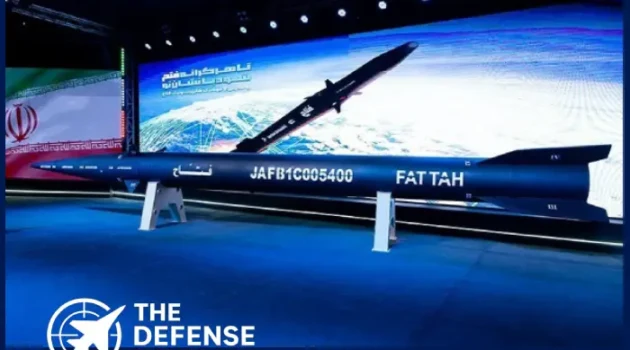
Iran unveiled the Fattah-1 hypersonic missile in a ceremony on June 6, 2023, marking what Tehran describes as a transformational advancement in its missile capabilities. Developed by the Islamic Revolutionary Guard Corps Aerospace Force, the Fattah-1 represents Iran’s first entry into the hypersonic weapons category, joining an exclusive technological club previously dominated by major military powers.
The fattah-1 hypersonic missile has already been deployed in combat operations. Researchers from the James Martin Center for Nonproliferation Studies identified Fattah-1 debris from Iranian strikes against Israel in both April and October 2024, demonstrating that Iran has moved beyond testing to operational use of its hypersonic missile technology.
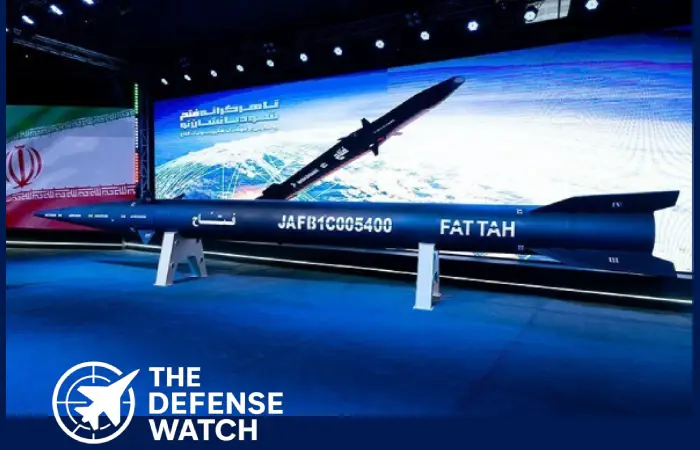
The unveiling of Iran’s hypersonic missile capability represents a significant shift in Middle Eastern military balance. The October 1 deployment of Fattah-1 missiles against Israeli targets demonstrated its effectiveness, with multiple missiles reportedly penetrating Israel’s defense networks, raising questions about the future of missile defense in an era of hypersonic flight.
Understanding Hypersonic Missiles: Beyond Speed Alone
The term “hypersonic” has become a source of both fascination and confusion in defense circles. A hypersonic weapon is defined as one that can travel and maneuver significantly during atmospheric flight at hypersonic speed, which is above Mach 5—five times the speed of sound. However, speed alone does not define a true hypersonic weapon.
Hypersonic weapons typically fall into two main categories: hypersonic glide vehicles (boost-glide weapons) and hypersonic cruise missiles (airbreathing weapons). What distinguishes these systems from conventional ballistic missiles—which also reach hypersonic speeds—is sustained maneuverability throughout their flight path.
In modern warfare, experts say hypersonic weapons must have advanced navigation systems that make them nimble and capable of changing trajectory midflight. This combination of extreme velocity and maneuverability creates a defensive challenge that traditional interceptor systems struggle to address.

The engineering challenges behind hypersonic flight are formidable. At hypersonic speeds, friction and air resistance create an incredible amount of heat, which needs to be managed through tough but lightweight heat shields and thermal protection systems. The materials, guidance systems, and propulsion technologies required represent the cutting edge of aerospace engineering.
(adsbygoogle = window.adsbygoogle || []).push({});Technical Specifications: Inside the Fattah-1 System
The Fattah-1’s design reflects sophisticated engineering tailored specifically for hypersonic warfare. With a range of 1,400 kilometers, the Fattah-1 is classified as a medium-range ballistic missile, capable of targeting Israel from any corner of western Iran. This range encompasses critical strategic targets throughout the Middle East, including Israeli military installations and U.S. bases in the region.
The missile’s speed capabilities are particularly noteworthy. The Fattah-1’s terminal speed is Mach 13 to 15, which translates to 16,000 to 18,500 kilometers per hour—three times faster than the lower limit of hypersonic speed. At these velocities, defenders have mere seconds to detect, track, and engage incoming threats before impact.
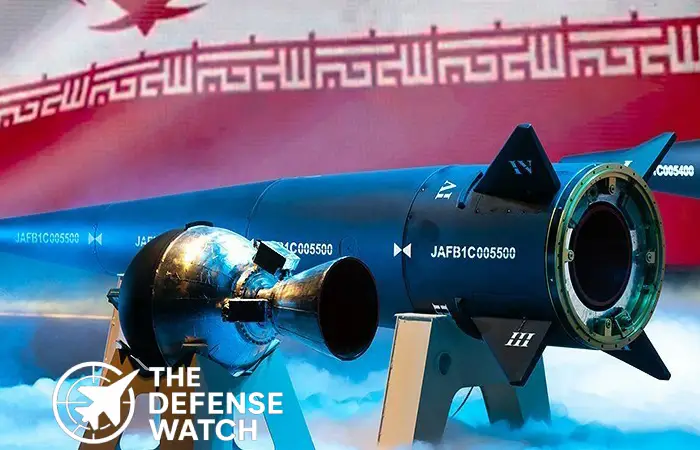
The Fattah-1 utilizes a two-stage solid-propellant system and carries a maneuverable re-entry vehicle capable of independent flight and in-flight course correction. This propulsion architecture allows rapid acceleration from launch while maintaining agility during the terminal phase of flight.
Maneuverable Re-Entry Vehicle Technology
The missile’s warhead section represents a departure from traditional ballistic missile design. The warhead measures approximately 3.6 meters long with thrust vector control for midcourse and terminal maneuverability, weighing roughly 1,000 kilograms and containing up to 500 kilograms of high-explosive payload.
The Fattah-1 features movable nozzles that allow the missile to maneuver in all directions both in and out of the Earth’s atmosphere, making it immune to interception by existing anti-missile systems according to Iranian claims. These control surfaces enable the weapon to execute unpredictable flight paths that complicate defensive targeting solutions.
(adsbygoogle = window.adsbygoogle || []).push({});The guidance systems aboard the Fattah-1 remain classified, but the missile’s ability to adjust its course implies sophisticated guidance technology ensuring greater targeting precision essential for hitting high-value targets with accuracy. This combination of speed, maneuverability, and precision represents the core challenge hypersonic weapons pose to modern air defenses.
The Fattah-2: Evolution of Iran’s Hypersonic Arsenal
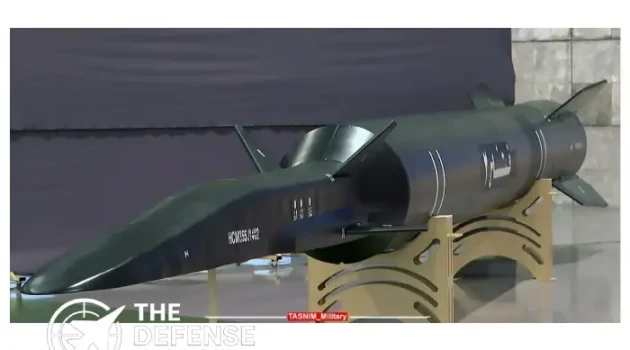
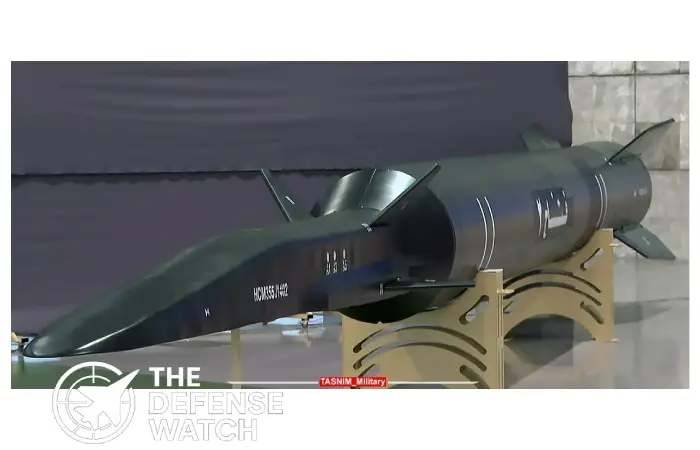
Iran has not rested on its laurels following the Fattah-1 debut. In November 2023, Iran presented the improved Fattah-2 model, featuring a gliding warhead that creates a new classification: Hypersonic Cruise Glide Vehicle. This represents a technological evolution beyond the original design.
While the Fattah-2’s first stage remains the same as the initial version, the second stage features a different warhead design with a solid fuel booster carrying a gliding warhead. This hybrid approach combines boost-glide technology with cruise capabilities, potentially extending range and enhancing terminal maneuverability.
(adsbygoogle = window.adsbygoogle || []).push({});The progression from Fattah-1 to Fattah-2 demonstrates Iran’s commitment to advancing its hypersonic missile capabilities. The modifications suggest Iranian engineers are working to address limitations in the original design while incorporating lessons learned from testing and operational deployment.
How Hypersonic Flight Challenges Missile Defense Systems
The emergence of iran hypersonic missiles has forced a fundamental reassessment of air defense architectures throughout the Middle East. The Fattah-1 compresses Israel’s response time for interception to mere seconds, far below the time available for slower ballistic missiles. This temporal compression creates cascading challenges for every element of the defensive kill chain.
Traditional ballistic missile defense relies on predictable trajectories. Unlike traditional ballistic missiles which follow a predictable arc, the Fattah-1 is capable of in-flight course adjustments, allowing it to glide and alter its trajectory within the atmosphere. This maneuverability forces defense systems to continuously recalculate intercept solutions, stretching computational resources and reducing engagement opportunities.
Israel’s multilayered air defense network—comprising Iron Dome, David’s Sling, Arrow 2, and Arrow 3 systems—was designed primarily to counter conventional ballistic threats. Yet hypersonic missiles like Iran’s Fattah-1 pose a new and serious challenge due to their extreme speed combined with mid-flight maneuverability, making them far harder to track and intercept even for advanced systems like Arrow.
Radar Detection and Tracking Limitations
The low-altitude flight profile that hypersonic weapons can employ creates additional detection challenges. Hypersonic glide vehicles can fly lower than traditional ballistic missiles, using terrain to hide from radar and reducing response time for defense systems. This terrain masking exploits the geometric limitations of ground-based radar systems, shrinking the engagement envelope available to interceptors.
(adsbygoogle = window.adsbygoogle || []).push({});However, hypersonic weapons are not invisible. The intense heating of a hypersonic vehicle traveling faster than about Mach 6 to 10 produces a very bright infrared signal during its glide phase that can be detected by currently deployed early-warning satellites. This thermal signature provides one potential vulnerability that defensive systems might exploit.
Operational Deployment: Combat Performance Assessment
Iran has moved beyond claims and demonstrations to actual combat employment of its hypersonic missile technology. In October 2024, Iran launched approximately 200 ballistic missiles at targets in Israel in at least two waves, using hypersonic missiles such as the Fattah weapons system. This represented the largest direct Iranian attack on Israel during the ongoing conflict.
The effectiveness of these strikes generated considerable debate. The October 1 deployment demonstrated the Fattah-1’s capacity to bypass Israel’s defense systems, showcasing Iran’s ability to reach high-value or strategic targets deep within Israeli territory. Multiple missiles penetrated Israeli air defenses, striking military bases and causing damage despite the multilayered defensive architecture.
(adsbygoogle = window.adsbygoogle || []).push({});However, Israeli sources present a different assessment. The Fattah-1 has had minimal success according to Israeli officials, with Israel able to intercept more than 95 percent of the missiles because speed is not crucial compared to maneuverability. This discrepancy highlights ongoing debates about the true capabilities of Iran’s hypersonic systems.
The Hypersonic Debate: True Capability or Exaggeration?
Western analysts have expressed skepticism about Iranian claims regarding the Fattah-1’s hypersonic credentials. Iran’s description of the missile as “hypersonic” has been noted as “dubious” by several media outlets and analysts, with questions raised about whether the system meets the technical definition of a maneuverable hypersonic weapon.
Most of the missiles Iran has deployed against Israel travel at hypersonic speed but are barely maneuverable, so are not considered true hypersonic missiles according to Israeli defense researchers. This distinction matters because maneuverability—not just speed—determines how effectively a weapon can evade interception.
The technical reality appears more nuanced than either Iranian promotional materials or complete dismissals suggest. Maneuverable reentry vehicles, such as employed on the Fattah-1, are generally excluded from the hypersonic weapons definition as they maneuver aerodynamically only for short periods during the terminal phase. By this strict definition, the Fattah-1 occupies a middle ground—faster and more capable than conventional ballistic missiles, but perhaps not meeting the full criteria for advanced hypersonic glide vehicles.
Strategic Implications for Regional Security
The introduction of what are hypersonic missiles—or at minimum, highly capable maneuvering ballistic missiles—into Iran’s arsenal carries significant strategic implications. These weapons serve as psychological weapons, forcing Israel and the United States to think twice before pursuing any military action against Iran. Deterrence value exists regardless of technical classification debates.
The missile shortage challenge facing Israeli defenses compounds this strategic shift. Israel is running low on its supply of Arrow missile interceptors just as Iran unleashes hypersonic missiles, with American defense leaders having known for months about the shortfall. This inventory constraint creates operational vulnerabilities that Iran can potentially exploit through saturation attacks.
(adsbygoogle = window.adsbygoogle || []).push({});U.S. military officials have responded by deploying additional assets to the region. The U.S. maintains THAAD (Terminal High Altitude Air Defense) batteries in Israel and Navy destroyers equipped with SM-3 interceptors offshore. However, these reinforcements represent finite resources subject to the same inventory pressures facing Israeli forces.
Production and Proliferation Questions
Critical uncertainties remain regarding Iran’s production capacity. Questions persist about how many hypersonic missiles Iran is able to produce, as these sophisticated systems usually cost significant amounts to produce in great numbers. Serial production capability determines whether Iran possesses a handful of demonstration systems or a sustainable operational force.
Some analysts suspect external assistance in Iran’s rapid development timeline. While analysts question the full extent of Iran’s claimed capabilities and suspect Russian assistance in their rapid development, even partially realized, these hypersonic missiles represent a serious escalation in regional military technology. Technology transfer from Russia or China could accelerate Iranian capabilities significantly.
Comparative Context: Global Hypersonic Race
Iran’s entry into hypersonic weapons development occurs within a broader global competition. Countries including Brazil, Australia, the United Kingdom, France, Germany, Iran, Japan, South Korea and North Korea all have hypersonic weapons programs. This proliferation trend suggests hypersonic technology is gradually becoming more accessible despite its complexity.
The United States, China, and Russia remain at the forefront of hypersonic development. China has demonstrated morphing missile concepts, while Russia claims operational deployment of systems like Avangard and Kinzhal. The Department of Defense has spent more than $8 billion since 2019 on programs to develop hypersonic missiles, reflecting the priority Washington places on matching peer competitors.
(adsbygoogle = window.adsbygoogle || []).push({});However, the technology faces inherent limitations. Hypersonic weapons at theater ranges still experience intense heating for about eight minutes when gliding for a thousand kilometers at low altitude. These thermal management challenges, combined with materials science requirements, create natural barriers to proliferation.
Future Defense Technologies and Countermeasures
Countering the hypersonic threat requires new technological approaches. Israel could accelerate research into directed energy weapons, which offer the rapid engagement necessary for high-speed threats, or explore kinetic interceptors specifically tailored for hypersonic maneuvering targets. Laser systems traveling at the speed of light could theoretically engage hypersonic threats if sufficient power and beam control can be achieved.
Advanced sensor networks represent another critical element. Israel’s defense industry may need to develop advanced radar systems with real-time data fusion capabilities to detect and intercept these missiles at different stages of flight. Earlier detection extends the engagement timeline, partially offsetting the speed advantage hypersonic weapons possess.
(adsbygoogle = window.adsbygoogle || []).push({});Regional cooperation offers strategic advantages in facing distributed threats. U.S. officials have urged Gulf nations to acquire additional interoperable sensors and weapons capable of sharing early warning and employing uniform tactics. An integrated regional defense architecture could provide overlapping coverage and distributed interceptor inventories.
The European Union has recognized the urgency of this challenge. The European Union is studying how to develop an interceptor for hypersonic missiles as it ramps up defense spending to counter threats. This reflects growing global awareness that hypersonic weapons will define next-generation air defense requirements.
Analysis: Reassessing Middle East Military Balance
Iran’s development and deployment of the Fattah-1 hypersonic missile system represents more than an incremental capability upgrade—it signals a potential inflection point in regional military dynamics. Whether or not the Fattah-1 meets strict technical definitions of a hypersonic weapon matters less than its demonstrated ability to complicate Israeli air defenses and penetrate multilayered protection systems.
The strategic calculus has shifted in three key areas. First, interceptor economics now favor the attacker, as relatively inexpensive ballistic missiles force the expenditure of sophisticated, costly interceptors. Second, the compressed engagement timelines associated with high-speed threats stress command-and-control systems, increasing the probability of defensive gaps. Third, the psychological dimension of hypersonic weapons—their perceived invincibility—carries deterrent value independent of actual interception rates.
Iran’s achievement also highlights the democratization of advanced military technology. What was once the exclusive domain of superpowers is now accessible to regional powers with sufficient technical expertise and resources. This proliferation trend will likely continue, forcing defense establishments worldwide to invest heavily in next-generation air defense systems.
(adsbygoogle = window.adsbygoogle || []).push({});The Fattah-1’s operational deployment in 2024 provided real-world performance data that will inform both Iranian refinements and Israeli defensive adaptations. Future variants will likely incorporate lessons learned regarding optimal flight profiles, warhead design, and guidance algorithms. Meanwhile, Israeli and American engineers will analyze intercept data to develop improved tracking and engagement solutions.
Ultimately, the hypersonic era forces a return to fundamental questions about deterrence, first-strike advantages, and strategic stability. If hypersonic missiles can reliably penetrate defenses, does this restore some of the nuclear-age logic of assured retaliation? Or does it incentivize preemptive strikes against mobile launchers before they can be employed? These questions will shape Middle Eastern security dynamics for the coming decade.
FAQs
What makes the Fattah-1 a hypersonic missile?The Fattah-1 achieves speeds between Mach 13-15 (three times faster than the Mach 5 hypersonic threshold) and features maneuverable reentry vehicle technology allowing mid-flight trajectory adjustments. However, some Western analysts debate whether its maneuverability meets strict hypersonic weapon definitions since it operates primarily during terminal phase rather than throughout the entire flight path.
Can Israeli air defenses intercept Iran’s hypersonic missiles?Israeli officials report intercepting over 95 percent of Iranian missile attacks, though some Fattah-1 systems have penetrated defenses and struck targets. The combination of extreme speed, maneuverability, and potential saturation attacks challenges even advanced Arrow and David’s Sling systems, particularly as interceptor inventories become constrained during sustained conflicts.
How does hypersonic flight technology work?Hypersonic flight involves traveling at speeds above Mach 5 while managing extreme temperatures generated by atmospheric friction. Advanced hypersonic weapons use heat-resistant materials, sophisticated guidance systems, and either boost-glide or air-breathing propulsion to maintain both speed and maneuverability throughout their flight profile.
Which countries possess operational hypersonic missiles?The United States, Russia, and China lead hypersonic development with various systems in testing or deployment. Iran, North Korea, India, and several European and Asian nations maintain active development programs. The technology remains challenging, with significant barriers related to materials science, propulsion, and guidance systems.
What countermeasures exist against hypersonic weapons?Potential countermeasures include directed energy weapons (lasers) for speed-of-light engagement, advanced early-warning satellites detecting thermal signatures, improved radar networks for extended tracking, specialized kinetic interceptors designed for hypersonic targets, and regional integrated defense architectures sharing sensor data and coordinating responses.