Executive Summary:
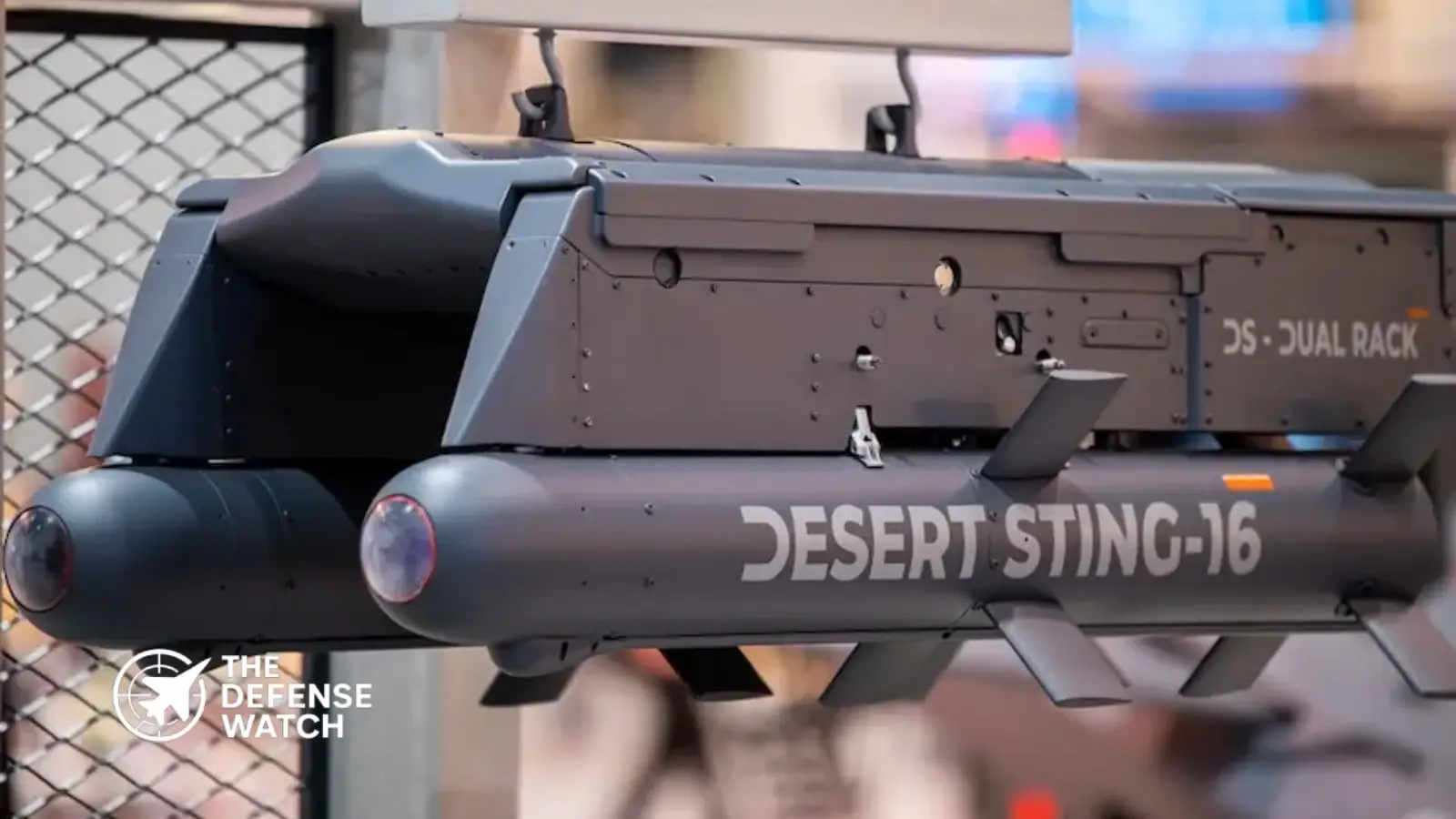
UAE-based EDGE Group has integrated its Desert Sting 16 precision-guided glide munition onto the Bayraktar TB2 unmanned aircraft developed by Baykar. The move expands the TB2’s available weapons portfolio and reflects growing defense cooperation between the United Arab Emirates and Türkiye as both companies seek to enhance export-focused unmanned warfare capabilities.
EDGE Integrates Desert Sting 16 On Bayraktar TB2
The Desert Sting 16 integration marks another step in the growing partnership between UAE-based defense technology company EDGE and Turkish drone manufacturer Baykar. The companies have confirmed the integration of the Desert Sting 16 precision-guided munition onto the Bayraktar TB2 unmanned aerial vehicle (UAV), adding a new precision strike option to one of the world’s most widely deployed drone platforms.
The effort is part of a broader strategic alliance between the two defense firms focused on expanding cooperation in advanced unmanned systems and precision-guided weapons. Initial plans for the integration were announced in early 2024, with both companies highlighting the potential for additional payloads and future collaboration across Baykar’s UAV portfolio.
What Is The Desert Sting 16?
The Desert Sting 16 is a lightweight precision-guided glide munition developed by EDGE. The weapon uses inertial navigation and satellite guidance, while a semi-active laser seeker can be added for increased targeting accuracy against designated targets. According to defense industry reporting, the munition can engage targets at ranges of up to approximately 15 kilometers when released from altitude and is designed to deliver precise effects while minimizing collateral damage.
Its relatively low weight makes it particularly suitable for medium-sized UAVs such as the Bayraktar TB2, allowing operators to maintain endurance while adding precision strike capability.
Why The Integration Matters
The Bayraktar TB2 has become one of the most successful export UAVs in recent years. The platform has been adopted by multiple armed forces worldwide for intelligence, surveillance, reconnaissance, and strike missions. Integrating the Desert Sting 16 expands the aircraft’s available weapons portfolio and gives current and future operators additional mission flexibility.
From an operational perspective, broader weapon compatibility is increasingly important in the global UAV market. Many defense customers seek flexible platforms capable of integrating both domestic and foreign munitions rather than relying on a single supplier ecosystem.
The integration also reflects a wider trend in the defense industry toward modular payload architectures. UAV manufacturers are increasingly designing platforms that can accommodate multiple sensors, weapons, and mission systems to meet diverse customer requirements.
Growing UAE-Türkiye Defense Cooperation
Beyond the technical achievement, the project highlights the expanding defense relationship between the UAE and Türkiye. EDGE and Baykar have steadily deepened cooperation through agreements covering weapons integration, unmanned systems, and joint market opportunities. Recent agreements announced in 2026 also include plans to integrate EDGE’s AL TARIQ precision-guided munitions onto the larger Bayraktar AKINCI unmanned combat aerial vehicle.
This pattern suggests that both companies view weapons integration as a long-term strategic effort rather than a single program. As unmanned systems become central to military modernization efforts worldwide, partnerships that combine proven UAV platforms with diverse precision-guided munitions are likely to attract increased attention from export customers.
Strategic Analysis
The Desert Sting 16 integration demonstrates how the global UAV market is evolving beyond platform performance alone. Today, a drone’s value increasingly depends on the breadth of weapons, sensors, and mission systems it can support.
For Baykar, expanding the TB2’s weapon options enhances the platform’s attractiveness in competitive export markets. For EDGE, integration with a globally recognized UAV opens additional opportunities for its precision-guided munitions among existing and future TB2 operators.
The development also underscores a broader industry shift toward multinational defense partnerships. Rather than developing every subsystem domestically, manufacturers are increasingly combining strengths across national defense industries to accelerate capability growth and improve market access.
As unmanned aircraft continue to assume larger roles in modern military operations, the combination of proven UAV platforms and flexible precision-guided weapons is expected to remain a key factor shaping procurement decisions worldwide.
Executive Summary:
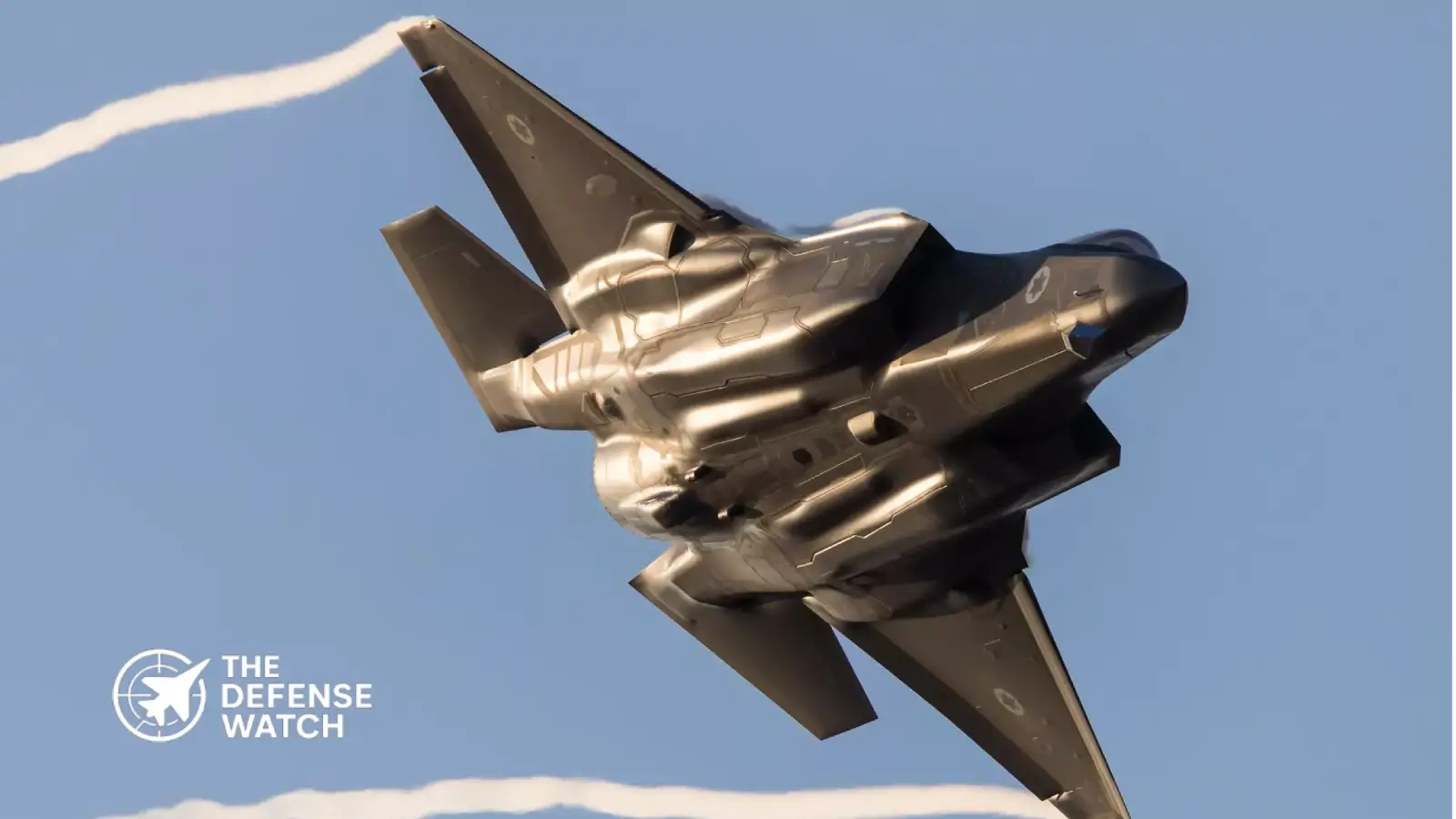
Israel has approved a multibillion-dollar procurement plan to acquire advanced U.S.-built fighter jets, including additional F-35 Lightning II aircraft. The move aims to sustain its qualitative military edge and counter evolving regional threats. The deal reinforces defense ties with the United States while accelerating Israeli Air Force modernization.
Israel Expands Fifth-Generation Fighter Fleet
Israel’s Defense Ministry has formally endorsed a major acquisition package centered on expanding its fleet of F-35 Lightning II aircraft, alongside potential procurement of advanced variants of the F-15EX Eagle II.
The deal, estimated in the multi-billion-dollar range, includes:
- Additional F-35I Adir stealth fighters
- Upgraded F-15 platforms optimized for heavy payload missions
- Long-term sustainment and support packages
The aircraft will be supplied by Lockheed Martin and Boeing under existing U.S. foreign military financing frameworks.
Key Capabilities Driving the Procurement
Fifth-Generation Stealth and Network Warfare
The F-35 remains central to Israel’s airpower doctrine due to its:
- Low observable stealth design for contested environments
- Advanced sensor fusion and data-sharing capabilities
- Integration into multi-domain operations
Heavy Strike and Payload Flexibility
The F-15EX complements the F-35 with:
- Higher payload capacity for long-range strike missions
- Ability to carry hypersonic and stand-off weapons
- Extended operational range without refueling
Comparison: New Fighters vs Legacy Platforms
Aircraft Range Payload Status Key Technology F-35I Adir ~2,200 km ~8,160 kg Operational/Expanding Stealth, sensor fusion F-15EX ~3,900 km ~13,300 kg Pending acquisition Advanced avionics, heavy payload Legacy F-16I ~1,700 km ~7,700 kg In service Multirole, non-stealth Older F-15 variants ~3,000 km ~10,400 kg Aging fleet Conventional radar systems Strategic Context: Maintaining Regional Air Superiority
Israel’s decision reflects a broader shift in regional threat dynamics, including:
- Expanding air defense networks across the Middle East
- Growing missile and UAV capabilities among adversaries
- Increased great-power competition in the region
By combining stealth penetration capabilities with high-payload strike platforms, Israel aims to maintain its long-standing qualitative military edge (QME).
U.S.-Israel Defense Alignment Strengthened
The procurement underscores continued strategic alignment with the United States, particularly in:
- Joint technology development
- Defense financing and export approvals
- Interoperability across allied systems
This agreement also reinforces Washington’s role as Israel’s primary defense supplier, while supporting U.S. aerospace industry production lines.
Outlook: Timeline and Operational Impact
Deliveries are expected to occur over the next decade, with phased integration into Israeli Air Force units. Once operational, the expanded fleet will:
- Enhance deep-strike capabilities
- Improve survivability in contested airspace
- Support multi-front operational readiness
The deal positions Israel to respond more effectively to both conventional and asymmetric threats in an increasingly complex security environment.
Executive Summary:
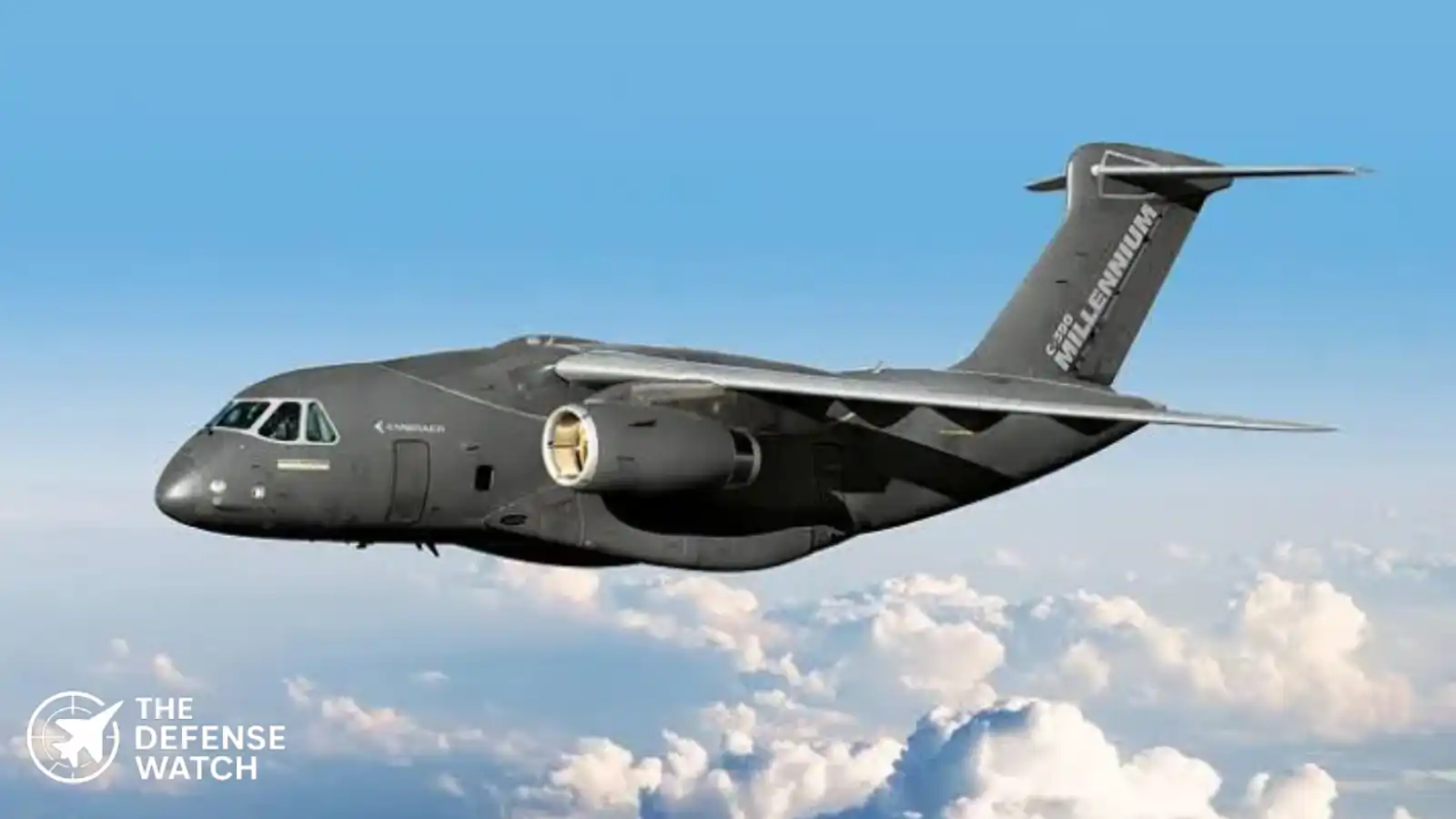
The United Arab Emirates has ordered 20 C-390 Millennium military transport aircraft from Brazil’s Embraer, becoming the first Middle Eastern operator. The deal reflects Abu Dhabi’s push to modernize its airlift fleet with faster, more versatile platforms. It also strengthens Brazil’s position in the global military transport market.
UAE Orders C-390 Millennium To Strengthen Strategic Airlift
The UAE C-390 Millennium deal marks a significant step in the country’s ongoing effort to modernize its military transport fleet and expand expeditionary logistics capabilities. Announced via Army Recognition, the agreement covers the acquisition of 20 aircraft from Embraer, making the United Arab Emirates the first operator of the platform in the Middle East.
The Embraer C-390 Millennium is a next-generation tactical airlifter designed to perform a wide range of missions, including troop and cargo transport, medical evacuation, aerial refueling, and disaster relief operations. Its adoption by the UAE highlights a broader shift toward multi-role, jet-powered transport platforms capable of faster response times and reduced operational costs compared to legacy turboprop aircraft.
The UAE Ministry of Defence has not publicly disclosed the total contract value, but the scale of the order suggests a major long-term investment in air mobility infrastructure.
Platform Capabilities And Operational Advantages
The C-390 Millennium is powered by twin jet engines, enabling higher cruising speeds and longer range compared to traditional transport aircraft such as the Lockheed Martin C-130J Super Hercules. It can carry payloads of up to approximately 26 tons and operate from semi-prepared runways, giving it flexibility in austere environments.
Key capabilities include:
- Rapid deployment of troops and heavy equipment
- Aerial refueling, both as tanker and receiver
- Humanitarian assistance and disaster response missions
- Medical evacuation with modular onboard systems
The aircraft’s advanced avionics suite and fly-by-wire controls reduce pilot workload while improving mission precision. Its cargo handling system is fully automated, allowing quicker turnaround times, which is critical in high-tempo operations.
From an operational standpoint, the UAE C-390 Millennium acquisition aligns with the need for faster strategic lift across long distances, especially given the country’s expanding defense footprint and international engagement.
Strategic Context: Why The UAE Is Investing Now
The UAE has steadily expanded its military modernization programs over the past decade, focusing on rapid deployment forces, joint operations, and global logistics reach. The UAE C-390 Millennium deal fits into this broader strategy.
Unlike turboprop platforms, jet-powered transports like the C-390 offer shorter transit times between theaters such as North Africa, the Eastern Mediterranean, and South Asia. This capability is increasingly relevant as regional security dynamics evolve.
Additionally, the UAE’s participation in multinational operations and humanitarian missions requires a flexible and interoperable airlift fleet. The C-390’s compatibility with NATO standards and its multi-mission design make it well suited for such roles.
From an analytical perspective, this procurement also reflects a diversification strategy. The UAE has traditionally relied on U.S. and European defense suppliers. By selecting a Brazilian platform, Abu Dhabi broadens its supplier base while gaining access to competitive pricing and technology transfer opportunities.
Implications For The Global Airlift Market
The UAE C-390 Millennium order represents a significant win for Embraer in the competitive military transport sector. The aircraft has already been adopted by countries such as Brazil, Portugal, and Hungary, but entry into the Middle East marks a new phase of market expansion.
The deal positions the C-390 as a viable alternative to established platforms like the C-130J, particularly for countries seeking modern capabilities without the higher acquisition and lifecycle costs associated with legacy systems.
For Embraer, this contract strengthens its credibility as a global defense supplier and could open doors to additional sales in the Gulf region, where demand for advanced air mobility solutions continues to grow.
Regional And Operational Impact
The introduction of the C-390 Millennium into the UAE Air Force is expected to enhance operational readiness and logistical efficiency. The aircraft’s ability to perform multiple mission profiles reduces the need for specialized fleets, streamlining maintenance and training requirements.
In a region characterized by rapid response requirements, whether for military contingencies or humanitarian crises, the UAE C-390 Millennium fleet will provide a flexible and scalable solution.
There is also a potential regional signaling effect. As the first Middle Eastern operator, the UAE could influence neighboring countries to evaluate similar platforms, particularly as airlift modernization becomes a priority across Gulf Cooperation Council states.
Executive Summary: U.S. Central Command (CENTCOM) has officially initiated Project Freedom as of May 4, 2026, a large-scale defensive operation designed to ensure the uninterrupted transit of commercial shipping through the Strait of Hormuz. Directed by the President, the mission integrates 15,000 service members and advanced multi-domain platforms to safeguard a corridor responsible for 25% of the world’s seaborne oil trade.
Strategic Deployment and Mission Objectives
The activation of Project Freedom marks a significant escalation in U.S. maritime posture within the Strait of Hormuz. The primary objective is the restoration of “freedom of navigation” amid rising regional tensions and ongoing naval blockades. According to Adm. Brad Cooper, Commander of CENTCOM, the mission is a defensive necessity to protect the global economy from volatility caused by the disruption of fuel and fertilizer shipments.

The mission operates under the broader Maritime Freedom Construct, a joint initiative between the U.S. Department of State and the Department of War. This framework seeks to synchronize diplomatic pressure with kinetic and non-kinetic military coordination, ensuring that international partners are integrated into a unified information-sharing network.
Force Composition and Technical Assets
CENTCOM has authorized a robust force package to achieve the mission’s goals. The deployment is characterized by its “multi-domain” approach, utilizing traditional naval power alongside emerging autonomous technologies.
- Naval Surface Assets: Multiple guided-missile destroyers (DDGs) providing Aegis-based integrated air and missile defense.
- Aviation Component: Over 100 land and sea-based aircraft, including strike fighters and electronic warfare platforms.
- Unmanned Systems: Integration of multi-domain unmanned platforms (USVs and UAVs) for persistent Intelligence, Surveillance, and Reconnaissance (ISR).
- Personnel: 15,000 U.S. service members deployed to support logistics, security, and operational command.
Platform Comparison: Maritime Security Capabilities
The following table compares the current multi-domain approach of Project Freedom against the legacy International Maritime Security Construct (IMSC) protocols used in previous years.
| Feature | Project Freedom (2026) | Legacy IMSC (Sentinel) |
| Operational Range | Full-spectrum multi-domain (Sea, Air, Cyber) | Primarily surface-vessel focused |
| Payload/Capacity | 100+ Aircraft; 15,000 Personnel | Limited regional task forces |
| Status | Active (as of May 4) | Phased transition |
| Key Technology | Multi-domain unmanned platforms & AI-ISR | Traditional manned radar & patrols |
Geopolitical Implications and Security Context
The Strait of Hormuz remains the world’s most sensitive chokepoint. The decision to maintain a naval blockade while simultaneously escorting merchant vessels suggests a dual-track strategy: denying freedom of movement to hostile actors while guaranteeing it for global commerce.
Technical Advantages of the New Construct
The transition to the Maritime Freedom Construct offers several tactical improvements over traditional patrol methods:
- Enhanced Interoperability: Real-time data fusion between the Department of State and military command centers reduces the “sensor-to-shooter” timeline.
- Autonomous Persistence: The use of unmanned platforms allows for 24/7 monitoring of the strait without the fatigue associated with manned crews.
- Scalable Deterrence: The presence of guided-missile destroyers provides a tiered response capability, ranging from non-lethal electronic interference to high-end kinetic engagement.
As Project Freedom unfolds, the emphasis remains on regional stability. However, the scale of the deployment—specifically the 15,000-strong personnel count—signals to regional adversaries that the U.S. is prepared for a sustained presence to prevent any further degradation of international maritime law.
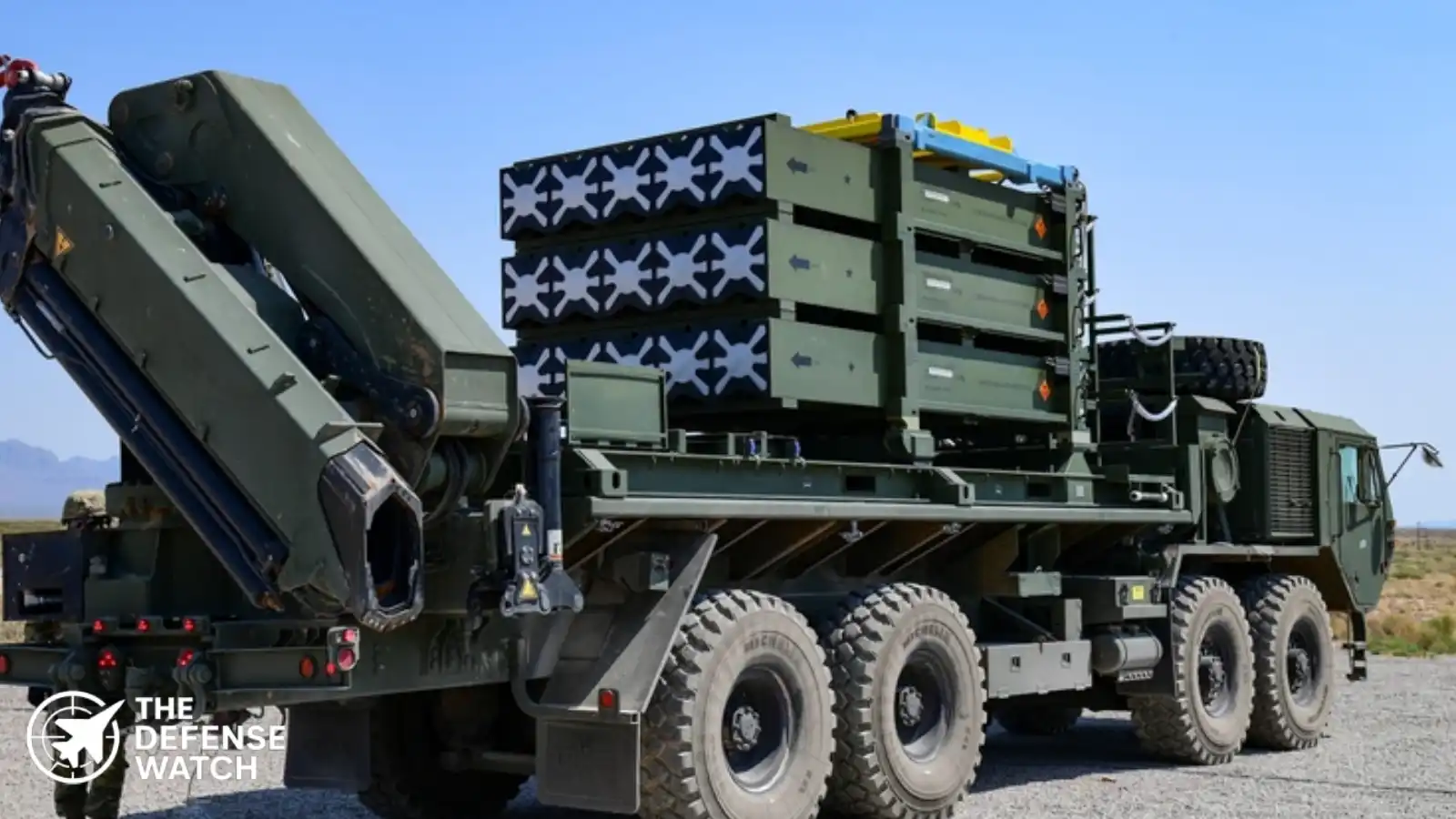
Israel Iron Dome UAE Deployment Signals New Phase In Regional Defense
Israel Iron Dome UAE cooperation appears to have entered a new stage after reports that Israel deployed one of its Iron Dome air defense batteries to the United Arab Emirates during the recent conflict with Iran.
According to Axios and follow-on regional reporting, the deployment included Tamir interceptors and Israeli operators, with the system used to help defend the UAE from incoming Iranian missile and drone attacks. Israeli and U.S. officials cited by Axios said the move came after consultations between Israeli Prime Minister Benjamin Netanyahu and UAE President Mohammed bin Zayed.
- Israel reportedly deployed an Iron Dome battery to the UAE during the 2026 conflict with Iran.
- Several dozen Israeli personnel were said to accompany the system to operate it on Emirati soil.
- The battery reportedly intercepted multiple Iranian missiles and drones targeting the UAE.
- The move marks the first known foreign combat deployment of Iron Dome.
- The deployment signals deeper Israel-UAE military coordination under the Abraham Accords.
If confirmed in full detail, this would be the first known operational use of Iron Dome on foreign territory during active combat.
Why Iron Dome Matters In The Gulf
Iron Dome air defense system was originally designed to defeat short-range rockets, artillery rounds, and drones. It has since evolved into a flexible lower-tier air defense layer capable of engaging cruise missiles and some aerial threats when integrated into broader networks.
That matters in the Gulf, where states such as the UAE already field advanced systems including THAAD and Patriot PAC-3. Those systems are optimized for higher-end ballistic missile defense, while Iron Dome can add magazine depth and cheaper intercept options against drones or lower-flying threats.
In practical terms, layered defense is critical during saturation attacks, where a mix of ballistic missiles, cruise missiles, and drones are launched simultaneously.
Strategic Meaning Beyond The Hardware
The more important story may be political rather than technical.
Since the 2020 Abraham Accords, Israel and the UAE have expanded diplomatic, economic, and security ties. A wartime deployment of Israeli military personnel and a sensitive air defense asset onto Emirati territory suggests a level of trust and urgency that would have been difficult to imagine only a few years ago.
It also indicates that Gulf states increasingly view integrated regional defense as necessary against missile and drone threats from Iran and aligned groups.
For Washington, which has long encouraged regional missile defense cooperation among partners, such a move aligns with broader U.S. strategic goals of burden-sharing and networked security architecture.
Operational Lessons From The Conflict
The reported attacks on the UAE underscore how modern air campaigns are changing. Precision missiles alone are no longer the sole challenge. Large numbers of low-cost drones can force defenders to expend expensive interceptors or overwhelm radars.
That dynamic has driven demand for multi-layered systems where each threat is matched with the most efficient response.
If Iron Dome performed successfully in the UAE, it could strengthen export interest in Israeli short-range air defense technology and accelerate additional Gulf procurement or joint integration programs.
What Comes Next
Neither Israel nor the UAE has publicly released full operational details. That is common for sensitive wartime air defense missions. But the reported deployment itself is significant.
It shows that missile defense is no longer just a national shield. It is becoming a coalition capability, rapidly moved where threats emerge.
For the Middle East, that may be one of the most important military lessons of the 2026 conflict.
■ KEY FACTS AT A GLANCE- ► Saudi Arabia condemned what it described as blatant Iranian aggression against multiple regional states.
- ► The Kingdom cited violations of sovereignty involving the UAE, Bahrain, Qatar, Kuwait, and Jordan.
- ► Riyadh pledged full solidarity and readiness to support any defensive measures taken by affected states.
- ► The statement warned of grave consequences if violations of international law continue.
- ► The development underscores rising security tensions across the Gulf and wider Middle East.
Saudi Arabia Condemns Iranian Aggression Amid Rising Gulf Tensions
Saudi Arabia condemns Iranian aggression in a strongly worded statement that signals growing concern across the Gulf. The Kingdom accused Iran of violating the sovereignty of several regional states and pledged full support to its partners.
In an official statement carried by the state run Saudi Press Agency, Riyadh denounced what it described as blatant aggression and a flagrant breach of international law. The Kingdom named the United Arab Emirates, Bahrain, Qatar, Kuwait, and Jordan as affected countries.
The statement warned of serious consequences if such actions continue and reaffirmed Saudi Arabia readiness to place all its capabilities at the disposal of allied governments.
Unified Gulf Messaging
The public declaration reflects a coordinated regional response. The countries mentioned are key members of the Gulf security architecture and maintain close defense ties with the United States and other Western partners.
Saudi Arabia condemns Iranian aggression at a time when regional air and missile defense networks are under sustained pressure. Gulf states operate layered defense systems that include US supplied Patriot and THAAD interceptors, alongside early warning radars and integrated command networks.
While Riyadh did not detail the specific incidents referenced, the language suggests concerns over cross border strikes, airspace violations, or indirect proxy activity. Iranian officials have not immediately responded to the statement.
Strategic Significance For Regional Security
Saudi Arabia condemns Iranian aggression in terms that go beyond routine diplomatic protest. The explicit reference to placing all capabilities at the disposal of allied states indicates potential military, intelligence, and logistical support.
The Gulf Cooperation Council has long emphasized collective security. In recent years, members have expanded joint exercises, missile defense integration, and intelligence sharing. Jordan, though not a GCC member, remains a close security partner to Gulf states and Washington.
The warning about grave consequences also reinforces deterrence messaging. Regional capitals have sought to signal that violations of sovereignty will not be treated as isolated incidents but as threats to broader stability.
Implications For US And Allied Forces
The United States maintains significant military assets across the Gulf, including naval forces in Bahrain and air assets in Qatar and the UAE. Any escalation tied to Iranian activity would directly intersect with US force posture and regional contingency planning.
Saudi Arabia condemns Iranian aggression as Washington continues to stress freedom of navigation and regional de escalation. Defense analysts note that Gulf air defense integration has improved in recent years, but vulnerabilities remain against drones and low altitude cruise missiles.
The Kingdom statement aligns with broader Western messaging emphasizing adherence to international law and state sovereignty.
Broader Geopolitical Context
Tensions between Iran and Gulf states have fluctuated over the past decade, shaped by proxy conflicts, maritime incidents, and missile and drone attacks. While diplomatic channels have reopened in some cases, mistrust remains high.
Saudi Arabia condemns Iranian aggression in a way that reinforces bloc cohesion. The inclusion of Qatar, which has at times maintained a more balanced diplomatic posture with Tehran, signals a shared red line on sovereignty violations.
From a strategic standpoint, the statement serves three purposes. It reassures allies, deters further action, and frames the issue within international legal norms. That positioning is critical for shaping global perception and maintaining support among Western security partners.
What To Watch Next
Defense observers will monitor whether Gulf states adjust force posture, increase air defense readiness, or conduct joint exercises in response. Any coordinated military signaling would suggest the statement is part of a broader security response rather than a standalone diplomatic move.
For now, Saudi Arabia condemns Iranian aggression in firm but measured terms. The next steps taken by regional capitals, and by Tehran, will determine whether tensions stabilize or move toward further escalation.
■ KEY FACTS AT A GLANCE- ► Iran reports launch of ballistic missiles and drones targeting Israeli territory after strikes attributed to Western and Israeli forces.
- ► Explosions heard in Tel Aviv and northern Israel, with infrastructure damage and at least one reported injury.
- ► Iranian state media say the Revolutionary Guard confirmed the operation, calling it a response to recent strikes.
- ► Israel activates air and missile defense systems to intercept incoming threats.
- ► Regional tensions rise as direct state to state confrontation expands beyond proxy conflict.
Iran Retaliation To Israel Marks New Phase In Regional Conflict
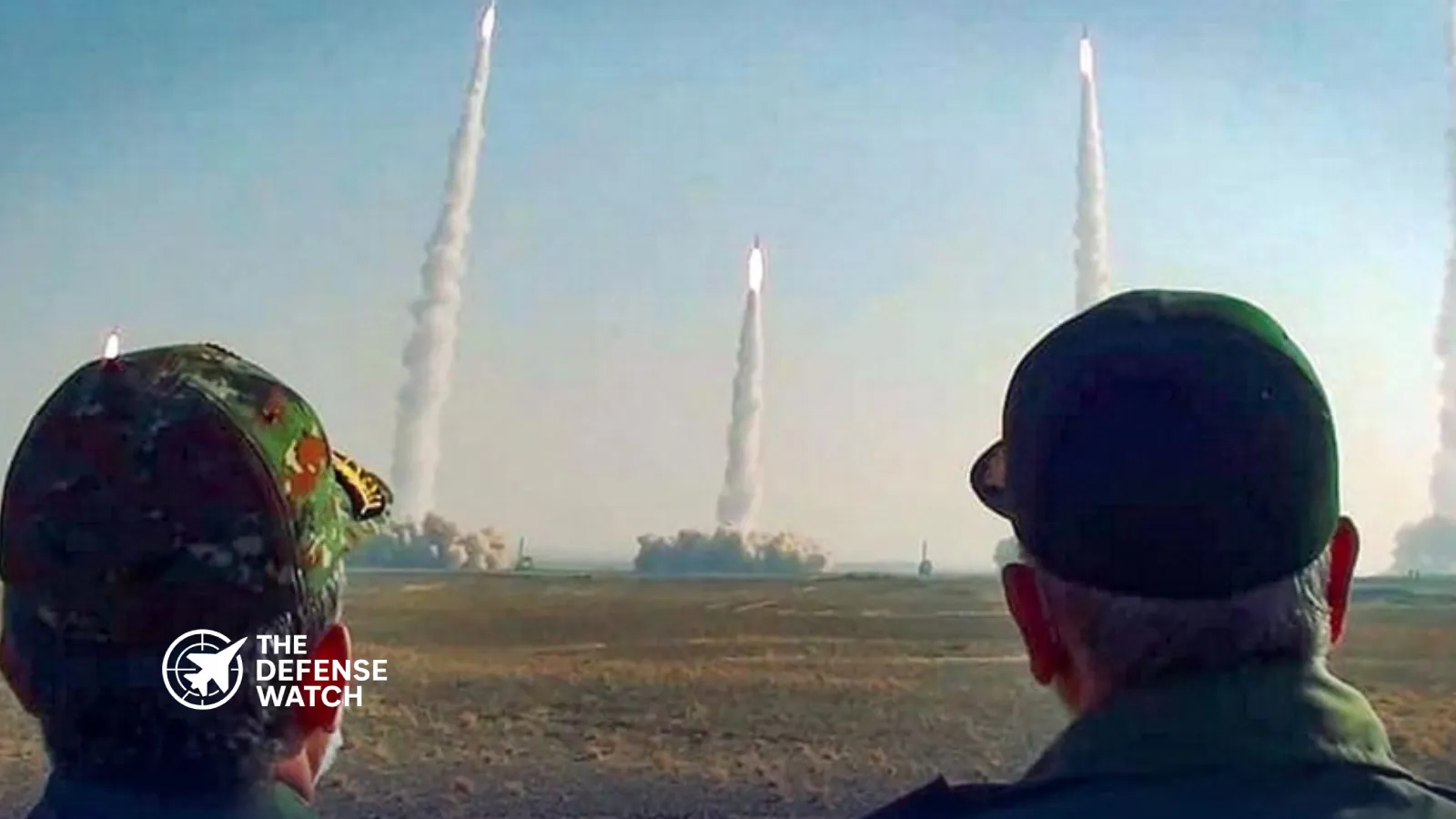
Iran’s military has launched what Tehran describes as sustained retaliatory strikes against Israeli territory following reported air operations involving Israeli and allied aircraft. Iran said ballistic missiles and armed drones were used in the attacks on and near Israeli population centers and military infrastructure.
Official Iranian state broadcasters reported blasts in the Israeli capital and northern urban areas. A nine-story building in the Tel Aviv metro area sustained damage and at least one civilian injury was recorded in open-source reporting of the incident.
Iran’s Islamic Revolutionary Guard Corps (IRGC) acknowledged the operation and framed it as a defensive action after what Iranian officials assert were unprovoked Western and Israeli air strikes on Iranian territory and regional proxies. The Iranian foreign ministry publicly urged civilians to remain calm while affirming the country’s right to respond.
Israeli defense forces said their integrated missile defense systems were engaged to intercept incoming threats, and air defense radar networks remained elevated. Independent verification of strike effectiveness and detailed casualty figures remain limited at this reporting time.
The escalation comes amid rising tensions in the Middle East, where multiple flashpoints, including the Gaza conflict and hostilities in Iraq and Syria, have already drawn in regional powers. Iran’s counter-strikes signify a broadening of direct military involvement beyond proxy engagements and could test existing deterrence structures between Tehran and Western defense partners.
Strategic Context And Military Implications
Iran’s use of ballistic systems against targets beyond its borders reflects an operational shift from proxy support to overt long-range engagement. Tehran possesses a range of medium-range ballistic missiles and unmanned aerial systems designed to reach key Israeli strategic and urban centers. Oversight groups tracking missile deployments note patterns that could indicate coordinated use of space and cyber domains to support kinetic actions. Open-source confirmation of exact weapon types remains pending.
For Israel, the activation of layered air defenses underscores preparedness but also highlights vulnerability to multi-axis threats. Israel’s integrated anti-missile shields have previously been tested by short-range rockets from non-state actors. The reported use of higher-trajectory ballistic threats may prompt adjustments to air defense postures and force prioritization.
Regional defense analysts say this episode may broaden the operational environment across the Levant and Gulf. Nations with vested security interests, including the United States and Gulf Cooperation Council members, are likely to reassess force postures and intelligence sharing as risks of miscalculation rise.
What Comes Next
Diplomatic channels in the region and beyond are expected to intensify efforts to de-escalate. Calls for restraint from global capitals often accompany such spikes in hostilities but may have limited immediate effect as military leaderships on both sides seek to solidify strategic messaging. Information coming from official state media will require independent corroboration as the situation evolves.
■ KEY FACTS AT A GLANCE- ► Russia has reportedly delivered six Mi-28NE attack helicopters to Iran.
- ► The Mi-28NE is the export variant of the Mi-28 Night Hunter all weather attack helicopter.
- ► The platform is armed with a 30mm cannon, anti tank guided missiles, rockets, and air to air missiles.
- ► The acquisition enhances Iran close air support and anti armor capabilities.
- ► The move reflects deepening military cooperation between Tehran and Moscow.
Russian Delivery Of Six Mi-28NE Helicopters Expands Iran Attack Aviation Fleet
The Russian delivery of six Mi-28NE helicopters marks a notable step in strengthening Iran rotary strike capability and modernizing its aging attack aviation fleet.
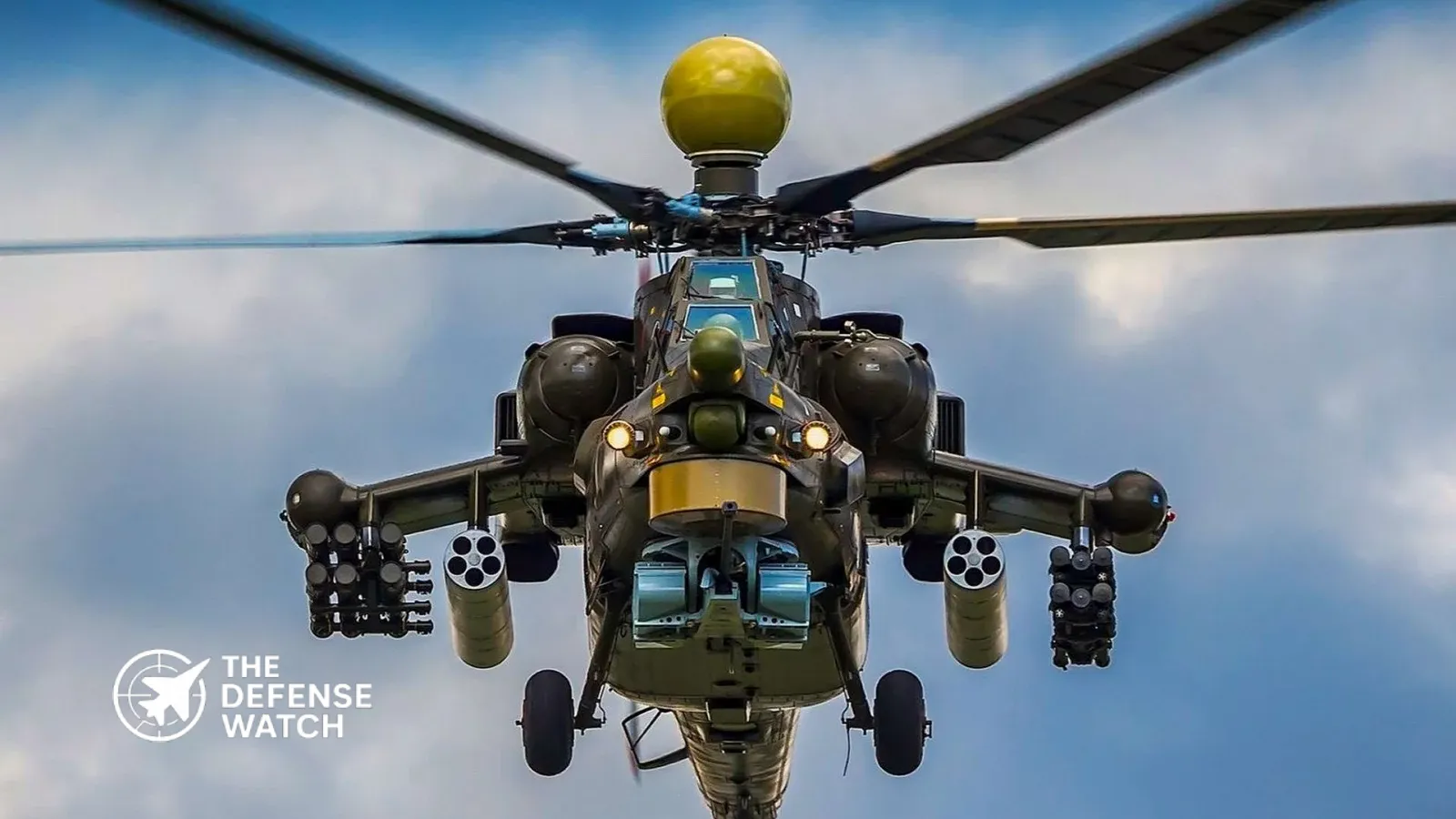
Moscow has transferred six Mi-28NE attack helicopters to Tehran, expanding Iran inventory of modern rotary wing strike platforms. The Mi-28NE is the export version of the Mil Mi-28, known in Russian service as the Night Hunter.
Platform Capabilities And Combat Role
The Mi-28NE is designed as a dedicated anti armor and close air support helicopter. It features a chin mounted 30mm Shipunov 2A42 cannon, compatible with high explosive and armor piercing ammunition. The aircraft can carry anti tank guided missiles, typically the Ataka series, as well as unguided rockets and short range air to air missiles.
Powered by twin turboshaft engines, the helicopter is built for all weather, day and night operations. It incorporates radar, electro optical targeting systems, and defensive countermeasures intended to increase survivability in contested airspace.
Compared with older platforms in Iranian service such as the Bell AH-1J SeaCobra, the Mi-28NE provides improved sensor fusion, heavier payload capacity, and better crew protection. The cockpit is armored, and critical systems are designed with redundancy to withstand battle damage.
Operational Impact For Iran
The Russian delivery of six Mi-28NE helicopters enhances Iran ability to conduct close air support and anti armor missions across varied terrain, including mountainous and desert regions.
Iran rotary wing fleet has historically relied on legacy systems dating back to the pre 1979 era, supplemented by limited domestic upgrades. Introducing a modern attack helicopter like the Mi-28NE improves strike precision, stand off engagement range, and night fighting capability.
From a tactical standpoint, the aircraft can support ground forces, defend key infrastructure, and provide rapid response against mechanized threats. Its missile armament allows engagement of armored vehicles at several kilometers, reducing exposure to short range air defenses.
However, the small number, six aircraft, suggests a limited operational footprint unless followed by additional orders. Sustainment, pilot training, spare parts supply, and integration into existing command networks will shape the long term effectiveness of the fleet.
Broader Russia Iran Defense Ties
The transfer underscores expanding defense cooperation between Moscow and Tehran. In recent years, both countries have deepened military coordination amid shifting regional dynamics and Western sanctions pressure.
Russia has marketed advanced combat aircraft and air defense systems to Iran, while Tehran has pursued modernization to offset regional rivals equipped with Western platforms. The Mi-28NE delivery fits within this broader pattern of selective, high value acquisitions.
Authoritative defense analysis from institutions such as the International Institute for Strategic Studies has noted that Iran armed forces continue incremental modernization efforts, often focused on asymmetric capabilities. The addition of dedicated modern attack helicopters signals attention to conventional battlefield roles as well.
Regional Security Context
The arrival of the Mi-28NE comes amid persistent tensions in the Middle East, including periodic cross border strikes and ongoing competition among regional powers. Attack helicopters remain critical assets for rapid reaction, border security, and support to ground formations.
While six helicopters alone do not alter the regional balance of power, they do enhance Iran tactical flexibility and strike options. The operational readiness of the fleet will depend on training cycles and logistical support over time.
As more details emerge regarding basing locations, unit assignments, and future procurement plans, the Russian delivery of six Mi-28NE helicopters will remain a key data point in assessing Iran evolving air combat posture.
■ KEY FACTS AT A GLANCE- ► Israel’s Ambassador to the U.S., Yechiel Leiter, confirmed the IAF’s F-35I Adir fleet carries stealth-compatible range-extending fuel tanks.
- ► The modification preserves the aircraft’s low-observable radar signature — a technically demanding engineering achievement.
- ► The Adir can now carry four externally mounted wing missiles in “beast mode” configuration for high-payload strike sorties.
- ► Conformal tank designs are reported to push the F-35I’s combat radius beyond 1,700 km — sufficient for round-trip strikes on Iran without aerial refueling.
- ► The IAF is the only F-35 operator to have conducted combat strikes using the external wing-carriage design.
- ► Israel’s fleet stood at 48 F-35I aircraft as of January 2026, with a total of 75 on order.
- ► The U.S. Air Force cited Israeli modifications when requesting FY2026 funds to explore similar F-35 external fuel tank integration.
Israel’s F-35I Adir Gets Stealth Fuel Tanks — What It Means
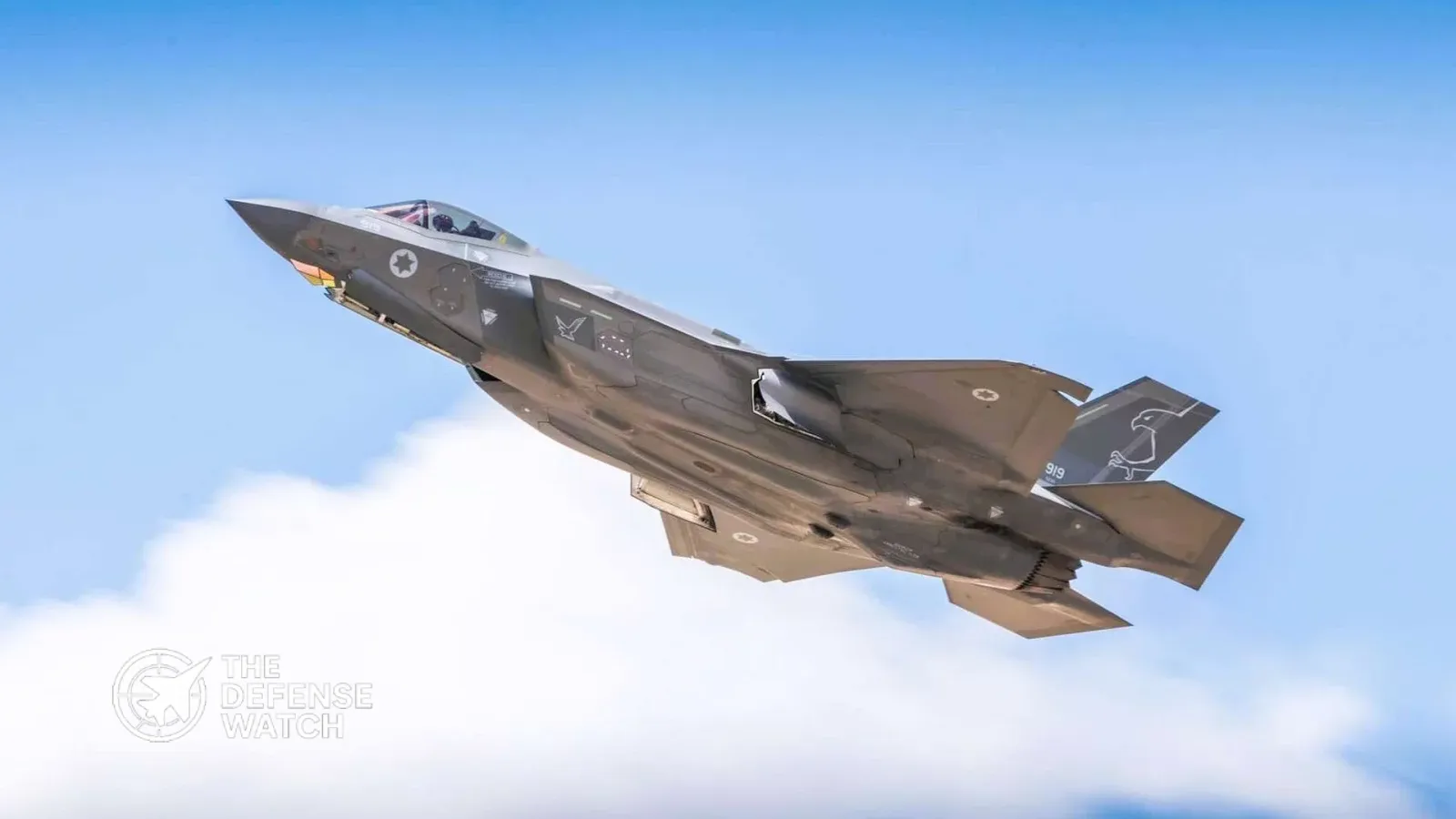
The Israeli Air Force’s F-35I Adir stealth fuel tank program has moved from long-rumored development into publicly confirmed operational reality. On February 16, 2026, Israel’s Ambassador to the United States, Yechiel Leiter, stated in an interview with the daily Israel Hayom — as reported by The Times of Israel — that the IAF’s Adir fleet has been fitted with range-extending fuel tanks “without compromising stealth.” Simultaneously, the ambassador disclosed that four external wing-mounted missiles have been added to the platform’s arsenal, formalizing the jet’s “beast mode” capability for high-payload strike missions.
The announcement carries substantial strategic weight. It is the first on-the-record confirmation by a senior Israeli official that the classified program — long speculated about in defense circles — has crossed the threshold from development into declared operational use. The timing, coming eight months after Israel’s June 2025 air campaign against Iran (Operation Rising Lion), signals that Israel intends adversaries, allies, and the broader strategic community to factor a more capable, longer-reaching F-35I into their strategic calculations.
“We developed fuel tanks that extend the aircraft’s range without compromising stealth, and we added four missiles on the wings.” — Yechiel Leiter, Israel’s Ambassador to the United States | Israel Hayom / Times of Israel, Feb. 16, 2026
The F-35I Adir: Not Your Standard F-35
To understand why Israel could achieve this modification while no other F-35 operator has, it is essential to understand what the F-35I Adir actually is. The Adir — Hebrew for “Mighty One” — is the only F-35 variant in global service that was contractually authorized for deep, indigenous systems integration by its operator before the first aircraft was delivered.
While every other nation that flies the F-35 operates a platform locked to Lockheed Martin’s standard hardware and software baseline, Israel negotiated a unique arrangement with the U.S. government and the F-35 Joint Program Office. This agreement permitted the Israeli defense industry to integrate national mission computers, electronic warfare suites developed by Elbit Systems, indigenous weapons, domestic data links, proprietary encryption systems, and custom command-and-control interfaces directly into the aircraft’s architecture.
This modular, open-architecture framework made the stealth tank program technically feasible. Because Israel and its defense contractors could work within the aircraft’s mission-system software and structural envelope — in cooperation with Lockheed Martin and the F-35 JPO — designing and certifying conformal fuel tanks that are aerodynamically and electromagnetically compatible with the airframe was a far less restrictive process than for any other operator.
The Stealth-Range Dilemma: How Israel Solved It
External fuel tanks on a stealth aircraft present a well-understood engineering paradox. The F-35’s low-observable profile derives from the careful geometric shaping of every external surface — every panel line, inlet, and contour is optimized to scatter radar energy away from threatening emitters. Attaching conventional pylon-mounted drop tanks immediately creates sharp edges, new radar-reflective volumes, and surface discontinuities that dramatically inflate the aircraft’s radar cross-section.
Israel’s solution, as described by open-source analysis and corroborated by Ambassador Leiter’s remarks, involved designing conformal tanks — installations that follow the curvature and contour of the fuselage rather than hanging below it on pylons. The tanks are reported to be “covered with absorbent materials” and attached using pylons engineered to preserve aerodynamic and electromagnetic signature characteristics, resulting in a cruise-flight range exceeding 2,200 kilometers — sufficient for a round-trip mission from Israeli airbases to targets deep inside Iranian territory without aerial refueling.
RANGE CONTEXT: The F-35A’s standard published combat radius on internal fuel alone is approximately 670 nautical miles (roughly 1,240 km). The Adir’s conformal tank integration is reported to extend unrefueled operational reach beyond 1,700 km — a critical threshold for striking Iran’s nuclear and missile infrastructure and returning safely.
The War Zone (TWZ), citing U.S. Air Force budget documents, confirmed in June 2025 that Israel’s extended-range capability was employed operationally during the Israel-Iran conflict. While precise technical parameters remain classified, the combination of conformal fuel tank geometry, radar-absorbent coatings, and jettison capability provides a credible, operationally viable answer to the stealth-range dilemma that has constrained fifth-generation aircraft globally.
Beast Mode: Four External Missiles and the Firepower Equation
Leiter’s second disclosure — that the F-35I now carries four externally mounted wing missiles — ties the range story to a separately confirmed IAF capability known colloquially as “beast mode.” The F-35 was originally optimized exclusively for internal weapons carriage. Its two internal bays hold precision-guided munitions while maintaining the aircraft’s full stealth profile. But internal volume is inherently limited.
In the year prior to Leiter’s interview, the IAF publicly announced that its Flight Test Center, working alongside Lockheed Martin and the Pentagon’s F-35 program, had developed an external wing-carriage capability. The IAF stated explicitly that the Adir is “the only F-35 to conduct strikes with this design.” Imagery released by the IDF during the June 2025 Iran air campaign confirmed that F-35Is flew combat missions with missiles visibly attached to their wings.
In “beast mode,” the F-35I trades its minimum radar signature for substantially increased firepower. The configuration is most tactically relevant in phases of a campaign where adversary air defenses have been degraded by prior SEAD (Suppression of Enemy Air Defenses) operations — reducing the survivability premium on stealth and making the firepower premium on heavy external ordnance loads more valuable per sortie.
Operational Impact: Tanker Independence and Mission Flexibility
One of the strategic drivers behind Israel’s long-range fuel tank program was a structural vulnerability in the IAF’s aerial refueling capacity. Prior to the June 2025 campaign, Israel operated only seven Boeing KC-707 Re’em tanker aircraft — a number defense analysts modeled as insufficient to sustain the scale of the observed operations. Extended-range F-35Is appear to have provided the additional endurance that made the campaign viable without confirmed external tanker support.
The equation is now shifting further. Israel has contracted the KC-46A Pegasus — the U.S. Air Force’s next-generation aerial refueling platform — to replace its aging Boeing 707-based tankers. But the conformal fuel tank program provides a complementary hedge: it reduces the dependency on tanker rendezvous points, which are themselves high-value targets and operationally complex to orchestrate in contested airspace.
Ambassador Leiter underscored Israel’s depth of experience in his interview, stating that Israeli pilots have logged more F-35 flight hours than all other foreign partner-nation pilots combined. He also relayed that Lockheed Martin’s chief executive described Israeli technical feedback and field-driven innovations as worth “many billions” to the company — an acknowledgment that Adir program modifications represent not just a national capability gain, but a data resource of global relevance to the entire F-35 enterprise.
U.S. Air Force Takes Note: FY2026 Budget Request Follows Israeli Lead
The Adir’s extended-range performance during Operation Rising Lion appears to have directly influenced U.S. Air Force procurement thinking. According to reporting by The War Zone citing U.S. Air Force budget documents, the USAF’s proposed Fiscal Year 2026 budget includes a request for funds to “evaluate feasibility and decompose requirements for integration of External Fuel Tanks to support long-range missions of the F-35.” This represents a reversal of an earlier programmatic decision that had eliminated the requirement for streamlined F-35 drop tanks.
The FY2026 request is particularly notable for the Navy’s carrier-based F-35C, whose existing development of the F/A-XX sixth-generation replacement has been placed on hold — leaving the C-model as the carrier air wing’s primary penetrating strike asset. Extended-range fuel tanks would directly address the F-35C’s combat radius limitations in Indo-Pacific scenarios. The USAF has indicated it will study Israeli modifications to the F-35I Adir as a reference point in the feasibility evaluation.
BROADER IMPACT: The F-35’s external tank challenge is not unique to Israel. Other partner nations operating the F-35 without organic tanker capacity — including several European allies — are watching Israeli developments closely as a potential model for extending their own aircraft’s effective operational reach. Strategic Implications: Deterrence, Iran, and the Regional Air Balance
Read in the context of Israel’s declared military doctrine and its active conflict with Iran, Leiter’s confirmation is clearly intended to carry a deterrence message. The operational credibility of Israel’s strike option against Iran’s nuclear program has historically been questioned by analysts on the grounds of range and weapons load — arguments that a larger aircraft like the F-15I Ra’am was better suited to the deep-strike mission. Those arguments are substantially weakened by the confirmed extended-range and beast-mode capabilities.
A more capable F-35I Adir — one that can reach central Iran and back without tanker support, carry a meaningful weapons load in either low-observable or high-payload configuration, and exploit its advanced sensor-fusion and electronic warfare systems throughout the mission — reinforces Israel’s capacity for unilateral action. It also reshapes alliance planning with Washington: the more credibly self-sufficient Israel’s strike posture is, the greater its leverage in discussions about U.S. involvement in future escalation scenarios.
For Iran, the strategic calculus is less favorable. The June 2025 air campaign already demonstrated that F-35I Adirs could penetrate Iranian air defenses — including elements of the Russian-origin S-300PMU-2 network — and strike hardened infrastructure. The confirmation that those aircraft now carry significantly more fuel and more weapons, with fewer logistical constraints, means the same capability is not a one-time demonstration but a durable, repeatable operational posture.
Fleet Status and What Comes Next
As of January 18, 2026, the IAF received its 48th F-35I Adir at Nevatim Air Base — adding tail numbers 978, 979, and 983 to its inventory in a single delivery ceremony. Under existing agreements with the United States, Israel is contracted to receive a total of 75 F-35Is, meaning more than a third of the eventual fleet has yet to be delivered. As those aircraft arrive in an already upgraded baseline configuration, Israel’s aggregate strike capacity will grow incrementally.
Technical details of the conformal tank program remain classified. Neither the Israeli government nor Lockheed Martin has released specific data on fuel volume, weight penalty, signature penalty, or integration architecture. External analysts note that some residual signature increase is almost certainly present with any external or conformal installation, and that the tanks would likely be jettisoned before penetrating the densest threat rings. The operational value, however, lies in the transit phase and the flexibility to reach distant targets with reduced reliance on tanker support.
What Ambassador Leiter’s public disclosure does, above all, is remove the capability from the realm of speculation. The F-35I Adir with stealth fuel tanks and external wing missiles is not a development program or a future aspiration — it is, by Israel’s own account, fielded and operationally proven. The Middle East air balance has shifted accordingly, and every actor in the region — and every F-35 operator beyond it — will be recalibrating their assessments in the months ahead.
The US-Iran nuclear talks in Geneva entered their second round on Tuesday, February 17, 2026, as Washington and Tehran seek to curb Iran’s nuclear program through indirect, Oman-mediated negotiations.
The latest round is taking place at the Embassy of Oman in Geneva, Switzerland, with the U.S. delegation led by Middle East envoy Steve Witkoff and senior advisor Jared Kushner. Iran’s side is headed by Foreign Minister Abbas Araghchi.
Background and Recent Developments
The second round comes just eleven days after the first direct engagement between the two sides on February 6, 2026. The current diplomatic push follows a turbulent 2025 that saw direct military confrontation between Iran and Israel, followed by U.S. B-2 Spirit stealth bomber strikes on Iranian nuclear facilities in June 2025.
Since then, Iran has reportedly paused high-level uranium enrichment activities, while the United States has significantly ramped up its military footprint across the Middle East.
Current U.S. Military Posture
The U.S. Navy currently maintains two carrier strike groups in or near the region:
- USS Abraham Lincoln (CVN-72) and its strike group, already operating in the Arabian Sea.
- USS Gerald R. Ford (CVN-78), the Navy’s newest and most advanced supercarrier, recently redirected toward the Middle East.
Additional U.S. assets include guided-missile destroyers, air defense systems, F-35C and F-15E squadrons, and extended troop deployments in Jordan, Qatar, Bahrain, and Saudi Arabia. Pentagon officials have indicated preparations for sustained operations if diplomacy fails.
Iran has responded by launching large-scale maritime drills near the Strait of Hormuz, with the IRGC Navy emphasizing its control over the critical chokepoint.
Key Positions
According to multiple reports, the two sides remain far apart:
- The United States is seeking deep, verifiable limits on Iran’s enrichment capacity, possible dismantlement of certain facilities, ballistic missile restrictions, and curbs on regional proxy activity.
- Iran insists talks remain limited to the nuclear file, demands meaningful sanctions relief, and rejects any “submission before threats.” Foreign Minister Araghchi has repeatedly stressed that Iran will not abandon peaceful nuclear enrichment entirely.
On Monday, Araghchi met with IAEA Director General Rafael Grossi in Geneva to discuss technical cooperation and verification issues.
Trump Administration Stance
President Donald Trump, speaking aboard Air Force One, said he would be involved in the talks “indirectly” and expressed belief that Iran wants a deal.
“I don’t think they want the consequences of not making a deal… We could have had a deal instead of sending the B-2s.”
Secretary of State Marco Rubio described the negotiations as difficult but said the U.S. remains willing to pursue a diplomatic outcome.
Outlook
Analysts note that the presence of heavy U.S. naval power in the Gulf serves as both leverage for the talks and a contingency should they collapse. A breakthrough remains uncertain, given the deep mistrust and wide gaps on core issues.
Newer Posts