Executive Summary: A Congressional Research Service report dated May 13, 2026, formally documents the loss or significant damage of 42 U.S. military aircraft during Operation Epic Fury — the 40-day American-Israeli air campaign against Iran that began February 28, 2026. The $2.6 billion tally covers 24 MQ-9 Reapers, seven KC-135 tankers, an E-3 AWACS, and multiple fighter types. The Pentagon has yet to provide Congress with a comprehensive, verified accounting of those losses.
US Operation Epic Fury Aircraft Losses Now Formally Documented — And the Bill Is $2.6 Billion
The full scope of U.S. military aircraft attrition during Operation Epic Fury is coming into focus — and the numbers are forcing a hard reckoning on Capitol Hill. The U.S. military lost or suffered significant damage to 42 aircraft during the aerial bombing campaign against Iran, which is currently in a tenuous ceasefire.
A Congressional Research Service report dated May 13, 2026, has formally documented what aviation and defense analysts had been tracking piecemeal since late February — that the United States military lost or sustained damage to more than 40 aircraft during Operation Epic Fury, the 40-day US-Israeli air campaign against Iran that began on February 28, 2026. The Defense Department estimated the total cost of the losses at $2.6 billion.
The report represents the first government-level document to systematically quantify those losses — and it arrives amid mounting frustration in Congress over the Pentagon’s reluctance to confirm the full extent of combat damage.
What the CRS Report Found: A Platform-by-Platform Breakdown
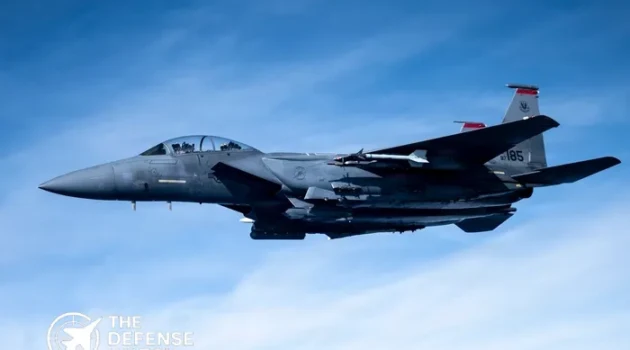
The Congressional Research Service report lists the aircraft combat losses from Epic Fury through early April 2026, including: four F-15E Strike Eagle fighter aircraft; one F-35A Lightning II; one A-10 Thunderbolt II; seven KC-135 Stratotanker aerial refueling aircraft; one E-3 Sentry AWACS; two MC-130J Commando II special operations aircraft; one HH-60W Jolly Green II combat search-and-rescue helicopter; 24 MQ-9 Reaper medium-altitude long-endurance drones; and one MQ-4C Triton high-altitude unmanned aircraft.
While many incidents were previously reported, the full scope of the impact was laid out in the CRS report released on May 13. Though the document in some cases cites media reports rather than Pentagon statements, it represents the first government source to quantify losses on platforms like the General Atomics MQ-9A Reaper UAS, Boeing KC-135 Stratotanker refueling jets, Sikorsky HH-60W combat rescue helicopter, and Northrop Grumman MQ-4C maritime patrol UAS.
The report itself acknowledges that the numbers may not be final. “The number of aircraft damaged or destroyed may remain subject to revision due to multiple factors, which may include classification, ongoing combat activity and attribution,” the CRS report notes.
The Drone Attrition Problem
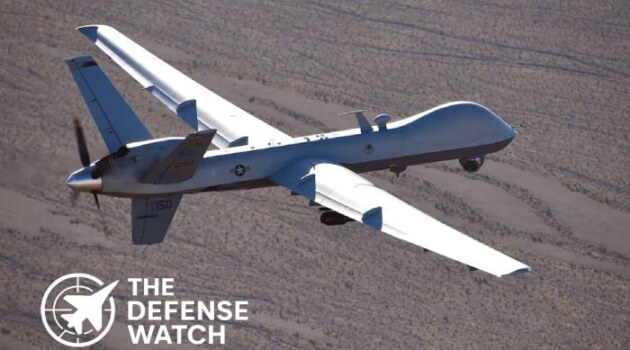
The single largest category of loss involves unmanned systems. Data cited during congressional questioning suggests approximately 24 MQ-9 Reaper drones were destroyed during the campaign — a figure representing more than 60 percent of reported attrition — demonstrating the vulnerability of persistent surveillance and strike platforms inside highly contested air-defense environments.
In early 2025, Houthi forces in Yemen shot down seven MQ-9s in just six weeks, demonstrating both the vulnerability of the platform and the willingness of operators to accept such losses in pursuit of operational objectives. Iran’s air-defense network proved considerably more lethal.
The scale of Reaper losses raises a broader strategic question: whether a platform optimized for counterterrorism and low-threat environments can sustain acceptable loss rates against near-peer integrated air defenses. The answer, based on Operation Epic Fury, appears to be a qualified no — and will likely accelerate procurement decisions around next-generation attritable and survivable unmanned platforms.
Tanker Fleet Under Strain: Seven KC-135s Gone
The tanker losses represent a serious, compounding readiness problem. Seven Boeing KC-135 Stratotankers have been lost as a result of the Iran war, according to the CRS report, citing official statements and unofficial media reports. US Central Command confirmed the destruction of one Stratotanker and significant damage to another during a mid-air collision over Iraq while providing air refueling support to the bombing campaign. That incident resulted in six US Air Force fatalities.
Another five KC-135 jets were destroyed on the ground by the same strike that hit the E-3, with the CRS citing news reports.
The U.S. Air Force operates approximately 376 KC-135s across active duty, Air Force Reserve, and Air National Guard units. The Air Force has been gradually replacing the Stratotanker with the Boeing KC-46A Pegasus, which entered service in 2019 and has reached a fleet of 100 aircraft.
The loss of seven Stratotankers — roughly two percent of the total fleet — may not be strategically crippling in isolation. But combined with the operational demands of a potential future conflict in the Pacific, where aerial refueling coverage is even more critical over vast oceanic distances, the depletion of aging tanker capacity carries long-term risk that Pentagon planners cannot ignore.
One indicator that combat losses are taking a toll on the tanker fleet is a move by the U.S. Air Force to begin restoring mothballed KC-135s to active service in the weeks since the Iran war began. A retired Stratotanker was moved from the Davis-Monthan AFB “boneyard” in the first week of April to a depot maintenance facility at Tinker AFB that specializes in restoring aircraft to flight status.
AWACS Loss Flags Capability Gap — and Forces a Procurement Rethink
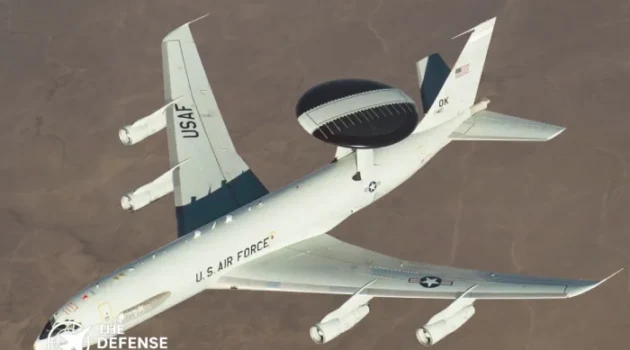
Among the most strategically significant single-platform losses is the destruction of a Boeing E-3 Sentry. One E-3 AWACS was destroyed on the ground by an Iranian strike, with no immediate replacement available. Though the Pentagon now says it will pursue fielding Boeing’s E-7A Wedgetail successor, covering two prototypes and five operational jets, those aircraft are years from delivery.
The loss of an E-3 is specifically flagged by the CRS as a numerically limited asset that could “create capability gaps or increase risk in other theaters.”
The E-3 Sentry is no longer in production, and the fleet is shrinking. The US Pentagon is reportedly rethinking its decision to cancel the E-7 replacement program and is considering adding the E-7 back into its budget, as the Iran conflict has highlighted the strategic value of the E-3 Sentry.
The AWACS loss is perhaps the most strategically irreversible single incident of the campaign. Unlike fighter jets or tankers, the airborne early warning mission requires specialized aircraft with no near-term off-the-shelf substitute. The gap in theater air command-and-control coverage, even temporary, creates exactly the kind of seam adversaries like China and Russia are studying for future exploitation.
F-35 Damaged in Combat — A Historic First
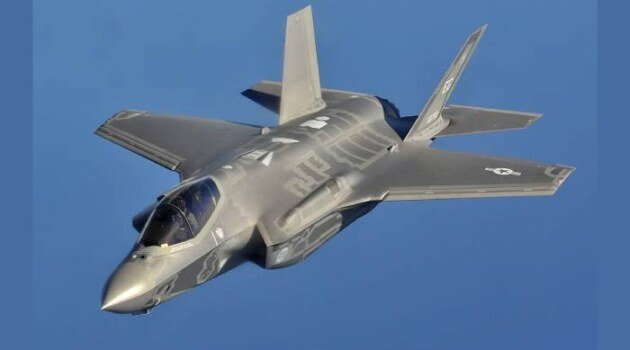
Among the most notable losses was the damage sustained by an F-35A Lightning II stealth fighter — the first time in the aircraft’s operational history that it had been hit in combat. The F-35 was damaged in a combat mission on March 19, most likely by Iranian forces.
Iranian officials claimed it as a victory for their air-defense forces. The Islamic Revolutionary Guard Corps said it had “seriously damaged” the F-35 over central Iran. A Ukrainian news agency said the IRGC’s Raad air defense system could have hit the aircraft, while Chinese analysts told the South China Morning Post that the damage was likely caused by an adapted air-to-air missile.
The incident will fuel years of technical and doctrinal debate. The F-35’s low-observable characteristics were designed to reduce risk, not eliminate it — and any confirmed kill or near-kill against the platform in a peer-contested environment has implications for how the aircraft is employed in future high-end conflicts.
The MC-130J Incident: Aircraft Abandoned on Iranian Soil
Two US military special operations transport aircraft were abandoned and destroyed on the ground inside Iran as part of the effort to recover a downed American airman. Photos and videos circulated by Iranian state media showed the charred remains of two fixed-wing transports on a flat desert pan in Isfahan province. The aircraft appear to be the specialized MC-130J Commando II variant used to infiltrate and exfiltrate special operations troops into enemy-controlled areas. Also visible in the wreckage were the remnants of what appeared to be Boeing MH-6 Little Birds.
Some 155 aircraft were involved in the recovery mission, including bombers, fighters, tankers, rescue helicopters, and special operations transports, with one fighter shot down and two rescue transports abandoned on the ground. The sheer scale of the rescue effort underscored both the commitment of U.S. forces to personnel recovery and the operational cost of sustaining combat search-and-rescue in a deeply hostile air environment.
Congressional Pressure Mounts as Pentagon Stays Quiet
US Democratic Congressman Ed Case said during a special Senate committee hearing that the United States had lost 39 aircraft since the start of the war with Iran on February 28, citing a report from a US defense publication. Case asked whether the Pentagon had calculated “a retention cost on all those aircraft.”
The Pentagon’s response was less than definitive. Pentagon CFO Jay Hurst declined to provide verified loss data, stating “We want to do a full diagnosis of the aircraft before we estimate that cost,” leaving replacement costs uncalculated.
During a May 12, 2026, hearing, Acting Pentagon Comptroller Jules W. Hurst III testified that the department’s cost estimate for military operations in Iran has increased to $29 billion. “A lot of that increase comes from having a refined estimate on repair or replacement costs for equipment,” he said.
The Pentagon’s refusal to confirm total loss figures in an open congressional session, combined with the CRS report’s documentation of 42 aircraft at a total cost of $2.6 billion, leaves a significant gap between what the public record shows and what the Defense Department has formally acknowledged.
The CRS report raises pointed questions for congressional oversight: it remains unclear whether the Department of Defense has provided Congress a full accounting of aircraft lost in Operation Epic Fury. Congress may need to assess whether it has sufficient information to evaluate the potential effects of aircraft losses and potential plans for developing or procuring replacements.
What This Means for US Airpower Going Forward
The high-intensity phase of Operation Epic Fury lasted approximately 39 days and generated nearly 13,000 United States Air Force sorties across a battlespace stretching from Persian Gulf operational corridors into Iranian territory. The Pentagon currently estimates operational expenditure at approximately $29 billion.
The replacement costs for the 42 aircraft lost could exceed $7 billion, according to a recent defense and intelligence report prepared for Congress. That estimate covers out-of-production platforms — including the KC-135, E-3, and A-10 — where no direct replacement is immediately available.
The lessons of Epic Fury extend well beyond the Middle East. As a preview of what China could do to American bases and equipment, the IRGC destroyed dozens of American aircraft — some of which are no longer in production. After unrelenting bombardment using some of America’s biggest and heaviest bombs, the intelligence community reportedly assesses that 90% of Iran’s underground missile storage and launch facilities are still active.
The combination of drone mass, integrated air defense, and ground-based missile strikes demonstrated that even a second-tier military power can impose significant material costs on U.S. forces in a contested theater. For Pentagon planners focused on a potential future Pacific conflict, where operational distances are greater and logistics chains more fragile, Operation Epic Fury is a data point that cannot be dismissed.