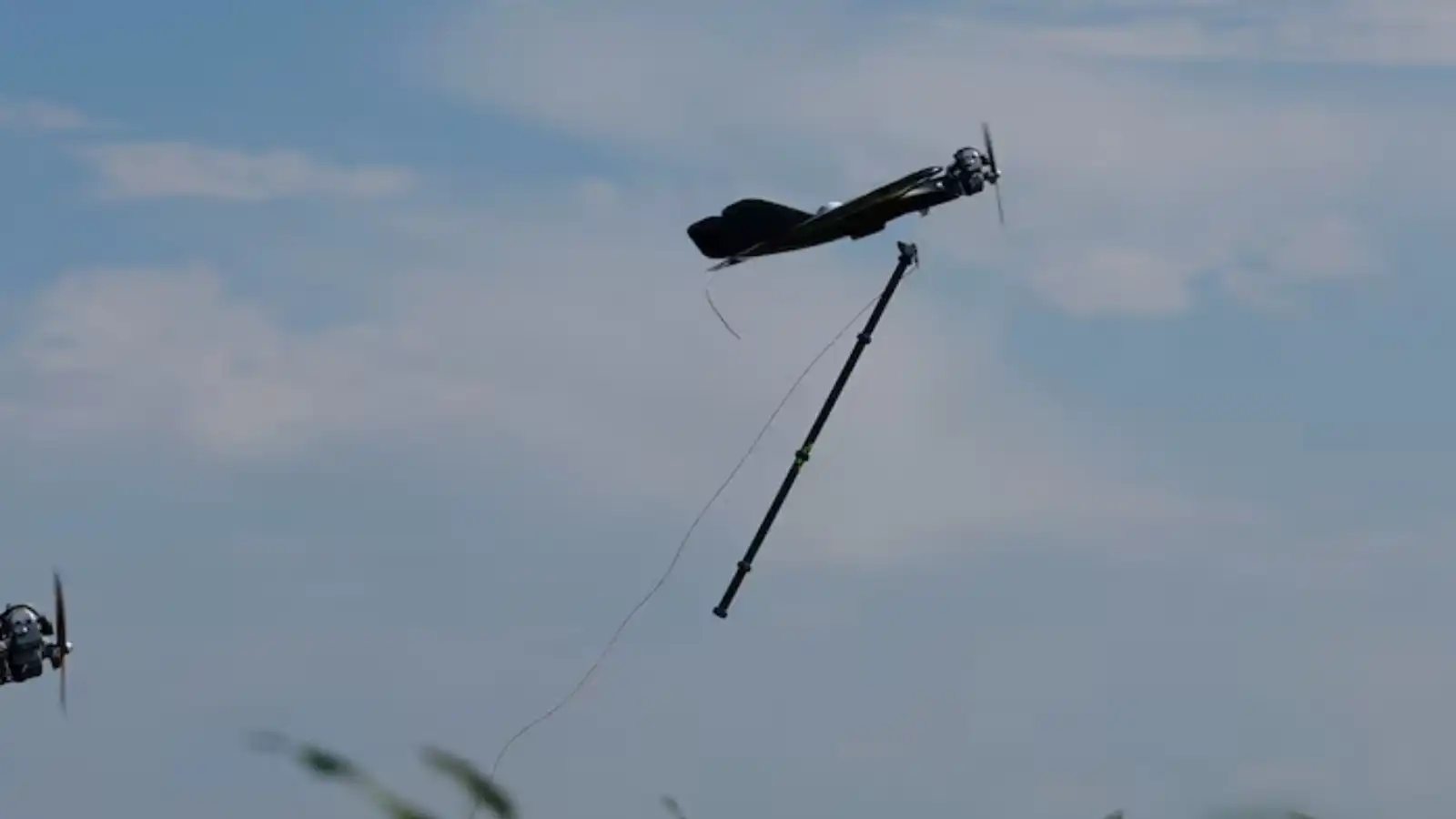
Ukraine is shifting more drone operations beyond the front line as both sides intensify electronic warfare and deep-strike campaigns.
Executive Summary:
Ukraine is intensifying its long-range drone warfare campaign against Russian rear-area infrastructure and logistics hubs. The shift reflects Kyiv’s growing emphasis on unmanned systems to offset Russia’s larger conventional force advantage and pressure battlefield supply networks.
Ukraine Expands Drone Warfare Beyond Front Lines
Ukraine drone warfare is entering a new operational phase as Kyiv increases attacks against Russian battlefield support infrastructure located well behind the front line. According to reporting from Reuters, Ukrainian drone units are increasingly focused on disrupting logistics corridors, command facilities, ammunition storage sites, and troop concentrations supporting Russian offensive operations.
The campaign reflects the growing central role unmanned aerial systems now play in the conflict. Drones have evolved from tactical reconnaissance assets into strategic strike platforms capable of shaping operations across large sections of the battlefield.
Ukrainian officials and drone operators cited by Reuters described how smaller, lower-cost systems are being used to pressure Russian rear positions continuously. The strategy aims to complicate Russian resupply operations while forcing Moscow to divert additional air defense and electronic warfare resources away from frontline combat zones.
The expanding use of drones also demonstrates how both sides are adapting to a battlefield increasingly dominated by precision strike systems, electronic warfare, and rapid targeting cycles.
Deep Strike Operations Target Russian Logistics
Ukraine’s long-range drone campaign appears designed to exploit one of Russia’s most persistent vulnerabilities, battlefield logistics and operational depth.
Russian forces continue to rely heavily on rail networks, ammunition depots, fuel storage sites, and centralized command structures to sustain large-scale operations. By targeting rear-area support infrastructure, Ukrainian forces aim to slow Russian offensive momentum without requiring direct large-scale assaults on fortified positions.
Reuters reported that Ukrainian drone operators are working closer with intelligence and targeting units to identify logistical bottlenecks and high-value support facilities. These strikes are intended to create cumulative operational pressure rather than isolated tactical effects.
This approach mirrors broader trends in modern warfare where relatively inexpensive unmanned systems can impose disproportionate costs on larger conventional forces. The conflict has become a real-world demonstration of how drones are reshaping operational planning across land warfare domains.
Military analysts have increasingly noted that rear-area security is becoming more difficult as drone range, endurance, autonomy, and targeting precision continue to improve.
Electronic Warfare Continues To Shape The Drone Battle
One of the defining features of Ukraine drone warfare remains the intense electronic warfare environment across the conflict zone.
Both Ukrainian and Russian forces are deploying jamming systems, signal disruption technologies, spoofing tools, and counter-UAS defenses at large scale. Reuters noted that Ukrainian operators frequently face communication interference and GPS denial measures during missions.
As a result, drone development on both sides is rapidly evolving toward more resilient navigation systems, autonomous flight capabilities, and alternative communications architectures.
The constant technological adaptation cycle has accelerated innovation across the unmanned systems sector. Smaller commercial drone technologies are being modified for military use, while domestic defense industries are racing to improve survivability against electronic countermeasures.
The conflict is increasingly viewed by Western military planners as a case study in future high-intensity drone warfare. NATO militaries and defense manufacturers continue monitoring lessons from Ukraine closely, particularly regarding low-cost strike drones, battlefield networking, and electronic warfare integration.
Drone Production And Attrition Remain Critical
Ukraine’s ability to sustain large-scale drone operations depends heavily on production capacity and rapid replacement rates.
Attrition levels for small unmanned systems remain extremely high. Many drones are lost to jamming, air defenses, weather conditions, or direct interception before completing missions. Despite those losses, drones remain cost-effective compared with traditional missile systems or manned strike aircraft.
Reuters reporting highlighted the importance of Ukraine’s expanding domestic drone manufacturing sector, which has become a central pillar of Kyiv’s defense strategy. Ukrainian authorities continue encouraging partnerships between military units, technology developers, and private industry to accelerate production.
The broader strategic goal appears to center on creating a scalable strike capability capable of maintaining operational pressure despite ongoing losses.
Russia, meanwhile, has also significantly expanded drone production and acquisition efforts, including the use of Iranian-designed Shahed systems and domestically produced variants. The growing drone competition has effectively created an industrial race centered on quantity, survivability, and electronic resilience.
Strategic Implications For Modern Warfare
The intensifying drone campaign highlights a broader transformation underway in modern military operations.
Ukraine drone warfare has shown that relatively low-cost unmanned systems can influence operational planning at tactical, operational, and strategic levels simultaneously. Rear-area strike capability once associated primarily with advanced air forces is now increasingly available through distributed drone networks.
This shift carries significant implications for military modernization efforts worldwide. Armed forces are reassessing force protection measures, logistics dispersion strategies, counter-drone defenses, and battlefield communications resilience.
The Ukraine conflict continues to demonstrate that future wars are likely to feature persistent drone surveillance, rapid precision strikes, and constant electronic warfare activity across the battlespace.
For Russia and Ukraine alike, the drone war has become not merely a supporting capability, but a central component of battlefield strategy.