Executive Summary
- Finnish President Alexander Stubb told Reuters on September 24 that he had urged SpaceX owner Elon Musk to expand Starlink access into areas of Russia where Ukrainian forces could use the network to support attacks against Russian ballistic-missile launchers.
- Ukraine is facing a continuing shortage of ballistic-missile interceptors. Ukrainian President Volodymyr Zelenskyy said on September 24 that Patriot interceptors remain the country’s effective option against Russian ballistic missiles, while Kyiv and NATO continue efforts to secure additional stocks.
- The proposal highlights a wider military-technology issue: satellite communications can support the targeting and command architecture behind long-range fires, but expanding Starlink coverage into Russian territory would be a significant policy decision by SpaceX and would not itself provide an air-defense or strike weapon.
Finnish President Alexander Stubb said September 24 that he had appealed to SpaceX owner Elon Musk to expand Starlink satellite internet access for Ukraine into areas of Russian territory where ballistic-missile launchers are located.
Speaking to Reuters in New York, Stubb said he wanted Ukraine to have Starlink access in areas where Russian missile launchers operate, including occupied Ukrainian territory and Russia itself. He argued that the additional connectivity could help Ukrainian forces target launchers and potentially reduce the threat posed to Ukrainian cities and infrastructure.
The proposal comes as Ukraine prepares for another winter under sustained Russian missile and drone attacks. Kyiv is simultaneously seeking additional Patriot interceptors because of the limited number of systems capable of engaging Russian ballistic missiles.
Starlink Is Part of the Targeting Architecture, Not an Interceptor
The distinction is important.
Starlink provides communications connectivity. It does not detect, track, or intercept ballistic missiles by itself. Its military value comes from its ability to connect dispersed users, command posts, sensors, drones and other systems across a battlespace.
Reuters reported that Ukrainian officials believe extending Starlink availability into Russian territory could allow Ukrainian weapons to engage mobile ballistic-missile launchers located within several hundred kilometers of the border. Reuters did not establish that Starlink itself supplies the targeting data or that expanded coverage would automatically enable such strikes.
That distinction matters because targeting a mobile missile launcher requires more than a communications link. A military kill chain normally depends on some combination of intelligence collection, target detection, geolocation, identification, command and control, weapon assignment and battle-damage assessment.
Starlink could support parts of that network, but the specific Ukrainian systems and procedures that would be used against Russian launchers were not disclosed in the Reuters report.
Why Ukraine Wants More Options Against Ballistic Missiles
Ukraine’s immediate problem is more fundamental than communications.
Zelenskyy said on September 24 that Russia had launched three waves of ballistic attacks against Kyiv and that Ukraine needs additional Patriot interceptors. He said Ukraine has developed effective methods against cruise missiles and drones but continues to depend heavily on Patriot for ballistic-missile defense.
The Finnish proposal therefore addresses a different layer of the problem.
| Layer | Primary function | Relevance to Ukraine |
|---|---|---|
| Satellite communications | Connects dispersed forces and systems | Supports command, control and data exchange |
| Intelligence and surveillance | Finds and tracks potential targets | Needed to locate mobile missile launchers |
| Long-range strike systems | Engages targets at extended distances | Could threaten launchers if detected and within weapon reach |
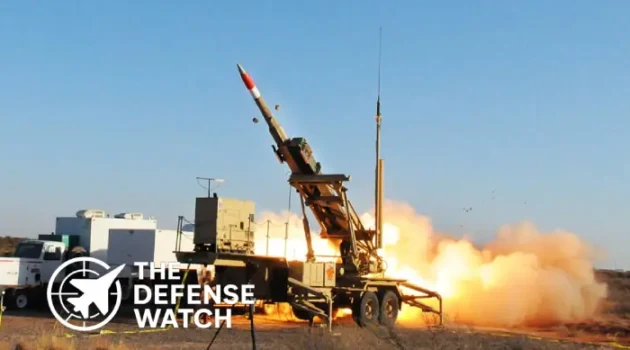
| Patriot | Intercepts incoming ballistic missiles | Provides point or area defense against the missile threat |
| Energy and infrastructure protection | Reduces effects of missile attacks | Critical ahead of winter |
The operational logic is straightforward: interceptors attempt to defeat the missile after launch, while attacks against launchers seek to reduce the threat earlier in the engagement chain.
Those approaches are complementary rather than interchangeable.
The Industrial Constraint Is Still Interceptors
The Starlink proposal does not remove Ukraine’s most immediate air-defense constraint.
NATO has repeatedly highlighted the shortage of Patriot missiles available to Ukraine. In February, NATO Secretary General Mark Rutte said the Prioritised Ukraine Requirements List, or PURL, had supplied around 75% of the missiles for Ukraine’s Patriot batteries and 90% of missiles used in other Ukrainian air-defense systems. He also said additional supplies were urgently needed.
Ukraine is also pursuing longer-term alternatives.
On September 16, Zelenskyy said Ukraine was working to expand an anti-ballistic defense initiative known as FREYJA, with the stated objective of producing a system that could be manufactured at sufficient scale and at a lower cost than existing systems. The specific technical architecture and performance figures for that program have not been publicly established in the sources reviewed for this article.
This creates a three-part requirement for Kyiv:
- Maintain enough interceptors to defend against incoming ballistic missiles.
- Improve the ability to detect and locate launch systems before missiles are fired.
- Expand domestic and allied production of air-defense and anti-ballistic systems.
The Starlink discussion falls primarily into the second category.
SpaceX’s Existing Restrictions Matter
Starlink’s own published policies show why expanded coverage would require a deliberate decision.
Starlink states that service availability depends on authorization and local regulatory requirements. Its current Ukraine guidance says additional security measures were implemented in February 2026 in coordination with Ukraine’s Ministry of Defense and Ministry of Digital Transformation, with terminals requiring government authorization to operate in Ukraine.
Starlink’s terms also state that its services are commercial communications products and that the company does not design or intend the service for offensive or defensive weaponry or comparable end uses. The terms additionally require compliance with export-control and sanctions laws and limit access to authorized locations.
That policy framework makes the proposed expansion more consequential than simply changing a coverage map.
It would involve decisions about where service is technically available, which users can access it, what activities are permitted and how those decisions interact with national-security and export-control requirements.
The Mobile Launcher Problem
Russia’s use of mobile missile systems creates a difficult targeting problem.
A mobile launcher can relocate between firing positions, conceal itself and operate within a broader support network. Destroying a launcher therefore requires timely intelligence and a sufficiently fast targeting process.
Satellite communications can reduce the communications burden between geographically separated units. But communications speed alone does not solve the larger intelligence problem.
Ukraine would still need reliable information about launcher location and status, a suitable weapon system, authorization to engage and a means of assessing the result.
This is where the proposal potentially intersects with Ukraine’s broader use of unmanned systems and long-range fires. Starlink has already become an important communications layer for Ukrainian battlefield operations and drone employment. Reuters described the network as a major component of Ukraine’s battlefield communications infrastructure.
The potential military value of expanded coverage would therefore come from connecting existing capabilities rather than creating a new strike capability by itself.
Starlink Versus the Air-Defense Problem
The proposal also illustrates a growing distinction between defensive and offensive approaches to missile warfare.
A Patriot battery waits for an incoming missile and attempts to defeat it during flight. A launcher-hunting operation attempts to locate the source of the attack and engage it before another missile is launched.
Neither approach eliminates the requirement for the other.
Even if Ukrainian forces could consistently locate Russian launchers, some missiles could still be launched before a launcher is detected or engaged. Conversely, relying exclusively on interceptors leaves Ukraine dependent on finite missile stocks and the production capacity of allied suppliers.
The practical gap is therefore not simply a shortage of Starlink coverage. It is the larger gap between finding mobile launchers quickly enough and having enough available weapons to act on that information.
What Would Need to Change
Based on the publicly available information, the proposal would require progress in several areas:
| Requirement | Current public picture | Remaining gap |
|---|---|---|
| Starlink connectivity | Extensive Ukrainian use, subject to authorization | Expanded access over Russian territory |
| Target detection | Ukraine operates multiple intelligence and surveillance capabilities | Persistent and timely launcher location |
| Targeting network | Starlink supports battlefield communications | Integration with the wider strike chain |
| Long-range weapons | Ukraine operates multiple long-range strike capabilities | Publicly confirmed launcher-specific employment details remain limited |
| Ballistic defense | Patriot remains central to Ukraine’s anti-ballistic defense | Additional interceptors and alternative systems |
| Industrial capacity | Allied production is expanding | Sustained interceptor and air-defense supply |
The public record does not establish that SpaceX has agreed to Stubb’s request. Reuters reported the Finnish president’s appeal, not a decision by Musk or SpaceX to change Starlink’s service boundaries.
Strategic Implications for Russia and NATO
For Russia, the significance would lie less in Starlink itself than in the possibility of a more connected Ukrainian long-range targeting architecture.
Russian missile forces have historically relied on mobility, dispersion, concealment and the ability to operate from protected areas. Any improvement in Ukraine’s ability to find and rapidly engage launch systems could increase the operational pressure on those forces.
For NATO, the episode also illustrates the expanding role of commercial space infrastructure in military operations.
Starlink is privately operated, but its communications network has become important to Ukraine’s wartime military infrastructure. That creates a broader question for European and U.S. defense planners: how much of a military communications architecture should depend on commercial satellite networks whose availability is governed by private-sector decisions, national regulations and contractual restrictions?
NATO’s own integrated air and missile defense framework treats ballistic-missile defense, air defense and supporting command systems as parts of a broader architecture rather than isolated capabilities.
That same principle applies to Ukraine’s problem. Communications, sensors, command systems, long-range fires and interceptors need to operate as an integrated network.
The Immediate Priority Remains Layered Defense
Stubb’s proposal comes at a moment when Ukraine is preparing for potentially intense Russian missile attacks against energy and heating infrastructure during the winter.
Reuters reported that Ukrainian officials are concerned about Russian attacks on energy and heating facilities, while ballistic missile use reached high levels during the summer.
The September 24 discussions between Zelenskyy and NATO Secretary General Mark Rutte also focused on securing additional Patriot interceptors.
That makes the Starlink issue one part of a much larger air-defense equation.
Ukraine needs the ability to detect threats, communicate across its force, engage launch systems when possible, intercept missiles that get through and protect critical infrastructure against the effects of attacks.
Expanding satellite connectivity could strengthen one layer of that architecture. It cannot substitute for the interceptors, sensors, weapons and industrial capacity required to sustain the entire system.
Conclusion
Alexander Stubb’s appeal to Elon Musk puts commercial satellite communications at the center of a wider debate over Ukraine’s ability to counter Russian ballistic-missile attacks.
The key issue is not whether Starlink can act as an air-defense system. It cannot. The potential value lies in providing communications connectivity that could support the broader intelligence and strike network used to locate and engage mobile missile launchers.
The more immediate constraint remains Ukraine’s limited supply of ballistic-missile interceptors. Kyiv’s September 24 discussions with NATO over Patriot missiles, alongside its longer-term effort to develop additional anti-ballistic capabilities, show that Ukraine is pursuing multiple layers of the problem at once.
Whether SpaceX changes Starlink’s coverage or usage policy remains unresolved in the public record reviewed for this report. Any such decision would have implications beyond Ukraine’s battlefield communications, because it would further demonstrate how commercial satellite infrastructure can become an operational component of a state military campaign.