Executive Summary:
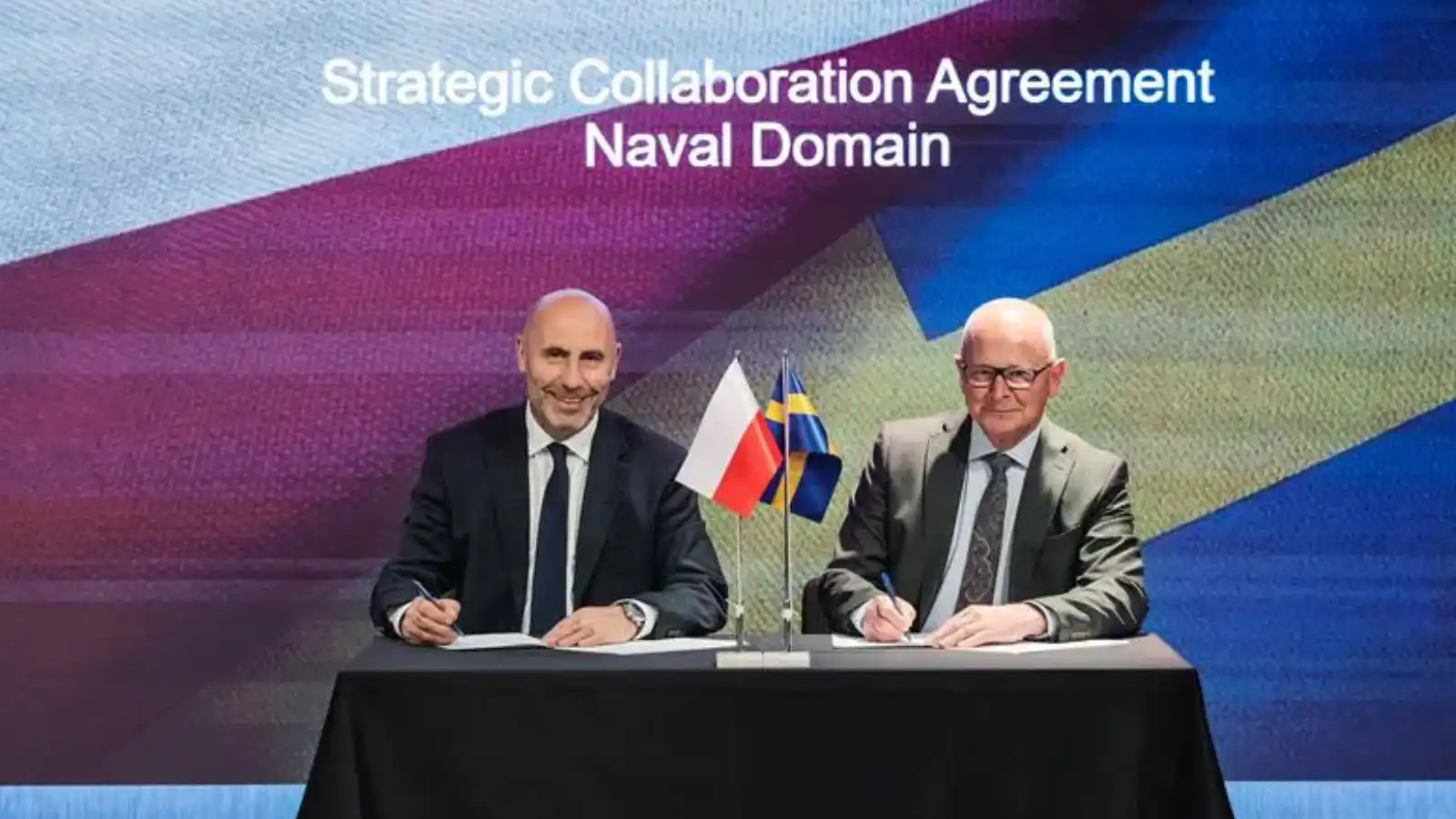
Swedish defense company Saab and Poland’s Polska Grupa Zbrojeniowa (PGZ) have signed a strategic naval cooperation agreement focused on submarines, surface vessels, and underwater systems. The partnership reflects growing European efforts to strengthen maritime security and industrial cooperation in the Baltic region amid rising regional defense pressures.
Saab And PGZ Naval Cooperation Expands European Maritime Defense Ties
Swedish defense company Saab and Poland’s state-owned defense group PGZ have signed a strategic naval cooperation agreement covering submarines, surface vessels, and underwater systems, marking a significant step in regional maritime defense cooperation.
The agreement, announced by Saab and reported by Defence Industry Europe, aims to deepen industrial collaboration between Sweden and Poland as NATO members continue expanding naval readiness in Northern and Eastern Europe.
The cooperation framework includes potential collaboration in naval platforms, underwater technologies, maintenance, and future modernization programs. Both companies indicated that the partnership is intended to support long-term capability development for regional maritime security operations.
Strategic Focus On Submarines And Underwater Warfare
A major focus of the Saab and PGZ agreement centers on submarine capabilities and underwater warfare systems. Saab is widely recognized for its submarine expertise through the development of the A26 Blekinge-class submarine program and advanced underwater technologies.
Saab has increasingly positioned itself as a key European supplier of naval systems, particularly in anti-submarine warfare, underwater surveillance, and maritime combat systems.
Meanwhile, Polska Grupa Zbrojeniowa continues expanding Poland’s domestic naval industrial base as Warsaw accelerates military modernization efforts across multiple domains.
The partnership could support Poland’s broader naval modernization plans, including future submarine procurement efforts and expanded indigenous shipbuilding capabilities. Although no procurement contract or financial value was disclosed, the agreement establishes a framework for future industrial and operational cooperation.
Baltic Security Environment Driving Maritime Cooperation
The Saab PGZ naval cooperation agreement comes amid heightened security concerns across the Baltic Sea region following Russia’s continued military activities near NATO borders and growing emphasis on maritime infrastructure protection.
European governments have increased investments in naval defense, anti-submarine warfare, and underwater monitoring capabilities after a series of incidents involving critical undersea infrastructure in the Baltic and North Sea regions over the past several years.
For Poland, maritime security has become increasingly important as the country modernizes its armed forces and expands defense spending. Warsaw has launched multiple modernization programs focused on air defense, armored forces, missile systems, and naval assets.
Sweden’s accession to NATO has also reshaped regional defense dynamics. Stockholm now plays a more integrated role in alliance maritime operations across Northern Europe, particularly in the Baltic Sea theater.
The Saab and PGZ partnership reflects a broader trend of European defense industrial cooperation designed to reduce reliance on non-European suppliers while improving interoperability among NATO members.
Industrial Cooperation Could Support Future Naval Programs
The agreement may create opportunities for future collaboration on naval shipbuilding, sustainment programs, combat management systems, and underwater technologies.
Saab has extensive experience integrating advanced naval combat systems onto surface combatants and submarines. The company’s portfolio includes naval radar systems, underwater sensors, torpedoes, and command-and-control solutions used by several NATO and partner nations.
PGZ, which oversees a large network of Polish defense companies, has sought greater participation in domestic and international naval programs. The group has played a central role in supporting Poland’s shipbuilding and defense manufacturing sectors.
While details remain limited, the cooperation framework suggests both companies are preparing for long-term collaboration tied to regional maritime modernization requirements.
Defense analysts view such partnerships as increasingly important as European states seek to accelerate procurement timelines, improve supply chain resilience, and strengthen domestic industrial capacity.
Growing European Defense Integration
The Saab PGZ naval cooperation agreement also highlights the growing importance of cross-border European defense partnerships amid rising geopolitical uncertainty.
Since Russia’s invasion of Ukraine, European NATO members have expanded defense spending and prioritized collaborative industrial projects to improve readiness and reduce capability gaps.
Naval defense has become a particularly important area of focus due to increased activity in the Baltic Sea, Arctic approaches, and North Atlantic maritime corridors.
The cooperation between Saab and PGZ aligns with broader NATO objectives aimed at improving regional deterrence, strengthening maritime domain awareness, and enhancing allied operational integration.
Although the agreement does not yet include confirmed production programs or platform acquisitions, it establishes a strategic foundation that could influence future naval procurement decisions in the region.
Why The Saab PGZ Partnership Matters
The agreement demonstrates how European defense companies are increasingly aligning industrial capabilities with evolving NATO operational requirements.
For Saab, the partnership strengthens its position in Central and Eastern European defense markets while expanding opportunities for naval cooperation with Poland.
For PGZ, the agreement offers access to advanced naval technologies and operational expertise at a time when Poland is rapidly modernizing its military forces.
The partnership also reinforces the strategic importance of the Baltic region, where maritime security, underwater infrastructure protection, and anti-submarine warfare are becoming central priorities for NATO planners.
As European governments continue increasing defense investments, partnerships such as the Saab PGZ agreement are likely to play a larger role in shaping future naval modernization programs across the continent.