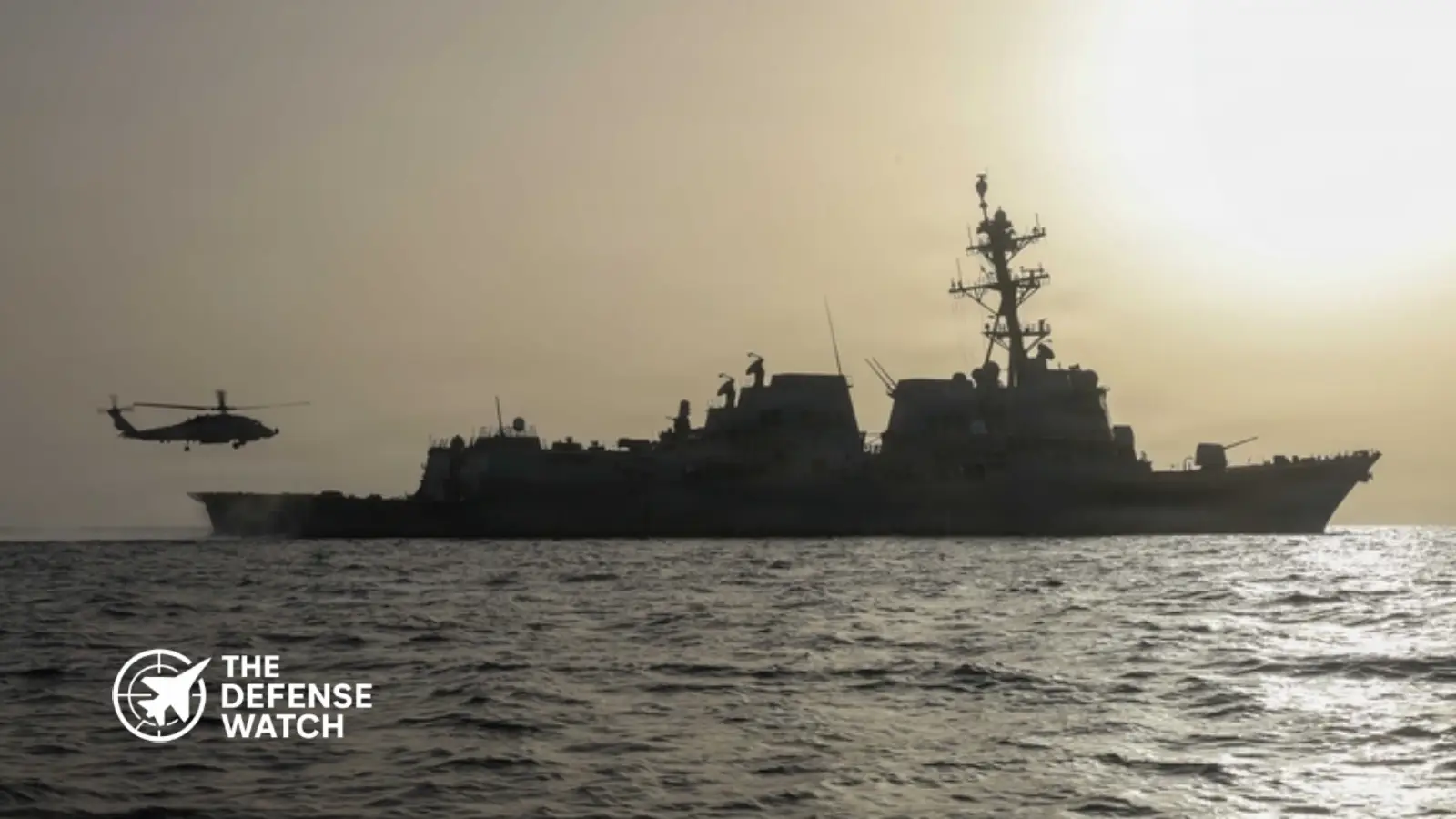
The U.S. Navy has awarded Lockheed Martin a $200.8 million contract to provide long term AEGIS combat system training support for allied naval forces under multiple Foreign Military Sales cases. The effort supports partner navies operating advanced missile defense capable surface combatants across the Indo-Pacific and NATO theaters through 2031.
The U.S. Naval Air Warfare Center Training Systems Command (NAWCTSD) has awarded Lockheed Martin a $200.8 million indefinite delivery/indefinite quantity contract to support multinational AEGIS combat system training requirements for allied naval operators, according to a Department of Defense contract announcement released on May 29.
The contract, awarded to the company’s Rotary and Mission Systems division in Orlando, Florida, covers comprehensive training and program management support for Foreign Military Sales (FMS) customers including Australia, Canada, Japan, Norway, South Korea, and Spain. Work is expected to continue through June 2031.
Under the agreement, Lockheed Martin will provide contractor instructors, subject matter experts, curriculum development, technical documentation, and advanced interactive training tools in support of the U.S. Navy’s Surface Combat Systems Training Command. The procurement was issued on a non-competitive basis, reflecting Lockheed Martin’s position as the original developer and primary integrator of the AEGIS Combat System architecture.
Deep Technical & Strategic Context Analysis
The AEGIS Combat System remains one of the most operationally significant naval battle management and integrated air and missile defense systems in service today. Originally developed during the Cold War to counter saturation anti-ship missile threats, the system has evolved into a multi-domain combat architecture capable of ballistic missile defense, long-range air defense, anti-surface warfare, and increasingly integrated sensor-network operations across coalition fleets.
Today, AEGIS-equipped destroyers and frigates form the backbone of maritime missile defense networks operated by the United States and several allied navies. Japan and South Korea rely heavily on AEGIS destroyers for regional ballistic missile defense against North Korean missile threats, while NATO operators such as Spain and Norway integrate the system into alliance maritime defense missions in the North Atlantic and Mediterranean. Australia’s Hobart-class destroyers similarly employ the system as a central component of Canberra’s evolving integrated air and missile defense strategy.
The contract highlights a growing operational challenge facing allied fleets, namely the need to sustain high-end combat readiness for increasingly software-defined naval combat systems. Modern AEGIS baselines integrate advanced radar systems, Cooperative Engagement Capability networking, Standard Missile interceptors, and real-time tactical data links. As system complexity grows, training pipelines have become as strategically important as the hardware itself.
The award structure also reflects common Pentagon acquisition risk management practices. The contract combines cost-plus-fixed-fee and firm-fixed-price elements under an indefinite-delivery/indefinite-quantity framework. In practical terms, this allows the Navy flexibility to issue task orders as operational requirements evolve while maintaining predictable pricing for defined support activities. Cost-plus structures are often used for technically uncertain work such as advanced curriculum development or software-enabled training modernization, where requirements may evolve during execution.
The emphasis on interactive courseware and digital training tools is also notable. The U.S. Navy and allied operators are increasingly shifting toward distributed and synthetic training environments that reduce operational downtime for frontline warships while enabling crews to rehearse high-end combat scenarios, including ballistic missile defense engagements and saturation missile attacks, in virtual environments.
Contract Breakdown & Details
Scope Of Work
Lockheed Martin will provide:
- Program management support for all assigned Foreign Military Sales cases
- Contractor instructor services for allied naval personnel
- Subject matter expert support for AEGIS combat system operations
- Curriculum development and maintenance
- Interactive courseware and training technology development
- Technical documentation preparation and sustainment
Participating Foreign Military Sales Customers
The training support effort covers AEGIS operators from:
- Japan
- South Korea
- Australia
- Canada
- Norway
- Spain
Geographic Workshare Distribution
The Department of Defense identified the following work allocation breakdown:
- Japan: 41%
- Chinhae, South Korea: 18%
- Dahlgren, Virginia: 13%
- Moorestown, New Jersey: 8%
- Halifax, Nova Scotia: 8%
- Sydney, Australia: 4%
- Watson, Australia: 4%
- Rota, Spain: 4%
Contract Structure
- Contract Value: $200,823,547
- Contract Type: Cost-plus-fixed-fee, firm-fixed-price, indefinite-delivery/indefinite-quantity
- Contracting Authority: Naval Air Warfare Center Training Systems Command
- Contract Completion Date: June 2031
- Competition Status: Non-competitive award
- Funding Status: No funds obligated at time of award, obligations occur through future task orders
Strategic Implications For Allied Naval Readiness
The concentration of work in Japan and South Korea underscores the Indo-Pacific’s growing importance in U.S. and allied naval planning. Both nations operate some of the world’s most advanced AEGIS destroyer fleets and remain central to regional missile defense architectures amid increasing North Korean missile activity and expanding Chinese naval power projection.
The contract also demonstrates how Foreign Military Sales programs increasingly extend beyond platform acquisition into long-term sustainment, training, and operational integration. For allied navies operating advanced combat systems, training continuity and software modernization are now critical determinants of combat effectiveness.
For Lockheed Martin, the award further reinforces the company’s dominant position within the global naval integrated air and missile defense market. Beyond shipboard combat systems, the company continues to expand its role in training modernization, digital simulation environments, and multinational interoperability support, areas expected to see increasing demand as coalition naval operations become more integrated.