• Home
  • About
  • Defense Systems
  • Manufacturer
  • Comparisons
  • Compare 
  • Tools
TheDefenseWatch.com
  • Aerospace & Aviation
  • Military & Ordnance
  • Naval & Maritime
  • Cyber & Space Defense
  • Policy & Strategy
  • Global News
  • Tools Library
    • Smart Calculator
    • Drone Flight Time Calculator
    • Drone Range Calculator
    • Counter-Drone Jammer Effective Range Calculator
    • Counter-Battery Radar Detection Calculator
    • Artillery Fire Correction Calculator
    • Thermal Camera Detection Range Calculator
    • Missile Range & Time-of-Flight Calculator
    • Radar Detection Range Calculator
    • FPV Strike Drone Payload vs Range Calculator
    • Loitering Munition Endurance Calculator
    • Sniper Ballistic Drop & Windage Calculator
    • Bullet Drop Calculator
    • U.S. Army Combat Fitness Test (ACFT) Calculator
    • Military Pension Calculator
    • Military Retirement Calculator
    • Military Pension Calculator
    • Large Number Calculator
Font ResizerAa

TheDefenseWatch.com

The Defense Watch | U.S. & Global Defense News, Analysis & Military Updates

Search
  • Home
  • About
  • Defense Systems
  • Manufacturer
  • Comparisons
  • Compare 
  • Tools

Stay Updated

Get the latest update

Subscribe

Explore

  • Drone
  • Fighter Jets & Military Aircraft
  • Hypersonic Weapons
  • Aircraft Carriers
  • Strategic History & Missions
  • Tools Library
Home » Dell Secures $9.7 Billion War Department Deal For Microsoft Enterprise Services
Cyber & Space Defense

Dell Secures $9.7 Billion War Department Deal For Microsoft Enterprise Services

Daniel Mercer / Defense & Aerospace Analyst
Last updated: September 7, 2026 9:01 am
Daniel Mercer / Defense & Aerospace Analyst
Share
6 Min Read
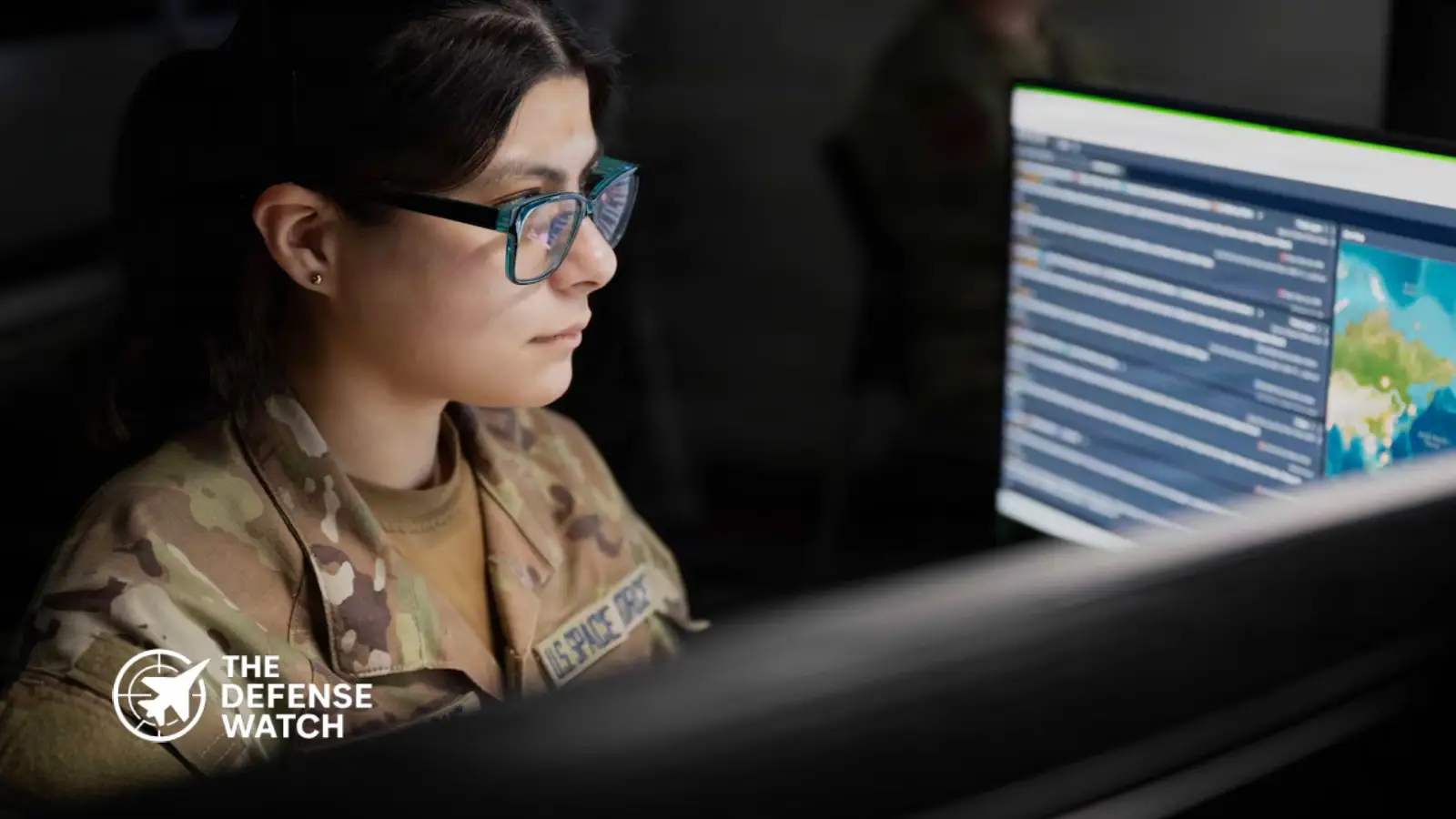
Dell and Microsoft enterprise technology systems supporting U.S. military digital modernization and CJADC2 operations
A Space Force guardian assigned to Space Delta 5 monitors a computer workstation at Vandenberg Space Force Base, Calif., Dec. 18, 2025. (Image Source DoW)
SHARE

Executive Summary:

The U.S. War Department has awarded Dell Federal Systems a five-year, $9.7 billion enterprise technology agreement for Microsoft services across the military and intelligence community. The contract consolidates dozens of legacy agreements into a single enterprise framework intended to reduce costs, improve operational continuity, and strengthen digital infrastructure supporting CJADC2 and AI-driven operations.

(adsbygoogle = window.adsbygoogle || []).push({});

Dell Secures Major Defense IT Modernization Contract

The War Department’s new Microsoft services agreement with Dell Federal Systems marks one of the largest enterprise IT consolidation efforts undertaken by the department to date. The five-year, $9.7 billion Core Enterprise Technology Agreement (CETA) is designed to unify software procurement and cloud services across multiple military organizations while supporting broader digital modernization priorities.

Contents
    • Executive Summary:
  • Dell Secures Major Defense IT Modernization Contract
  • Consolidation Intended To Reduce Costs And Complexity
  • CJADC2 And AI Integration Remain Central Drivers
  • Defense Enterprise IT Spending Continues To Grow
  • Digital Infrastructure Increasingly Seen As Operational Capability

According to War Department Chief Information Officer Kirsten A. Davies, the agreement will provide department-wide access to Microsoft 365, advanced cloud subscriptions, and essential on-premises software licensing. The contract also extends support to the intelligence community and the U.S. Coast Guard.

Davies described the agreement as part of the department’s effort to modernize digital infrastructure in response to increasingly contested operational environments and near-peer competition.

The deal is scheduled to begin June 1.

- Advertisement -

Consolidation Intended To Reduce Costs And Complexity

The War Department stated that the agreement replaces dozens of separate contracts previously used to provide similar Microsoft services across the defense enterprise.

Officials estimate the new enterprise structure will save approximately $422 million annually through consolidated procurement and standardized licensing arrangements. The department indicated those savings could increase as additional IT services migrate into the agreement over time.

(adsbygoogle = window.adsbygoogle || []).push({});

Importantly, the contract does not introduce new spending authority. Instead, it restructures existing funding streams under a centralized acquisition framework.

Davies emphasized that service members and civilian personnel are not expected to experience disruptions during the transition because many existing contracts already relied on the same vendor ecosystem.

The consolidation strategy reflects a broader trend across the U.S. defense sector, where agencies are attempting to reduce fragmented IT procurement practices that historically created duplicated costs, uneven cybersecurity standards, and interoperability challenges.

CJADC2 And AI Integration Remain Central Drivers

A key strategic element of the agreement is its role in supporting Combined Joint All-Domain Command and Control (CJADC2), the Pentagon’s effort to connect sensors, platforms, commanders, and weapons systems across all operational domains.

The department described the new enterprise agreement as foundational digital infrastructure for enabling real-time data sharing and operational coordination across the joint force and coalition partners.

(adsbygoogle = window.adsbygoogle || []).push({});

Military leaders increasingly view cloud-based enterprise systems and secure data-sharing environments as essential components for future warfare, particularly as operations become more data-intensive and dependent on rapid decision-making.

- Advertisement -

The agreement also aligns with the department’s growing emphasis on artificial intelligence integration, analytics, and distributed operational networks capable of functioning in disconnected or contested environments.

By standardizing enterprise software environments, the department may improve compatibility between commands and reduce technical barriers that often slow information sharing between organizations.

Defense Enterprise IT Spending Continues To Grow

The Dell agreement highlights the increasing role commercial technology firms now play in national defense infrastructure.

Over the past decade, the Pentagon and broader defense community have expanded investments in cloud computing, cybersecurity, AI platforms, and enterprise collaboration systems as part of long-term modernization programs.

Microsoft remains one of the defense sector’s most significant technology providers, supporting cloud, productivity, cybersecurity, and classified network operations across multiple agencies.

The War Department’s latest contract also reflects the growing importance of enterprise resilience. Officials specifically referenced support for sensitive and disconnected environments, indicating that continuity of operations remains a priority amid rising concerns over cyber threats and contested communications networks.

Large-scale enterprise agreements also provide procurement stability during periods of rapid technological transition. Rather than relying on fragmented contract structures, centralized agreements can simplify upgrades, licensing, cybersecurity patching, and interoperability standards across large organizations.

Digital Infrastructure Increasingly Seen As Operational Capability

Defense analysts increasingly view enterprise IT infrastructure as a core operational capability rather than administrative overhead.

Secure cloud services, collaboration platforms, AI-enabled analytics, and real-time data integration are now directly linked to operational readiness, targeting efficiency, logistics management, and decision superiority.

(adsbygoogle = window.adsbygoogle || []).push({});

The War Department’s emphasis on CJADC2 within the Dell agreement demonstrates how enterprise software procurement is becoming intertwined with warfighting concepts.

Officials stated the agreement allows military personnel to focus on mission execution while centralized enterprise systems handle software and infrastructure management behind the scenes.

That operational logic mirrors broader Pentagon modernization efforts focused on speed, interoperability, and resilient communications across globally distributed forces.

As defense organizations continue integrating AI and data-centric operations into military planning, enterprise technology contracts such as the new Dell agreement are likely to become increasingly central to future force modernization strategies.


TAGGED:cyber warfareDefense Budgets & PolicyDefense contracts
Share This Article
Facebook Copy Link Print
ByDaniel Mercer / Defense & Aerospace Analyst
Follow:
Daniel Mercer is a defense and aerospace analyst at TheDefenseWatch.com covering military aviation, aerospace technology, unmanned systems, air warfare, and defense procurement. His reporting uses official documents, government and military statements, company announcements, and other public sources.
Leave a Comment

Leave a Reply Cancel reply

Your email address will not be published. Required fields are marked *

Latest Defense Systems

  • SPY-6 Radar SPY-6 Radar
  • Boeing VC-25B Presidential Aircraft Boeing VC-25B Presidential Aircraft
  • SM-3 Block IB Missile SM-3 Block IB Missile
  • USS Abraham Lincoln Aircraft Carrier USS Abraham Lincoln Aircraft Carrier
  • M142 HIMARS M142 HIMARS
  • Terrex S5 Infantry Vehicle Terrex S5 Infantry Vehicle
  • A-29 Super Tucano Aircraft A-29 Super Tucano Aircraft
  • DSAR 15 Rifle DSAR 15 Rifle
  • ASMP Missile ASMP Missile

Recent Compares

  • Tejas vs Gripen: Key Differences and Capabilities Tejas vs Gripen: Key Differences and Capabilities View Comparison →
  • Tejas vs MiG-21 Bison: How India Replaced Its Iconic Supersonic Fighter Tejas vs MiG-21 Bison: How India Replaced Its Iconic Supersonic Fighter View Comparison →
  • F-35 vs F-16: Stealth, Sensors and Combat Roles F-35 vs F-16: Stealth, Sensors and Combat Roles View Comparison →
  • Tejas Fighter Jet vs F-16 Fighting Falcon: Capability Compared Tejas Fighter Jet vs F-16 Fighting Falcon: Capability Compared View Comparison →
  • Rafale Fighter Jet vs F-16 Fighting Falcon : Which Fighter Has the Edge? Rafale Fighter Jet vs F-16 Fighting Falcon : Which Fighter Has the Edge? View Comparison →
  • Su-57 Fighter Jet vs J-20 Fighter Jet: Stealth and Air Combat Compared Su-57 Fighter Jet vs J-20 Fighter Jet: Stealth and Air Combat Compared View Comparison →
  • Mirage 2000 vs Tejas Mk1A: Legacy Combat Power vs Indigenous Modernization Mirage 2000 vs Tejas Mk1A: Legacy Combat Power vs Indigenous Modernization View Comparison →
  • Rafale Fighter Jet vs F-22 Raptor: Which Air Dominance Fighter Has the Edge? Rafale Fighter Jet vs F-22 Raptor: Which Air Dominance Fighter Has the Edge? View Comparison →
  • Tejas Fighter Jet vs. Rafale Fighter Jet: India’s Indigenous Fighter Meets France’s Proven Multirole Combat Aircraft Tejas Fighter Jet vs. Rafale Fighter Jet: India’s Indigenous Fighter Meets France’s Proven Multirole Combat Aircraft View Comparison →
  • F-22 Raptor vs. F-35 Joint Strike Fighter: Which Fifth Generation Fighter Has the Edge? F-22 Raptor vs. F-35 Joint Strike Fighter: Which Fifth Generation Fighter Has the Edge? View Comparison →

Recent Posts

  • Raytheon Tests Faster Coyote Interceptor With New Rocket Motor
  • Raytheon to Develop Software Upgrades for U.S. Navy Radar Detection
  • Kim Jong Un Opens North Korea Weapons Museum as Pyongyang Claims Missile Test Success
  • Pentagon Certifies Bath Iron Works for Second Arleigh Burke Destroyer
  • North Korea Fires Unidentified Projectile Toward East Coast, Seoul Says

You Might Also Like

Military Sealift Command contract
Defense Contracts

MSC Awards $759 Million Diesel Engine Sustainment Contract for Global Sealift Fleet

June 4, 2026
Ukrainian pilots air tactics training
Aerospace & AviationFighter Jets & Military Aircraft

Inzpire To Train Ukrainian Pilots In Air Tactics Under New UK Contract

August 13, 2026
German F-35A fighter jet alongside Joint Strike Missile, representing expanded precision strike capability integration
Defense Contracts

Germany Expands Joint Strike Missile Procurement For F-35A Fleet Integration

September 9, 2026
Pentagon audit failure
Global News

Trump Executive Order Restricts Defense Contractor Dividends and CEO Pay, Sparking Investor Concerns

February 7, 2026

Logo

Copyright © 2026 TheDefenseWatch.com

Helpful Links

  • Home
  • About Us
  • Privacy Policy
  • Terms of Use / Disclaimer
  • U.S. Privacy Notice – CCPA Compliance

Defense Systems

  • Defense Systems
  • Comparisons 
  • Manufacturer
  • Tactical Calculators

Popuplar

Which 5 Air Forces Possess the Costliest Fighter Jet Fleets in the World
Evolving Strategic Value: Carrier Strike Groups in the Indo-Pacific’s Future Security Architecture
Autonomous Weapon Systems Spark U.S. Ethics Debate Amid Rapid Military AI Integration

We report on developments involving military forces, governments, defense companies, research organizations, and security institutions around the world. 

Welcome Back!

Sign in to your account

Username or Email Address
Password

Lost your password?