

Executive Summary:
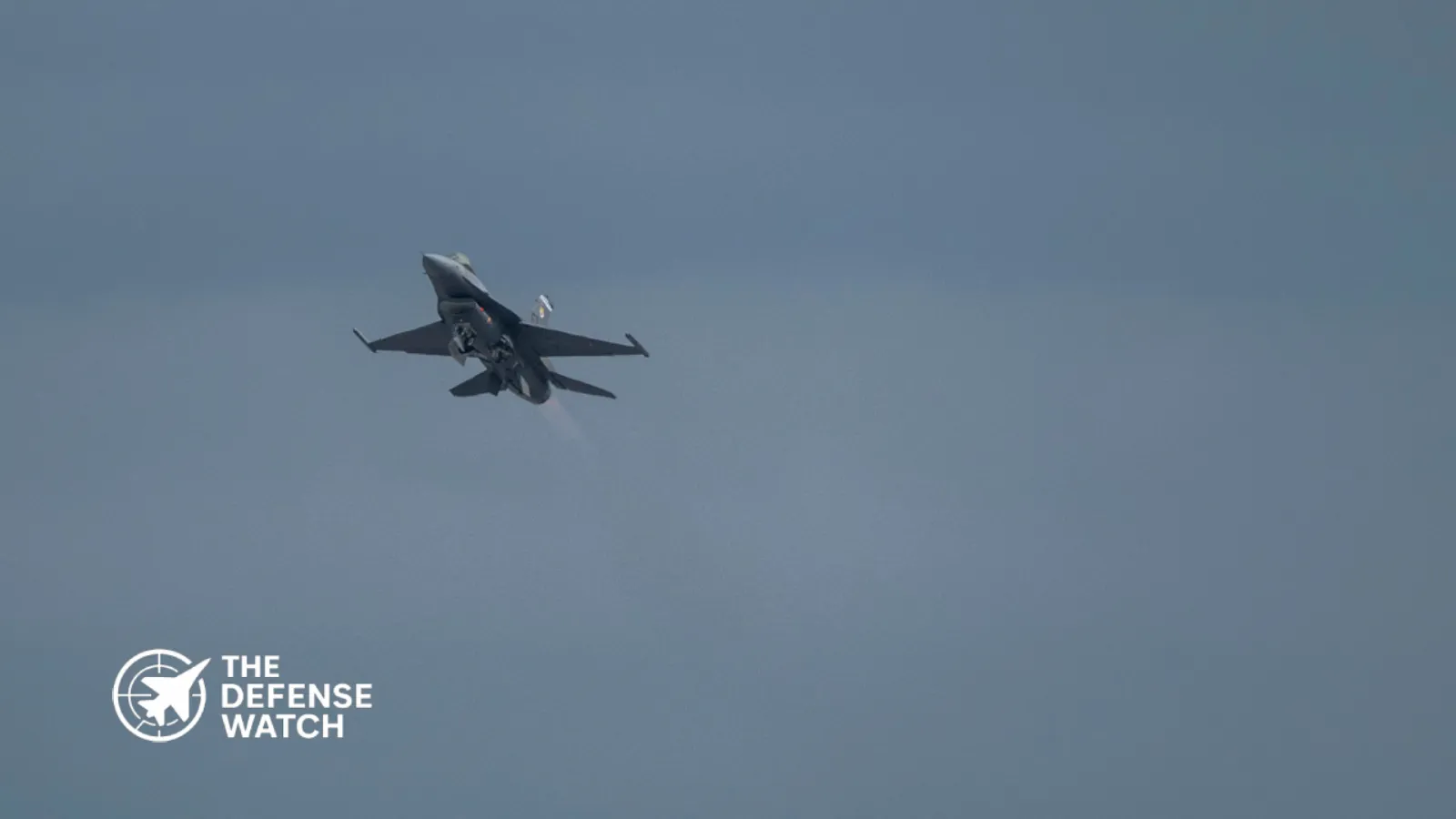
The Defense Advanced Research Projects Agency (DARPA) and the US Air Force have conducted flights of frontline Lockheed Martin F-16 fighters equipped with the Viper Experimentation and Next-generation Operations Model (VENOM) autonomy kit. The aftermarket modification enables pilots to switch between traditional manual controls and AI-driven autonomous flight with the flip of a switch. This development, announced in July 2026, builds directly on prior X-62 VISTA testing to mature AI for aerial combat and support future Collaborative Combat Aircraft (CCA) operations.
VENOM Autonomy Kit Brings AI to Operational F-16 Fleet
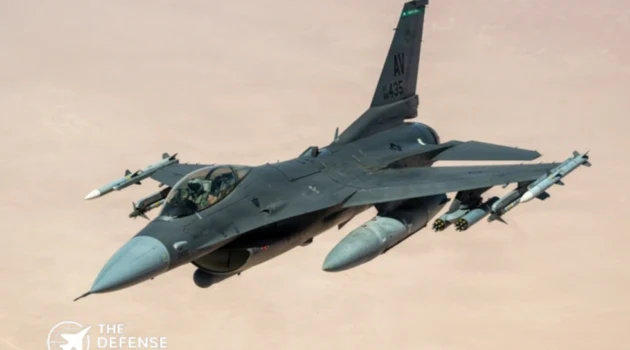
The US Air Force and DARPA have successfully flown F-16s modified with the VENOM kit at Eglin Air Force Base in Florida. At least one modified aircraft operates with the 96th Test Wing, with additional jets modified as part of the program.
The VENOM kit interfaces with the F-16’s existing flight controls and mission systems without altering core software. It includes hardware additions such as an auto-throttle for AI regulation of thrust and control surfaces. This design supports safe “human-on-the-loop” experimentation, where a pilot remains aboard to monitor and intervene if necessary.
Brigadier General James Valpiani, DARPA tactical technology office program manager, stated: “The air force and DARPA team has automated flight controls and sensors on a standard F-16 without changing the jet’s core software. This enables an efficient pipeline for developing dominant AI for aerial combat.”
Evolution from X-62 VISTA Demonstrator
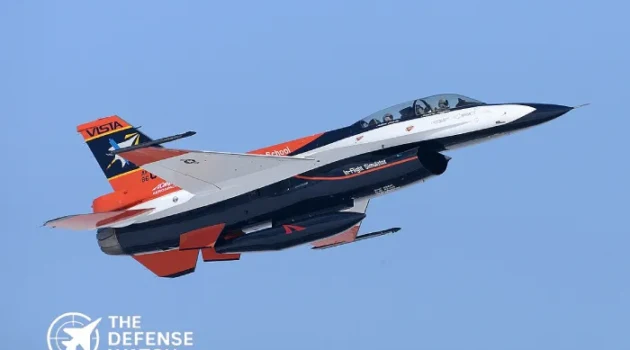
VENOM extends technologies proven on the unique X-62A VISTA (Variable Stability In-flight Simulator Test Aircraft), a heavily modified F-16D used by the Air Force Test Pilot School at Edwards AFB, California. Under DARPA’s Air Combat Evolution (ACE) program, the X-62 demonstrated AI-controlled within-visual-range dogfighting against human-piloted F-16s in 2023, completing 21 sorties with increasingly complex scenarios.
These tests involved high-speed, close-proximity maneuvers, including passes within 2,000 feet at speeds up to 1,040 knots. Participants included algorithms from Shield AI and others, which showed capabilities to improvise novel tactics.
While the X-62 remains a one-of-a-kind experimental platform, VENOM proves the concept on standard, frontline-configured F-16s drawn from operational fleets. At least four jets have received modifications, with arrivals at Eglin documented in 2024 and 2025.
Technical and Operational Implications
The VENOM approach prioritizes modularity and safety. The kit creates a reliable environment for testing multiple AI agents in live scenarios while maintaining human oversight. This addresses key challenges in combat AI trustworthiness amid the “fog and friction” of warfare, including incomplete sensor data, electronic warfare, and rapid decision timelines.
Key VENOM Program Elements:
- Switchable Control: Pilot can toggle between human and autonomous modes instantly.
- Hardware Additions: Auto-throttle and specialized instrumentation for AI control.
- Software Integration: Interfaces with existing F-16 systems without core software changes.
- Test Focus: Multi-agent AI evaluation, human-machine teaming, and CCA command-and-control methods.
This configuration supports broader USAF goals for Collaborative Combat Aircraft such as the General Atomics FQ-42 and Anduril FQ-44. VENOM-modified F-16s will help develop tactics for human pilots to direct teams of autonomous platforms in contested environments.
Strategic Context for US Air Force Modernization
Autonomous enhancements to legacy platforms like the F-16 offer a cost-effective bridge to sixth-generation capabilities. By leveraging existing airframes, the program accelerates AI maturation while reducing risk to high-value assets in high-threat scenarios. It also provides workload relief for pilots managing complex sensor, communications, and weapons suites.
Operationally, this supports the USAF’s shift toward distributed, attritable force structures. Autonomous F-16 testbeds enable realistic experimentation in beyond-visual-range coordination, electronic warfare integration, and multi-ship tactics—critical for maintaining advantage against peer adversaries.
Technical hurdles remain, particularly in ensuring AI reliability under real-world variables differing from simulation. VENOM’s human-on-the-loop design mitigates these by allowing iterative refinement in live flight. The program’s rapid progress—from X-62 dogfighting in 2023 to VENOM flights in 2026—demonstrates effective transition of autonomy technologies.
Future Testing and Broader Impact
Upcoming VENOM activities will expand to multi-agent live-flight testing and refine human control interfaces for CCA operations. Success here could influence not only uncrewed loyal wingmen but also optionally-manned configurations that enhance safety and mission effectiveness across the fighter fleet.
This effort aligns with ongoing USAF investments in mission autonomy software from providers including Shield AI, Anduril, and others, positioning the service to field production CCA systems in the coming years.
Executive Summary:
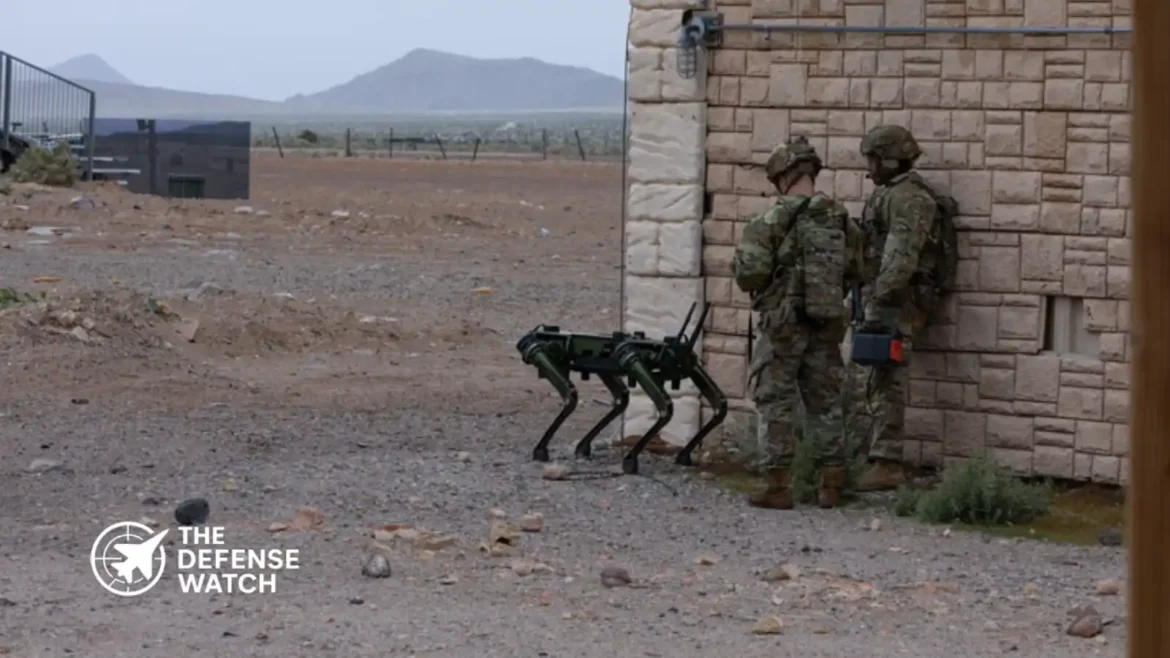
The U.S. Army used the African Lion 26 exercise in Morocco to test autonomous combat systems, including robotic ground vehicles and AI-enabled battlefield technologies. The drills demonstrated Washington’s growing focus on integrating unmanned systems into future combat operations while strengthening interoperability with allied forces.
U.S. Army Tests Autonomous Combat Systems During African Lion 26
The U.S. Army autonomous combat systems program took a major step forward during the African Lion 26 multinational exercise in Morocco, where American forces evaluated robotic and AI-enabled battlefield technologies under realistic operational conditions.
African Lion 26, led by the United States Africa Command (AFRICOM), is one of the largest military exercises conducted on the African continent. The annual event brings together U.S. troops and partner nations to improve interoperability, readiness, and regional security cooperation.
This year’s exercise placed a strong emphasis on autonomous warfare technologies, reflecting the Pentagon’s accelerating effort to modernize ground combat operations amid growing global competition with near-peer adversaries.
Autonomous Systems Take Center Stage
According to reports from the exercise, U.S. forces deployed multiple autonomous combat systems designed to support reconnaissance, logistics, surveillance, and battlefield coordination missions.
The systems reportedly included unmanned ground vehicles (UGVs), autonomous reconnaissance platforms, and AI-assisted command-and-control technologies capable of operating in contested environments.
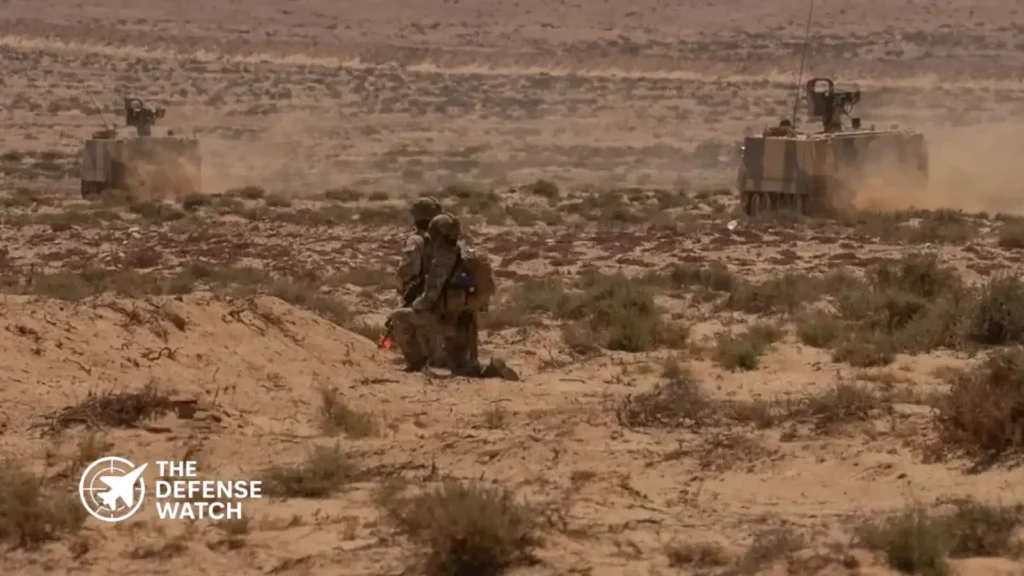
Military planners increasingly view autonomous systems as critical tools for reducing troop exposure, improving battlefield awareness, and sustaining operational tempo during high-intensity conflicts.
The U.S. Army has spent several years testing robotic systems through initiatives such as Project Convergence and the Army Futures Command modernization strategy. African Lion 26 provided another opportunity to evaluate how these technologies perform alongside multinational partner forces in desert and semi-arid terrain conditions similar to potential future operational theaters.
Why Morocco Matters Strategically
Morocco has become an increasingly important defense partner for the United States in North Africa. Its geographic position near the Mediterranean, Atlantic approaches, and Sahel region makes it strategically valuable for NATO and AFRICOM operations.
Testing autonomous combat systems in Morocco offers operational advantages because the terrain closely resembles environments where future expeditionary missions could occur. The exercise also allows U.S. commanders to study how AI-enabled systems function under extreme heat, dust, and long-range maneuver conditions.
The growing use of autonomous platforms also reflects broader shifts in global military doctrine. Armed forces worldwide, including China and Russia, are rapidly investing in AI-assisted warfare capabilities, autonomous drones, and robotic combat support systems.
For the Pentagon, exercises like African Lion 26 are not only about regional security cooperation. They also serve as large-scale experimentation environments for next-generation military technologies.
AI And Battlefield Integration
One of the most significant aspects of the exercise was the integration of AI-driven battlefield management systems with autonomous platforms.
Modern military operations increasingly depend on rapid sensor-to-shooter decision cycles. Autonomous systems can process battlefield data faster than traditional human-operated systems, enabling commanders to identify threats and coordinate responses more efficiently.
However, the operational deployment of AI-enabled combat systems continues to raise doctrinal and ethical questions. Defense analysts have warned that military organizations must balance automation with human oversight, particularly in lethal decision-making scenarios.
The U.S. Department of Defense has repeatedly stated that autonomous weapons systems will remain subject to human judgment and command authority.
African Lion 26 therefore represents both a technology demonstration and a practical test of how human operators interact with increasingly autonomous battlefield tools.
Growing Role Of Multinational Exercises
Large-scale exercises like African Lion have evolved beyond conventional training events. They now function as strategic laboratories for testing interoperability among allied militaries using advanced technologies.
The integration of autonomous systems into multinational exercises also helps partner nations better understand future battlefield concepts likely to dominate military operations over the next decade.
For AFRICOM, the exercise supports broader goals of regional stability while reinforcing U.S. influence across Africa amid expanding Russian and Chinese activity on the continent.
The U.S. Army autonomous combat systems showcased during African Lion 26 indicate that future military operations will likely feature a combination of human soldiers, robotic support vehicles, AI-enabled sensors, and unmanned aerial systems operating as integrated battlefield networks.
Analysis: A Broader Pentagon Modernization Push
The timing of the African Lion 26 autonomous systems testing aligns with the Pentagon’s broader modernization agenda focused on preparing for large-scale, technology-driven conflicts.
Recent conflicts in Ukraine and the Middle East have demonstrated the growing importance of drones, AI-assisted targeting, electronic warfare, and autonomous reconnaissance systems in modern combat.
The U.S. Army appears increasingly focused on ensuring its forces can operate in highly contested environments where traditional communications and logistics networks may be disrupted.
Autonomous systems offer several advantages in such scenarios, including persistent surveillance, reduced manpower requirements, and enhanced operational flexibility.
Still, significant challenges remain. Autonomous combat platforms require secure communications, resilient software architectures, and protection against cyber and electronic warfare attacks. Any vulnerabilities in those systems could create operational risks during real-world deployments.
African Lion 26 provided the Army with valuable operational data that could influence future procurement programs, doctrine development, and battlefield integration strategies.
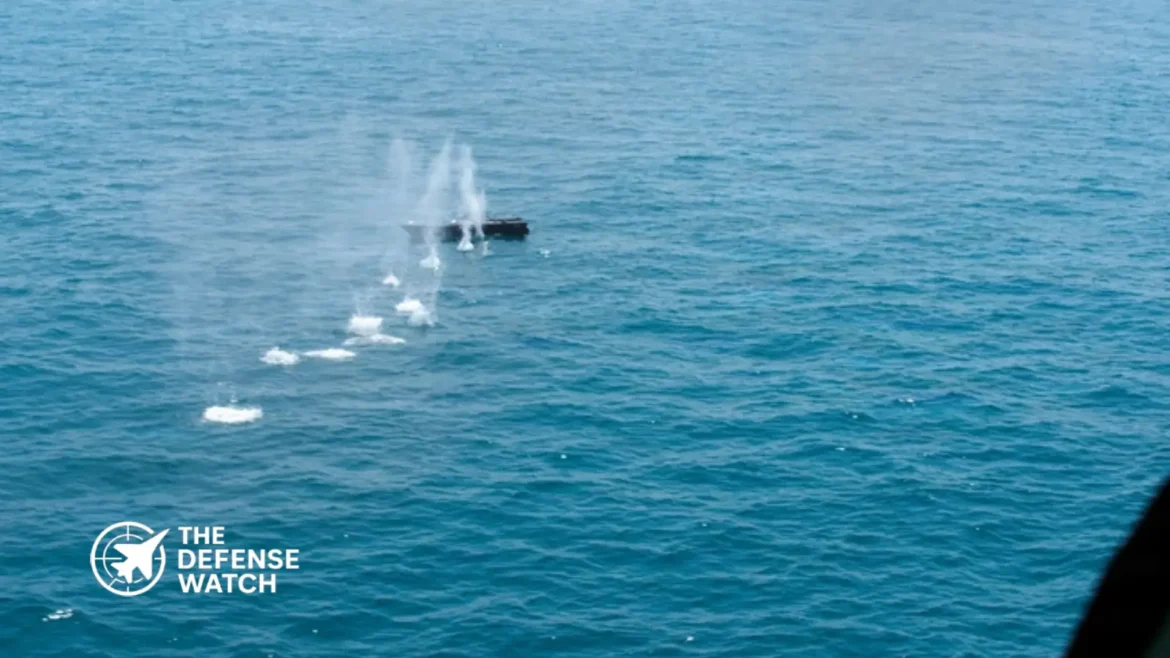
Prescient Edge Contract Strengthens Project Overmatch
The Project Overmatch contract awarded to Prescient Edge Corp. marks another step in the U.S. Navy’s push to connect fleets, sensors, weapons, and autonomous platforms into a unified combat network. The Department of Defense said the company received an $11,302,394 cost-reimbursement contract to provide specialized technical support for the Navy’s Project Overmatch program.
- Prescient Edge Corp. received an $11.3 million cost-reimbursement contract for Navy Project Overmatch support.
- The contract funds end-to-end testing, refinement, and rapid operationalization of robotic autonomous systems.
- Work will be performed across U.S. and overseas sites including California, Virginia, Maryland, Bahrain, Germany, and Portugal.
- Four option years could raise total contract value to $59.3 million through April 2031.
- Naval Information Warfare Center Pacific in San Diego is the contracting activity.
The work focuses on end-to-end testing, refinement, and rapid operational deployment of robotic autonomous systems, an area that has become central to future naval warfare.
Project Overmatch is widely understood as the Navy’s operational framework for linking ships, aircraft, submarines, satellites, and unmanned systems through secure data-sharing networks. It is often described as the Navy’s contribution to the Pentagon’s broader Joint All-Domain Command and Control effort.
Why Project Overmatch Matters
The strategic value of Project Overmatch lies in speed. Modern conflicts increasingly reward forces that can detect threats first, share targeting data instantly, and respond faster than opponents.
That means autonomous systems are no longer separate tools. They are becoming nodes inside a larger combat web. Unmanned surface vessels, underwater drones, and AI-enabled sensors can expand fleet reach while reducing risk to manned crews.
This Project Overmatch contract suggests the Navy is moving beyond theory and into operational integration. Funding for testing and rapid fielding often signals that systems are being pushed closer to deployable status.
Multi-Region Performance Shows Global Scope
According to the award notice, work will be conducted across several strategic regions:
- California, including San Diego and Port Hueneme (30%)
- National Capital Region, including Lexington Park, Laurel, Tysons, and Washington (30%)
- U.S. operational hubs such as Stennis, Norfolk, Jacksonville, Key West, and Tampa (20%)
- Overseas locations including Portugal, Germany, Bahrain, Ecuador, Panama, and Honduras (20%)
That footprint reflects the Navy’s need to validate systems across different commands, environments, and mission sets.
For example, Bahrain hosts the U.S. Fifth Fleet and is a key maritime security hub in the Middle East. Norfolk remains the center of Atlantic fleet operations, while San Diego anchors Pacific fleet readiness.
Contract Timeline And Value
The base contract runs from April 28, 2026, through April 27, 2027. Four one-year options could extend performance through April 2031, bringing the total potential value to $59.3 million.
The Navy obligated research, development, test, and evaluation funds at award, including $1.56 million that will expire at the end of the current fiscal year.
The award was issued as a sole-source acquisition under 10 U.S. Code 3204(a)(1), which allows non-competitive awards when only one responsible source can meet requirements.
Analysis: What This Signals For Naval Modernization
This Project Overmatch contract is modest in dollar size compared with shipbuilding programs, but strategically significant. Digital warfare architecture often costs less than major platforms while delivering outsized combat advantage.
If the Navy can successfully network autonomous systems into real-time operations, it could improve surveillance coverage, distributed lethality, and resilience against electronic warfare threats.
In any future Indo-Pacific or Middle East contingency, the side that connects sensors and shooters fastest may hold the advantage. That is why contracts like this matter.
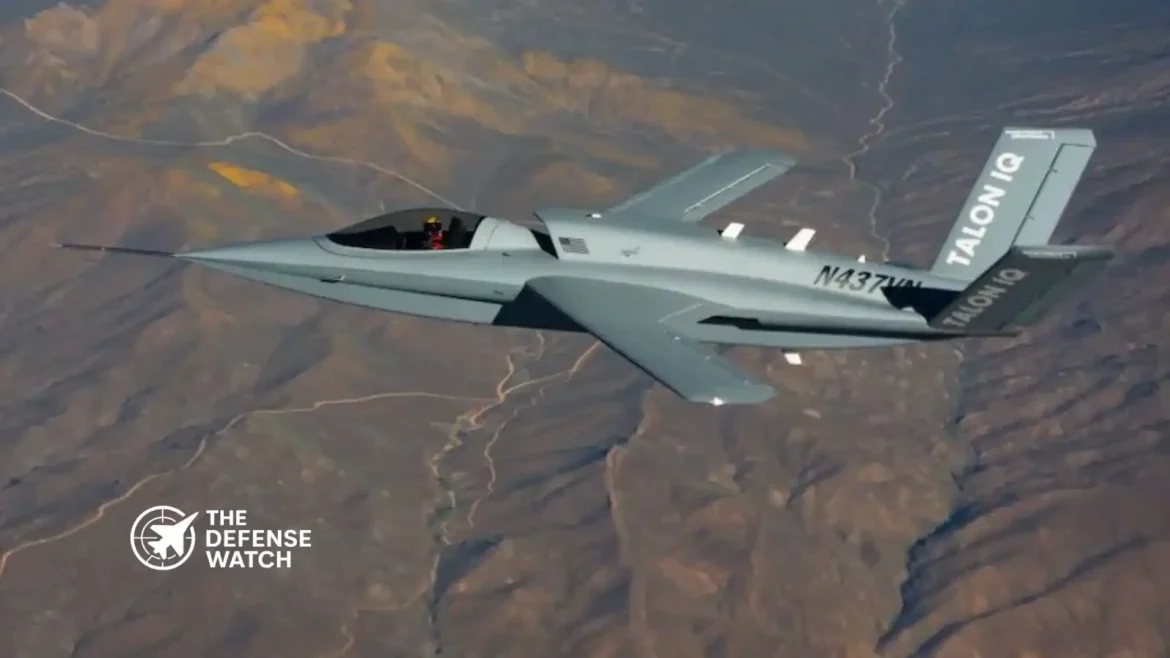
- Northrop Grumman successfully demonstrated mid-flight autonomy software swapping on its Talon IQ testbed aircraft.
- The test enables real-time updates to onboard autonomy systems without landing or interrupting missions.
- The capability supports modular open systems architecture for faster integration of new software and mission tools.
- Demonstration aligns with U.S. military efforts to accelerate AI-driven and autonomous combat capabilities.
- The Talon IQ platform serves as a flexible airborne testbed for next-generation autonomy technologies.
Northrop Grumman Autonomy Software Swap Demonstration Signals Shift in Air Combat Flexibility
The Northrop Grumman autonomy software swap demonstration marks a significant step toward real-time adaptability in military aviation, as the company successfully executed a mid-flight software update on its Talon IQ airborne test platform.
According to reporting from Northrop Grumman, the test proved that autonomy software can be modified and replaced during flight without interrupting operations. The demonstration was conducted on the Talon IQ, a platform designed to evaluate next-generation autonomous and AI-driven capabilities.
This milestone highlights a broader push across the U.S. defense sector to adopt modular, software-defined architectures that can evolve rapidly in response to emerging threats.
Real-Time Software Updates Without Mission Disruption
The core achievement of the test lies in its ability to perform a seamless software transition while airborne. Traditionally, updates to mission systems require aircraft to be grounded, tested, and redeployed. That process can take hours or even days.
By contrast, the demonstrated capability allows operators to swap autonomy algorithms mid-mission. This opens the door to dynamic mission adaptation, where aircraft can adjust behavior based on changing battlefield conditions.
From an operational standpoint, this could allow:
- Rapid updates to threat recognition algorithms
- Integration of new mission parameters during flight
- Real-time testing and validation of AI models
This approach reflects the growing importance of software dominance in modern warfare, where adaptability can outweigh raw hardware performance.
Modular Open Systems Architecture Gains Momentum
The Northrop Grumman autonomy software swap test aligns with the U.S. Department of Defense push for Modular Open Systems Architecture, often referred to as MOSA.
MOSA aims to decouple hardware and software development, allowing components to be upgraded independently. In practical terms, this reduces vendor lock-in and accelerates innovation cycles.
The Talon IQ testbed is built to support this concept. It acts as a flying laboratory where different autonomy stacks, sensors, and mission systems can be integrated and evaluated without redesigning the entire platform.
This modular approach is increasingly seen as essential for programs such as:
- Collaborative combat aircraft
- Loyal wingman drones
- AI-enabled ISR platforms
The ability to update systems mid-flight reinforces the viability of MOSA in real-world operations, not just controlled test environments.
Strategic Implications for Autonomous Warfare
The successful demonstration of a Northrop Grumman autonomy software swap has broader implications beyond a single test.
First, it supports the shift toward software-defined warfare. In this model, the effectiveness of a platform depends less on its physical configuration and more on its software capabilities.
Second, it enables faster iteration cycles. Military developers can deploy, test, and refine autonomy algorithms in operational conditions, shortening the feedback loop significantly.
Third, it enhances resilience. If a vulnerability or performance issue is identified, updates can be deployed immediately without waiting for the platform to return to base.
This capability becomes especially relevant in contested environments where communications and logistics may be degraded.3
Talon IQ as a Testbed for Future Combat Systems
The Talon IQ platform plays a central role in this development. Designed as a flexible and reconfigurable testbed, it allows engineers to experiment with advanced autonomy concepts in a real-world flight environment.
Unlike traditional test aircraft, Talon IQ emphasizes rapid integration and experimentation. This makes it well-suited for evaluating emerging technologies tied to artificial intelligence, machine learning, and autonomous decision-making.
The platform’s role is expected to expand as the U.S. military continues investing in next-generation air combat systems, including unmanned and optionally crewed aircraft.
Industry Context and Competitive Landscape
The Northrop Grumman autonomy software swap demonstration comes at a time when defense contractors are racing to define the future of autonomous airpower.
Companies across the U.S. and allied nations are developing systems capable of operating with increasing levels of independence. Programs such as collaborative combat aircraft and swarm-enabled drones rely heavily on adaptable software frameworks.
In this environment, the ability to update autonomy systems in flight could provide a competitive edge. It allows operators to maintain technological relevance even as threats evolve rapidly.
Moreover, it aligns with Pentagon priorities around agile development and continuous capability delivery.
Why This Matters Now
The timing of this demonstration is notable. As geopolitical tensions rise and air defense systems become more sophisticated, the demand for adaptable and resilient platforms is increasing.
Autonomous systems are expected to operate in highly contested environments where pre-programmed behavior may not be sufficient. Real-time updates offer a way to maintain effectiveness under these conditions.
The Northrop Grumman autonomy software swap capability directly addresses this need, providing a pathway toward more responsive and flexible air operations.
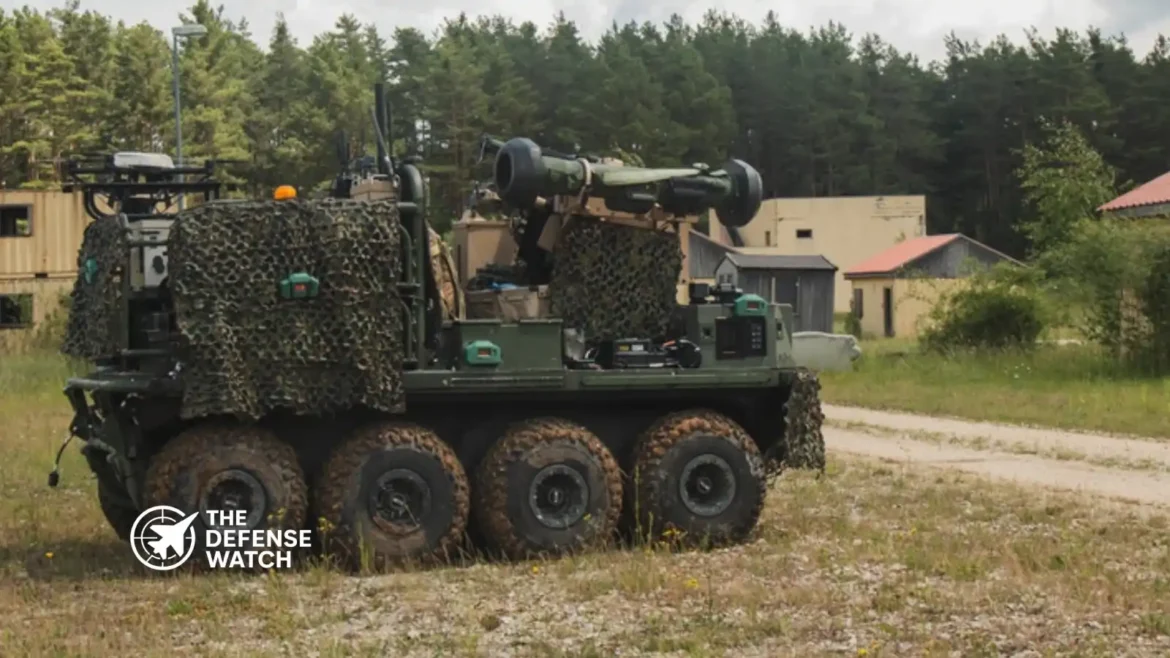
US Army Tests Autonomous Mine Breaching System To Protect Troops
The US Army mine breaching system under testing, known as SLICE, represents a shift toward autonomous combat engineering designed to keep soldiers out of direct danger during minefield clearance operations.
The system is being evaluated as part of ongoing efforts to modernize battlefield engineering capabilities and reduce exposure to explosive threats. Minefields remain one of the most persistent and lethal hazards in modern warfare, especially in high intensity conflicts.
- The US Army is testing the autonomous SLICE mine breaching system designed to clear explosive hazards without exposing soldiers.
- The system uses robotic platforms and remote or autonomous control to detect and neutralize mines.
- SLICE aims to reduce casualties during high risk combat engineering missions in contested environments.
- The capability supports multi domain operations where speed and survivability are critical.
- Testing reflects a broader US military push toward autonomy in frontline engineering and logistics roles.
A Safer Approach To Minefield Clearance
Traditional mine breaching operations require combat engineers to operate close to or within hazardous zones. Even with armored vehicles and specialized equipment, these missions carry significant risk.
The US Army mine breaching system changes that equation by introducing robotic and semi autonomous platforms capable of detecting, marking, and neutralizing explosive devices from a distance.
The SLICE system integrates sensors, mobility platforms, and control systems that allow operators to manage breaching tasks remotely. In some configurations, it can operate with increasing levels of autonomy, reducing the need for constant human input.
This approach aligns with broader US Army modernization priorities, particularly the push toward unmanned systems that can perform high risk tasks without putting personnel in harm’s way.
Operational Relevance In Modern Warfare
The importance of autonomous breaching systems has grown in recent years, driven by lessons from conflicts where extensive minefields and improvised explosive devices have slowed advances and caused heavy casualties.
In contested environments, especially against near peer adversaries, rapid breaching of obstacles is essential to maintain maneuver momentum. Delays in clearing minefields can expose units to artillery, drone surveillance, and counterattacks.
The US Army mine breaching system is designed to address this challenge by improving both speed and survivability. By removing soldiers from the immediate danger zone, commanders gain more flexibility in planning and executing operations.
This is particularly relevant in multi domain operations, where ground forces must coordinate with air, cyber, and space assets under constant threat.
Technology Behind The SLICE System
While specific technical details remain limited, the SLICE system is understood to combine several key components:
- Robotic ground platforms capable of operating in rough terrain
- Advanced sensors for mine detection and classification
- Remote control interfaces and autonomous navigation features
- Payloads designed to neutralize or clear explosive hazards
Such systems may also integrate with broader battlefield networks, allowing data sharing between units and improving situational awareness.
The use of autonomy in engineering roles mirrors similar trends in logistics and reconnaissance, where unmanned systems are increasingly taking on frontline responsibilities.
Strategic Implications For Future Combat
The testing of the US Army mine breaching system highlights a wider transformation in how militaries approach risk on the battlefield.
Autonomous systems are not just force multipliers, they are becoming risk reducers. By shifting dangerous tasks to machines, militaries can preserve manpower while maintaining operational effectiveness.
This trend is likely to accelerate as artificial intelligence, sensor technology, and robotics continue to mature. Future breaching operations could involve fully autonomous teams working ahead of human units, clearing paths in real time.
However, integration challenges remain. Reliability, electronic warfare resilience, and command control frameworks will all play a role in determining how quickly such systems are fielded at scale.
Balancing Innovation With Battlefield Reality
While the promise of the US Army mine breaching system is clear, its success will depend on performance in realistic combat conditions.
Minefields are often complex, with layered threats that include anti tank mines, anti personnel devices, and booby traps. Adversaries may also employ countermeasures to disrupt autonomous systems.
As a result, testing and validation will be critical. The Army’s approach appears focused on incremental development, ensuring that systems like SLICE can operate effectively alongside human engineers.
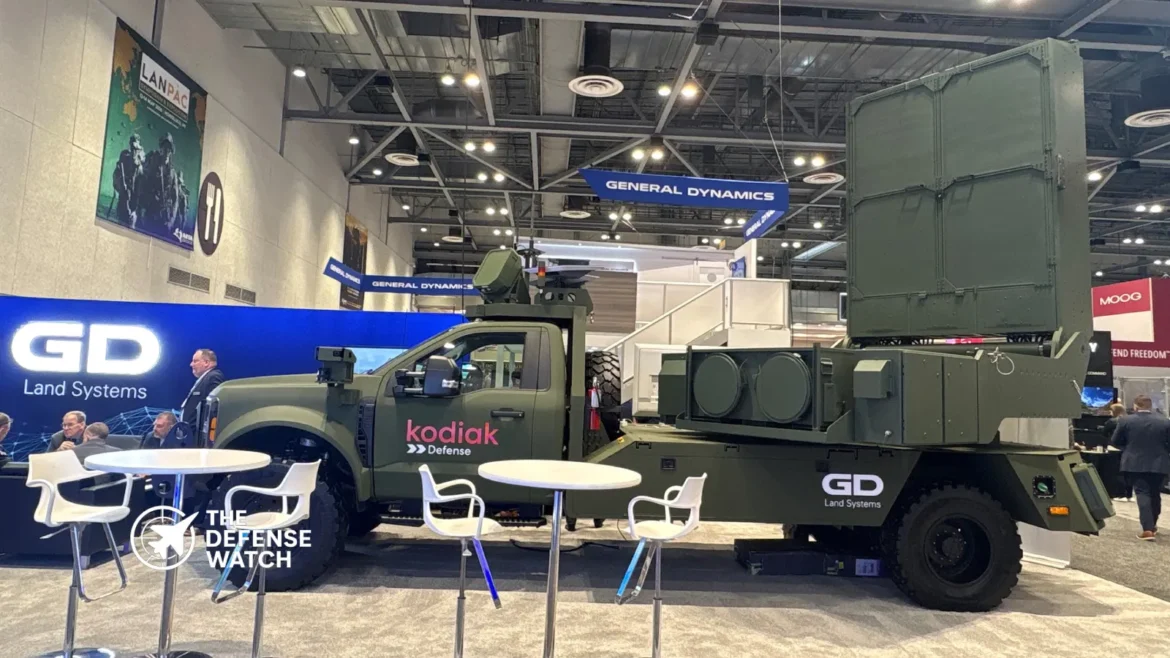
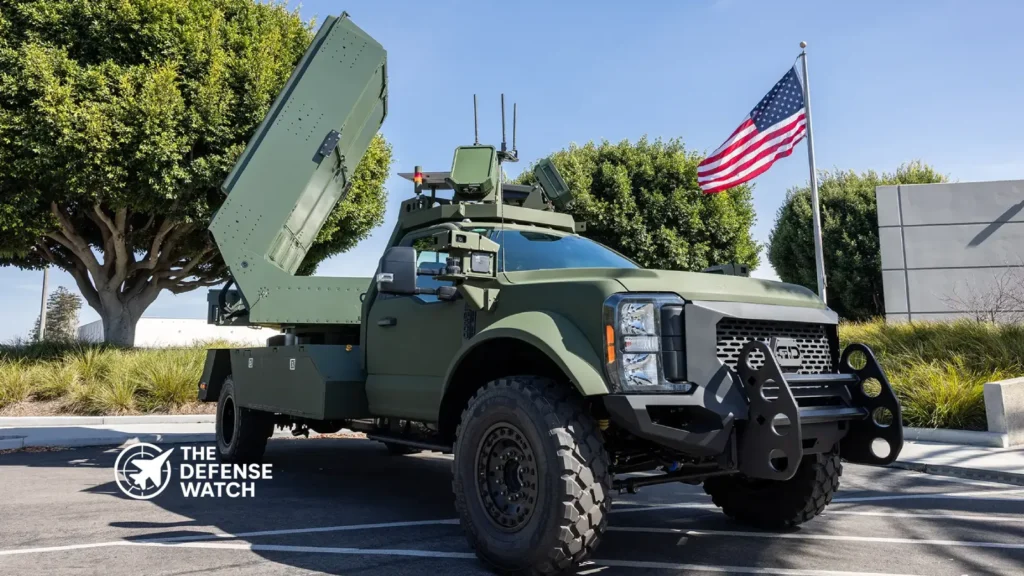
- ► General Dynamics Land Systems partnered with Epirus and Kodiak AI to unveil an autonomous HPM counter-UAS system.
- ► The system integrates high-power microwave technology to disable drone swarms without kinetic interceptors.
- ► Autonomous driving capability enables unmanned operation in contested or high-risk environments.
- ► Designed to counter growing UAV threats across military bases, maneuver forces, and critical infrastructure.
- ► Reflects broader U.S. shift toward scalable, non-kinetic, and autonomous air defense solutions.
Autonomous HPM Counter-UAS System Marks Shift In Drone Defense
The autonomous HPM counter-UAS system unveiled by General Dynamics Land Systems in partnership with Epirus and Kodiak AI represents a significant step in the evolution of counter-drone warfare.
Announced via official company release, the system combines high-power microwave technology with autonomous mobility, aiming to address the rapid proliferation of small unmanned aerial systems across modern battlefields.
Unlike traditional air defense systems that rely on missiles or guns, this platform uses directed energy to disrupt or disable drone electronics at scale. That approach reduces cost per engagement and avoids the logistical burden of interceptors.
Directed Energy Meets Autonomous Mobility
At the core of the system is Epirus’ high-power microwave capability, designed to neutralize multiple drones simultaneously. This is particularly relevant as militaries face increasingly complex drone swarm threats, where conventional defenses can be overwhelmed.
The integration of autonomy from Kodiak AI allows the platform to operate without a human driver. This enables deployment in high-risk or forward areas while reducing personnel exposure.
General Dynamics Land Systems provides the vehicle platform and system integration, leveraging its experience in armored and tactical mobility systems.
The result is a mobile, unmanned counter-UAS asset capable of operating as part of layered air defense networks.
Operational Relevance In Modern Conflicts
The emergence of the autonomous HPM counter-UAS system reflects lessons observed in recent conflicts, where low-cost drones have demonstrated outsized battlefield impact. From reconnaissance to loitering munitions, UAVs now challenge both static bases and maneuver units.
Traditional countermeasures, including kinetic interceptors and electronic warfare, remain effective but face scalability issues. Missile-based systems are costly, while jamming can be limited by spectrum congestion or countermeasures.
High-power microwave systems offer a different approach. By targeting drone electronics directly, they can engage multiple threats in a single pulse, making them well suited for swarm scenarios.
The addition of autonomy further enhances operational flexibility. Unmanned systems can be pre-positioned, remotely supervised, or integrated into broader autonomous force structures.
Strategic Implications For U.S. Defense
The autonomous HPM counter-UAS system aligns with broader U.S. Department of Defense priorities focused on layered air defense and emerging technologies.
Directed energy has long been viewed as a promising solution for countering drones, cruise missiles, and other low-cost threats. Programs across the services continue to explore both laser and microwave-based systems.
This collaboration between industry players highlights a trend toward modular, rapidly deployable solutions. By combining existing technologies, companies can accelerate fielding timelines compared to traditional acquisition programs.
There is also a clear emphasis on autonomy. As the U.S. military moves toward distributed operations, autonomous systems are expected to play a larger role in force protection and logistics.
Industry Collaboration And Technology Integration
The partnership between General Dynamics Land Systems, Epirus, and Kodiak AI reflects increasing convergence between defense primes and technology firms.
Epirus has focused on scalable directed energy solutions tailored for counter-UAS missions. Kodiak AI brings commercial autonomous driving expertise, adapted for military applications. General Dynamics integrates these capabilities into a deployable platform.
Such collaborations are becoming more common as defense programs seek to incorporate commercial innovation, particularly in areas like artificial intelligence and autonomy.
Outlook For Counter-UAS Systems
The introduction of the autonomous HPM counter-UAS system underscores the growing importance of non-kinetic solutions in air defense.
As drone threats continue to evolve, militaries are likely to adopt a mix of kinetic and non-kinetic systems to ensure resilience. High-power microwave systems offer a scalable option, especially against massed or low-cost threats.
While operational deployment timelines were not disclosed, the system reflects a clear direction in U.S. and allied defense planning.
Future developments will likely focus on improving range, power efficiency, and integration with command-and-control networks.
- Switzerland’s Taskforce Drones plans a new UAS technical trials campaign in autumn 2026.
- Trials will evaluate attack drones and counter-UAS technologies under challenging alpine conditions.
- Previous testing took place in December 2025 at the Hinterrhein range in Graubünden.
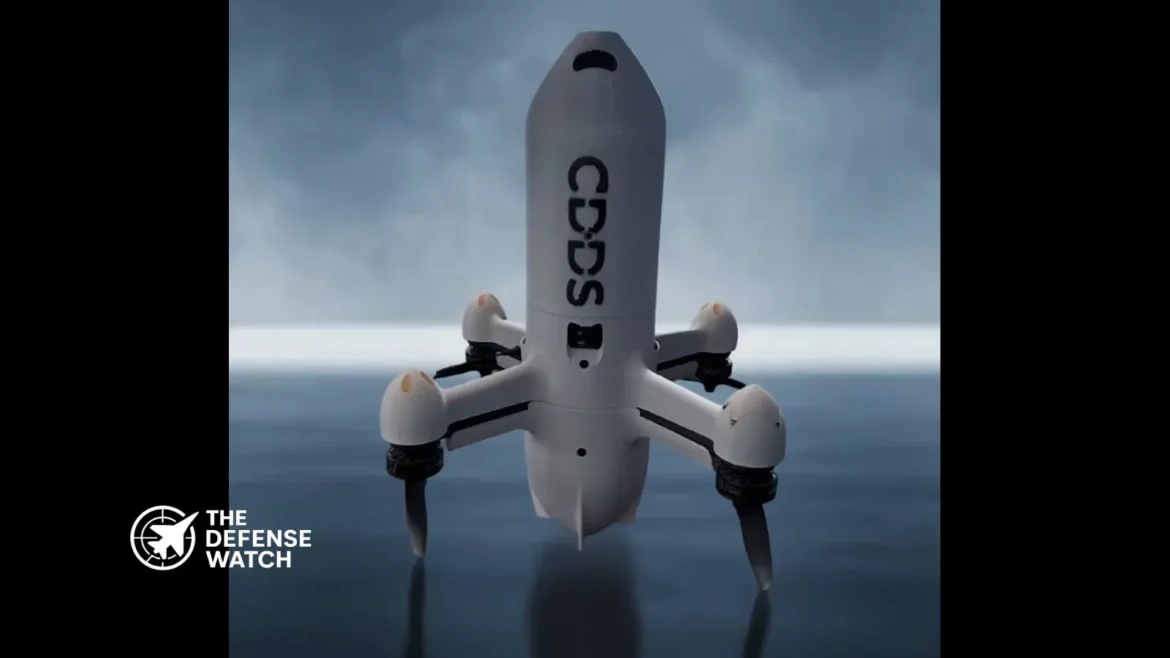
- Industry participants included Auterion, Counter Drone Defence Systems, and ENS Dynamics.
- The trials aim to accelerate the operational maturity of drone and counter-drone systems for future European defense needs.
Swiss UAS Technical Trials Planned For Autumn 2026
Swiss UAS technical trials planned by the government-backed Taskforce Drones will take place in autumn 2026 as part of a broader effort to accelerate the development of both attack drones and counter-drone technologies. The initiative is overseen by Switzerland’s Federal Department of Defence, Civil Protection and Sport (DDPS) and coordinated through the national armaments agency Armasuisse.
(adsbygoogle = window.adsbygoogle || []).push({});Officials say the upcoming campaign will represent the next standardized testing phase for unmanned aerial systems within the program. The trials aim to measure operational maturity, reliability, and performance of emerging drone technologies under real-world environmental conditions.
The program reflects growing international urgency around unmanned warfare and counter-drone defense as military forces adapt to lessons from recent conflicts.
The Big Picture
European defense planners increasingly view drones as a central element of modern warfare. Small unmanned aircraft now conduct reconnaissance, electronic warfare, and precision strike missions while operating at costs far lower than traditional aircraft or missile systems.
At the same time, counter-drone technologies have become a critical priority for military forces. The rapid spread of low-cost drones used by both state militaries and irregular groups has created new threats to bases, infrastructure, and deployed forces.
Switzerland’s Taskforce Drones initiative reflects a broader trend among Western militaries to accelerate experimentation cycles. Rather than relying solely on long procurement programs, defense organizations are turning to rapid trials and live testing environments to evaluate emerging technologies.
The approach mirrors innovation models seen in NATO exercises, U.S. Department of Defense drone programs, and European defense experimentation initiatives.
What’s Happening
The Taskforce Drones program plans to conduct its next UAS technical trials during autumn 2026. According to program officials, the testing will form part of a standardized evaluation campaign designed to compare the performance of multiple drone and counter-drone systems.
Earlier trials took place in December 2025 at the Hinterrhein shooting range in the canton of Graubünden. The site offers a complex testing environment that includes mountainous terrain, narrow valleys, and high-altitude conditions.
Those conditions create significant operational challenges for drone sensors and autonomous navigation systems. For example, automated camera-based recognition systems can struggle to distinguish targets against snow-covered terrain and mountainous backgrounds.
Several companies participated in the earlier trials, including:
- Auterion
- Counter Drone Defence Systems (CDDS)
- ENS Dynamics
The tests evaluated both attack drones and counter-UAS systems designed to detect, track, and intercept hostile drones.
Why It Matters
Testing unmanned systems in difficult environments provides insights that cannot be replicated in controlled laboratory conditions.
Mountainous terrain, changing weather patterns, and visual complexity challenge drone navigation systems, artificial intelligence algorithms, and sensor performance. These conditions are particularly relevant for European militaries operating in alpine or urbanized environments.
For counter-drone systems, the ability to detect small UAVs against complex backgrounds is a critical operational requirement. Small drones often fly low and slow, making them difficult to track using traditional radar or electro-optical sensors.
By conducting realistic field trials, defense agencies can identify system weaknesses early and accelerate improvements before full-scale deployment.
The Swiss testing program also offers industry participants an opportunity to demonstrate their technology in a government-supervised environment, which can support future procurement decisions.
Strategic Implications
The expansion of drone experimentation programs signals a shift in how militaries approach technology development.
Traditional procurement cycles often take years to move from concept to operational deployment. In contrast, drone warfare evolves rapidly, driven by commercial technology, artificial intelligence advances, and battlefield experimentation.
Programs like Taskforce Drones allow defense organizations to:
- Evaluate multiple competing systems quickly
- Collect operational performance data
- Identify promising technologies for future acquisition
This approach helps reduce the risk of adopting systems that perform well in controlled tests but fail under real operational conditions.
For European militaries, the effort also contributes to regional resilience against drone threats targeting infrastructure, airports, and military installations.
Competitor View
Strategic competitors closely monitor Western experimentation programs in unmanned systems.
Russia, China, and Iran have all invested heavily in drone warfare, particularly in areas such as loitering munitions, swarm tactics, and electronic warfare.
These countries may view Switzerland’s testing initiative as part of a broader Western effort to strengthen counter-drone defenses and accelerate drone innovation.
The lessons generated from European testing environments could also influence NATO doctrine, particularly in areas such as autonomous targeting, sensor fusion, and layered counter-UAS defense.
At the same time, competitors continue to explore methods designed to defeat these systems, including electronic jamming, stealthy drone designs, and coordinated swarm attacks.
Capability Gap
The Taskforce Drones program aims to address a growing operational gap between the rapid evolution of drone technology and the slower pace of traditional military procurement.
Recent conflicts have demonstrated several key vulnerabilities:
- Difficulty detecting small drones
- Limited counter-drone response times
- Challenges identifying targets in cluttered environments
Drone operators increasingly exploit terrain, urban environments, and weather conditions to evade detection.
Testing in alpine terrain directly targets these challenges by forcing drone sensors and algorithms to operate in complex visual environments where traditional detection methods often struggle.
However, limitations remain. Drone testing programs can evaluate technology performance, but operational success ultimately depends on integration with command networks, sensors, and air defense systems.
What To Watch Next
Several milestones will shape the next phase of the Swiss UAS technical trials program.
First, the autumn 2026 campaign will expand testing scenarios and may include additional industry participants.
Second, defense officials will analyze data from the trials to assess technology readiness and operational maturity.
Finally, successful systems could move toward procurement or further experimentation within European defense programs.
(adsbygoogle = window.adsbygoogle || []).push({});The trials may also provide opportunities for collaboration with NATO partners and other allied nations seeking to improve their counter-drone capabilities.
The Bottom Line
Switzerland’s upcoming UAS technical trials highlight the growing importance of rapid experimentation in drone warfare and counter-drone defense.
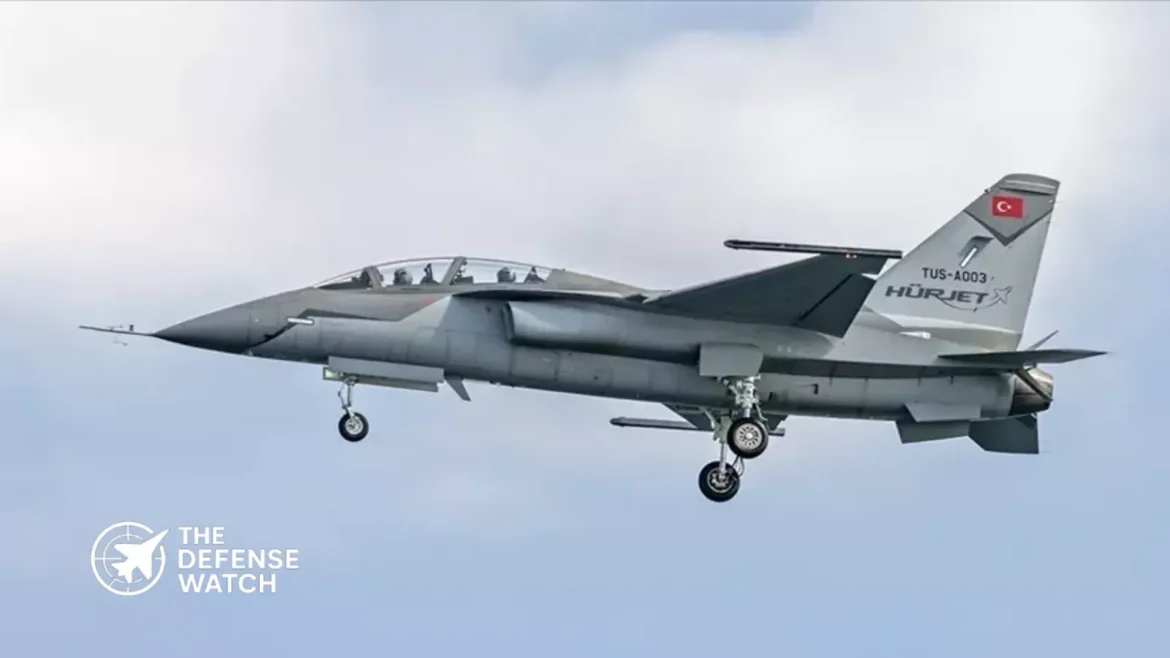
- ► HÜRJET test flights will run from February 23, 2026, through March 16, 2026, over Antalya Bay.
- ► Flights will originate from Antalya Air Base Command and extend toward Gazipaşa.
- ► The aircraft may reach supersonic speeds during certain test profiles.
- ► Sonic booms may be heard in coastal areas as a natural result of high speed testing.
- ► Authorities emphasized there is no cause for public concern during the scheduled activities.
HÜRJET Test Flights Over Antalya Bay Enter Supersonic Phase
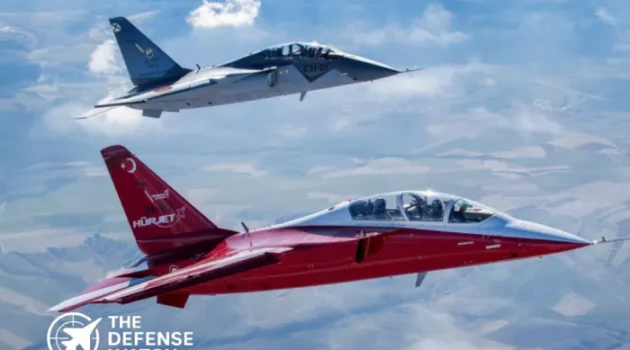
HÜRJET test flights over Antalya Bay are scheduled to continue through March 16, with Turkish authorities confirming that some sorties may include supersonic runs.
(adsbygoogle = window.adsbygoogle || []).push({});In a public notice, the Antalya Governor’s Office stated that flight tests under the HÜRJET Project will take place between February 23, 2026, and March 16, 2026. Operations will be conducted over the maritime area stretching from Antalya Bay to Gazipaşa, with aircraft departing from Antalya Air Base Command.
Officials warned that explosion like high intensity sounds could be heard along parts of the coastline. These sounds would result from the aircraft exceeding the speed of sound during specific test profiles.
Authorities stressed that such noise is a routine outcome of supersonic flight testing and urged residents not to be alarmed.
Advancing The HÜRJET Program
The HÜRJET advanced jet trainer is being developed by Turkish Aerospace Industries as part of Turkey’s broader effort to modernize pilot training and expand domestic aerospace capabilities.
Designed as a supersonic, single engine advanced trainer, HÜRJET is intended to replace aging jet trainers in Turkish service and support the transition of pilots to frontline platforms such as the F-16 Fighting Falcon and Turkey’s next generation combat aircraft programs.
According to Turkish defense officials and company disclosures in prior briefings, HÜRJET is expected to reach speeds above Mach 1, making controlled supersonic testing a key milestone in flight envelope expansion.
The Antalya maritime test zone offers a safer environment for high speed trials, minimizing risks to populated urban areas while allowing engineers to gather critical aerodynamic and structural data.
Why Supersonic Testing Matters
Supersonic trials are not symbolic. They are essential for validating airframe integrity, engine performance, flight control systems, and structural response under high stress conditions.
(adsbygoogle = window.adsbygoogle || []).push({});When an aircraft breaks the sound barrier, it generates a shock wave known as a sonic boom. Over water, these effects are easier to manage from both a safety and public relations standpoint.
For HÜRJET, expanding into supersonic regimes signals that the program is moving beyond basic flight validation toward full performance certification. This phase typically involves:
- Incremental speed increases
- Structural load assessments
- Avionics performance verification
- Stability and control evaluations
Defense aviation programs worldwide follow similar flight test methodologies before operational approval.
Strategic Implications For Turkey’s Aerospace Sector
The continued HÜRJET test flights over Antalya Bay highlight Ankara’s long term push for defense industrial autonomy.
Turkey has invested heavily in indigenous aerospace programs, seeking to reduce reliance on foreign suppliers. The HÜRJET program fits within a broader portfolio that includes unmanned systems, helicopters, and next generation fighter development.
From a policy perspective, a domestically produced supersonic trainer offers several advantages:
- Reduced foreign procurement exposure
- Export potential to allied and partner nations
- Greater control over training doctrine and upgrades
If successfully fielded, HÜRJET could position Turkey among a limited group of nations capable of designing and producing advanced jet trainers domestically.
(adsbygoogle = window.adsbygoogle || []).push({});However, sustained testing is critical. Flight envelope expansion, especially at supersonic speeds, often determines whether a program meets performance targets on schedule.
Public Communication And Transparency
The Antalya Governor’s Office decision to notify residents ahead of the HÜRJET test flights over Antalya Bay reflects standard aviation safety and civil coordination practices.
Sonic booms can cause concern among local communities unfamiliar with supersonic activity. Clear communication helps prevent misinformation and unnecessary alarm.
Similar public advisories are issued in the United States during military supersonic training over designated airspace corridors, particularly in coastal or desert regions.
(adsbygoogle = window.adsbygoogle || []).push({});By identifying the maritime corridor from Antalya Bay to Gazipaşa, authorities delineated a specific operational zone, reinforcing transparency in military flight activity.
What Comes Next
The March 16 end date does not necessarily mark the conclusion of the HÜRJET test campaign. Rather, it likely represents a defined test window for specific performance evaluations.
Future milestones may include:
- Expanded weapons integration trials
- Advanced avionics validation
- Export demonstration campaigns
For now, the focus remains on validating high speed performance and operational reliability.
The coming weeks will provide clearer insight into how rapidly the HÜRJET program progresses through its certification roadmap.
- ► The U.S. Air Force is advancing the Collaborative Combat Aircraft program through a phased weapons integration strategy.
- ► CCA platforms are designed to operate alongside crewed fighters under the Next Generation Air Dominance framework.
- ► Initial integration focuses on existing U.S. munitions to reduce risk and accelerate operational capability.
- ► The effort supports broader Air Force modernization and distributed combat operations.
- ► Officials emphasize deliberate testing and integration to ensure safety, reliability, and combat effectiveness.
USAF Collaborative Combat Aircraft Program Moves Into Weapons Integration Phase
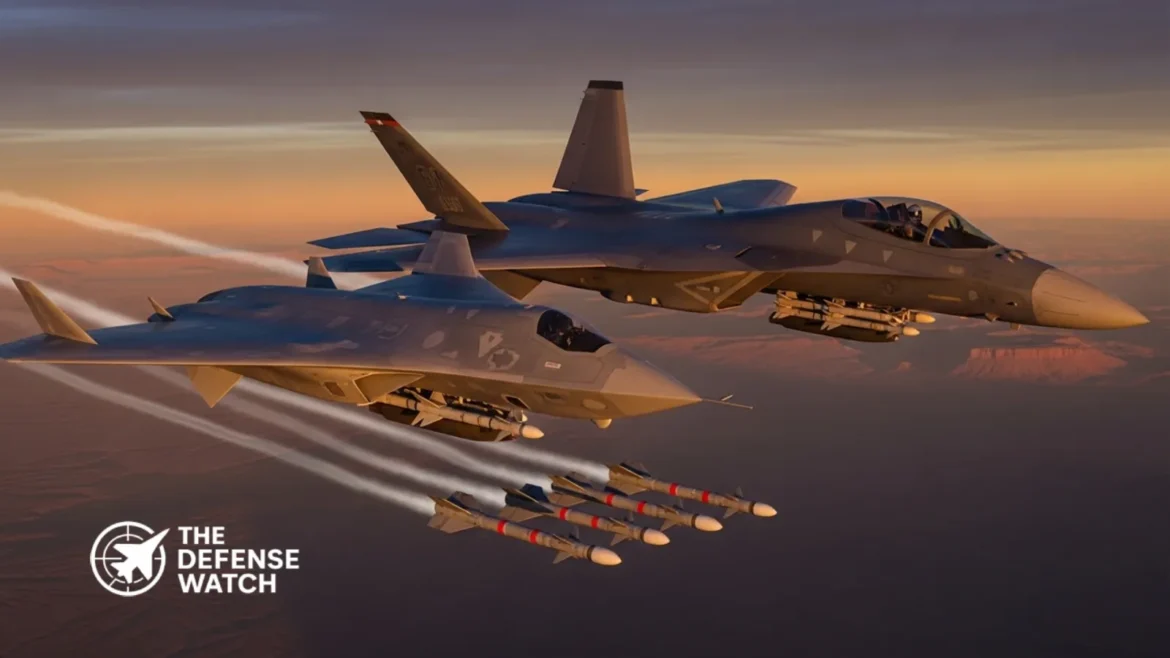
The Collaborative Combat Aircraft program is progressing through a deliberate weapons integration process as the U.S. Air Force refines how autonomous platforms will operate in future high-end conflicts.
(adsbygoogle = window.adsbygoogle || []).push({});According to the United States Air Force, the effort focuses on carefully integrating proven munitions onto emerging uncrewed aircraft designed to fly alongside crewed fighters. The goal is to reduce technical risk while accelerating operational capability.
The Collaborative Combat Aircraft program forms a central pillar of the Next Generation Air Dominance architecture. Under this concept, autonomous aircraft will support crewed platforms by carrying additional weapons, conducting sensing missions, and extending operational reach.
A Phased and Risk-Managed Approach
Air Force officials describe the weapons integration strategy as deliberate and incremental. Instead of developing entirely new weapons in parallel with new aircraft, the service is prioritizing compatibility with existing, combat-proven munitions already in the inventory.
This approach serves several purposes.
First, it reduces development timelines. Integrating established weapons avoids the long certification cycles associated with new munitions. Second, it supports logistical continuity across the force. Third, it strengthens interoperability within joint and allied operations.
From a force design perspective, the Collaborative Combat Aircraft program is intended to create mass at a lower cost than traditional fighters. By distributing weapons across multiple autonomous platforms, commanders can complicate enemy targeting and increase survivability in contested airspace.
Supporting NGAD and Future Air Dominance
The Collaborative Combat Aircraft program is closely aligned with NGAD objectives. While NGAD centers on a sixth-generation crewed fighter, CCA platforms provide scalable combat power around that core aircraft.
In practical terms, autonomous aircraft could carry additional air-to-air missiles, electronic warfare payloads, or intelligence, surveillance, and reconnaissance systems. This reduces the burden on crewed aircraft and enables greater tactical flexibility.
The Air Force has consistently emphasized that CCAs are not simply drones in the traditional sense. Instead, they are designed as collaborative systems that integrate into a broader combat network. That network includes advanced data links, distributed sensors, and secure communications that allow real-time coordination.
(adsbygoogle = window.adsbygoogle || []).push({});The deliberate weapons integration effort reflects lessons learned from past acquisition programs. Rushing integration can create cascading delays and cost overruns. A phased plan, by contrast, allows the service to validate software, hardware interfaces, and safety protocols step by step.
Operational Implications and Strategic Context
The Collaborative Combat Aircraft program arrives at a time when the United States faces pacing challenges in the Indo-Pacific and other theaters. Potential adversaries continue to expand integrated air defense systems, long-range missiles, and counter-air capabilities.
In that environment, survivability and distributed operations become critical.
Autonomous aircraft operating in coordination with crewed fighters can increase tactical options. They can absorb risk in high-threat areas, extend sensor coverage, and expand weapons capacity without placing additional pilots in harm’s way.
From an operational standpoint, integrating weapons early and methodically ensures these platforms are not limited to sensing roles alone. Arming CCAs provides credible combat utility from the outset.
(adsbygoogle = window.adsbygoogle || []).push({});The Air Force has underscored that testing remains central to the effort. Weapons separation trials, flight envelope validation, and software verification are essential before operational deployment. Safety, reliability, and predictable performance remain non-negotiable requirements.
Industrial and Modernization Impact
The Collaborative Combat Aircraft program also signals a shift in how the Air Force approaches acquisition. Modular architectures and open systems design are intended to allow faster upgrades over time.
By aligning weapons integration with existing inventories, the service reduces supply chain friction and enhances sustainment efficiency. This matters as the Air Force balances modernization priorities across fighters, bombers, tankers, and space-based assets.
As development continues, the deliberate weapons integration strategy positions the Collaborative Combat Aircraft program as a credible component of future U.S. airpower.
(adsbygoogle = window.adsbygoogle || []).push({});Rather than pursuing rapid but risky fielding, the Air Force is prioritizing structured integration, operational validation, and scalable growth. That methodical path may prove decisive as the service works to maintain air superiority in increasingly contested environments.
Navy Achieves Milestone With Partner-Launched Autonomous Vessel
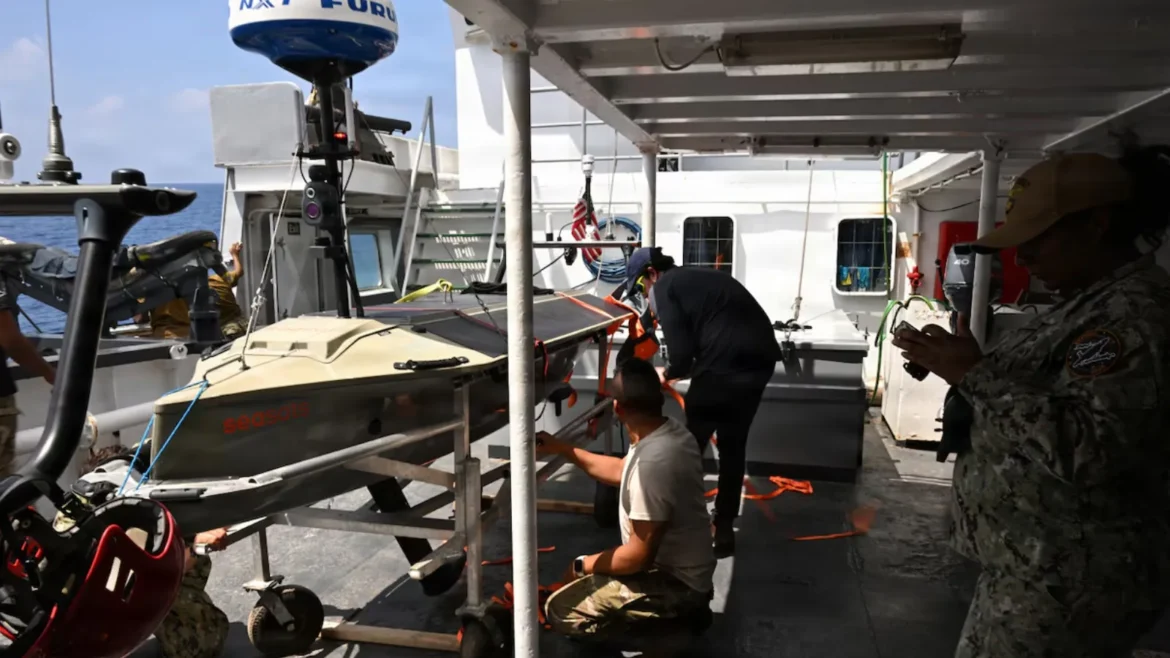
The U.S. Navy’s Commander Task Force 66 successfully launched the Lightfish unmanned surface vessel from a Seychelles Coast Guard vessel on February 9, marking the first time the autonomous system has been deployed from a partner nation’s ship during maritime operations.
The historic deployment occurred during Cutlass Express 26 off the coast of Seychelles in the Indian Ocean, demonstrating enhanced interoperability between U.S. forces and African maritime partners. The operation tested the Lightfish’s capabilities in open ocean conditions with limited connectivity, advancing the Navy’s autonomous systems integration strategy.
According to Navy Lt. Bryna Loranger, CTF 66 operations officer, the deployment represents a significant step forward in collaborative maritime domain awareness. The exercise combined U.S. technological capabilities with Seychelles Coast Guard assets and infrastructure to enhance expeditionary robotic autonomous systems capabilities in the U.S. Africa Command area of responsibility.
Expanding Unmanned Maritime Capabilities
Commander Task Force 66, established in May 2024, operates as the U.S. 6th Fleet’s first all-domain task force dedicated to integrating robotic and autonomous systems with naval, joint, and NATO partners across European and African theaters. The task force currently maintains 22 unmanned surface vessels and expects to double its operational capacity as additional assets reach readiness.

The Lightfish deployment during Cutlass Express 26 was part of an unmanned systems training event designed to promote knowledge transfer and build partner capacity in autonomous maritime operations. Shane Condon, a civilian contractor working with CTF 66, worked alongside Seychelles Coast Guardsmen to execute the launch, demonstrating the practical application of unmanned systems in partner nation operations.
Navy Rear Adm. Kelly Ward, director of strategic effects for CTF 66, emphasized the strategic importance of integrating unmanned tactics directly into operations. The task force leverages artificial intelligence and advanced technologies to maintain presence across Africa’s maritime zones while detecting illegal activity and countering threats in the gray zone.
Strategic Implications For Maritime Security
The successful partner nation deployment advances the Navy’s approach to modern maritime challenges, where information systems, technology, and economic vulnerabilities are increasingly weaponized by adversaries operating outside traditional warfare domains. CTF 66’s unmanned systems serve as force multipliers, enhancing maritime domain awareness and deterrence capabilities.
Cutlass Express 26 brings together 19 partner nations and allies through shore-based training events and at-sea operations. The exercise includes medical training, visit board search and seizure procedures, maritime interdiction operations, and counter-illegal fishing tactics. The multi-national collaboration provides participating nations opportunities to synchronize responses to real-world maritime security scenarios.
The exercise framework allows CTF 66 to operate large numbers of unmanned systems at scale through strong international partnerships. These collaborative relationships enable the task force to preposition and deploy assets in host countries, extending operational reach and response capabilities across the African maritime domain.
Technology Integration And Future Operations
The Lightfish deployment validates CTF 66’s technological integration strategy and demonstrates the feasibility of operating advanced autonomous systems from partner nation platforms. The unmanned surface vessel operates with sophisticated sensors and communications systems designed to function in contested electromagnetic environments with degraded connectivity.

Navy Cmdr. Michael Aragon, assigned to CTF 66, worked with Seychelles Coast Guard personnel during pre-launch preparations, highlighting the technical knowledge transfer occurring through the partnership. Navy Petty Officer 2nd Class Melissa Adams and Seychelles Coast Guard Capt. Julian Morel participated in the operation, demonstrating the multi-national crew coordination required for unmanned systems deployment.
The task force continues developing unmanned technologies to enhance how militaries integrate naval platforms across all domains. Since establishment, CTF 66 has driven innovation in autonomous systems employment, testing concepts that inform broader Navy and joint force unmanned operations strategies.
Regional Maritime Security Enhancement
The Indian Ocean deployment advances U.S. Africa Command’s comprehensive maritime security strategy by providing collaborative opportunities among African forces and international partners. The Seychelles location offers strategic access to critical sea lanes and maritime traffic routes requiring persistent monitoring and security presence.
Cutlass Express 26 represents one of three regional express series exercises sponsored by U.S. Africa Command and enabled by U.S. 6th Fleet. The exercise series builds partner capacity, promotes interoperability, and addresses shared maritime security concerns across the African continent.
The unmanned systems integration demonstrated during the exercise enhances freedom of navigation operations and strengthens international maritime law enforcement capabilities. Partner nations gain access to advanced technologies and operational concepts that improve their ability to secure territorial waters and exclusive economic zones.
Operational Readiness And Deterrence
CTF 66’s expanding fleet of unmanned surface vessels provides scalable options for maritime presence operations, intelligence gathering, and tactical employment across the European and African theaters. The vessels operate semi-autonomously or autonomously depending on mission requirements, reducing crew exposure to hazardous environments while maintaining operational effectiveness.
The task force’s ability to deploy systems from partner nation vessels expands operational flexibility and demonstrates coalition integration of emerging technologies. This capability proves particularly valuable in resource-constrained environments where distributed operations and partner coordination enhance overall maritime security posture.
As CTF 66 continues expanding its unmanned vessel inventory and operational concepts, the task force enhances deterrence and lethality across assigned areas of responsibility. The Lightfish deployment validates technical capabilities while strengthening international partnerships essential for long-term maritime security cooperation.
The successful Cutlass Express 26 unmanned systems operation establishes precedents for future collaborative deployments and accelerates the integration of autonomous technologies into routine maritime operations with partner nations across the African continent and beyond.