
- Home
- Defense Systems
- Missiles & Precision Weapons
- Trident II D5 Missile
Trident II D5 Missile
Defense Systems Full Specifications
1. General Information
| Name / Designation | Trident II D5 |
| Type / Role | Submarine-Launched Ballistic Missile (SLBM) |
| Country of Origin | United States |
| Manufacturer | Lockheed Martin Space |
| Service Entry / Year Introduced | 1990 |
| Operational Status | Active |
2. Performance & Range
| Range | >7,400 km (Intercontinental) |
| Speed | Mach 20+ |
| Ceiling / Altitude Limit | Exo-atmospheric ballistic trajectory |
| Accuracy (CEP) | ~90 meters or better |
| Warhead Type | Nuclear (MIRV capable) |
3. Guidance & Targeting
| Guidance System | Inertial + Stellar Navigation |
| Targeting Mode | Pre-programmed ballistic targeting |
| Launch Platform Compatibility | Submarine |
| Seeker Type | None (ballistic guidance) |
4. Physical Characteristics
| Length | ~13.4 m |
| Diameter | ~2.11 m |
| Wingspan | N/A |
| Launch Weight | ~59,000 kg |
| Propulsion | Three-stage solid rocket |
5. Warhead & Payload
| Warhead Weight | Multiple RVs (variable yield) |
| Explosive Type | Nuclear |
| Detonation Mechanism | Airburst / Surface Burst |
| Payload Options | MIRV nuclear warheads |
6. Operational Use & Capabilities
| Operational Range Type | Long Range |
| Deployment Platform | Submarine |
| Target Types | Strategic targets, cities, military infrastructure |
| Combat Proven | No (deterrence role) |
| Users / Operators | United States, United Kingdom |
PROS
- High accuracy for a strategic ballistic missile
- MIRV capability enables multiple target engagement
- Submarine launch ensures survivability and stealth
- Proven reliability with extensive operational history
- Continuous upgrades extend service life
CONS
- Extremely high development and maintenance costs
- Limited use to strategic nuclear roles only
- Dependence on submarine fleet availability
- Complex maintenance and handling requirements
- Subject to arms control and treaty limitations
Trident II D5 Submarine-Launched Ballistic Missile
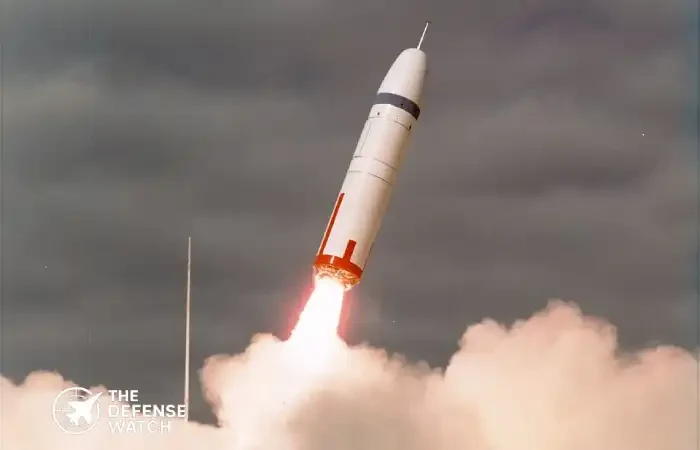
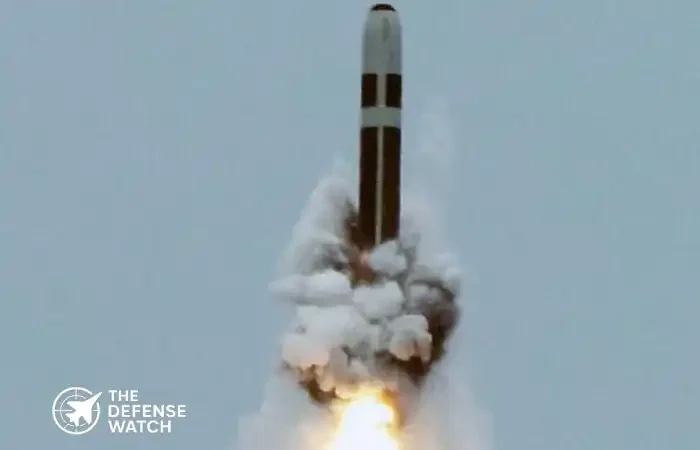
The Trident II D5 is a cornerstone of the United States’ sea-based nuclear deterrent, designed for launch from ballistic missile submarines. It provides survivable, second-strike capability, ensuring strategic stability in high-threat environments. Known for its precision and reliability, the missile supports Multiple Independently Targetable Reentry Vehicles (MIRVs), allowing a single launch to engage multiple targets across vast distances.
Manufacturer
Developed and produced by Lockheed Martin Space, the Trident II D5 entered service with the U.S. Navy in 1990. It is deployed aboard Ohio-class and newer Columbia-class submarines. The system has undergone continuous upgrades under life-extension programs to maintain operational effectiveness through the coming decades.
Speed and Range
The Trident II D5 is an intercontinental ballistic missile with a range exceeding 7,400 km, capable of reaching targets across continents. It travels at hypersonic speeds, estimated above Mach 20 during its midcourse phase. Its advanced inertial navigation system, enhanced with stellar guidance updates, ensures high accuracy with a circular error probable measured in tens of meters.
Cost/Price
The estimated unit cost of a Trident II D5 missile is approximately $30 to $40 million, depending on configuration and upgrade packages. Lifecycle and modernization costs significantly increase total program expenditure, reflecting its strategic importance.
Disclaimer Note
The information provided on TheDefenseWatch.com is for general informational purposes only. While we strive to ensure the accuracy, completeness, and timeliness of our content regarding defense and aerospace products, technologies, and specifications, we cannot guarantee that all information is 100% accurate or up-to-date due to the evolving nature of military technology and classified data.TheDefenseWatch.com does not warrant the reliability, suitability, or availability of the information for any specific purpose. Users are advised to consult official sources, such as manufacturers, government publications, or defense agencies, for precise and verified data before making decisions based on our content.We are not affiliated with any defense manufacturers, governments, or military organizations mentioned. Opinions, reviews, and ratings reflect expert analysis but are subjective and should not be considered endorsements. TheDefenseWatch.com is not responsible for any errors, omissions, or consequences arising from the use of this website’s content.External links are provided for convenience and do not imply endorsement. TheDefenseWatch.com reserves the right to update or modify content without prior notice. By using this website, you agree to our Privacy & Cookies Policy.



New Arrivals








Popular Comparisons
-
 J-10C vs JF-17 Thunder: Which Fighter Is More Capable?
View Comparison →
-
Tejas vs Gripen: Key Differences and Capabilities
View Comparison →
-
Tejas vs MiG-21 Bison: How India Replaced Its Iconic Supersonic Fighter
View Comparison →
-
F-35 vs F-16: Stealth, Sensors and Combat Roles
View Comparison →
-
Tejas Fighter Jet vs F-16 Fighting Falcon: Capability Compared
View Comparison →
-
Rafale Fighter Jet vs F-16 Fighting Falcon : Which Fighter Has the Edge?
View Comparison →
-
Su-57 Fighter Jet vs J-20 Fighter Jet: Stealth and Air Combat Compared
View Comparison →
-
Mirage 2000 vs Tejas Mk1A: Legacy Combat Power vs Indigenous Modernization
View Comparison →
-
Rafale Fighter Jet vs F-22 Raptor: Which Air Dominance Fighter Has the Edge?
View Comparison →
-
Tejas Fighter Jet vs. Rafale Fighter Jet: India’s Indigenous Fighter Meets France’s Proven Multirole Combat Aircraft
View Comparison →


- General Atomics to Supply Components for U.S. Army and Navy Hypersonic Weapons

- Lockheed Martin Tests Mk21A Reentry Vehicle for Sentinel ICBM
- Lockheed Martin Wins $122.4 Million Trident II Navigation Contract
- Pentagon Prepares Review of Military Legal System and JAG Corps
- U.S. and Colombia Launch Southern Vanguard 2027 Exercise
- CENTCOM Receives 25,000+ Drones and Counter-UAS Systems Under Pentagon Push
- Helsing Transfers Combat Software Ownership to Germany
- NASA Prepares New X-Plane Reveal as Experimental Aircraft Program Expands
- NASA’s Swift Space Telescope Reenters Atmosphere After 22-Year Mission
- Remington 870 in Military Service: Mark 1 to MCS





Fighter Jets
-
 F-100 Super Sabre
-
North American F-86 Sabre
-
Northrop YF-23 Fighter
-
Rafale F5 Fighter
-
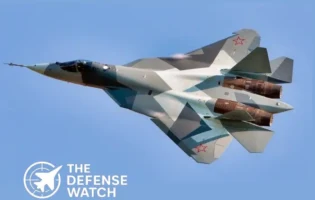
SU-57 Felon Stealth Fighter
-
Boeing F/A-XX Fighter
-
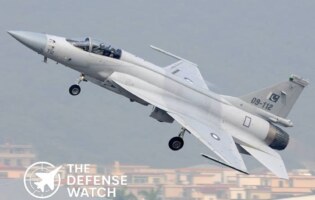
JF-17 Thunder Fighter Jet
-
F-47 Fighter Jet
-
MIG-31 Fighter Jet
-
J-10CE Fighter Jet
-
Chengdu J-10 Fighter Jet
-
Chengdu J-10C Fighter Jet
-
Gripen E Fighter Jet
-
Tejas Mk1A Fighter Jet
-
Tejas Mk‑2 Fighter Jet
-
F-16V Viper Block 70 Fighter Jet
-
F-15EX Eagle II Fighter
-
F-15E Strike Eagle Fighter
-
F/A-18E/F Super Hornet Fighter Jet
-
Saab Gripen F Fighter Jet
-
JAS 39E/F Gripen Fighter Jet
-
JAS 39 Gripen Fighter Jet
-
F-35A Lightning II Fighter Jet
-
F/A-18F Super Hornet








Recent Compares
-
J-10C vs JF-17 Thunder: Which Fighter Is More Capable?
View Comparison →
-
Tejas vs Gripen: Key Differences and Capabilities
View Comparison →
-
Tejas vs MiG-21 Bison: How India Replaced Its Iconic Supersonic Fighter
View Comparison →
-
F-35 vs F-16: Stealth, Sensors and Combat Roles
View Comparison →
-
Tejas Fighter Jet vs F-16 Fighting Falcon: Capability Compared
View Comparison →
Latest Defense Systems
10 Compares Defense Systems
-
J-10C vs JF-17 Thunder: Which Fighter Is More Capable?
View Comparison →
-
Tejas vs Gripen: Key Differences and Capabilities
View Comparison →
-
Tejas vs MiG-21 Bison: How India Replaced Its Iconic Supersonic Fighter
View Comparison →
-
F-35 vs F-16: Stealth, Sensors and Combat Roles
View Comparison →
-
Tejas Fighter Jet vs F-16 Fighting Falcon: Capability Compared
View Comparison →
-
Rafale Fighter Jet vs F-16 Fighting Falcon : Which Fighter Has the Edge?
View Comparison →
-
Su-57 Fighter Jet vs J-20 Fighter Jet: Stealth and Air Combat Compared
View Comparison →
-
Mirage 2000 vs Tejas Mk1A: Legacy Combat Power vs Indigenous Modernization
View Comparison →
-
Rafale Fighter Jet vs F-22 Raptor: Which Air Dominance Fighter Has the Edge?
View Comparison →
-
Tejas Fighter Jet vs. Rafale Fighter Jet: India’s Indigenous Fighter Meets France’s Proven Multirole Combat Aircraft
View Comparison →
- General Atomics to Supply Components for U.S. Army and Navy Hypersonic Weapons
- Lockheed Martin Tests Mk21A Reentry Vehicle for Sentinel ICBM
- Lockheed Martin Wins $122.4 Million Trident II Navigation Contract
- Pentagon Prepares Review of Military Legal System and JAG Corps
- U.S. and Colombia Launch Southern Vanguard 2027 Exercise