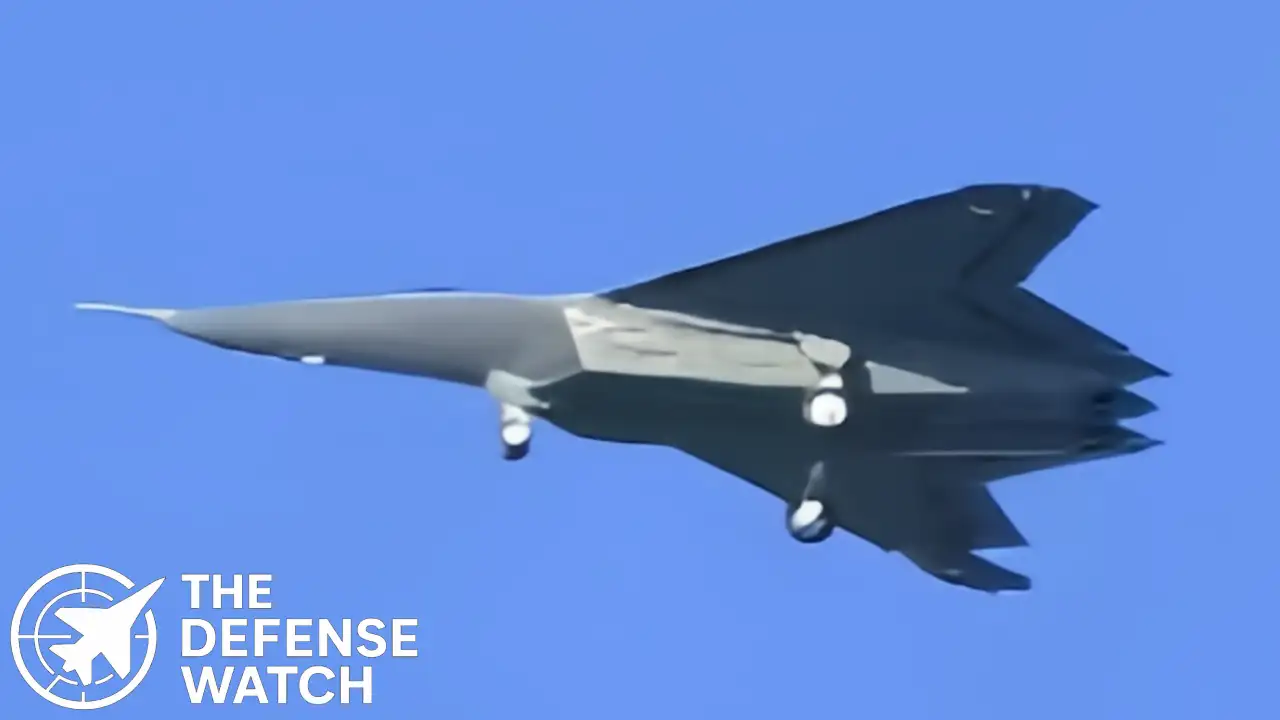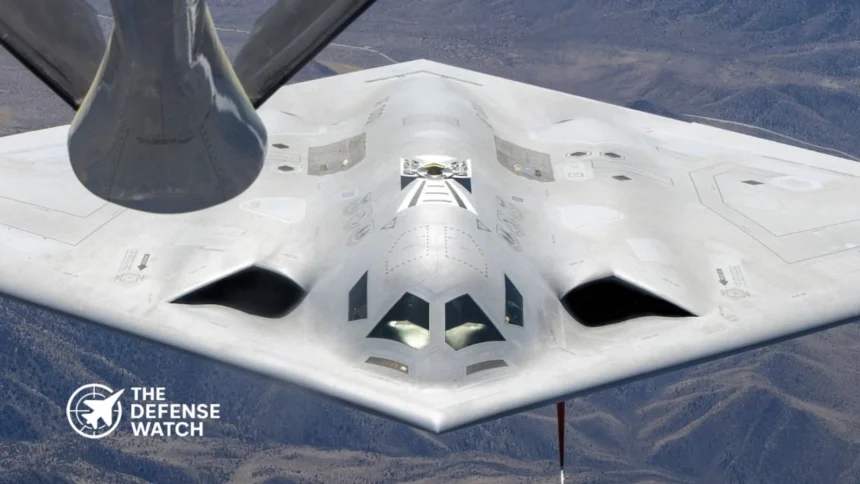
The U.S. Air Force’s B-21 Raider has completed its first publicly announced weapons-release test, demonstrating a key capability required for the next-generation stealth bomber to move beyond basic flight testing.
During the test, conducted from Edwards Air Force Base (AFB), California, a B-21 test aircraft released a conventional weapon. The Department of the Air Force announced the milestone on November 13, 2026, confirming that the event validated the aircraft’s digital models and the maturity of its open-systems architecture.
The test moves the Northrop Grumman-developed bomber into a more advanced stage of weapons integration. However, the Air Force has not identified the munition used, disclosed detailed release parameters, or provided information confirming whether the weapon struck a designated target.
The program remains on track to have aircraft arrive at Ellsworth Air Force Base, South Dakota, in 2027.
From Flight Testing to Weapons Integration
The weapons-release demonstration represents an important transition in the B-21 development program.
Earlier flight testing has focused on aircraft performance, flight characteristics and the expansion of the bomber’s operating envelope. The latest milestone addresses a different requirement: demonstrating that the aircraft can safely release weapons while maintaining the performance and systems integration expected of an operational strike platform.
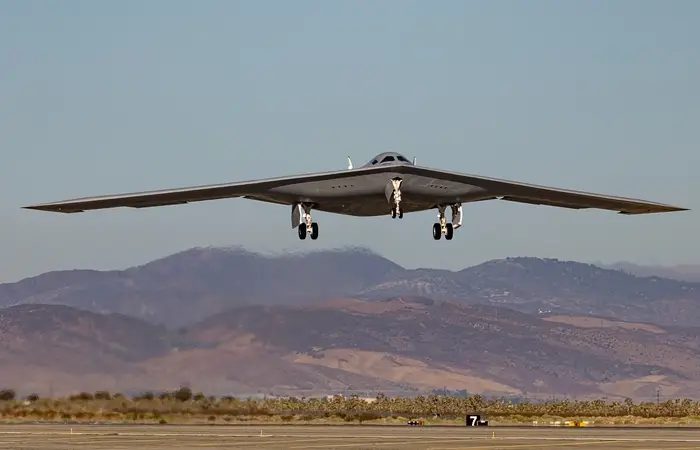
According to the Department of the Air Force, the test aircraft departed Edwards AFB and released a conventional weapon during a recent test mission.
Air Force Secretary Troy Meink said the aircraft was designed to combine reliability and maintainability with the ability to integrate new weapons quickly.
The service also credited the test with demonstrating the maturity of the Raider’s open-systems architecture, which is intended to support future upgrades and weapons integration.
The distinction matters because a bomber’s operational value depends on more than its ability to fly and avoid detection. Its weapons systems, mission computers, software and release mechanisms must function together under demanding flight conditions.
Digital Twin Technology Supports Weapons Testing
One of the most notable elements of the B-21 weapons-release milestone is the role played by digital engineering.
The Air Force said the test was supported by thousands of hours of virtual modeling conducted within the B-21’s digital twin environment.
A digital twin is a computer-based representation of a physical aircraft and its associated systems. Engineers can use these models to evaluate system behavior, examine potential problems and refine performance before conducting corresponding physical tests.
For weapons integration, modeling can help engineers predict how a munition will behave during separation from an aircraft and refine its expected trajectory.
The Air Force said this work allowed the B-21 Combined Test Force to accelerate weapons integration and refine the weapon’s trajectory before the aircraft conducted the actual release.
This approach can reduce the number of physical test iterations needed to identify and resolve engineering issues. It does not eliminate the need for flight testing, however.
The November demonstration provided physical evidence that the aircraft could release a conventional weapon, complementing the extensive simulation work that preceded it.
The Air Force has not disclosed the modeling data, test conditions or specific weapon involved.
Why Open-Systems Architecture Matters
The B-21’s open-systems architecture is another important part of the latest milestone.
In military aircraft development, an open architecture is intended to make it easier to integrate new technologies, software and mission equipment without requiring extensive redesign of the entire platform.
For a bomber expected to remain in service for decades, this flexibility has operational and financial implications.
Weapons technology, targeting requirements and electronic warfare threats will continue to change. A platform that can accommodate new weapons and mission systems through planned upgrades may retain operational relevance longer than one dependent on lengthy, platform-specific modifications.
The Air Force specifically linked the November test to the maturity of the B-21’s architecture and its ability to onboard additional weapons.
However, the demonstration should not be interpreted as confirmation that every planned weapon has completed integration or received operational clearance.
The service has not published a complete list of weapons cleared for the B-21, nor has it disclosed the remaining certification requirements.
What the Test Means for the B-21 Program
The B-21 Raider is being developed by Northrop Grumman to replace aging portions of the U.S. long-range bomber force.
The aircraft is intended to conduct penetrating strike missions in heavily defended environments and support both conventional and nuclear missions.
Its development is part of a wider U.S. effort to maintain long-range strike capabilities as potential adversaries expand integrated air defense networks, advanced radar systems and long-range precision weapons.
The B-21 is expected to complement the existing B-52 Stratofortress fleet while eventually replacing the B-1B Lancer and B-2 Spirit.
The weapons-release test adds an important element to that development effort, but it does not establish that the bomber is ready for operational deployment.
Further testing will be needed to establish the maturity of its weapons integration, mission systems and other capabilities before the aircraft can enter regular operational service.
Ellsworth AFB Remains the First Operational Destination
The Air Force continues to target 2027 for the arrival of the first B-21 aircraft at Ellsworth AFB in South Dakota.
The installation is preparing to become the first operational home of the new bomber, requiring infrastructure, personnel training, maintenance arrangements and supporting systems.
The timeline also places pressure on the development and production programs to advance together.
Northrop Grumman has been expanding its manufacturing capacity to support the planned transition from development toward larger-scale production.
The company has opened an additional manufacturing facility in Layton, Utah, covering approximately 265,000 square feet. It has also started work on a larger assembly facility at Plant 42 in Palmdale, California, according to its November program update.
These investments are intended to support increased production capacity, although manufacturing expansion alone does not establish how quickly completed aircraft will be delivered.
The Air Force’s 2027 objective therefore depends on progress across several areas, including flight testing, weapons integration, production readiness and preparations at Ellsworth.
An Important Milestone, Not Yet Operational Clearance
The B-21’s first weapons-release test provides evidence that the program is progressing beyond basic aircraft flight testing.
It demonstrates that the Raider has reached an important stage in integrating its conventional strike capability with the aircraft’s digital engineering and mission architecture.
Nevertheless, significant details remain undisclosed. The Air Force has not identified the weapon, published the release conditions or provided a complete account of the remaining weapons qualification work.
The next important measure of progress will be how quickly the program expands testing, validates additional capabilities and prepares the aircraft for its planned arrival at Ellsworth AFB in 2027.
For the U.S. bomber modernization effort, the November test is a meaningful development. It is also a reminder that demonstrating one successful weapons release and establishing a fully operational bomber capability are two different stages of the same program.