
- Home
- Defense Systems
- Attack & Multirole Drones (UAVs)
- ALTIUS-600 Drone
ALTIUS-600 Drone


Defense Systems Full Specifications
1. General Information
| Name | ALTIUS-600 |
| Manufacturer | Anduril Industries (Area-I) |
| Country of Origin | United States |
| Type / Role | Autonomous Air Vehicle / Multi-role UAS (ISR, EW, Loitering Munition) |
| First Flight / Introduced | ~2010s / Operational 2020s |
| Status | In Service / Operational |
| Unit Cost | Not publicly detailed (attritable class) |
2. Performance
| Maximum Speed | 90 km/h |
| Cruise Speed | 60 km/h |
| Operational Range | Up to 440 km |
| Endurance | Up to 4 hours |
| Service Ceiling | Not specified (low/medium altitude) |
| Rate of Climb | Not publicly detailed |
3. Dimensions
| Length | 1 m |
| Wingspan | 2.54 m |
| Height | Not specified |
| Maximum Takeoff Weight (MTOW) | 12.25 kg |
4. Payload & Armament
| Payload Capacity | Up to 3.2 kg |
| Hardpoints | Modular nosecone |
| Weapons | Warhead (ALTIUS-600M variant) |
| Sensors | EO/IR, SIGINT, EW options |
| Avionics | Autonomous flight control, data links |
5. Propulsion
| Engine Type | Electric / Battery-powered (pusher propeller) |
| Engine Power | Not specified |
| Propeller Type | Two-blade pusher |
6. Communication & Control
| Control Type | Remote / Autonomous |
| Data Link Range | Line-of-sight / beyond (via network) |
| Navigation | GPS / INS |
| Ground Control Station | Portable / integrated systems |
7. Operational Use
| Primary Users | U.S. DoD (Army, SOCOM testing), potential allies |
| Combat Proven | Testing / demonstrations |
| Notable Operations | U.S. Army Project Convergence, ALE demonstrations |
PROS
- Highly flexible multi-domain launch capability (air, ground, sea)
- Long endurance and range for a small, attritable UAS in ISR roles
- Modular payload system for rapid mission reconfiguration
- High degree of autonomy reduces operator workload
- Cost-effective for expendable or high-risk missions
CONS
- Low speed limits responsiveness in dynamic scenarios
- Limited payload capacity restricts armament options
- Smaller warhead in munition variant compared to larger systems
- Dependent on external launch platforms for deployment
- Shorter endurance in armed configurations reduces loiter time
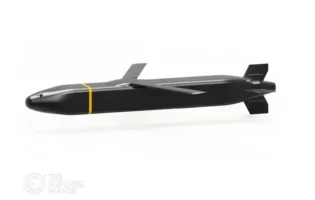
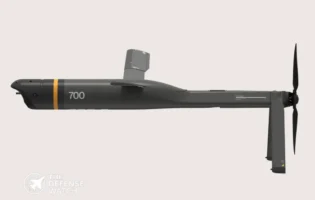
The ALTIUS-600 is a versatile, tube-launched autonomous air vehicle developed by Area-I (now part of Anduril Industries), designed for multi-domain operations in modern U.S. military contexts. This compact drone stands out for its flexibility, supporting intelligence, surveillance, reconnaissance (ISR), electronic warfare, communications relay, and, in its armed variant (ALTIUS-600M), precision loitering munition strikes.
Manufacturer:
Anduril Industries (following the 2021 acquisition of Area-I), United States.
Speed and Range:
The ALTIUS-600 achieves a maximum speed of approximately 90 km/h (56 mph) and a cruise speed around 60 km/h (37 mph). It offers an operational range of up to 440 km (about 270-375 miles depending on configuration) and endurance of up to 4 hours for ISR missions, though the loitering munition variant (ALTIUS-600M) typically provides shorter endurance of around 1.5-2 hours with reduced range (around 160 km) to accommodate heavier payloads.
Cost/Price:
Specific unit costs are not publicly disclosed in detail, but foreign military sales packages involving hundreds of systems (including launchers and support) have been valued in the hundreds of millions of dollars, indicating a relatively affordable profile for attritable, expendable platforms compared to larger UAVs.
The ALTIUS-600 features a 1-meter length, 2.54-meter wingspan, and gross weight of about 12.25 kg (27 lb). It is launched from tubes on ground vehicles, aircraft (fixed-wing or rotary), or maritime platforms, providing expeditionary forces with air-launched effects (ALE). Its modular nosecone supports payloads up to approximately 3.2 kg (7 lb) for non-lethal missions or warheads in the armed configuration. Key capabilities include high autonomy for single-operator control of multiple units, EO/IR sensors for day/night operations, and integration for collaborative strikes or swarm-like tactics. The system enhances survivability of manned assets by extending standoff distances and performing dangerous tasks in contested environments. It has seen testing and integration with U.S. Army programs like Project Convergence and demonstrations for potential allies, underscoring its role in evolving U.S. defense strategies focused on distributed, autonomous operations.
Disclaimer Note
The information provided on TheDefenseWatch.com is for general informational purposes only. While we strive to ensure the accuracy, completeness, and timeliness of our content regarding defense and aerospace products, technologies, and specifications, we cannot guarantee that all information is 100% accurate or up-to-date due to the evolving nature of military technology and classified data.TheDefenseWatch.com does not warrant the reliability, suitability, or availability of the information for any specific purpose. Users are advised to consult official sources, such as manufacturers, government publications, or defense agencies, for precise and verified data before making decisions based on our content.We are not affiliated with any defense manufacturers, governments, or military organizations mentioned. Opinions, reviews, and ratings reflect expert analysis but are subjective and should not be considered endorsements. TheDefenseWatch.com is not responsible for any errors, omissions, or consequences arising from the use of this website’s content.External links are provided for convenience and do not imply endorsement. TheDefenseWatch.com reserves the right to update or modify content without prior notice. By using this website, you agree to our Privacy & Cookies Policy.

New Arrivals









Popular Comparisons
-
 J-10C vs JF-17 Thunder: Which Fighter Is More Capable?
View Comparison →
-
Tejas vs Gripen: Key Differences and Capabilities
View Comparison →
-
Tejas vs MiG-21 Bison: How India Replaced Its Iconic Supersonic Fighter
View Comparison →
-
F-35 vs F-16: Stealth, Sensors and Combat Roles
View Comparison →
-
Tejas Fighter Jet vs F-16 Fighting Falcon: Capability Compared
View Comparison →
-
Rafale Fighter Jet vs F-16 Fighting Falcon : Which Fighter Has the Edge?
View Comparison →
-
Su-57 Fighter Jet vs J-20 Fighter Jet: Stealth and Air Combat Compared
View Comparison →
-
Mirage 2000 vs Tejas Mk1A: Legacy Combat Power vs Indigenous Modernization
View Comparison →
-
Rafale Fighter Jet vs F-22 Raptor: Which Air Dominance Fighter Has the Edge?
View Comparison →
-
Tejas Fighter Jet vs. Rafale Fighter Jet: India’s Indigenous Fighter Meets France’s Proven Multirole Combat Aircraft
View Comparison →


- Department of War and Lockheed Martin Sign 10-Year F-35 Agreement With $7 Billion Investment Commitment

- Pentagon Approves Active Denial System for Potential U.S. Southern Border Use
- U.S. Air Force Plans Larger F-35 Role in 1,509-Aircraft Fighter Fleet
- Raytheon Wins Two-Year Extension for AN/TPY-2 Radar Support
- Space Force Selects Northrop Grumman, True Anomaly for New Orbital Reconnaissance Satellites
- Hegseth and Guyana’s President Establish Enhanced Military Partnership
- Ukrainian F-16 vs. Russian Su-35: What Happened, How the Engagement Unfolded and Why It Matters
- Canada’s Fighter Jet Fleet Faces a Critical Transition as F-35 Review Continues
- New Zealand Signs Deal for Five MH-60R Seahawk Helicopters
- U.S. Air Force Test Pilot School Adds Water Landings to Training



Fighter Jets
-
 SU-57 Felon Stealth Fighter
-
Boeing F/A-XX Fighter
-
JF-17 Thunder Fighter Jet
-
F-47 Fighter Jet
-
MIG-31 Fighter Jet
-
J-10CE Fighter Jet
-
Chengdu J-10 Fighter Jet
-
Chengdu J-10C Fighter Jet
-
Gripen E Fighter Jet
-
Tejas Mk1A Fighter Jet
-
Tejas Mk‑2 Fighter Jet
-
F-16V Viper Block 70 Fighter Jet
-
F-15EX Eagle II Fighter
-
F-15E Strike Eagle Fighter
-
F/A-18E/F Super Hornet Fighter Jet
-
Saab Gripen F Fighter Jet
-
JAS 39E/F Gripen Fighter Jet
-
JAS 39 Gripen Fighter Jet
-
F-35A Lightning II Fighter Jet
-
F/A-18F Super Hornet
-
J-50 Fighter Jet
-
Spanish EF-18 Hornet Fighter
-
F-35i Adir Fighter Jet
-
F-16 Fighting Falcon






Recent Compares
-
J-10C vs JF-17 Thunder: Which Fighter Is More Capable?
View Comparison →
-
Tejas vs Gripen: Key Differences and Capabilities
View Comparison →
-
Tejas vs MiG-21 Bison: How India Replaced Its Iconic Supersonic Fighter
View Comparison →
-
F-35 vs F-16: Stealth, Sensors and Combat Roles
View Comparison →
-
Tejas Fighter Jet vs F-16 Fighting Falcon: Capability Compared
View Comparison →
Latest Defense Systems
10 Compares Defense Systems
-
J-10C vs JF-17 Thunder: Which Fighter Is More Capable?
View Comparison →
-
Tejas vs Gripen: Key Differences and Capabilities
View Comparison →
-
Tejas vs MiG-21 Bison: How India Replaced Its Iconic Supersonic Fighter
View Comparison →
-
F-35 vs F-16: Stealth, Sensors and Combat Roles
View Comparison →
-
Tejas Fighter Jet vs F-16 Fighting Falcon: Capability Compared
View Comparison →
-
Rafale Fighter Jet vs F-16 Fighting Falcon : Which Fighter Has the Edge?
View Comparison →
-
Su-57 Fighter Jet vs J-20 Fighter Jet: Stealth and Air Combat Compared
View Comparison →
-
Mirage 2000 vs Tejas Mk1A: Legacy Combat Power vs Indigenous Modernization
View Comparison →
-
Rafale Fighter Jet vs F-22 Raptor: Which Air Dominance Fighter Has the Edge?
View Comparison →
-
Tejas Fighter Jet vs. Rafale Fighter Jet: India’s Indigenous Fighter Meets France’s Proven Multirole Combat Aircraft
View Comparison →
- Department of War and Lockheed Martin Sign 10-Year F-35 Agreement With $7 Billion Investment Commitment
- Pentagon Approves Active Denial System for Potential U.S. Southern Border Use
- U.S. Air Force Plans Larger F-35 Role in 1,509-Aircraft Fighter Fleet
- Raytheon Wins Two-Year Extension for AN/TPY-2 Radar Support
- Space Force Selects Northrop Grumman, True Anomaly for New Orbital Reconnaissance Satellites