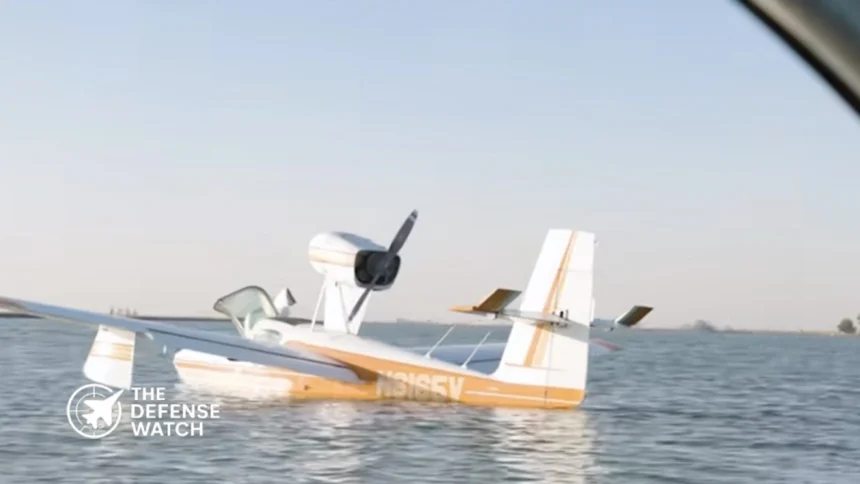
The U.S. Air Force Test Pilot School at Edwards Air Force Base, California, has added water landings to its curriculum, according to an October 2026 report by FlightGlobal. The change introduces another practical element into the training of personnel who evaluate aircraft performance, handling and safety.
The school prepares experienced pilots, flight test engineers and other specialists to assess new and modified aerospace systems. Its work supports the development and evaluation of aircraft and technologies intended for military service.
The precise format of the newly added water landing instruction, including the aircraft involved, the number of training events and the objectives established for students, could not be independently confirmed from the publicly accessible material reviewed for this article.
Why water landing training matters to flight testers
Water landings present a different set of hazards from conventional runway recoveries. Depending on the aircraft, the circumstances and the type of landing, contact with water can create substantial impact forces, damage the airframe and expose the crew to risks associated with rapid flooding or loss of flotation.
For test pilots, understanding those risks is relevant to evaluating aircraft behavior beyond routine operating conditions. Flight testing requires crews to examine how aircraft respond to different configurations, flight conditions and abnormal situations while collecting data that engineers can use to assess performance and safety.
However, water landing training should not automatically be interpreted as preparation for routine amphibious operations. The addition of this training alone does not establish that the Air Force intends to operate its conventional combat aircraft from water or that the school is testing a new amphibious aircraft.
The purpose of the instruction will depend on its specific objectives, which have not been established by the available public information.
Inside the Air Force’s test pilot training system
The USAF Test Pilot School is part of the Air Force’s flight test enterprise at Edwards Air Force Base. Its curriculum combines academic instruction with practical flying, technical evaluation and the analysis of test results.
According to the school’s official website, its flight test course runs for 48 weeks and trains experimental test pilots, remotely piloted aircraft test pilots, combat systems officers, air battle managers and flight test engineers. The school also operates a separate space test course for personnel evaluating space systems.
That mix reflects the demands of modern military development. Evaluating an aircraft is not simply a matter of flying it and determining whether it performs as expected. Test teams must plan missions, identify safety risks, collect reliable measurements and interpret results against defined requirements.
A practical training event can therefore serve several purposes, from developing decision-making skills to helping students understand the relationship between aircraft behavior, test procedures and safety planning.
The school has adapted its curriculum before as the Air Force’s technical requirements have changed. Its official history documents earlier expansions into aerospace research and space-related training, while the current program includes dedicated instruction for remotely piloted aircraft and other specialist roles.
What the change could mean for military aviation
The operational value of the new water landing instruction will depend on how it fits into the school’s broader flight test objectives.
One possible area of relevance is emergency preparedness. A forced landing over water creates a different set of considerations from an emergency landing on a runway or an unprepared land surface. Training can help personnel understand the hazards and decision-making demands associated with such scenarios, although the available reporting does not establish that emergency procedures are the stated purpose of this particular addition.
Another consideration is test methodology. Flight test personnel must distinguish between what an aircraft is designed to do and how it behaves under specific conditions. Additional practical exercises can broaden the situations students encounter during training, provided each event has clearly defined objectives and appropriate safety controls.
The change also illustrates the distinction between operational pilot training and experimental flight test education. Operational training prepares aircrews to perform assigned missions. Test pilot training prepares specialists to investigate aircraft behavior, evaluate technical performance and generate evidence that informs engineering and acquisition decisions.
Those functions overlap, but they are not interchangeable.
What remains unclear
The available information does not establish whether water landings will become a permanent feature of every class, whether students will use a dedicated aircraft or whether the instruction will involve actual water contact, simulated scenarios or a combination of methods.
The Air Force has not been independently verified as having released those details in a publicly accessible primary-source announcement reviewed for this article. No conclusions should be drawn about the cost, frequency or operational impact of the training without further documentation.
The confirmed broader context is that the USAF Test Pilot School regularly reviews and adapts its curriculum to meet changing test and evaluation requirements. The water landing addition, as reported by FlightGlobal, is a specific change within that training environment. Its wider significance will become clearer when the Air Force publishes further details about the course and its objectives.