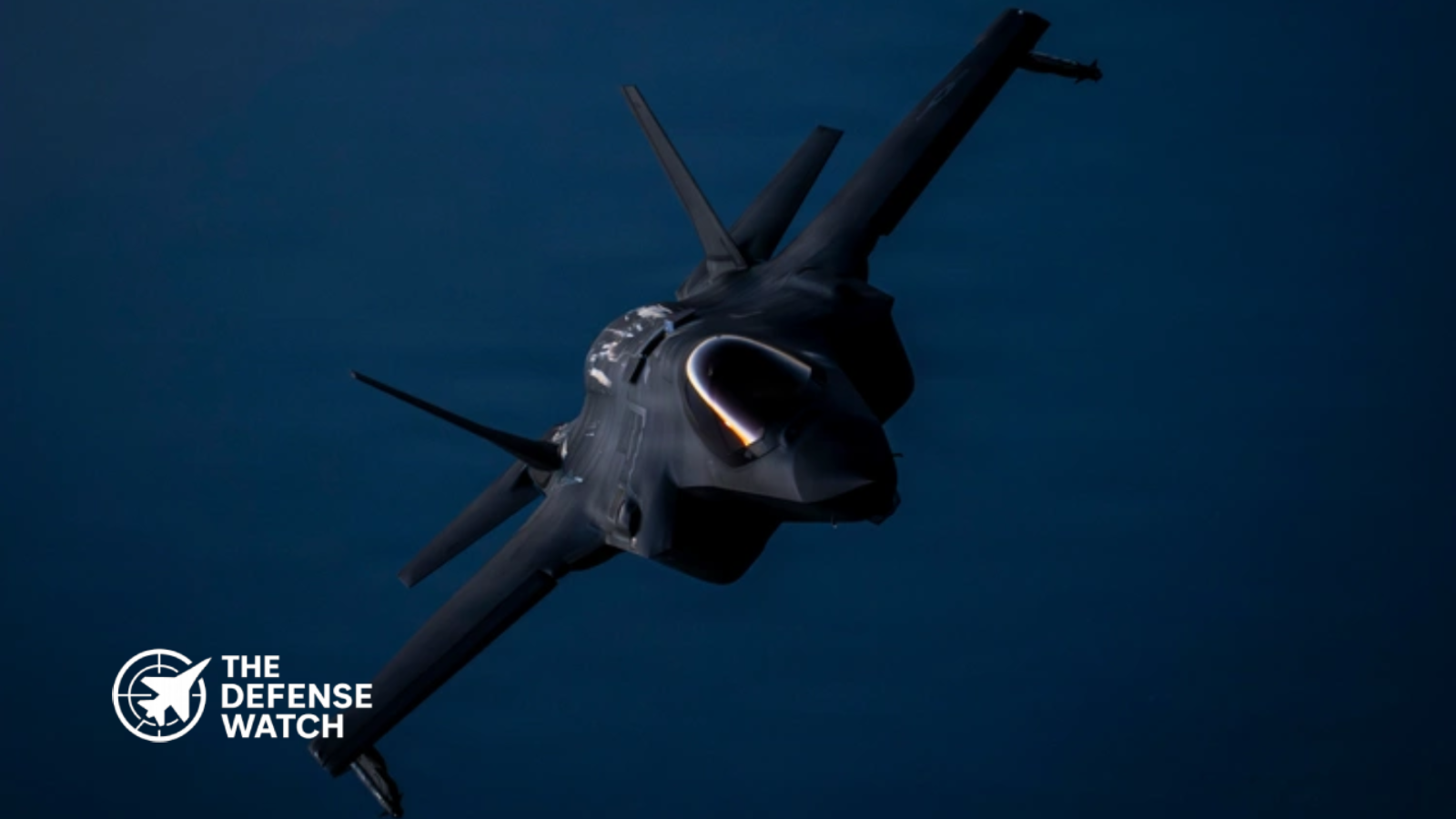
The U.S. Department of War and Lockheed Martin have finalized a 10-year framework agreement intended to provide greater predictability for F-35 Lightning II fighter production, spare parts procurement, aircraft modifications and fleet sustainment. Announced on October 22, 2026, the arrangement includes a minimum commitment covering 850 U.S. aircraft and at least $7 billion in company-funded investment initiatives.
The agreement is designed to give Lockheed Martin and its suppliers a longer planning horizon for production capacity, equipment, materials and workforce requirements. However, the framework is not itself a completed aircraft purchase contract. Its execution remains subject to congressional authorization and appropriations, with formal contract terms, pricing and schedules still to be established.
According to information released by DoW, the plan also encompasses international F-35 orders and associated support requirements. The company intends to maintain production at a rate of 156 aircraft annually under the framework.
What the agreement covers
The arrangement links aircraft procurement with several requirements that affect the availability and operating costs of the wider F-35 fleet.
- U.S. aircraft procurement: A minimum floor of 850 aircraft over the 10-year period.
- Private investment: At least $7 billion in initiatives funded by Lockheed Martin to support the F-35 program.
- Initial spare parts: Procurement of parts needed to support aircraft deliveries and fleet operations.
- Modification kits: Equipment to support planned changes and upgrades to aircraft.
- Global sustainment: Support for the international F-35 fleet, including maintenance and supply-chain requirements.
- International orders: Production planning that incorporates demand from foreign customers alongside U.S. requirements.
The framework’s central feature is the combination of aircraft production and sustainment planning. Rather than treating each requirement as an isolated purchasing decision, the arrangement is intended to give the government and manufacturer a more coordinated view of demand over time.
The Pentagon has not provided a single total contract value for the 10-year framework in the supplied announcement. The $7 billion figure refers to Lockheed Martin’s investment commitment, not the total price of 850 aircraft and their associated support.
Why the $7 billion investment matters
Fighter production depends on a supply network that extends well beyond the company assembling the aircraft. Components, specialized materials, electronic systems, tooling and skilled labor must be available in the right quantities and on compatible schedules.
A predictable procurement plan can help suppliers justify investments that would be difficult to support through shorter or uncertain order cycles. It can also give Lockheed Martin more scope to plan production facilities, workforce requirements and inventory before demand reaches the assembly line.
The investment commitment is therefore intended to address industrial capacity and supply-chain constraints as well as aircraft output. The company expects longer-term planning and higher purchasing volumes to help lower production costs, although the size of any savings will depend on final contract terms, supplier performance and actual production costs.
The distinction between investment and guaranteed savings is important. The $7 billion commitment does not, by itself, establish how much the government will save, when the investments will be completed, or how much additional production capacity they will create.
Those outcomes will need to be assessed against measurable results, including delivery schedules, production efficiency, parts availability and the cost of sustaining aircraft already in service.
Production stability does not automatically mean better fleet readiness
The framework’s most important test may be whether predictable purchasing translates into more aircraft available for operations.
The F-35 program supports three U.S. military variants: the F-35A for conventional takeoff and landing, the F-35B for short takeoff and vertical landing, and the carrier-based F-35C. Each variant has different operating requirements, but all depend on a common industrial network for components, maintenance support and modernization.
Buying aircraft in larger, coordinated quantities can improve planning. However, the number of jets produced is only one measure of program performance. Maintenance capacity, repair turnaround times, replacement parts, software upgrades and the availability of trained personnel also affect how many aircraft can be deployed when required.
A 2026 report by Breaking Defense identified sustainment complexity and the need to demonstrate long-term cost savings as concerns during earlier discussions of a multiyear arrangement. The finalized framework now provides a path toward longer-term planning, but its practical benefits will depend on the terms of the resulting contracts and the government’s ability to measure performance.
Congressional approval remains a key condition
The announcement does not eliminate the need for congressional authorization and appropriations. Lawmakers will still have a role in determining whether the proposed procurement arrangement receives the legal authority and funding required for execution.
That distinction matters because a 10-year framework creates expectations for future purchases, while annual defense budgets and formal contract awards determine how those plans are implemented. Until the required approvals and awards are in place, the 850-aircraft figure should be understood as the agreement’s stated minimum planning commitment, not as 850 aircraft already ordered under a single finalized contract.
The available announcement also does not establish a final total price, a year-by-year delivery schedule, or a detailed breakdown of the $7 billion investment. Those details will be important for assessing whether the framework produces measurable savings and improves the availability of the U.S. and international F-35 fleets.
For Lockheed Martin, the agreement offers a longer period in which to plan production and supplier investment. For the Pentagon, its value will ultimately depend on whether that stability delivers aircraft, spare parts and maintenance support at predictable costs and on schedule.