

Executive Summary:
Lockheed Martin and GM Defense have signed a memorandum of understanding to strengthen America’s defense industrial base through expanded manufacturing collaboration. The partnership focuses on supply chain resilience, production readiness, and advanced manufacturing techniques as the Pentagon seeks greater capacity to support growing defense requirements. The move reflects a broader U.S. effort to accelerate weapons production and reduce industrial bottlenecks.
Lockheed Martin GM Defense Partnership Targets Manufacturing Expansion
Lockheed Martin GM Defense partnership efforts are set to play a growing role in strengthening the United States defense industrial base as demand for military production capacity continues to rise.
Lockheed Martin and GM Defense announced a new memorandum of understanding (MOU) aimed at combining the defense contractor’s production expertise with General Motors’ large scale commercial manufacturing capabilities. The collaboration was facilitated by the U.S. Department of Defense and focuses on accelerating the delivery of critical defense capabilities through improved industrial capacity.
According to both companies, the partnership will concentrate on three primary areas:
- Strengthening defense supply chains
- Advancing manufacturing and design capabilities
- Evaluating opportunities to expand production capacity through commercial manufacturing infrastructure and expertise
The agreement does not identify specific programs or weapons systems at this stage. However, company officials indicated that the initiative is designed to improve production efficiency and support future defense manufacturing requirements.
Why The Partnership Matters
The announcement comes amid growing concern within the Pentagon about the ability of the U.S. defense industrial base to sustain increased demand for munitions, missile systems, and other critical military equipment.
In recent months, the U.S. government has emphasized the need to address manufacturing bottlenecks, fragile supply chains, and limited production capacity across key defense sectors. President Donald Trump recently invoked authorities under the Defense Production Act to help expand weapons manufacturing and strengthen supply chains supporting national defense requirements.
Defense officials have increasingly encouraged collaboration between traditional defense contractors and major commercial manufacturers. The goal is to leverage proven industrial expertise from sectors such as automotive manufacturing to help accelerate defense production.
This strategy echoes historical efforts in which American industry was mobilized to rapidly expand military production during periods of heightened national security demand.
Combining Defense Expertise With Commercial Manufacturing
Lockheed Martin brings extensive experience in missile production, aerospace manufacturing, and advanced defense systems. The company is already investing approximately $9 billion through 2030 to expand munitions production and modernize facilities.
GM Defense, meanwhile, offers access to General Motors’ large scale manufacturing operations, engineering capabilities, research facilities, and supply chain management expertise. Company officials indicated that GM Defense may utilize laboratories and production facilities across the broader GM enterprise to support future collaborative projects.
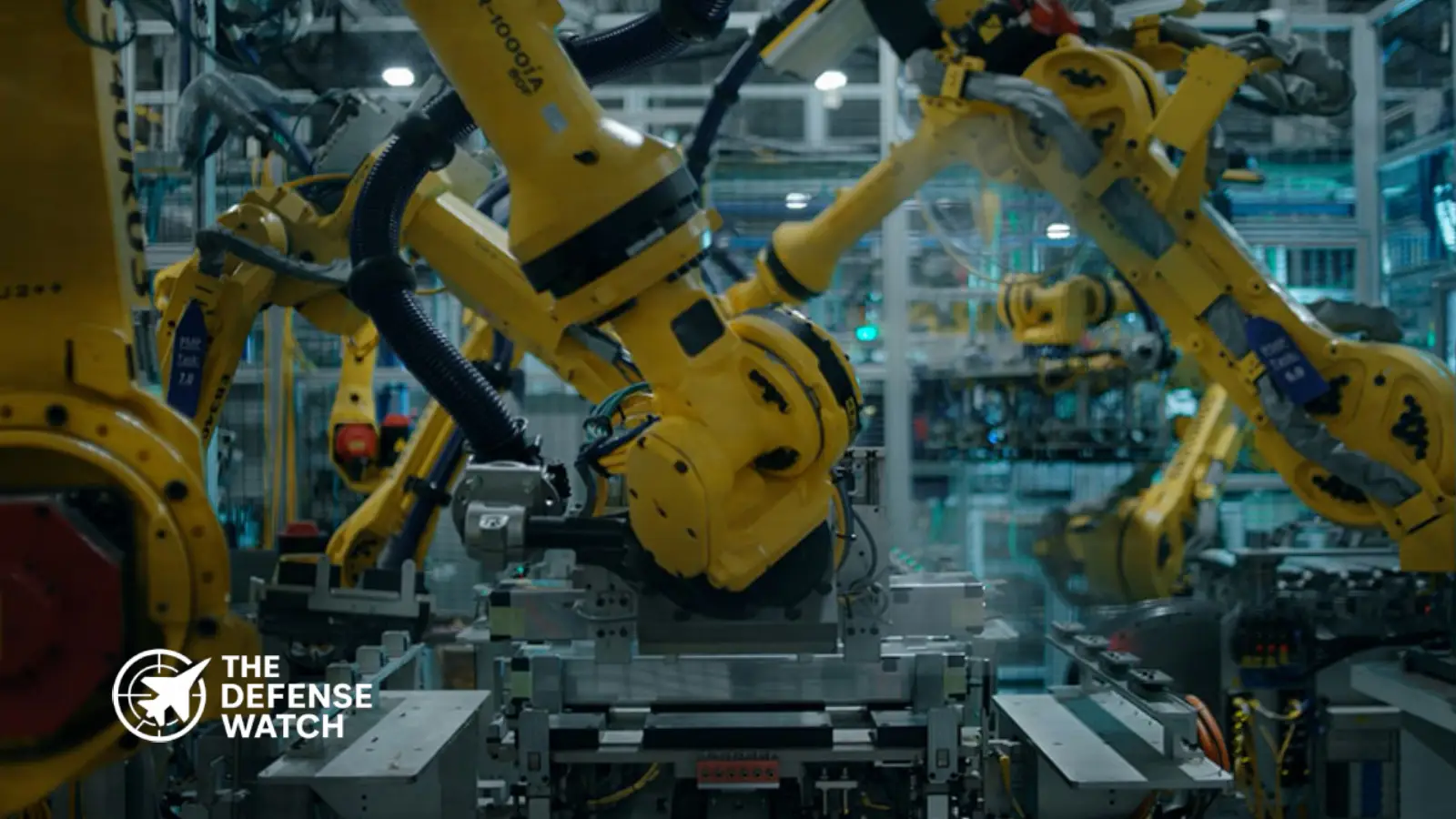
The partnership is particularly significant because commercial automotive manufacturers operate some of the most advanced high volume production systems in the United States. Applying those methods to defense production could help improve manufacturing efficiency and increase output without requiring entirely new industrial infrastructure.
Lockheed Martin Chief Operating Officer Frank St. John highlighted similarities between advanced defense products and modern automotive manufacturing, noting that both rely on precision engineering, complex supply chains, and high quality production processes.
Broader Defense Industrial Base Modernization
The collaboration is part of a wider effort to modernize and expand the U.S. defense industrial base.
Over the past year, Lockheed Martin has announced multiple initiatives aimed at increasing production rates for key missile and air defense programs. Earlier this year, the company reached an agreement with the U.S. government to significantly increase annual production of PAC-3 Missile Segment Enhancement interceptors over a seven year period.
At the same time, the Pentagon has sought to engage nontraditional industrial partners, including major automotive manufacturers, to help address production challenges and expand manufacturing capacity across the defense sector. Reports indicate that discussions have also involved other manufacturers capable of supporting weapons and military equipment production.
Analysis: A Strategic Industrial Shift
Beyond the announcement itself, the partnership highlights an important shift in how the United States is approaching defense production.
For decades, defense manufacturing capacity largely remained within a relatively small group of specialized contractors and suppliers. Today’s security environment, characterized by rising demand for missile systems, air defense interceptors, drones, and precision munitions, is forcing policymakers to rethink that model.
Rather than relying solely on traditional defense production networks, the Pentagon is increasingly looking to commercial industry for additional capacity, advanced manufacturing techniques, and supply chain resilience. This approach may help reduce production timelines while creating a more flexible industrial base capable of responding to future crises.
The Lockheed Martin GM Defense partnership represents one of the clearest examples yet of this evolving strategy. While specific programs remain undisclosed, the agreement signals that future defense production may increasingly draw upon America’s broader industrial ecosystem rather than the defense sector alone.
Outlook
The companies have not announced a timeline for specific projects or production targets. However, both organizations indicated that the collaboration will explore opportunities to accelerate capability delivery and strengthen the long term resilience of the U.S. defense industrial base.
As defense demand continues to grow and the Pentagon prioritizes industrial expansion, partnerships between major defense contractors and commercial manufacturers are likely to become an increasingly important component of U.S. military modernization efforts.
