(adsbygoogle = window.adsbygoogle || []).push({});Executive Summary:
Lockheed Martin has unveiled HIMARS FLEX, a new modular version of its widely used High Mobility Artillery Rocket System. The system introduces dual-pod launcher options, expanded munition compatibility, and the ability to support both offensive strike missions and defensive air and missile defense roles. The development reflects growing military demand for flexible, multi-mission launch platforms.
Lockheed Martin Introduces HIMARS FLEX At Eurosatory 2026
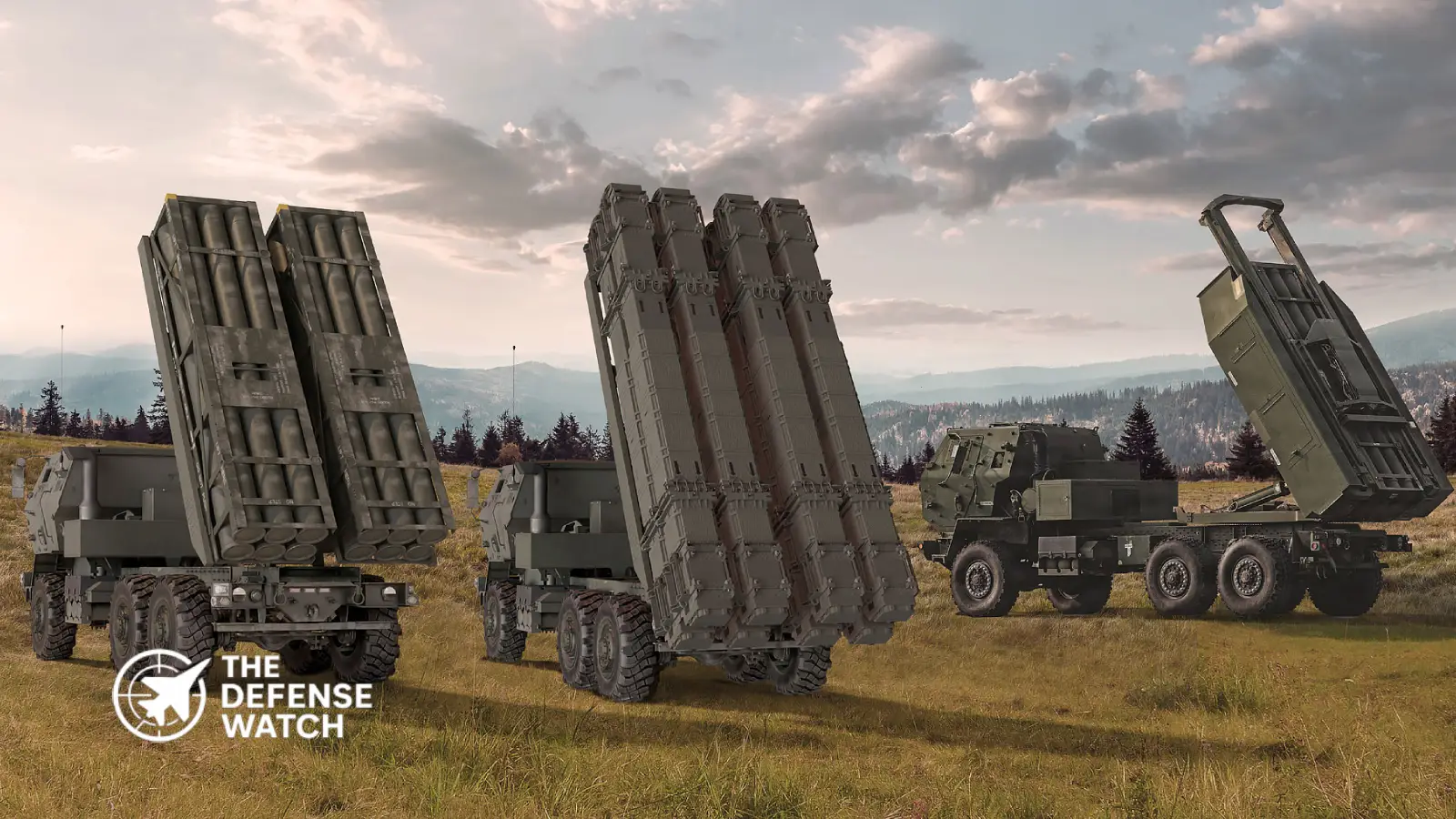
HIMARS FLEX is Lockheed Martin’s latest evolution of the combat proven High Mobility Artillery Rocket System, unveiled during the Eurosatory 2026 defense exhibition in Paris. The new configuration expands the traditional HIMARS concept by introducing a modular launcher architecture capable of supporting a wider range of offensive and defensive missions.
The centerpiece of the new design is a dual-pod launcher arrangement that significantly increases available missile capacity compared with the standard M142 HIMARS launcher. According to company information released during the event, the system can carry twice the munition load of the current single-pod configuration while maintaining strategic mobility and compatibility with existing NATO weapons inventories.
A Shift Toward Multi-Mission Launcher Platforms
The introduction of HIMARS FLEX reflects a broader trend in military modernization programs. Armed forces increasingly seek systems capable of performing multiple roles without requiring separate dedicated launchers for strike and air defense missions.
Unlike the standard HIMARS, which primarily serves as a precision strike platform, HIMARS FLEX is designed to support both deep fires and defensive intercept missions. The launcher can reportedly employ existing munitions such as Guided Multiple Launch Rocket System (GMLRS) rockets, Extended Range GMLRS, Army Tactical Missile System (ATACMS), and the Precision Strike Missile (PrSM). It also introduces compatibility with air and missile defense interceptors, including the PAC-3 family.
This approach aligns with ongoing efforts by Western militaries to improve force survivability and operational flexibility in contested environments where missile, drone, and air threats continue to expand.
Dual-Pod Configuration Increases Firepower
One of the most significant changes is the launcher’s dual-pod arrangement. Current M142 HIMARS launchers carry a single rocket pod containing six GMLRS rockets, two PrSM missiles, or one ATACMS missile. HIMARS FLEX effectively doubles available launch capacity through its modular architecture.
The increased payload could provide commanders with greater tactical flexibility by reducing reload frequency and enabling mixed munition loads tailored to mission requirements.
For expeditionary forces, maintaining high rates of fire while reducing logistics demands remains a critical operational advantage. The ability to carry both strike and defensive interceptors simultaneously could allow units to engage multiple threat types without repositioning specialized assets.
Supporting The Future Of Integrated Fires
Lockheed Martin says HIMARS FLEX is built around its FLEXFires technology ecosystem, a software-driven architecture intended to simplify integration of emerging weapons and mission systems. The platform also incorporates provisions for optional autonomous operation, reflecting the defense industry’s growing focus on automation and reduced crew workloads.
The unveiling comes as the HIMARS family continues to expand globally. Multiple NATO and partner nations have recently acquired or received new launchers, including Canada, Lithuania, Estonia, and Australia, as demand for long-range precision fires remains high.
At the same time, the U.S. Army continues to develop new HIMARS-compatible munitions, including the Precision Strike Missile Increment 2, which recently demonstrated the ability to engage moving maritime targets during flight testing.
Analysis: Why HIMARS FLEX Matters
The significance of HIMARS FLEX extends beyond increased rocket capacity. The system represents an effort to merge traditionally separate mission areas, long-range precision strike and air defense, into a single deployable platform.
Modern battlefields increasingly require forces to counter drones, cruise missiles, ballistic missiles, and conventional ground targets simultaneously. Maintaining separate launcher fleets for each mission can increase logistics burdens, training requirements, and deployment complexity.
By offering modular launcher configurations and compatibility with a broader range of interceptors and strike weapons, HIMARS FLEX could provide military planners with a more adaptable solution for distributed operations. The concept is particularly relevant for NATO forces operating across large geographic areas where mobility, survivability, and rapid response are becoming increasingly important.
Whether the new configuration progresses into production will depend on customer interest and future procurement decisions. However, the unveiling demonstrates how Lockheed Martin is positioning the HIMARS family to remain relevant as military requirements evolve beyond traditional rocket artillery roles.