
• Home
  • About
  • Defense Systems
  • Manufacturer
  • Comparisons
  • Compare 
  • Tools
TheDefenseWatch.com
  • Aerospace & Aviation
  • Military & Ordnance
  • Naval & Maritime
  • Cyber & Space Defense
  • Policy & Strategy
  • Global News
  • Tools Library
    • Smart Calculator
    • Drone Flight Time Calculator
    • Drone Range Calculator
    • Counter-Drone Jammer Effective Range Calculator
    • Counter-Battery Radar Detection Calculator
    • Artillery Fire Correction Calculator
    • Thermal Camera Detection Range Calculator
    • Missile Range & Time-of-Flight Calculator
    • Radar Detection Range Calculator
    • FPV Strike Drone Payload vs Range Calculator
    • Loitering Munition Endurance Calculator
    • Sniper Ballistic Drop & Windage Calculator
    • Bullet Drop Calculator
    • U.S. Army Combat Fitness Test (ACFT) Calculator
    • Military Pension Calculator
    • Military Retirement Calculator
    • Military Pension Calculator
    • Large Number Calculator
Font ResizerAa

TheDefenseWatch.com

The Defense Watch | U.S. & Global Defense News, Analysis & Military Updates

Search
  • Home
  • About
  • Defense Systems
  • Manufacturer
  • Comparisons
  • Compare 
  • Tools

Stay Updated

Get the latest update

Subscribe

Explore

  • Drone
  • Fighter Jets & Military Aircraft
  • Hypersonic Weapons
  • Aircraft Carriers
  • Strategic History & Missions
  • Tools Library
Home » NASA Prepares New X-Plane Reveal as Experimental Aircraft Program Expands
Aerospace & AviationFighter Jets & Military Aircraft

NASA Prepares New X-Plane Reveal as Experimental Aircraft Program Expands

Daniel Mercer / Defense & Aerospace Analyst
Last updated: November 4, 2026 10:06 pm
Daniel Mercer / Defense & Aerospace Analyst
Share
3 Min Read
NASA new experimental aircraft
Generated image of NASA’s new X-70 Fractal experimental aircraft, a crewed, rapidly reconfigurable research platform for advanced aviation technologies.
SHARE

NASA New X-Plane: Experimental Aircraft Program Update

NASA is preparing to introduce another experimental aircraft as Administrator Jared Isaacman pushes to expand the agency’s flight research capabilities and rebuild its historic X-plane portfolio.

Contents
NASA New X-Plane: Experimental Aircraft Program UpdateNASA’s expanding experimental aircraft ambitionsWhat the new aircraft could mean for flight researchX-59 provides a reference point for NASA’s research strategyNASA X-59 QuesstWhy NASA wants more experimental aircraftA broader return to flight-test development

The planned announcement is expected during the MAX POWER aerospace exhibition at Kennedy Space Center in Florida, scheduled for November 6-8, 2026. Isaacman confirmed the upcoming X-plane announcement during an October 30 appearance on NASASpaceFlight’s The Flame Trench podcast.

However, NASA’s publicly available event schedule and advance announcements do not establish the designation X-70 Fractal or confirm the detailed specifications contained in the supplied announcement. Those details should not yet be treated as independently verified aircraft characteristics.

NASA’s expanding experimental aircraft ambitions

The planned introduction follows Isaacman’s efforts to restore NASA’s position in experimental aviation research.

- Advertisement -

X-planes are specialized aircraft developed to investigate technologies, aerodynamic configurations, propulsion systems and flight characteristics that conventional production aircraft may not adequately test.

Rather than serving as operational military aircraft, their primary purpose is to generate engineering data that can support future aviation development.

NASA’s historical portfolio includes aircraft that investigated supersonic flight, hypersonic performance, unconventional wing configurations and advanced flight-control technologies.

The Bell X-1, which broke the sound barrier in 1947, and the North American X-15, which explored high-speed and high-altitude flight, remain among the best-known examples.

The agency’s current experimental aviation effort includes the X-59, developed to investigate technologies that could make supersonic flight over populated areas quieter.

What the new aircraft could mean for flight research

Isaacman’s comments indicate that NASA intends to introduce additional experimental platforms rather than concentrate its flight research activities around a single aircraft.

The precise mission of the upcoming X-plane has not been publicly established in the agency’s advance announcement. Its eventual research objectives will determine whether it primarily supports aerodynamic testing, flight-control development, propulsion integration or another area of aviation technology.

The distinction matters because experimental aircraft are generally designed around specific research questions.

- Advertisement -

A platform focused on advanced flight controls, for example, would require a different test program from an aircraft intended to investigate high-speed propulsion or unconventional aerodynamic configurations.

The supplied X-70 announcement describes a crewed platform with rapidly reconfigurable flight controls and capacity for up to 2,000 pounds of experimental equipment. It also lists a takeoff weight of 10,000 pounds, a cruising speed of Mach 0.75 and an operating altitude of up to 45,000 feet.

However, these figures have not been corroborated by the NASA primary-source material identified for this report. They should not be presented as verified specifications until NASA publishes supporting documentation.

X-59 provides a reference point for NASA’s research strategy
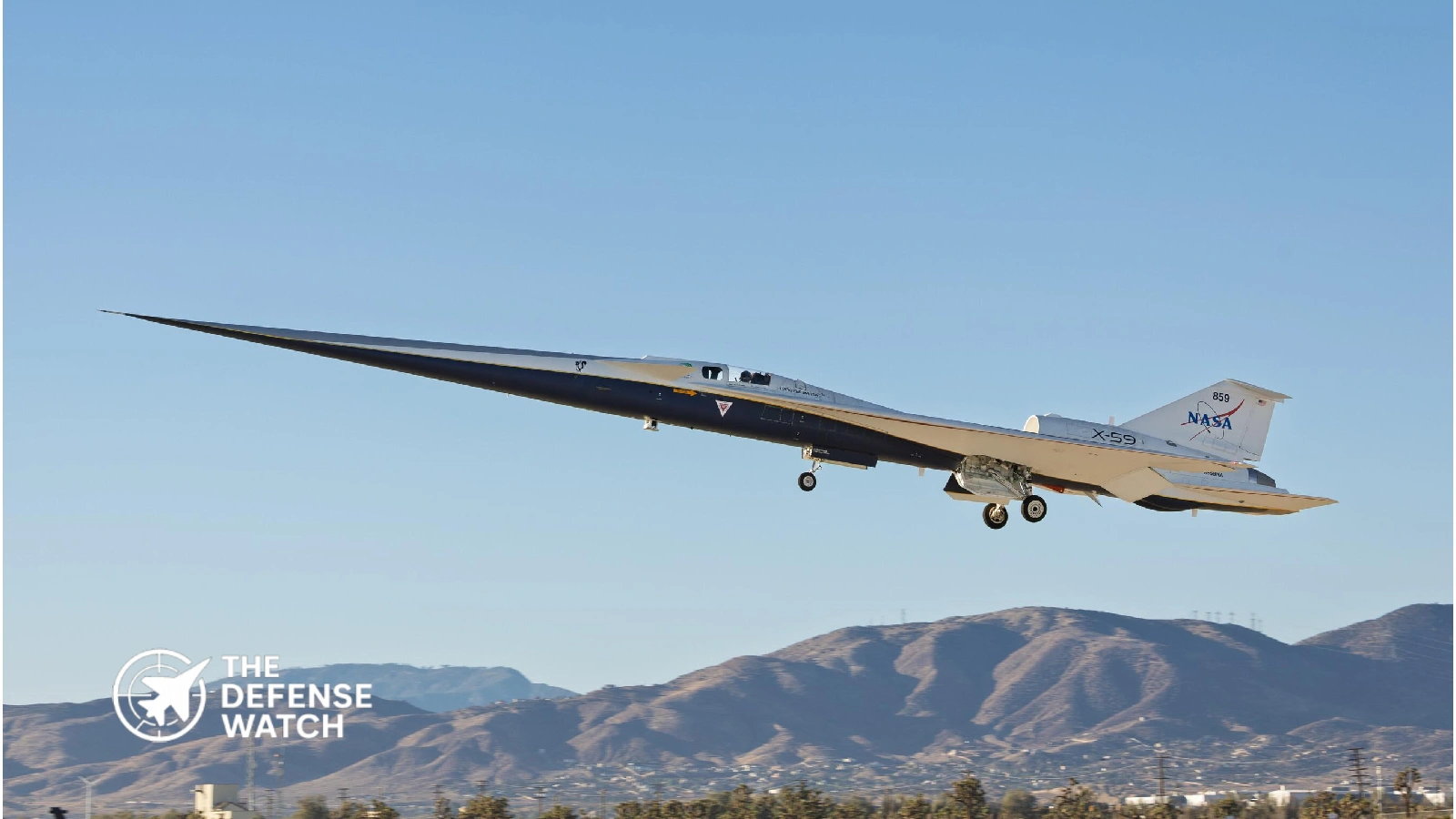
NASA X-59 Quesst

NASA X-59 Quesst

NASA’s existing X-59 program demonstrates how experimental aircraft can address specific technical challenges with potential implications for commercial aviation.

The X-59 is an important reference point for understanding NASA’s renewed interest in experimental aircraft.

Developed with Lockheed Martin’s Skunk Works, the aircraft is designed to investigate ways of reducing the perceived noise generated by supersonic flight.

  • X-59 Quiet Supersonic Aircraft 

    X-59 Quiet Supersonic Aircraft 

    • Maximum Speed: Mach 1.4 (1,490 km/h)
    • Range: ~1,000 miles (1,600 km)
    • Payload Capacity: N/A (Experimental aircraft)
    • Crew: 1
    • View Details →
    8.0

    NASA reported in October 2026 that the X-59 had completed 40 additional flights since its first flight on October 28, 2025. During testing, it reached speeds of up to Mach 1.53 and altitudes exceeding 56,000 feet.

    Its research program is intended to provide acoustic data that could help inform future approaches to commercial supersonic flight over land.

    The X-59 and the planned new X-plane should not be assumed to share the same mission. NASA has not publicly established that the upcoming aircraft will pursue quiet supersonic flight.

    Why NASA wants more experimental aircraft

    Experimental platforms allow researchers to investigate technologies before they are incorporated into commercial or operational aircraft.

    This approach can reduce technical uncertainty by allowing engineers to collect real flight data, evaluate system performance and identify problems that computer simulations alone may not fully resolve.

    For the United States, the benefits extend beyond civilian aviation.

    Research involving advanced flight controls, aerodynamic performance, propulsion integration and high-speed flight can contribute to technologies relevant to future aerospace development, including areas of interest to the defense industry.

    However, NASA’s research objectives should not automatically be interpreted as evidence of a military development program. The agency’s planned X-plane announcement has not established a specific defense application.

    A broader return to flight-test development

    NASA’s experimental aircraft history provides important context for the new initiative.

    The X-1 established a foundation for supersonic flight research. The X-15 subsequently expanded knowledge of high-speed flight and atmospheric operations at extreme altitudes. Later experimental aircraft investigated unconventional aerodynamic designs and flight-control concepts.

    The X-59 represents a more focused research approach, concentrating on the acoustic challenges associated with supersonic flight.

    A larger experimental aircraft portfolio could give NASA additional opportunities to investigate technologies that require dedicated flight testing. It could also provide more flexibility when different research programs compete for access to limited aircraft and test facilities.

    The main challenge will be translating ambitious research objectives into aircraft that can be built, tested and operated within available budgets and engineering resources.

    For now, the new X-plane’s identity and research mission remain the most important unanswered questions.
TAGGED:Aviation ResearchExperimental AircraftNASAX-planes
Share This Article
Facebook Copy Link Print
ByDaniel Mercer / Defense & Aerospace Analyst
Follow:
Daniel Mercer is a defense and aerospace analyst at TheDefenseWatch.com covering military aviation, aerospace technology, unmanned systems, air warfare, and defense procurement. His reporting uses official documents, government and military statements, company announcements, and other public sources.

Search Defense Systems

Latest Defense Systems

  • B61 Nuclear Bomb B61 Nuclear Bomb
  • Japan E-767 Airborne Japan E-767 Airborne
  • Remington 870 Shotgun Remington 870 Shotgun
  • RUTA B1 Cruise Missile RUTA B1 Cruise Missile
  • XQ-67A Drone XQ-67A Drone
  • B-25 Mitchell Bomber B-25 Mitchell Bomber
  • F-100 Super Sabre F-100 Super Sabre
  • North American F-86 Sabre North American F-86 Sabre
  • North American XB-70 Valkyrie North American XB-70 Valkyrie

Recent Compares

  • J-10C vs JF-17 Thunder: Which Fighter Is More Capable? J-10C vs JF-17 Thunder: Which Fighter Is More Capable? View Comparison →
  • Tejas vs Gripen: Key Differences and Capabilities Tejas vs Gripen: Key Differences and Capabilities View Comparison →
  • Tejas vs MiG-21 Bison: How India Replaced Its Iconic Supersonic Fighter Tejas vs MiG-21 Bison: How India Replaced Its Iconic Supersonic Fighter View Comparison →
  • F-35 vs F-16: Stealth, Sensors and Combat Roles F-35 vs F-16: Stealth, Sensors and Combat Roles View Comparison →
  • Tejas Fighter Jet vs F-16 Fighting Falcon: Capability Compared Tejas Fighter Jet vs F-16 Fighting Falcon: Capability Compared View Comparison →
  • Rafale Fighter Jet vs F-16 Fighting Falcon : Which Fighter Has the Edge? Rafale Fighter Jet vs F-16 Fighting Falcon : Which Fighter Has the Edge? View Comparison →
  • Su-57 Fighter Jet vs J-20 Fighter Jet: Stealth and Air Combat Compared Su-57 Fighter Jet vs J-20 Fighter Jet: Stealth and Air Combat Compared View Comparison →
  • Mirage 2000 vs Tejas Mk1A: Legacy Combat Power vs Indigenous Modernization Mirage 2000 vs Tejas Mk1A: Legacy Combat Power vs Indigenous Modernization View Comparison →
  • Rafale Fighter Jet vs F-22 Raptor: Which Air Dominance Fighter Has the Edge? Rafale Fighter Jet vs F-22 Raptor: Which Air Dominance Fighter Has the Edge? View Comparison →
  • Tejas Fighter Jet vs. Rafale Fighter Jet: India’s Indigenous Fighter Meets France’s Proven Multirole Combat Aircraft Tejas Fighter Jet vs. Rafale Fighter Jet: India’s Indigenous Fighter Meets France’s Proven Multirole Combat Aircraft View Comparison →

Recent Posts

  • Lockheed Martin Tests Mk21A Reentry Vehicle for Sentinel ICBM
  • Lockheed Martin Wins $122.4 Million Trident II Navigation Contract
  • Pentagon Prepares Review of Military Legal System and JAG Corps
  • U.S. and Colombia Launch Southern Vanguard 2027 Exercise
  • CENTCOM Receives 25,000+ Drones and Counter-UAS Systems Under Pentagon Push

You Might Also Like

WAFAR RD-702 rocket test
Aerospace & Aviation

Indonesian Air Force Tests Domestically Produced WAFAR RD-702 Rocket in Push for Defense Self-Reliance

September 7, 2026
Trent 1000XE durability enhancement programme
Aerospace & AviationFighter Jets & Military Aircraft

Rolls-Royce Opens Trent 1000XE Durability Enhancement Programme at Historic Derby Engine Site

February 4, 2026
Royal Marines T-150 drone
Aerospace & AviationDrones & UAVs

Royal Marines Move To Deploy T-150 Drone As Arctic Competition Intensifies

September 12, 2026
UK sovereign turbojet engine
Aerospace & AviationFighter Jets & Military Aircraft

UK Advances Sovereign Turbojet Production With Alloyed and MOD Partnership

September 16, 2026

Logo

Copyright © 2026 TheDefenseWatch.com

Helpful Links

  • Home
  • About Us
  • Privacy Policy
  • Terms of Use / Disclaimer
  • U.S. Privacy Notice – CCPA Compliance

Defense Systems

  • Defense Systems
  • Comparisons 
  • Manufacturer
  • Tactical Calculators

Popuplar

Which 5 Air Forces Possess the Costliest Fighter Jet Fleets in the World
Evolving Strategic Value: Carrier Strike Groups in the Indo-Pacific’s Future Security Architecture
Autonomous Weapon Systems Spark U.S. Ethics Debate Amid Rapid Military AI Integration

We report on developments involving military forces, governments, defense companies, research organizations, and security institutions around the world. 

Welcome Back!

Sign in to your account

Username or Email Address
Password

Lost your password?