
- Home
- Defense Systems
- Radar and Jamming Systems
- KLJ-7A Radar
KLJ-7A Radar

Defense Systems Full Specifications
1. General Information
| Name / Designation | KLJ-7A AESA Radar |
| Manufacturer | NRIET / CETC |
| Country of Origin | China |
| Type / Role | Airborne fire-control radar |
| Operational Domain | Air-to-air / Air-to-ground / Maritime |
| Status | In production |
2. Technical Specifications
| Frequency Band | X-band |
| Antenna Type | AESA, solid-state T/R modules |
| Antenna Aperture / Size | Approx. 600+ mm class |
| Power Output | Not publicly disclosed |
| Detection Range | ~170 km (estimated) |
| Tracking Range | ~150 km (estimated) |
| Target Tracking Capacity | 15–20 targets (estimated) |
| Elevation Coverage | Wide-angle AESA vertical coverage |
| Azimuth Coverage | ±60° typical AESA |
| Beam Steering | Electronic, rapid multi-mode |
| Pulse Repetition Frequency (PRF) | Not disclosed |
| Resolution | High-resolution SAR/GMTI |
| Update Rate | High, electronically steered |
| Clutter Rejection / ECCM | Advanced digital ECCM |
3. Functional Capabilities
| Primary Functions | Air intercept, strike support, SAR, GMTI, maritime |
| Target Types | Aircraft, UAVs, vehicles, ships |
| Integration / Networking | Compatible with Chinese avionics |
| IFF Capability | Integrated IFF modes |
| Data Link / Networking | Supports Chinese tactical data links |
| Weather & Terrain Resistance | All-weather radar modes |
| Mobility / Mounting | Fighter nose-mounted radar |
4. Physical & Operational Characteristics
| Dimensions | Not publicly disclosed |
| Weight | Estimated 80–100 |
| Power Requirement | Aircraft power supply |
| Cooling System | Liquid/air hybrid (estimated) |
| Operating Temperature Range | Military-grade environmental tolerance |
| Deployment Platform | JF-17 Block III |
| Crew Requirement | Pilot-operated |
5. Software & Processing
| Signal Processor Type | Digital signal processor |
| Processing Speed | High-speed multi-core |
| AI / Automation Features | Mode automation, smart tracking |
| Data Output / Interface | Standardized avionics bus |
| Software Upgradeability | Modular firmware updates |
6. Operational History
| Year Introduced | Mid-2010s (AESA version) |
| Users / Operators | Pakistan (confirmed) |
| Notable Deployments | Integrated on JF-17 Block III |
| Successor / Predecessor | Successor to KLJ-7 series |
7. Export / Compliance Data
| Export Availability | Limited, China-approved only |
| ITAR / MTCR Status | Not ITAR/MTCR controlled (Chinese origin) |
| Cost Estimate | Not disclosed |
PROS
- AESA beam steering and fast scanning
- Improved ECCM for contested airspace
- Multi-role air/ground/maritime capability
- Lightweight and modular design
- Increased BVR targeting performance
CONS
- Limited transparency in official specifications
- Restricted export availability
- Integration largely tied to JF-17 platform
- Less global operational data compared to Western AESA radars
- Unknown long-term sustainment support outside partner nations
KLJ-7A AESA Radar: Advanced Fighter Fire-Control System
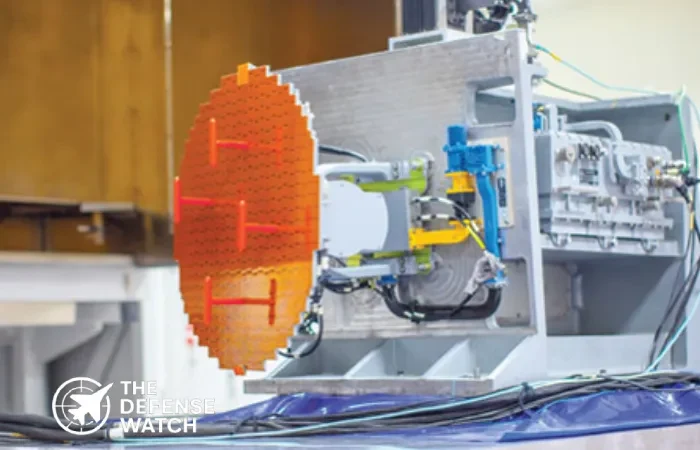
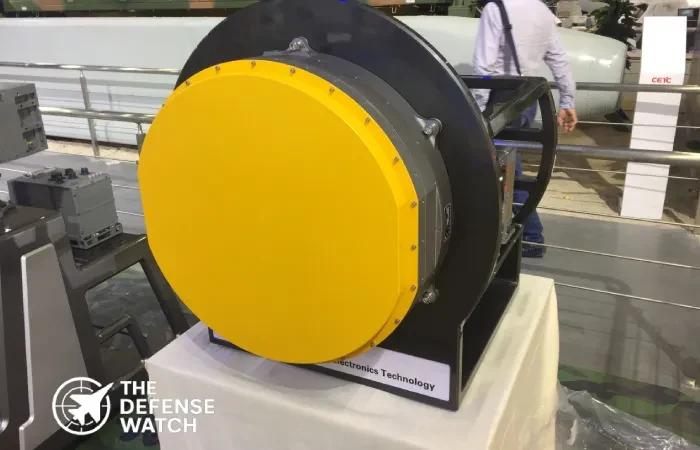
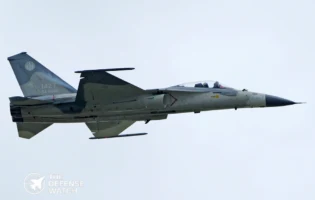
The KLJ-7A is the latest evolution in China’s airborne fire-control radar family, designed primarily to equip the JF-17 Block III multirole fighter. Developed by the Nanjing Research Institute of Electronics Technology (NRIET), the KLJ-7A transitions the aircraft from mechanically scanned technology to a more advanced Active Electronically Scanned Array (AESA) architecture—bringing it closer to the performance class of modern Western and Russian radars.
As an AESA system, the KLJ-7A offers significantly improved detection range, faster target refresh rates, sharper resolution, and enhanced resistance to jamming compared to earlier KLJ-7 mechanically scanned variants. Open-source assessments indicate a detection range of approximately 170 km, depending on target size and environment. Its electronically steered beam allows rapid multi-target engagement, enabling the JF-17 Block III to support modern beyond-visual-range missiles and advanced air-to-ground strike missions.
The radar is built to handle simultaneous air-to-air, air-to-surface, and maritime roles. It supports track-while-scan, synthetic aperture radar (SAR) mapping, ground moving target indication (GMTI), and high-resolution imaging for precision strike. The KLJ-7A also integrates enhanced electronic counter-countermeasures (ECCM) to operate in dense threat environments common to modern conflicts.
Designed for compact fighters, the KLJ-7A features a lightweight AESA array, modular line-replaceable units, and reduced maintenance demands compared to older mechanically scanned radars. Pakistan is the confirmed operator, with the radar forming the technological core of the JF-17 Block III modernization program.
By combining affordability with AESA-class capability, the KLJ-7A strengthens the JF-17’s competitiveness in global export markets while providing operators with a functional jump in situational awareness, targeting precision, and electronic survivability.
KLJ-7A Radar Price
The KLJ-7A radar is not commercially available in the United States, and detailed pricing is not publicly disclosed. As a defense-restricted system produced by China for specific partner nations, cost estimates vary by configuration and integration package.
FAQs
What fighter jet uses the KLJ-7A radar?
The radar is primarily integrated into the JF-17 Block III fighter.
Is the KLJ-7A an AESA radar?
Yes, it is a fully digital Active Electronically Scanned Array system.
What is the estimated range of the KLJ-7A?
Open sources estimate around 170 km depending on target type.
Who manufactures the KLJ-7A radar?
NRIET (China), part of the CETC group.
Does it support multi-target engagement?
Yes, the radar supports simultaneous tracking of multiple aerial targets.
Disclaimer Note
The information provided on TheDefenseWatch.com is for general informational purposes only. While we strive to ensure the accuracy, completeness, and timeliness of our content regarding defense and aerospace products, technologies, and specifications, we cannot guarantee that all information is 100% accurate or up-to-date due to the evolving nature of military technology and classified data.TheDefenseWatch.com does not warrant the reliability, suitability, or availability of the information for any specific purpose. Users are advised to consult official sources, such as manufacturers, government publications, or defense agencies, for precise and verified data before making decisions based on our content.We are not affiliated with any defense manufacturers, governments, or military organizations mentioned. Opinions, reviews, and ratings reflect expert analysis but are subjective and should not be considered endorsements. TheDefenseWatch.com is not responsible for any errors, omissions, or consequences arising from the use of this website’s content.External links are provided for convenience and do not imply endorsement. TheDefenseWatch.com reserves the right to update or modify content without prior notice. By using this website, you agree to our Privacy & Cookies Policy.
New Arrivals




Popular Comparisons
-
 Tejas vs Gripen: Key Differences and Capabilities
View Comparison →
-
Tejas vs MiG-21 Bison: How India Replaced Its Iconic Supersonic Fighter
View Comparison →
-
F-35 vs F-16: Stealth, Sensors and Combat Roles
View Comparison →
-
Tejas Fighter Jet vs F-16 Fighting Falcon: Capability Compared
View Comparison →
-
Rafale Fighter Jet vs F-16 Fighting Falcon : Which Fighter Has the Edge?
View Comparison →
-
Su-57 Fighter Jet vs J-20 Fighter Jet: Stealth and Air Combat Compared
View Comparison →
-
Mirage 2000 vs Tejas Mk1A: Legacy Combat Power vs Indigenous Modernization
View Comparison →
-
Rafale Fighter Jet vs F-22 Raptor: Which Air Dominance Fighter Has the Edge?
View Comparison →
-
Tejas Fighter Jet vs. Rafale Fighter Jet: India’s Indigenous Fighter Meets France’s Proven Multirole Combat Aircraft
View Comparison →
-
F-22 Raptor vs. F-35 Joint Strike Fighter: Which Fifth Generation Fighter Has the Edge?
View Comparison →


- US Military Weighs MOAB for Potential Future Strikes on Iran, CNN Reports

- Saab Wins $120 Million Order for New Gripen Flight Control Computer
- L3Harris Delivers First VAMPIRE Counter-Drone Systems to U.S. Army
- Lockheed Martin Invests $300 Million in Texas Munitions Expansion, Plans 6,000 U.S. Jobs
- Lockheed Martin Taps Avio for ER GMLRS and PrSM Rocket Motor Production
- Lockheed Martin Wins $16.1 Million Contract Modification for F-35 Processor Support
- Lockheed Martin Wins $74.3 Million Contract Modification for AN/SLQ-32(V)6 Electronic Warfare Systems
- Hegseth Says Autonomous Warfare Has Long Been the Pentagon’s End Goal
- US Rejects Automatic Body Camera Activation for ICE Officers
- Iron Dome Architect Develops New Counter-Swarm Drone Defense System






Fighter Jets
-
 MIG-31 Fighter Jet
-
J-10CE Fighter Jet
-
Chengdu J-10 Fighter Jet
-
Chengdu J-10C Fighter Jet
-
Gripen E Fighter Jet
-
Tejas Mk1A Fighter Jet
-
Tejas Mk‑2 Fighter Jet
-
F-16V Viper Block 70 Fighter Jet
-
F-15EX Eagle II Fighter
-
Boeing F/A-XX Fighter
-
F-15E Strike Eagle Fighter
-
F/A-18E/F Super Hornet Fighter Jet
-
Saab Gripen F Fighter Jet
-
JAS 39E/F Gripen Fighter Jet
-
JAS 39 Gripen Fighter Jet
-
F-35A Lightning II Fighter Jet
-
F/A-18F Super Hornet
-
J-50 Fighter Jet
-
Spanish EF-18 Hornet Fighter
-
F-47 Fighter Jet
-
F-35i Adir Fighter Jet
-
F-16 Fighting Falcon
-
AIDC T-5 Brave Eagle
-
F-CK-1 Ching-Kuo Fighter








Recent Compares
-
Tejas vs Gripen: Key Differences and Capabilities
View Comparison →
-
Tejas vs MiG-21 Bison: How India Replaced Its Iconic Supersonic Fighter
View Comparison →
-
F-35 vs F-16: Stealth, Sensors and Combat Roles
View Comparison →
-
Tejas Fighter Jet vs F-16 Fighting Falcon: Capability Compared
View Comparison →
-
Rafale Fighter Jet vs F-16 Fighting Falcon : Which Fighter Has the Edge?
View Comparison →
Latest Defense Systems
10 Compares Defense Systems
-
Tejas vs Gripen: Key Differences and Capabilities
View Comparison →
-
Tejas vs MiG-21 Bison: How India Replaced Its Iconic Supersonic Fighter
View Comparison →
-
F-35 vs F-16: Stealth, Sensors and Combat Roles
View Comparison →
-
Tejas Fighter Jet vs F-16 Fighting Falcon: Capability Compared
View Comparison →
-
Rafale Fighter Jet vs F-16 Fighting Falcon : Which Fighter Has the Edge?
View Comparison →
-
Su-57 Fighter Jet vs J-20 Fighter Jet: Stealth and Air Combat Compared
View Comparison →
-
Mirage 2000 vs Tejas Mk1A: Legacy Combat Power vs Indigenous Modernization
View Comparison →
-
Rafale Fighter Jet vs F-22 Raptor: Which Air Dominance Fighter Has the Edge?
View Comparison →
-
Tejas Fighter Jet vs. Rafale Fighter Jet: India’s Indigenous Fighter Meets France’s Proven Multirole Combat Aircraft
View Comparison →
-
F-22 Raptor vs. F-35 Joint Strike Fighter: Which Fifth Generation Fighter Has the Edge?
View Comparison →
- US Military Weighs MOAB for Potential Future Strikes on Iran, CNN Reports
- Saab Wins $120 Million Order for New Gripen Flight Control Computer
- L3Harris Delivers First VAMPIRE Counter-Drone Systems to U.S. Army
- Lockheed Martin Invests $300 Million in Texas Munitions Expansion, Plans 6,000 U.S. Jobs
- Lockheed Martin Taps Avio for ER GMLRS and PrSM Rocket Motor Production