
- Home
- Defense Systems
- Defense Systems
- DragonFire Laser Defense Weapon
DragonFire Laser Defense Weapon

Defense Systems Full Specifications
1. General Information
| System Name | DragonFire Laser Directed Energy Weapon (LDEW) |
| Manufacturer | MBDA UK, Leonardo, QinetiQ, Dstl (UK MOD-led) |
| Country of Origin | United Kingdom |
| Type / Role | High-Power Laser Air & Surface Defense System |
| In Service | Pre-Operational; Deployment Planned |
| Year Introduced | Demonstrator Phase (2021–2024) |
| Unit Cost | Undisclosed (Approx. £10 per shot) |
2. Performance & Capabilities
| Maximum Engagement Range | Classified (Line-of-Sight) |
| Maximum Engagement Altitude | Classified |
| Target Types | Drones, UAVs, Missiles, Fast Boats |
| Interception Probability | Not Publicly Released |
| Reaction Time | Near-Instant (Speed of Light) |
| Radar Detection Range | High Precision (Sub-centimeter accuracy reported) |
3. Missile Specifications
4. Radar & Fire Control
5. Launcher & Mobility
| Launcher Type | Fixed or Ship-Mounted Laser Turret |
| Crew Required | 2–4 Personnel |
6. Command & Control
| C2 System | Integrated Digital Battle Management System |
| Connectivity | Secure Data Link / Sensor Fusion |
| Network Capability | Yes (Integrated Layered Defense) |
| Operation Mode | Autonomous / Manual / Networked |
7. Operational Use
| Primary Operator | United Kingdom (Royal Navy & British Army Planned) |
| Combat Proven | Trials Only |
| Conflict History | None (Pre-Operational Testing) |
| Notable Feature | Ultra-Low Cost Per Shot & Speed-of-Light Intercept |
PROS
- Very low cost per shot (~£10) compared to traditional missiles.
- High accuracy — demonstrated ability to hit extremely small targets at distance.
- Rapid engagement speed thanks to the speed-of-light nature of laser.
- Scalable deployment: can be integrated on naval ships (e.g., Type 45) and potentially land platforms.
- Sustainable long-term logistics: reduced need to carry large missile inventories.
CONS
- Line-of-sight limitation — cannot engage targets hidden by terrain or below horizon.
- Sensitivity to atmospheric conditions (e.g., rain, fog) could degrade laser effectiveness.
- High power and cooling requirements, especially for sustained firing.
- Still early in deployment — not yet fully battle-proven in wartime conditions.
- May face countermeasures: highly reflective materials or coatings could diminish effectiveness.
The DragonFire laser system marks a major leap in directed-energy weapons, bringing high-powered precision to modern air and maritime defense. Developed under the auspices of the UK Ministry of Defense, this laser weapon promises to reshape how military forces intercept drones, missiles, and other aerial threats.
Origins & Manufacturer
DragonFire is developed by a British consortium led by MBDA UK, with key technology contributions from Leonardo and QinetiQ, working closely with the Defense Science & Technology Laboratory (Dstl) on behalf of the UK MOD.
Purpose & Role
As a Laser Directed Energy Weapon (LDEW), DragonFire is intended to serve as a lower-cost, rapid-fire complement to traditional point-defense systems. It excels in countering unmanned aerial systems (UAS), fast inshore boats, and potentially other small, fast-moving threats.
Capabilities & Performance
- Precision: In live trials, the system demonstrated pinpoint accuracy capable of hitting a one-pound coin from 1 kilometer away.
- Speed of engagement: Because laser energy travels at the speed of light, DragonFire can engage visible targets nearly instantaneously once tracked.
- Cost per shot: Extremely low — approximately £10 per firing, far cheaper than conventional missiles.
- Energy & power: The demonstrator is reported to be a ~50 kW-class system.
- Target tracking: Leonardo’s beam director provides ultra-stable, high-precision tracking in dynamic environments, even from moving platforms.
- Operational domain: Tested successfully against high-speed aerial targets, including drones flying at up to 650 km/h.
Deployment & Use
- Fielding schedule: The UK Ministry of Defense signed a £316 million contract to deploy DragonFire systems, with first installations slated for Royal Navy Type 45 destroyers by 2027.
- Strategic role: It is being positioned as a persistent, layered defensive layer, reducing reliance on expensive interceptor missiles for saturation or recurrent threats.
- Testing status: It has already achieved first high-power firing against aerial targets at the MOD’s Hebrides Range.
Disclaimer Note
The information provided on TheDefenseWatch.com is for general informational purposes only. While we strive to ensure the accuracy, completeness, and timeliness of our content regarding defense and aerospace products, technologies, and specifications, we cannot guarantee that all information is 100% accurate or up-to-date due to the evolving nature of military technology and classified data.TheDefenseWatch.com does not warrant the reliability, suitability, or availability of the information for any specific purpose. Users are advised to consult official sources, such as manufacturers, government publications, or defense agencies, for precise and verified data before making decisions based on our content.We are not affiliated with any defense manufacturers, governments, or military organizations mentioned. Opinions, reviews, and ratings reflect expert analysis but are subjective and should not be considered endorsements. TheDefenseWatch.com is not responsible for any errors, omissions, or consequences arising from the use of this website’s content.External links are provided for convenience and do not imply endorsement. TheDefenseWatch.com reserves the right to update or modify content without prior notice. By using this website, you agree to our Privacy & Cookies Policy.


New Arrivals



Popular Comparisons
-
 Tejas vs Gripen: Key Differences and Capabilities
View Comparison →
-
Tejas vs MiG-21 Bison: How India Replaced Its Iconic Supersonic Fighter
View Comparison →
-
F-35 vs F-16: Stealth, Sensors and Combat Roles
View Comparison →
-
Tejas Fighter Jet vs F-16 Fighting Falcon: Capability Compared
View Comparison →
-
Rafale Fighter Jet vs F-16 Fighting Falcon : Which Fighter Has the Edge?
View Comparison →
-
Su-57 Fighter Jet vs J-20 Fighter Jet: Stealth and Air Combat Compared
View Comparison →
-
Mirage 2000 vs Tejas Mk1A: Legacy Combat Power vs Indigenous Modernization
View Comparison →
-
Rafale Fighter Jet vs F-22 Raptor: Which Air Dominance Fighter Has the Edge?
View Comparison →
-
Tejas Fighter Jet vs. Rafale Fighter Jet: India’s Indigenous Fighter Meets France’s Proven Multirole Combat Aircraft
View Comparison →
-
F-22 Raptor vs. F-35 Joint Strike Fighter: Which Fifth Generation Fighter Has the Edge?
View Comparison →


- US Rejects Automatic Body Camera Activation for ICE Officers

- Iron Dome Architect Develops New Counter-Swarm Drone Defense System
- U.S. Navy Conducts First F-35C Landing on USS John F. Kennedy
- Huntington Ingalls Wins $56.2 Million Contract for Foreign Nuclear Submarine Support
- US Forces Disable Cargo Ship Attempting to Evade Iran Blockade
- Netherlands Deploys Nuclear-Capable F-35s for NATO Steadfast Noon
- Pakistan Tests Extended-Range Fatah-2 Hypersonic Ballistic Missile
- CSG Acquires 9.5% Stake in MDA Space, Expanding Into Space Technology
- RAF Voyager Completes 14 Missions During Saudi Arabia Deployment
- L3Harris Wins $250 Million GMLRS Rocket Motor Contract



Fighter Jets
-
 MIG-31 Fighter Jet
-
J-10CE Fighter Jet
-
Chengdu J-10 Fighter Jet
-
Chengdu J-10C Fighter Jet
-
Gripen E Fighter Jet
-
Tejas Mk1A Fighter Jet
-
Tejas Mk‑2 Fighter Jet
-
F-16V Viper Block 70 Fighter Jet
-
F-15EX Eagle II Fighter
-
Boeing F/A-XX Fighter
-
F-15E Strike Eagle Fighter
-
F/A-18E/F Super Hornet Fighter Jet
-
Saab Gripen F Fighter Jet
-
JAS 39E/F Gripen Fighter Jet
-
JAS 39 Gripen Fighter Jet
-
F-35A Lightning II Fighter Jet
-
F/A-18F Super Hornet
-
J-50 Fighter Jet
-
Spanish EF-18 Hornet Fighter
-
F-47 Fighter Jet
-
F-35i Adir Fighter Jet
-
F-16 Fighting Falcon
-
AIDC T-5 Brave Eagle
-
F-CK-1 Ching-Kuo Fighter








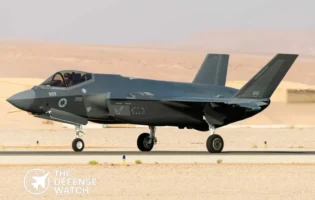
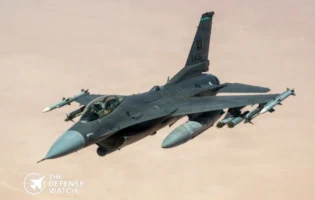
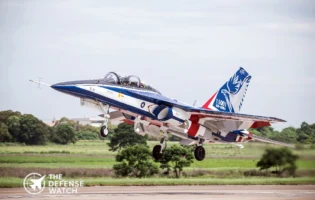
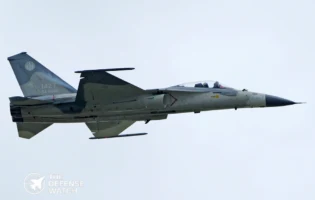
Recent Compares
-
Tejas vs Gripen: Key Differences and Capabilities
View Comparison →
-
Tejas vs MiG-21 Bison: How India Replaced Its Iconic Supersonic Fighter
View Comparison →
-
F-35 vs F-16: Stealth, Sensors and Combat Roles
View Comparison →
-
Tejas Fighter Jet vs F-16 Fighting Falcon: Capability Compared
View Comparison →
-
Rafale Fighter Jet vs F-16 Fighting Falcon : Which Fighter Has the Edge?
View Comparison →
Latest Defense Systems
10 Compares Defense Systems
-
Tejas vs Gripen: Key Differences and Capabilities
View Comparison →
-
Tejas vs MiG-21 Bison: How India Replaced Its Iconic Supersonic Fighter
View Comparison →
-
F-35 vs F-16: Stealth, Sensors and Combat Roles
View Comparison →
-
Tejas Fighter Jet vs F-16 Fighting Falcon: Capability Compared
View Comparison →
-
Rafale Fighter Jet vs F-16 Fighting Falcon : Which Fighter Has the Edge?
View Comparison →
-
Su-57 Fighter Jet vs J-20 Fighter Jet: Stealth and Air Combat Compared
View Comparison →
-
Mirage 2000 vs Tejas Mk1A: Legacy Combat Power vs Indigenous Modernization
View Comparison →
-
Rafale Fighter Jet vs F-22 Raptor: Which Air Dominance Fighter Has the Edge?
View Comparison →
-
Tejas Fighter Jet vs. Rafale Fighter Jet: India’s Indigenous Fighter Meets France’s Proven Multirole Combat Aircraft
View Comparison →
-
F-22 Raptor vs. F-35 Joint Strike Fighter: Which Fifth Generation Fighter Has the Edge?
View Comparison →
- US Rejects Automatic Body Camera Activation for ICE Officers
- Iron Dome Architect Develops New Counter-Swarm Drone Defense System
- U.S. Navy Conducts First F-35C Landing on USS John F. Kennedy
- Huntington Ingalls Wins $56.2 Million Contract for Foreign Nuclear Submarine Support
- US Forces Disable Cargo Ship Attempting to Evade Iran Blockade