• Home
  • About
  • Defense Systems
  • Manufacturer
  • Comparisons
  • Compare 
  • Tools
TheDefenseWatch.com
  • Aerospace & Aviation
  • Military & Ordnance
  • Naval & Maritime
  • Cyber & Space Defense
  • Policy & Strategy
  • Global News
  • Tools Library
    • Smart Calculator
    • Drone Flight Time Calculator
    • Drone Range Calculator
    • Counter-Drone Jammer Effective Range Calculator
    • Counter-Battery Radar Detection Calculator
    • Artillery Fire Correction Calculator
    • Thermal Camera Detection Range Calculator
    • Missile Range & Time-of-Flight Calculator
    • Radar Detection Range Calculator
    • FPV Strike Drone Payload vs Range Calculator
    • Loitering Munition Endurance Calculator
    • Sniper Ballistic Drop & Windage Calculator
    • Bullet Drop Calculator
    • U.S. Army Combat Fitness Test (ACFT) Calculator
    • Military Pension Calculator
    • Military Retirement Calculator
    • Military Pension Calculator
    • Large Number Calculator
Font ResizerAa

TheDefenseWatch.com

The Defense Watch | U.S. & Global Defense News, Analysis & Military Updates

Search
  • Home
  • About
  • Defense Systems
  • Manufacturer
  • Comparisons
  • Compare 
  • Tools

Stay Updated

Get the latest update

Subscribe

Explore

  • Drone
  • Fighter Jets & Military Aircraft
  • Hypersonic Weapons
  • Aircraft Carriers
  • Strategic History & Missions
  • Tools Library
Home » L3Harris Expands NATO Communications Capability Through Tailored Support for Allied Nations
Alliances & DoctrinesPolicy & Strategy

L3Harris Expands NATO Communications Capability Through Tailored Support for Allied Nations

Samuel Drake | Defense Analyst
Last updated: September 7, 2026 6:51 am
Samuel Drake | Defense Analyst
Share
2 Min Read
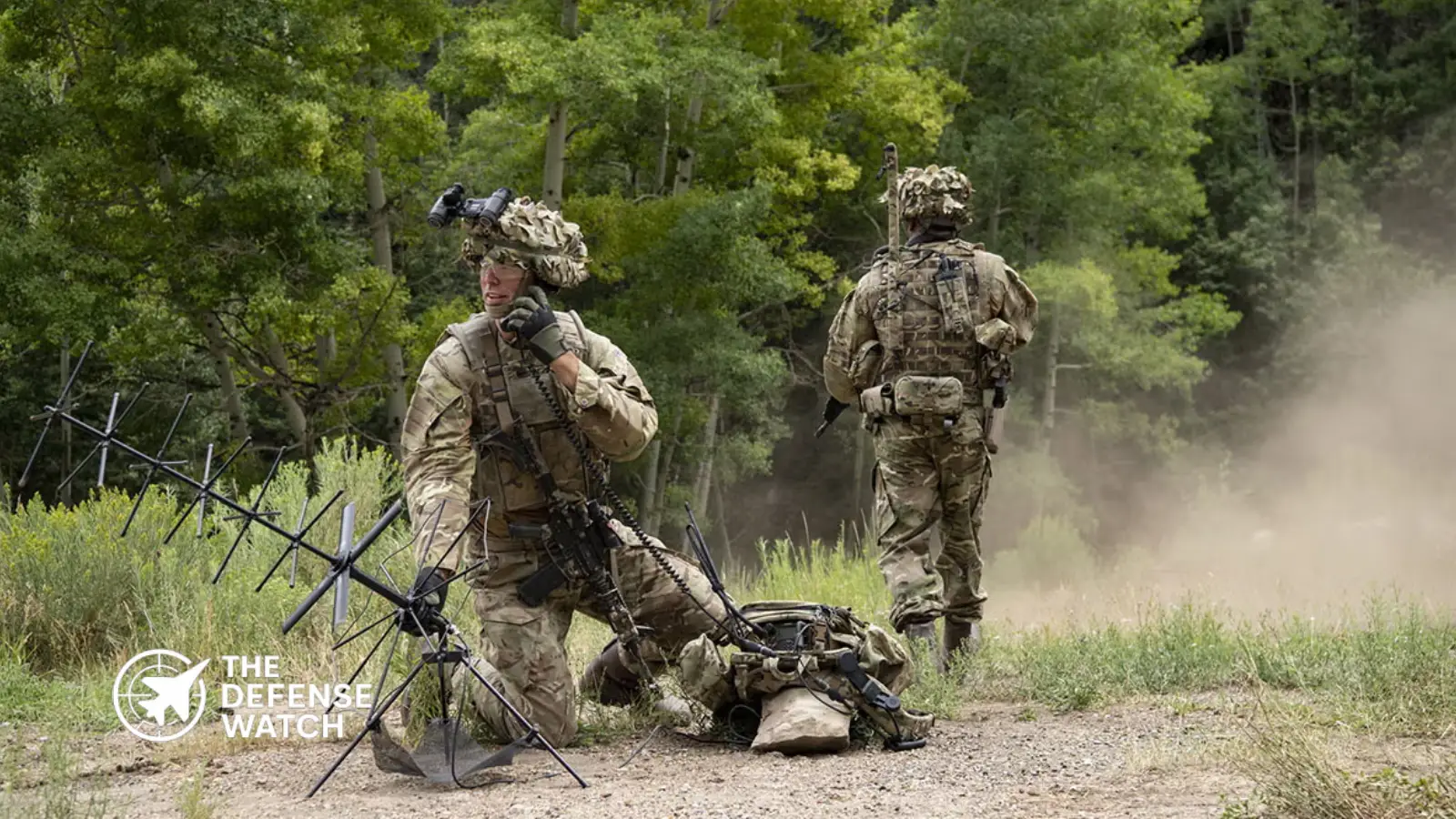
L3Harris communications systems supporting NATO military interoperability and secure battlefield networking across allied forces.
Image : L3Harris
SHARE

Executive Summary:

L3Harris is expanding its support for NATO member states by providing tailored communications, networking, and interoperability solutions designed to meet national defense requirements. The effort reflects growing demand among allied nations for resilient military communications capable of operating in contested and electronically challenged environments.

(adsbygoogle = window.adsbygoogle || []).push({});

L3Harris NATO Communications Strategy Gains Momentum

L3Harris NATO communications capabilities are becoming increasingly important as allied nations accelerate military modernization programs in response to evolving security challenges across Europe and other strategic regions.

Contents
  • L3Harris NATO Communications Strategy Gains Momentum
  • Focus on Interoperability and Electronic Warfare Resilience
  • European Modernization Programs Drive Demand
  • Why NATO Communications Modernization Matters

The U.S.-based defense technology company is leveraging its global footprint, established NATO relationships, and extensive communications portfolio to deliver country-specific solutions that improve interoperability while addressing individual national requirements. According to L3Harris, the company has supported NATO partners with tactical and broadband data link technologies for more than three decades, providing secure connectivity across air, land, maritime, and unmanned platforms.

As NATO continues to emphasize multi-domain operations, resilient communications networks have become a critical enabler for coalition forces. Military planners increasingly view communications systems as foundational infrastructure that connects sensors, command centers, and combat units across the battlefield.

(adsbygoogle = window.adsbygoogle || []).push({});

Focus on Interoperability and Electronic Warfare Resilience

A central element of the company’s approach is ensuring seamless interoperability among allied forces. L3Harris states that its communications and data link systems are deployed across more than 150 global platforms and support real-time intelligence sharing, targeting, and mission coordination.

- Advertisement -

The growing importance of electronic warfare protection is also shaping defense procurement priorities across NATO. Recent conflicts have demonstrated that communications networks can become prime targets for jamming, interception, and disruption.

L3Harris has emphasized software-defined architectures, secure waveforms, and resilient networking technologies designed to maintain connectivity in contested environments. These capabilities are intended to support command-and-control operations while enabling rapid information exchange between coalition partners.

From a strategic perspective, communications resilience is increasingly viewed as a force multiplier. Modern military operations depend on the ability to connect sensors, shooters, intelligence assets, and decision-makers across multiple domains. Nations that can maintain network integrity under electronic attack gain a significant operational advantage.

(adsbygoogle = window.adsbygoogle || []).push({});

European Modernization Programs Drive Demand

The company’s expanding role within NATO is supported by several major European modernization efforts.

In the Netherlands, L3Harris recently signed a strategic partnership agreement with the Dutch Ministry of Defence to support the FOXTROT communications program. The initiative aims to strengthen resilient communications capabilities and improve interoperability with NATO allies. The agreement also includes collaboration with Dutch industry partners to support long-term capability development.

Germany has also selected L3Harris communications technologies as part of its Digitalization Land Based Operations program, which is intended to modernize military communications networks and improve coalition interoperability. The company previously received orders valued at approximately $214 million under the effort.

More recently, L3Harris announced a $170 million order from a Central European nation for Falcon IV communication systems that will support force modernization and NATO interoperability objectives.

These programs illustrate a broader trend across Europe. NATO members are investing heavily in communications infrastructure as they seek to improve readiness, strengthen deterrence, and enhance operational integration with allied forces.

- Advertisement -
(adsbygoogle = window.adsbygoogle || []).push({});

Why NATO Communications Modernization Matters

The modernization of military communications networks has become a strategic priority across the alliance.

While investments in aircraft, armored vehicles, missiles, and naval platforms often attract greater public attention, secure communications systems serve as the connective tissue that allows those capabilities to operate effectively together.

L3Harris’ emphasis on tailored national solutions reflects a broader shift within NATO procurement strategies. Rather than adopting uniform systems across all member states, many governments are seeking customized capabilities that address domestic operational requirements while maintaining alliance interoperability.

(adsbygoogle = window.adsbygoogle || []).push({});

This approach allows nations to preserve sovereign capabilities while remaining fully integrated into NATO command structures.

As electronic warfare threats continue to evolve and military operations become increasingly data-driven, demand for resilient communications and networking technologies is expected to remain a core component of allied defense modernization efforts. L3Harris appears well positioned to benefit from that trend through its established presence across NATO communications programs and its growing portfolio of interoperable defense technologies.


TAGGED:L3Harrismilitary communicationsNATO
Share This Article
Facebook Copy Link Print
BySamuel Drake | Defense Analyst
Follow:
Samuel Drake is a defense analyst at TheDefenseWatch.com covering naval warfare, military ordnance, maritime technology, fleet modernization, and defense procurement. His reporting focuses on documented capabilities, procurement programs, and military technology.
Leave a Comment

Leave a Reply Cancel reply

Your email address will not be published. Required fields are marked *

F-22 Reptor

Latest Defense Systems

  • B61 Nuclear Bomb B61 Nuclear Bomb
  • Japan E-767 Airborne Japan E-767 Airborne
  • Remington 870 Shotgun Remington 870 Shotgun
  • RUTA B1 Cruise Missile RUTA B1 Cruise Missile
  • XQ-67A Drone XQ-67A Drone
  • B-25 Mitchell Bomber B-25 Mitchell Bomber
  • F-100 Super Sabre F-100 Super Sabre
  • North American F-86 Sabre North American F-86 Sabre
  • North American XB-70 Valkyrie North American XB-70 Valkyrie

Recent Compares

  • J-10C vs JF-17 Thunder: Which Fighter Is More Capable? J-10C vs JF-17 Thunder: Which Fighter Is More Capable? View Comparison →
  • Tejas vs Gripen: Key Differences and Capabilities Tejas vs Gripen: Key Differences and Capabilities View Comparison →
  • Tejas vs MiG-21 Bison: How India Replaced Its Iconic Supersonic Fighter Tejas vs MiG-21 Bison: How India Replaced Its Iconic Supersonic Fighter View Comparison →
  • F-35 vs F-16: Stealth, Sensors and Combat Roles F-35 vs F-16: Stealth, Sensors and Combat Roles View Comparison →
  • Tejas Fighter Jet vs F-16 Fighting Falcon: Capability Compared Tejas Fighter Jet vs F-16 Fighting Falcon: Capability Compared View Comparison →
  • Rafale Fighter Jet vs F-16 Fighting Falcon : Which Fighter Has the Edge? Rafale Fighter Jet vs F-16 Fighting Falcon : Which Fighter Has the Edge? View Comparison →
  • Su-57 Fighter Jet vs J-20 Fighter Jet: Stealth and Air Combat Compared Su-57 Fighter Jet vs J-20 Fighter Jet: Stealth and Air Combat Compared View Comparison →
  • Mirage 2000 vs Tejas Mk1A: Legacy Combat Power vs Indigenous Modernization Mirage 2000 vs Tejas Mk1A: Legacy Combat Power vs Indigenous Modernization View Comparison →
  • Rafale Fighter Jet vs F-22 Raptor: Which Air Dominance Fighter Has the Edge? Rafale Fighter Jet vs F-22 Raptor: Which Air Dominance Fighter Has the Edge? View Comparison →
  • Tejas Fighter Jet vs. Rafale Fighter Jet: India’s Indigenous Fighter Meets France’s Proven Multirole Combat Aircraft Tejas Fighter Jet vs. Rafale Fighter Jet: India’s Indigenous Fighter Meets France’s Proven Multirole Combat Aircraft View Comparison →

Recent Posts

  • Remington 870 in Military Service: Mark 1 to MCS
  • Boeing Receives $16.9 Million Contract Modification for Japan’s E-767 AWACS Support
  • Lockheed Martin Wins $80 Million Air Force Mission Planning Software Contract
  • Pakistan Tests Indigenous Fa’az Air-to-Air Missile for First Time
  • Operation Unified Resolve Reports 70% Drop in Rio Grande Valley Border Crossings

You Might Also Like

US may strike Iran again
Policy & Strategy

Trump Signals United States Could Strike Iran Again Over Nuclear Program

December 13, 2025
U.S. role in NATO post-Ukraine
Policy & Strategy

The U.S. in NATO’s Next Chapter: Post-Ukraine Strategy, Strained Commitments & the Path Ahead

August 26, 2025
Pakistan fighter jets Saudi Arabia
Alliances & DoctrinesPolicy & Strategy

Pakistan Expands Air Power Presence In Saudi Arabia Under Defense Pact

September 17, 2026
L3Harris Next Generation Jammer Low Band
Cyber & Space DefenseDefense Contracts

L3Harris Wins $876 Million Navy Award for Next Generation Jammer Low Band

October 20, 2026

Logo

Copyright © 2026 TheDefenseWatch.com

Helpful Links

  • Home
  • About Us
  • Privacy Policy
  • Terms of Use / Disclaimer
  • U.S. Privacy Notice – CCPA Compliance

Defense Systems

  • Defense Systems
  • Comparisons 
  • Manufacturer
  • Tactical Calculators

Popuplar

Which 5 Air Forces Possess the Costliest Fighter Jet Fleets in the World
Evolving Strategic Value: Carrier Strike Groups in the Indo-Pacific’s Future Security Architecture
Autonomous Weapon Systems Spark U.S. Ethics Debate Amid Rapid Military AI Integration

We report on developments involving military forces, governments, defense companies, research organizations, and security institutions around the world. 

Welcome Back!

Sign in to your account

Username or Email Address
Password

Lost your password?