- Home
- Defense Systems
- Compare
- S-400 vs S-500: Russia’s Advanced Air Defense Systems comparison
S-400 vs S-500: Russia’s Advanced Air Defense Systems comparison
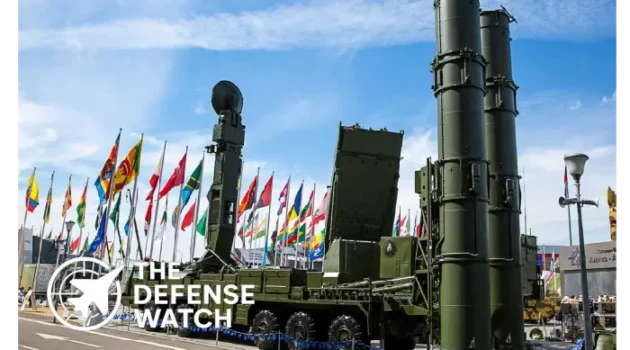
The S-400 Triumf and S-500 Prometey represent the pinnacle of Russia’s layered air and missile defense capabilities, bridging the gap between traditional surface-to-air missile (SAM) systems and near-space defense platforms. While both systems are designed by Almaz-Antey, their operational philosophies and performance envelopes set them apart significantly.
Introduced in 2007, the S-400 Triumf (SA-21 Growler) was engineered to replace the S-300 series and provide multi-layered protection against aircraft, cruise missiles, and tactical ballistic threats. It can engage targets at ranges up to 400 km and altitudes of 30 km, using multiple missile types — including the 40N6E long-range interceptor. Its advanced 91N6E Big Bird radar and networked command system allow simultaneous engagement of up to 36 targets.
By contrast, the S-500 Prometey (SA-23 Gladiator) represents a major technological leap forward. Operationally fielded in the 2020s, it’s designed not just for aerial defense but also for intercepting intercontinental ballistic missiles (ICBMs) and even low-orbit satellites. With an engagement range exceeding 600 km and altitude coverage beyond 200 km, the S-500 operates in the exo-atmospheric layer, a domain traditionally reserved for strategic missile defense systems.
Equipped with the 77N6-N and 77N6-N1 interceptor missiles, the S-500 integrates advanced radar systems capable of detecting stealth aircraft and hypersonic targets. It can reportedly neutralize threats traveling at speeds up to Mach 20, a capability unmatched by any other SAM system currently in service.
In essence, the S-400 serves as a highly effective tactical and strategic defense shield, ideal for protecting cities and military bases, while the S-500 extends that coverage into space-defense territory, forming the uppermost tier of Russia’s integrated aerospace defense network.
1. General Information
|
System Name
|
S-400 Triumf (SA-21 Growler)
S-500 Prometey (Prometheus) |
|
Manufacturer
|
Almaz-Antey Concern
Almaz-Antey |
|
Country of Origin
|
Russia
Russia |
|
Type / Role
|
Long-Range Surface-to-Air Missile System
Long-Range Surface-to-Air Missile System |
|
In Service
|
Yes
Yes (2021–Present) |
|
Year Introduced
|
2007
2021 |
|
Unit Cost
|
USD 500 Million (Estimated per Battery)
USD 1.5–2 Billion (Estimated per Battery) |
2. Performance & Capabilities
|
Maximum Engagement Range
|
400 km
600 km |
|
Maximum Engagement Altitude
|
30 km
200 km |
|
Target Types
|
Aircraft, Cruise Missiles, Ballistic Missiles, UAVs
Aircraft, ICBMs, Satellites, Hypersonic Missiles |
|
Interception Probability
|
80–90% (depending on target type)
90% (Medium-Range Missiles) |
|
Reaction Time
|
10 seconds
10 seconds |
|
Radar Detection Range
|
Up to 600 km
800 km |
3. Missile Specifications
|
Missile Type
|
48N6DM / 40N6E / 9M96E2
77N6-N / 77N6-N1 |
|
Missile Length
|
7.5 m
7.6 m |
|
Missile Weight
|
1,800–1,900 kg
2,200 kg |
|
Warhead Type
|
HE-Fragmentation / Proximity Fuse
Kinetic / Fragmentation |
|
Warhead Weight
|
150 kg
150 kg |
|
Speed
|
Up to Mach 14
Mach 14 |
4. Radar & Fire Control
|
Radar Type
|
Phased Array / AESA
Active Electronically Scanned Array (AESA) Radar |
|
Radar Name
|
91N6E Big Bird / 92N6 Grave Stone
91N6A(M) + 96L6-TsP Radar Systems |
|
Detection Range
|
600 km
800 km |
|
Tracking Capacity
|
300 Targets
150+ Targets |
|
Guidance System
|
Inertial + Active / Semi-Active Homing
Inertial + Active Radar Homing |
|
Fire Control System
|
Automated Command Post 55K6E
Automated Digital Control |
5. Launcher & Mobility
|
Launcher Type
|
Mobile / Truck-Mounted
Mobile / Truck-Mounted |
|
No. of Missiles per Launcher
|
4
4 |
|
Reload Time
|
30–60 minutes
30–45 minutes |
|
Mobility Platform
|
BAZ-64022 / MAZ-7910 8×8 Trucks
BAZ-69096 10x10 Truck |
|
Crew Required
|
3–5 personnel
3–5 personnel |
6. Command & Control
|
C2 System
|
Battle Management & Control (BMC)
Integrated Air Defense Network |
|
Connectivity
|
Secure Radio / Data Link
Secure Radio + Satellite Link |
|
Network Capability
|
Yes (Layered Defense Integration)
Yes (Layered Integration with S-400) |
|
Operation Mode
|
Autonomous / Networked
Autonomous / Networked / Manual Override |
7. Operational Use
|
Primary Operator
|
Russia, China, India, Turkey
Russia |
|
Combat Proven
|
Limited (Operational Readiness Confirmed)
No (Limited Operational Testing) |
|
Conflict History
|
Syrian Air Defense Network
None (Deployed for Defense) |
|
Notable Feature
|
Multi-missile, multi-target defense capability
Near-space interception ability |
Disclaimer Note
The information provided on TheDefenseWatch.com is for general informational purposes only. While we strive to ensure the accuracy, completeness, and timeliness of our content regarding defense and aerospace products, technologies, and specifications, we cannot guarantee that all information is 100% accurate or up-to-date due to the evolving nature of military technology and classified data.TheDefenseWatch.com does not warrant the reliability, suitability, or availability of the information for any specific purpose. Users are advised to consult official sources, such as manufacturers, government publications, or defense agencies, for precise and verified data before making decisions based on our content.We are not affiliated with any defense manufacturers, governments, or military organizations mentioned. Opinions, reviews, and ratings reflect expert analysis but are subjective and should not be considered endorsements. TheDefenseWatch.com is not responsible for any errors, omissions, or consequences arising from the use of this website’s content.External links are provided for convenience and do not imply endorsement. TheDefenseWatch.com reserves the right to update or modify content without prior notice. By using this website, you agree to our Privacy & Cookies Policy.
















 J-10C vs JF-17 Thunder: Which Fighter Is More Capable?
View Comparison →







 F-100 Super Sabre