Executive Summary:
Pakistan’s planned acquisition of China’s J-35AE stealth fighter marks a major shift in regional airpower dynamics. Analysts warn the platform could compress decision timelines in a crisis with India, increasing escalation risks.
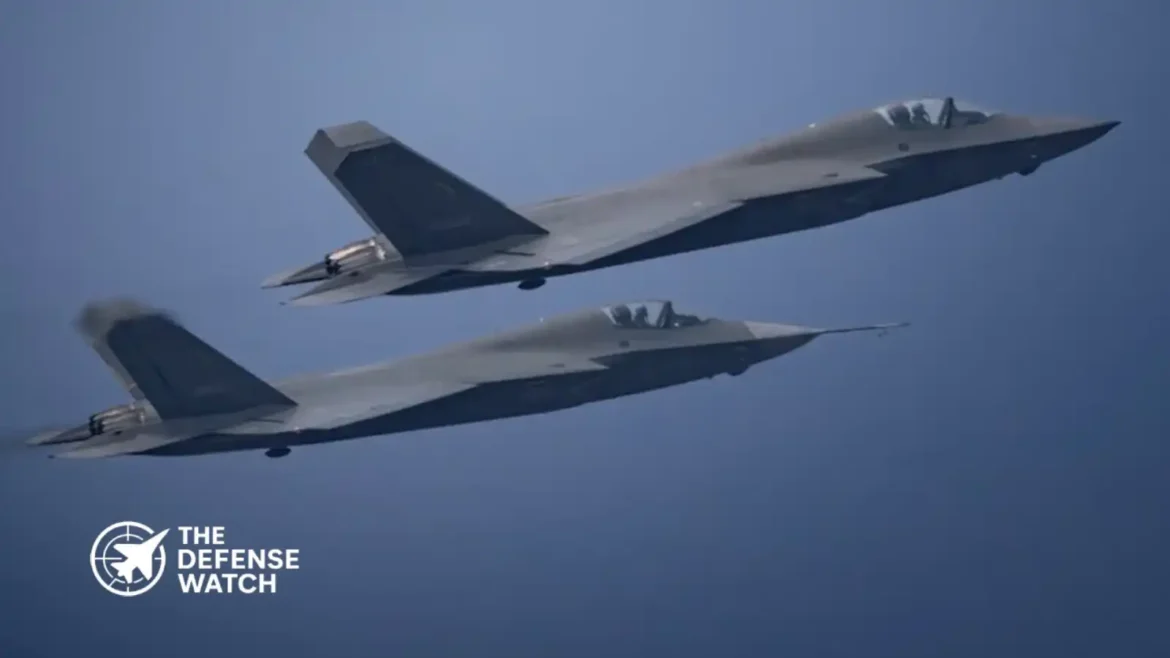
The Pakistan J-35AE stealth fighter program is emerging as a pivotal development in South Asia’s evolving military balance, with potential implications for nuclear stability between Pakistan and India. As Islamabad moves toward acquiring China’s export-oriented fifth-generation fighter, defense analysts are raising concerns about how advanced stealth capabilities could alter crisis dynamics in a region already marked by high tensions.
Recent reporting highlights that the aircraft’s introduction may not only enhance Pakistan’s air combat capabilities but also increase the speed and ambiguity of military engagements, factors closely linked to escalation risks in nuclear-armed rivalries.
China’s J-35AE: A Fifth-Generation Export Platform
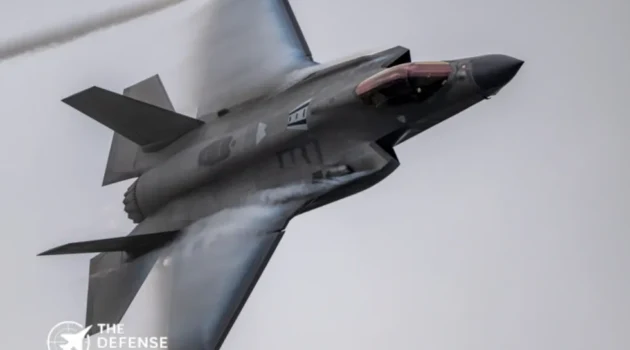
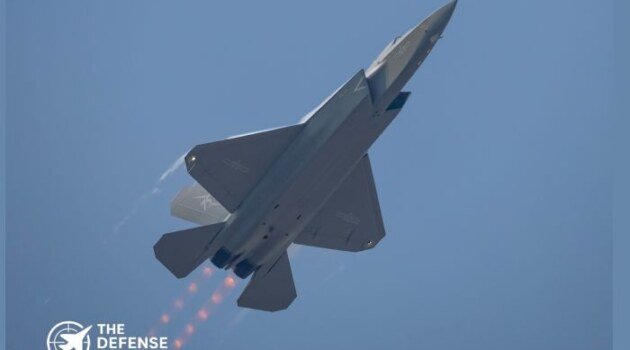
The J-35AE is widely understood to be the export variant of China’s FC-31 stealth fighter, developed for international customers seeking fifth-generation capabilities without access to Western platforms like the F-35.
Key features expected in the Pakistan J-35AE stealth fighter include:
- Low observable stealth design for reduced radar signature
- Advanced avionics and sensor fusion
- Beyond-visual-range (BVR) air-to-air combat capability
- Network-centric warfare integration
While official specifications remain limited, defense analysts assess that the aircraft is designed to compete with modern Western and Russian fighters in contested environments.
For Pakistan, the platform represents a potential leap beyond its current fleet, which includes F-16s and JF-17 variants.
Strategic Implications For South Asia
The introduction of the Pakistan J-35AE stealth fighter could significantly impact the regional balance of power, particularly in relation to India’s air force modernization efforts.
India is currently advancing multiple programs, including:
- Rafale multirole fighters
- Indigenous Advanced Medium Combat Aircraft (AMCA) development
- Upgrades to Su-30MKI fleet
The addition of a stealth fighter to Pakistan’s inventory may narrow qualitative gaps in certain operational scenarios, particularly in contested airspace where radar evasion is critical.
More importantly, stealth platforms can complicate early warning systems. Reduced detection times can lead to compressed decision-making windows during crises, increasing the likelihood of miscalculation.
Nuclear Escalation Risks And Crisis Stability
One of the most significant concerns tied to the Pakistan J-35AE stealth fighter is its potential impact on nuclear escalation dynamics.
South Asia operates under a fragile deterrence framework, where both India and Pakistan maintain nuclear arsenals and delivery systems. Stability often depends on:
- Clear signaling
- Predictable force postures
- Sufficient warning time
Stealth aircraft challenge these assumptions by introducing ambiguity. In a crisis, the inability to detect or track incoming aircraft could lead to worst-case scenario planning.
Analysts note several escalation risks:
- Misinterpretation of conventional strikes as nuclear delivery attempts
- Reduced confidence in air defense systems
- Pressure for rapid retaliation
These dynamics could shorten the decision cycle for political and military leaders, increasing the chance of escalation beyond conventional conflict.
Operational Advantages And Limitations
From an operational standpoint, the Pakistan J-35AE stealth fighter would offer clear advantages:
- Enhanced survivability in contested airspace
- Improved strike capability against high-value targets
- Greater flexibility in offensive and defensive missions
However, several limitations remain:
- Integration challenges with existing command and control systems
- Training and maintenance requirements for advanced stealth platforms
- Dependence on Chinese logistics and support infrastructure
Additionally, stealth effectiveness depends on tactics, electronic warfare support, and pilot proficiency, not just aircraft design.
China’s Expanding Defense Exports Strategy
The J-35AE also reflects China’s broader push to expand its presence in the global defense market. By offering a fifth-generation fighter for export, Beijing is positioning itself as an alternative to Western suppliers.
Pakistan is a key partner in this strategy, with longstanding cooperation in:
- Joint fighter development (JF-17 program)
- Air defense systems
- Military technology transfer
The Pakistan J-35AE stealth fighter deal would deepen this relationship and reinforce China’s role as Islamabad’s primary defense partner.
Regional And Global Reactions
While official responses remain limited, the development is likely to draw attention from:
- India, which may accelerate its own stealth fighter programs
- The United States, given its strategic interests in the Indo-Pacific
- Regional actors monitoring shifts in military balance
The introduction of stealth technology into South Asia’s already complex security environment underscores the need for confidence-building measures and crisis management mechanisms.
Analysis: A Shift In Airpower And Deterrence
At its core, the Pakistan J-35AE stealth fighter program represents more than a procurement decision. It signals a shift toward next-generation warfare capabilities in a region where technological parity has often influenced strategic stability.
The key issue is not just capability, but perception. In nuclear-armed rivalries, uncertainty can be as destabilizing as actual military imbalance.
If stealth platforms reduce transparency in military operations, they may weaken existing deterrence frameworks that rely on visibility and predictability.
This raises broader questions:
- Can existing confidence-building measures adapt to stealth-era warfare?
- Will both sides invest in counter-stealth technologies?
- How will crisis communication evolve under reduced situational awareness?
These factors will shape the long-term impact of the Pakistan J-35AE stealth fighter on regional security.
Conclusion
The planned introduction of the Pakistan J-35AE stealth fighter marks a significant milestone in South Asia’s military evolution. While the platform promises enhanced operational capability for Pakistan, it also introduces new complexities into an already sensitive strategic environment.
As both Pakistan and India continue to modernize their forces, the balance between deterrence and escalation will depend increasingly on how advanced technologies are integrated into doctrine, communication, and crisis management frameworks.
Executive Summary: China has unveiled the Yitian II 8×8 SHORAD system, a mobile air defense platform equipped with 20 km-range missiles designed to counter drones and low-altitude threats. The system reflects Beijing’s response to evolving battlefield conditions where UAVs and precision-guided munitions dominate. Its deployment highlights growing competition with U.S. and allied forces adapting to similar threats.
China Introduces Yitian II SHORAD System
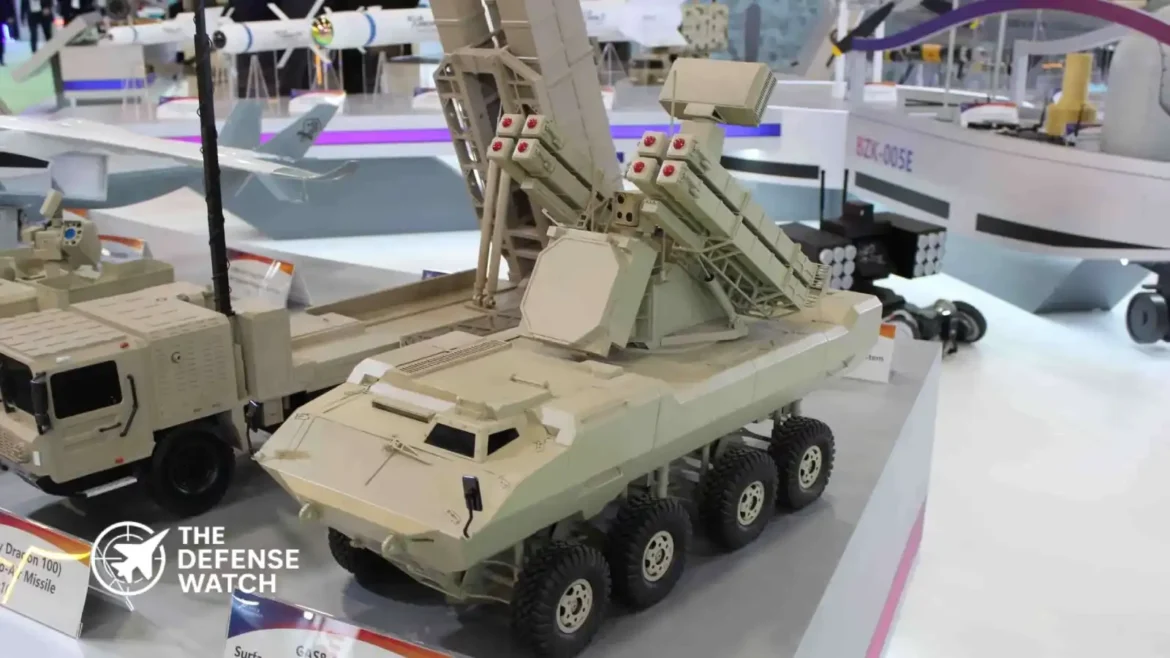
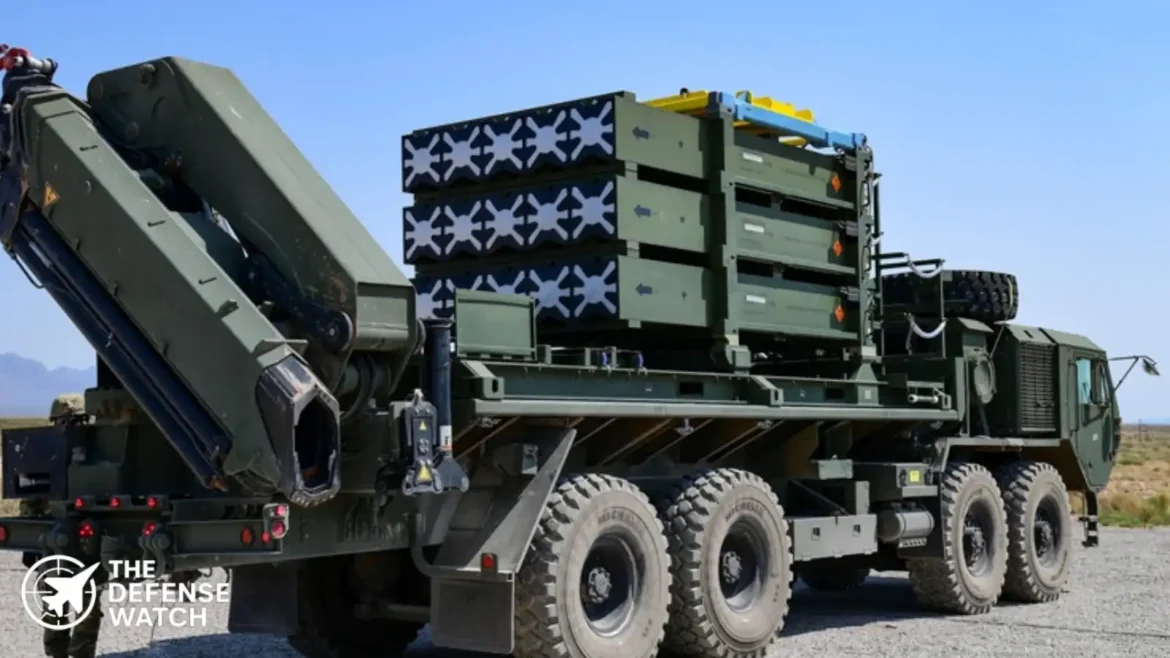
China has revealed its latest short-range air defense system, the Yitian II, mounted on an 8×8 wheeled armored platform. The system is designed to intercept a range of aerial threats, including drones, helicopters, and low-flying aircraft.
The most notable upgrade is its extended missile range of up to 20 kilometers, a significant improvement over earlier SHORAD systems. This positions the Yitian II as a more capable asset in layered air defense networks.
The system integrates radar, electro-optical tracking, and missile launch capabilities into a single mobile unit, enabling rapid deployment and autonomous engagement.
Key Features and Capabilities
Enhanced Engagement Range and Targeting
- Missile range: up to 20 km, expanding coverage against aerial threats
- Capable of engaging low-altitude and slow-moving targets, including drones
- Likely incorporates improved seeker technology for higher hit probability
Mobility and Survivability
- Mounted on a high-mobility 8×8 chassis for rapid repositioning
- Designed for shoot-and-scoot tactics to avoid counterfire
- Suitable for both frontline and rear-area defense roles
Integrated Sensor Suite
- Combines radar and electro-optical systems for all-weather operation
- Enhanced tracking against small radar cross-section targets such as UAVs
- Network-capable for integration into broader air defense systems
Comparison with Legacy and Competitor Systems
| System | Range | Payload | Status | Key Technology |
|---|---|---|---|---|
| Yitian II | 20 km | Short-range SAMs | Emerging (China) | EO + radar fusion, anti-drone focus |
| Yitian (Legacy) | ~6–10 km | Short-range SAMs | In service (China) | Basic IR-guided missiles |
| Avenger (U.S.) | ~8 km | Stinger missiles | Operational | IR-guided, mobile SHORAD |
| Pantsir-S1 (RU) | ~20 km | Missiles + guns | Operational | Combined gun-missile system |
Responding to the Drone Warfare Shif
The development of Yitian II reflects a broader shift in military priorities driven by the rapid proliferation of drones. Conflicts in recent years have demonstrated how low-cost UAVs can overwhelm traditional air defenses.
China appears to be aligning its doctrine with these lessons by fielding systems optimized for:
- Counter-UAV operations
- Defense against loitering munitions
- Protection of mobile and static assets
The extended range also allows earlier interception, reducing the risk posed by swarm attacks.
Strategic Implications for U.S. and Allied Forces
The unveiling of Yitian II comes amid growing concerns within U.S. military circles about vulnerabilities to drone attacks. American forces have increasingly focused on SHORAD modernization, but systems like Yitian II highlight the pace of Chinese advancements.
Key implications include:
- Intensified competition in tactical air defense systems
- Increased emphasis on multi-layered air defense networks
- Potential challenges in Indo-Pacific operational environments
China’s continued investment in mobile, networked air defense platforms suggests a long-term effort to deny air superiority in contested regions.
Outlook
The Yitian II represents a clear step forward in China’s SHORAD capabilities. Its combination of mobility, extended range, and anti-drone specialization aligns with evolving battlefield requirements.
As drone warfare continues to shape modern conflict, systems like Yitian II are likely to play a central role in future military operations, particularly in high-intensity and hybrid warfare scenarios.
US Army Deploys VAMPIRE Counter Drone System At Balikatan 2026
The US Army VAMPIRE counter drone system has been deployed for the first time during Exercise Balikatan 2026 in the Philippines, marking a notable step in expanding U.S. counter unmanned aerial system capabilities in the Indo Pacific.
The deployment highlights how rapidly evolving drone threats are reshaping operational priorities, especially in contested environments where low cost unmanned systems are increasingly used for surveillance and attack missions.
- The US Army deployed the VAMPIRE counter drone system for the first time at Balikatan 2026 in the Philippines.
- VAMPIRE uses laser guided rockets to engage drones and low altitude aerial threats.
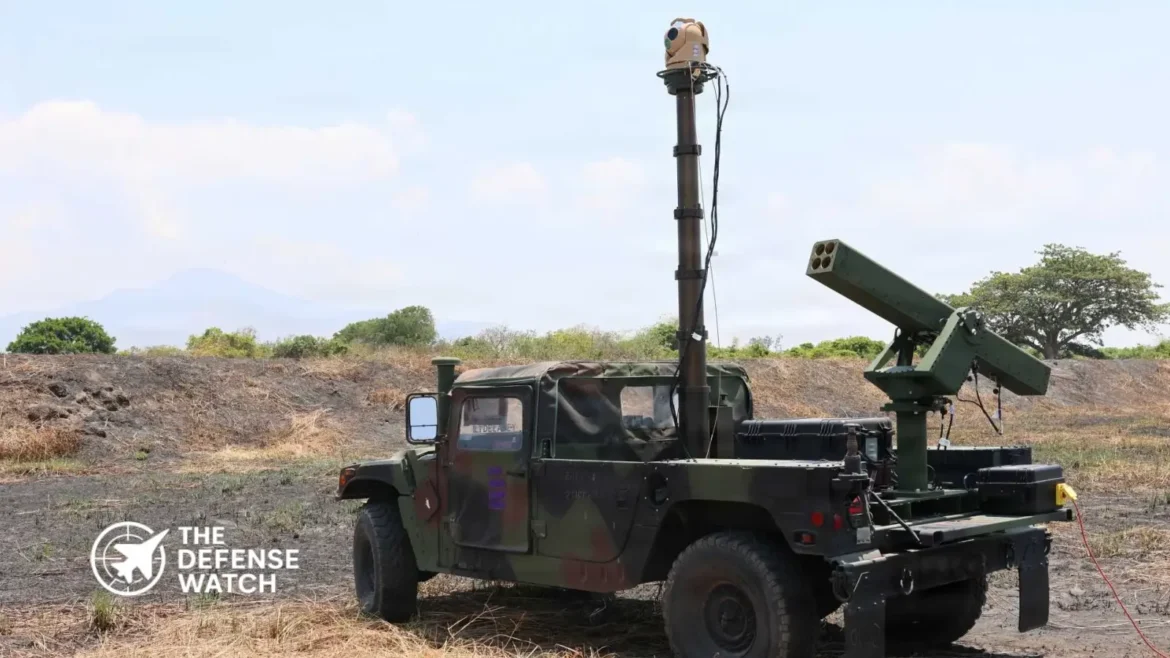
- The system is mounted on light tactical vehicles, enabling rapid deployment in dispersed environments.
- The deployment reflects increasing focus on counter drone capabilities in the Indo Pacific theater.
- Balikatan 2026 is one of the largest joint US Philippines military exercises, emphasizing interoperability.
Balikatan, one of the largest annual joint exercises between the United States and the Philippines, provides a realistic environment to test emerging technologies under operational conditions. The introduction of the US Army VAMPIRE counter drone system into this setting signals a shift toward more agile and deployable air defense solutions.
A Mobile And Scalable Counter Drone Capability
The VAMPIRE system, developed by L3Harris Technologies, is designed as a lightweight, vehicle mounted counter drone platform. It integrates a laser targeting system with Advanced Precision Kill Weapon System rockets, allowing operators to engage small unmanned aerial systems with precision.
Unlike traditional air defense systems, VAMPIRE is built for rapid deployment and ease of integration. It can be mounted on a wide range of light tactical vehicles without major modifications. This flexibility makes it suitable for distributed operations, a key component of modern U.S. military doctrine.
From an operational perspective, the US Army VAMPIRE counter drone system fills a critical gap between small arms fire and larger, more expensive missile systems. Drones, particularly commercial off the shelf variants, present a cost asymmetry problem. Using high end interceptors against low cost drones is not sustainable in prolonged conflicts. VAMPIRE offers a more balanced approach.
Strategic Context In The Indo Pacific
The decision to deploy the US Army VAMPIRE counter drone system in the Philippines is closely tied to the broader strategic environment in the Indo Pacific. The region has seen a steady increase in drone usage for surveillance, maritime domain awareness, and potential strike roles.
By integrating VAMPIRE into Balikatan 2026, U.S. and Philippine forces are testing how such systems can operate in archipelagic terrain, where dispersed units must rely on mobile and self contained defenses.
This deployment also aligns with ongoing U.S. efforts to strengthen alliance interoperability. Systems like VAMPIRE can be shared, adapted, or co deployed with partner forces, making them valuable in coalition operations.
Lessons From Recent Conflicts
Recent conflicts, particularly in Eastern Europe and the Middle East, have demonstrated the growing importance of counter drone systems. Small drones have been used extensively for reconnaissance, targeting, and direct attacks on personnel and infrastructure.
The US Army VAMPIRE counter drone system reflects lessons learned from these conflicts. Its emphasis on mobility, precision, and cost effectiveness addresses key operational challenges observed in real world combat scenarios.
Importantly, the system’s use of laser guided rockets allows for accurate targeting while minimizing collateral damage. This is critical in densely populated or complex environments, where traditional air defense solutions may be less suitable.
Operational Impact And Future Outlook
The introduction of the US Army VAMPIRE counter drone system at Balikatan 2026 is more than a technical demonstration. It represents a broader shift in how the U.S. military approaches air defense at the tactical level.
Instead of relying solely on layered, high end systems, there is increasing emphasis on scalable solutions that can be deployed at the unit level. This approach enhances survivability and operational flexibility.
Looking ahead, the continued integration of systems like VAMPIRE into joint exercises will likely accelerate their adoption across different theaters. As drone threats continue to evolve, the demand for adaptable countermeasures is expected to grow.
Israel Iron Dome UAE Deployment Signals New Phase In Regional Defense
Israel Iron Dome UAE cooperation appears to have entered a new stage after reports that Israel deployed one of its Iron Dome air defense batteries to the United Arab Emirates during the recent conflict with Iran.
According to Axios and follow-on regional reporting, the deployment included Tamir interceptors and Israeli operators, with the system used to help defend the UAE from incoming Iranian missile and drone attacks. Israeli and U.S. officials cited by Axios said the move came after consultations between Israeli Prime Minister Benjamin Netanyahu and UAE President Mohammed bin Zayed.
- Israel reportedly deployed an Iron Dome battery to the UAE during the 2026 conflict with Iran.
- Several dozen Israeli personnel were said to accompany the system to operate it on Emirati soil.
- The battery reportedly intercepted multiple Iranian missiles and drones targeting the UAE.
- The move marks the first known foreign combat deployment of Iron Dome.
- The deployment signals deeper Israel-UAE military coordination under the Abraham Accords.
If confirmed in full detail, this would be the first known operational use of Iron Dome on foreign territory during active combat.
Why Iron Dome Matters In The Gulf
Iron Dome air defense system was originally designed to defeat short-range rockets, artillery rounds, and drones. It has since evolved into a flexible lower-tier air defense layer capable of engaging cruise missiles and some aerial threats when integrated into broader networks.
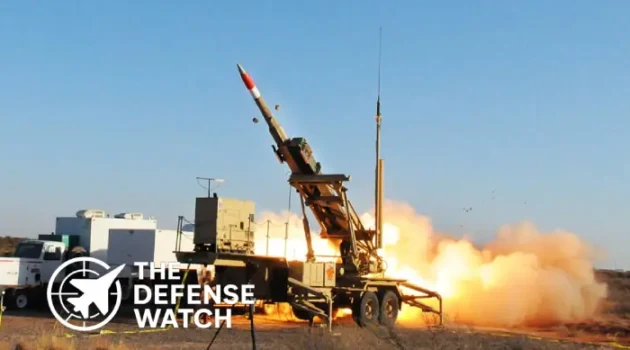
That matters in the Gulf, where states such as the UAE already field advanced systems including THAAD and Patriot PAC-3. Those systems are optimized for higher-end ballistic missile defense, while Iron Dome can add magazine depth and cheaper intercept options against drones or lower-flying threats.
In practical terms, layered defense is critical during saturation attacks, where a mix of ballistic missiles, cruise missiles, and drones are launched simultaneously.
Strategic Meaning Beyond The Hardware
The more important story may be political rather than technical.
Since the 2020 Abraham Accords, Israel and the UAE have expanded diplomatic, economic, and security ties. A wartime deployment of Israeli military personnel and a sensitive air defense asset onto Emirati territory suggests a level of trust and urgency that would have been difficult to imagine only a few years ago.
It also indicates that Gulf states increasingly view integrated regional defense as necessary against missile and drone threats from Iran and aligned groups.
For Washington, which has long encouraged regional missile defense cooperation among partners, such a move aligns with broader U.S. strategic goals of burden-sharing and networked security architecture.
Operational Lessons From The Conflict
The reported attacks on the UAE underscore how modern air campaigns are changing. Precision missiles alone are no longer the sole challenge. Large numbers of low-cost drones can force defenders to expend expensive interceptors or overwhelm radars.
That dynamic has driven demand for multi-layered systems where each threat is matched with the most efficient response.
If Iron Dome performed successfully in the UAE, it could strengthen export interest in Israeli short-range air defense technology and accelerate additional Gulf procurement or joint integration programs.
What Comes Next
Neither Israel nor the UAE has publicly released full operational details. That is common for sensitive wartime air defense missions. But the reported deployment itself is significant.
It shows that missile defense is no longer just a national shield. It is becoming a coalition capability, rapidly moved where threats emerge.
For the Middle East, that may be one of the most important military lessons of the 2026 conflict.
TAI Malaysia Defense Cooperation Gains New Momentum
TAI Malaysia defense cooperation moved into sharper focus this week after Turkish Aerospace Industries said it is targeting broader collaboration with Kuala Lumpur during the Defense Services Asia (DSA) 2026 exhibition in Malaysia.
According to comments reports, TAI CEO Mehmet Demiroglu said existing programs with Malaysia are progressing successfully and new opportunities are under discussion. These include ongoing work linked to unmanned aerial systems and the HURJET advanced jet trainer.
KEY FACTS AT A GLANCE- TAI said it aims to expand defense cooperation with Malaysia during the DSA 2026 exhibition in Kuala Lumpur.
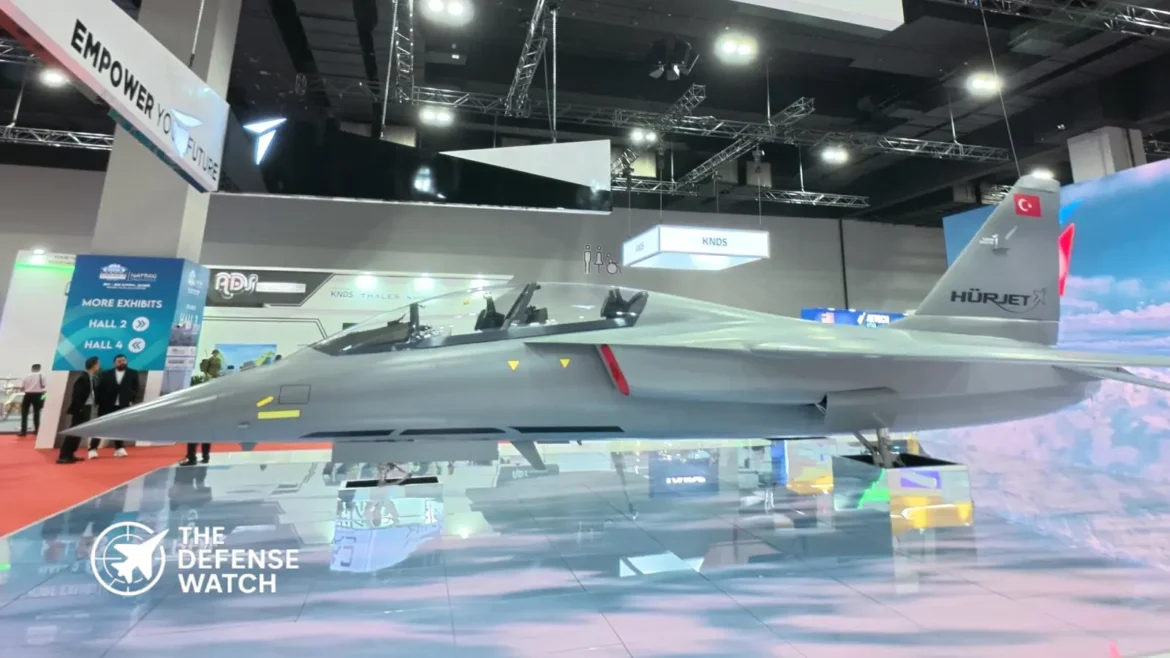
- Malaysian Prime Minister Anwar Ibrahim visited the TAI stand and signed a full-scale HURJET model.
- TAI said ongoing cooperation includes ANKA unmanned aerial vehicles and the HURJET trainer aircraft program.
- The company operates a Malaysia office employing more than 120 personnel.
- The announcement reflects rising Southeast Asian demand for airpower modernization and industrial partnerships.
Malaysia has become an increasingly important export market for Turkish defense firms as Southeast Asian governments seek cost-effective modernization options, diversified suppliers, and technology transfer arrangements.
HURJET And ANKA Programs Highlighted
At the event, Malaysian Prime Minister Anwar Ibrahim visited the TAI pavilion and signed a full-scale model of the HURJET trainer aircraft on display, a symbolic gesture that drew attention to the platform’s export potential.
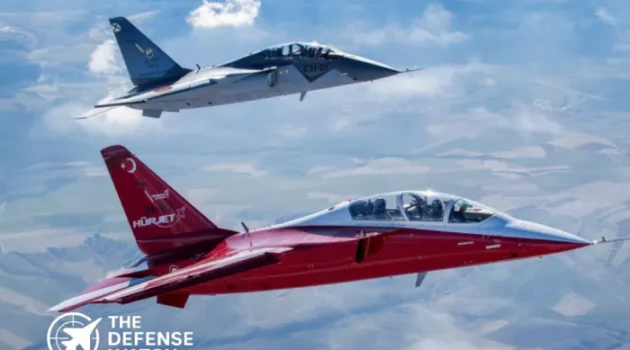
HURJET is designed as an advanced jet trainer with light combat potential. For air forces replacing aging trainers while preserving fighter pilot pipelines, the aircraft could offer a practical middle-tier solution.
TAI also referenced its ANKA unmanned aerial vehicle relationship with Malaysia. Earlier deliveries of three ANKA UAVs to the Royal Malaysian Air Force helped establish the company’s presence in the country.
That matters because once a supplier delivers one platform successfully, follow-on contracts for sustainment, upgrades, training, sensors, or additional aircraft often become easier to secure.
Why Malaysia Matters To Turkish Defense Industry
TAI said it maintains an office in Malaysia with more than 120 employees, indicating the relationship goes beyond simple exports.
A local footprint can support:
- In-country maintenance and logistics
- Engineering cooperation
- Training support
- Faster customer response times
- Long-term industrial integration
For Malaysia, partnerships structured around domestic participation are increasingly valuable. Like many mid-sized defense buyers, Kuala Lumpur wants capability growth without total dependence on overseas sustainment chains.
Strategic Context In Southeast Asia
The timing is notable. Southeast Asia faces growing maritime competition, gray-zone pressure, and persistent airspace monitoring demands. As a result, regional states are reviewing force structure priorities across aircraft, drones, radars, and naval systems.
Malaysia has multiple modernization requirements, including maritime patrol, air surveillance, pilot training, and fleet recapitalization. That creates openings for suppliers able to combine affordability with flexible industrial terms.
Turkey has been steadily expanding into this market by offering systems that are generally less expensive than many Western alternatives while still delivering NATO-linked engineering standards and operational relevance.
What Comes Next
No new contract value or signed procurement decision was announced in the latest statement. However, public signaling at a major regional exhibition often precedes formal negotiations.
If discussions progress, likely areas to watch include:
- Additional UAV support or expansion
- HURJET trainer evaluation
- Aerospace industrial cooperation
- Maintenance and repair partnerships
- Future avionics or sensor integration work
For Washington and allied observers, the broader takeaway is that second-tier defense exporters are becoming more competitive in Asia, reshaping procurement dynamics once dominated by a narrower group of suppliers.
Bottom Line
TAI Malaysia defense cooperation is more than a trade-show headline. It reflects Malaysia’s search for practical modernization partners and Turkey’s rise as a serious aerospace exporter. If current ANKA ties expand into HURJET or broader industrial programs, the relationship could become one of Ankara’s most important defense footholds in Southeast Asia.
Japan Dismantles Postwar Arms Export Barriers in Landmark Policy Shift
Japan’s defense export rules have undergone their most significant transformation in decades, as the government of Prime Minister Sanae Takaichi formally approved an overhaul that lifts longstanding restrictions on overseas weapons sales and positions Tokyo as a credible supplier in the global arms market. The move affects everything from warships and missiles to submarines and fighter aircraft — systems that Japan’s industrial base has long had the technical capacity to build, but rarely the legal authority to sell abroad.
¦ KEY FACTS AT A GLANCE- Japan on April 21, 2026 approved its most sweeping defense export rules overhaul since World War II, removing five restrictive export categories and opening the door to sales of warships, missiles, submarines, and fighter aircraft.
- The revised framework eliminates the previous system that limited arms exports to five categories: rescue, transport, warning, surveillance, and minesweeping equipment.
- Japan’s defense budget stands at approximately $60 billion for 2026 — comparable in scale to South Korea, Germany, Italy, and Israel — and the country builds advanced systems including submarines, stealth fighters, and surface combatants.
- Countries including Poland and the Philippines are actively exploring procurement deals, with used Japanese frigates for Manila expected to be among the first exports approved.
- Mitsubishi Electric projects its defense revenues will triple to 600 billion yen by 2031 following the rule changes; Toshiba is also expanding capacity and hiring staff in London and Singapore.
The policy shift, reported by Reuters and confirmed by multiple Japanese government officials, eliminates a five-category framework that had confined most military exports to non-lethal equipment such as rescue gear, transport systems, surveillance tools, and minesweeping hardware. Under the new structure, each proposed sale will be assessed individually by ministers and officials on its own merits.
Decades of Restraint Come to an End
Japan’s postwar pacifist constitution has defined its security posture since 1947, and arms export restrictions — tightened over successive decades — became a core pillar of that identity. Even as Tokyo allowed narrow exceptions beginning in 2014 under the late Prime Minister Shinzo Abe, the country remained largely absent from international defense markets.
The revision approved by Prime Minister Takaichi’s government removes the five export categories that had limited most military exports to rescue, transport, warning, surveillance, and minesweeping equipment, with ministers and officials now assessing each proposed sale on an individual basis.
Japan will keep in place three export principles committing it to strict screening, controls on transfers to third countries, and a ban on sales to countries involved in conflict — though the government noted exceptions could be made when deemed necessary for national security.
This is not a complete abandonment of principles. The safeguards remain on paper. But the removal of the categorical restrictions is operationally transformative. Japan can now, for the first time in the postwar era, negotiate the sale of a destroyer or a missile battery to a strategic partner without being blocked at the regulatory gate.
Strategic Timing: Trump, Ukraine, and the Supply Chain Crunch
The timing of Tokyo’s decision is no accident. It arrives at a moment of acute strain on Western defense supply chains and deepening uncertainty about Washington’s reliability as a security guarantor.
Wars in Ukraine and the Middle East are straining U.S. weapons production, expanding opportunities for Japan, while U.S. allies in Europe and Asia are looking to diversify supply as Washington’s long-held security commitments look less certain under President Donald Trump.
For allies in Eastern Europe and Southeast Asia watching stockpiles diminish and delivery timelines stretch, Japan suddenly represents a high-quality alternative — one with a proven industrial base and, importantly, no entanglement in existing conflict zones.
Japanese Prime Minister Sanae Takaichi stated that no single country can now protect its own peace and security alone, and that partner countries that support each other in terms of defense equipment are necessary.
The geopolitical alignment is equally significant. Successive U.S. administrations, including the current Trump administration, have pushed Japan to take on more of the collective defense burden. White House spokeswoman Anna Kelly did not respond to questions about the specific policy changes, but said the two countries were closer than ever under Trump and Takaichi.
Beijing, predictably, pushed back. The Chinese Foreign Ministry said governments should recognize that blindly entrusting their security to another country or tying themselves to another country’s war chariot would only end up backfiring. T
Mitsubishi, Toshiba, and the Industrial Upside
Japan’s defense industry has long operated at a structural disadvantage: world-class engineering talent and manufacturing infrastructure, constrained by a single-customer model. Contractors such as Mitsubishi Heavy Industries can build advanced systems including submarines, fighter aircraft, and missiles, but for decades have relied on small orders from a single customer, Japan’s Self-Defense Forces.
That equation is now changing rapidly.
Mitsubishi Electric expects defense sales to triple to 600 billion yen by 2031 following the rule changes, and Toshiba is also hiring and expanding capacity. Masahiko Arai, senior vice president at Mitsubishi Electric’s defense unit, captured the mood bluntly: “Offers are coming from everywhere,” he said, noting the company has been adding staff in London and Singapore to facilitate defense exports.
The industrial logic is straightforward. Higher export volumes mean longer production runs, which reduce per-unit costs. Lower costs improve Japan’s own procurement economics while simultaneously making Japanese systems more competitive internationally. It is a self-reinforcing cycle that Tokyo’s policymakers have long wanted to unlock.
Japan spends roughly $60 billion on its own military this year and builds submarines and fighter jets, making its defense sector comparable in size to South Korea, Germany, Italy, and Israel.
First Deals: Philippines Frigates and Poland’s Interest
While the policy framework is new, the pipeline of potential buyers is already forming.
One of the first deals Takaichi’s government will likely approve is the export of used frigates to the Philippines, which is locked in maritime confrontation with Beijing in the South China Sea, according to two Japanese officials.
The Philippines deal is symbolically significant. Manila has been one of the most vocal proponents of deeper defense cooperation with Japan, and a frigate transfer would mark the first major lethal equipment export in Tokyo’s postwar history. It would also directly bolster a U.S. treaty ally locked in an escalating territorial dispute with China in the South China Sea.
Beyond Southeast Asia, Warsaw’s interest signals that Tokyo’s reach may extend well into Europe. Poland, which has dramatically accelerated its rearmament following Russia’s invasion of Ukraine, is actively surveying global suppliers for artillery, armor, and naval systems. Japan’s precision manufacturing reputation and NATO-compatible systems could make it an attractive source.
Japanese officials and diplomats have confirmed that countries ranging from Poland to the Philippines are exploring procurement opportunities as they modernize their forces.
Next-Generation Fighter and the Long Game
Tokyo’s ambitions extend beyond near-term exports. Japan is also developing a next-generation fighter jet with Britain and Italy for deployment in the mid-2030s, part of a strategy to share development costs and gain access to new technology.
This trilateral effort — known as the Global Combat Air Programme (GCAP) — places Japan within a high-end Western aerospace consortium for the first time. The export rule changes complement GCAP directly: without the ability to sell finished aircraft to third parties, the economics of co-development are significantly weaker. Now, Japan can be a full commercial partner in the program, not merely a manufacturing contributor.
Japan has steadily increased defense spending in recent years to 2% of GDP, and Takaichi’s government is expected to announce further rises this year when it releases a new security strategy.
Analysis: A Structural Shift, Not a One-Time Event
What Tokyo announced on April 21 is not simply a policy adjustment — it is a structural repositioning of Japan within the global defense order.
For most of the postwar era, Japan was a security consumer: receiving extended deterrence from Washington, hosting U.S. forces, and purchasing American platforms. The Abe era began shifting that dynamic through increased spending and an expanded constitutional interpretation of collective self-defense. Takaichi’s government has now taken the next logical step: transforming Japan into a security producer capable of supplying allies as well as itself.
The strategic implications run in multiple directions. For Washington, a better-armed Japan that can also export defense equipment reduces the burden on U.S. production lines — a benefit the Trump administration has openly sought. For U.S. partners in Europe and Southeast Asia, Japan represents a credible, technologically advanced alternative at a moment when American supply timelines are strained. And for Tokyo itself, the export framework opens a path to sustaining — and potentially expanding — a defense industrial base that would otherwise remain structurally sub-scale.
The safeguards Tokyo has preserved — strict screening, third-party transfer controls, and a conflict-zone export ban — are meaningful constraints. They will slow certain deals and may disqualify some potential buyers entirely. But within those guardrails, Japan’s defense industry is now open for business in a way it has not been since before World War II.
Whether Tokyo can convert industrial potential into durable export relationships will depend on execution: competitive pricing, reliable delivery schedules, and after-sales support infrastructure that Japanese firms are only beginning to build. The policy door is open. The commercial test is just beginning.
DSA 2026 Malaysia Opens As Regional Defense Demand Rises
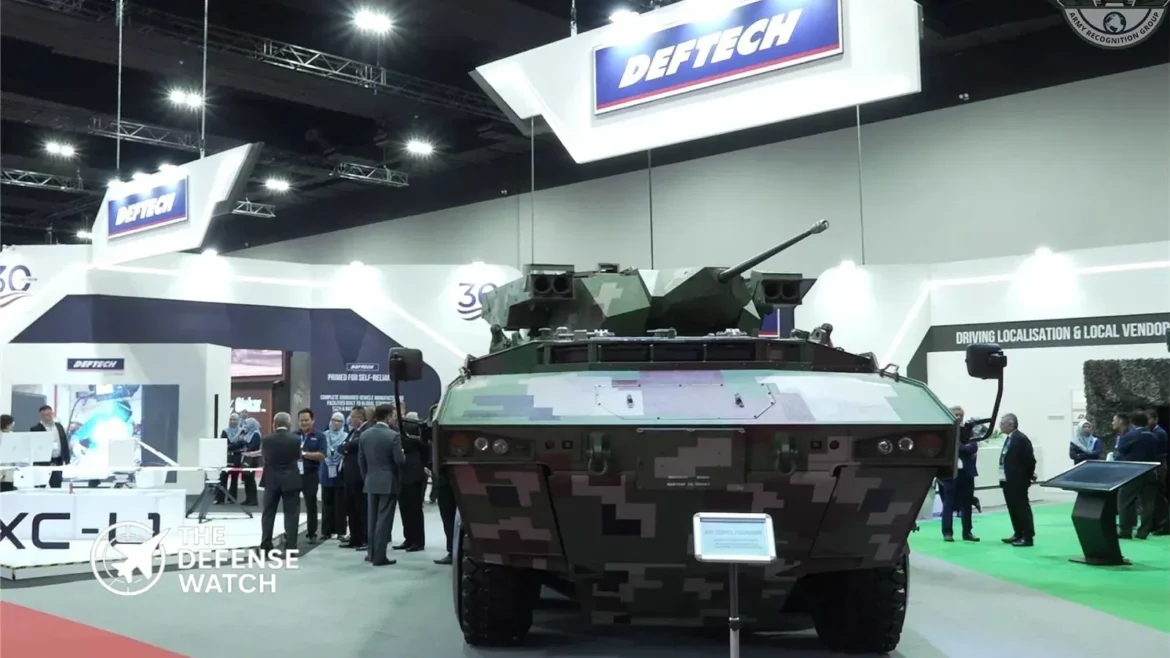
DSA 2026 Malaysia has opened in Kuala Lumpur, bringing together defense manufacturers, military delegations, and security officials at a time of rising geopolitical tension across Asia and beyond. Held at the Malaysia International Trade and Exhibition Centre (MITEC), the event runs from April 20 to April 23 and is widely regarded as one of the region’s most important defense trade shows.
¦ KEY FACTS AT A GLANCE- DSA 2026 runs from April 20 to April 23 at MITEC in Kuala Lumpur, Malaysia.
- Event organizers say 1,456 companies from 63 countries are participating, making it the largest edition so far.
- 37 national pavilions are displaying land, air, naval, cyber, and homeland security technologies.
- Exhibits include air defense systems, drones, armored vehicles, artillery, sensors, and electronic warfare equipment.
- The expo highlights Southeast Asia’s growing role in global defense procurement and industrial partnerships.
Malaysian officials said this year’s edition includes 1,456 exhibiting companies from 63 countries, surpassing the 2024 event in size. That growth signals continued demand for modernization programs across Southeast Asia, where governments are balancing maritime security, air defense, border control, and disaster response requirements.
Broad Range Of Military Capability On Display
The advanced military capability showcase at DSA 2026 spans land, air, sea, cyber, and homeland security sectors.
Among the systems highlighted:
- Surface to air missile systems and integrated air defense networks
- Tactical drones and loitering munitions
- Armored vehicles and artillery platforms
- Naval patrol vessels and maritime surveillance tools
- Electronic warfare and cyber defense systems
- Sensors, radars, and command systems
South Korea’s LIG Defense & Aerospace displayed multi-layered missile defense products including Cheongung-II and L-SAM, while UAE defense groups EDGE and Calidus promoted precision weapons, autonomous systems, vehicles, and naval platforms.
Why DSA 2026 Matters Beyond The Show Floor
More than a trade exhibition, DSA 2026 Malaysia reflects a broader strategic shift. Southeast Asia sits astride major sea lanes, faces gray-zone maritime pressure, and must respond to evolving drone and missile threats. That makes procurement decisions in Kuala Lumpur increasingly relevant to Washington, Beijing, Seoul, Ankara, and European suppliers.
Malaysia itself has been pursuing selective modernization while managing budget pressures. For many states in the region, exhibitions like DSA are where future partnerships, industrial offsets, maintenance deals, and technology transfer discussions begin.
This is especially important as governments seek faster acquisition cycles rather than decade-long procurement timelines.
Malaysia’s Defense Industry Also In Focus
Prime Minister Anwar Ibrahim toured the exhibition and visited local company pavilions, highlighting domestic industrial participation. Malaysian firms are using DSA 2026 to demonstrate local manufacturing, electronics integration, and support services.
That domestic emphasis mirrors a wider trend: countries increasingly want not only imported systems, but also local assembly, sustainment capacity, and workforce development.
Outlook
The scale of DSA 2026 Malaysia shows that Asia remains one of the world’s most active defense markets. While many exhibits are promotional, the real significance lies in what follows, contract talks, industrial agreements, and long-term military modernization plans.
For global defense companies, Kuala Lumpur is no longer a side event. It is a serious access point to one of the fastest-growing strategic markets.
Balikatan Military Exercises Enter A New Phase
Balikatan military exercises opened this week as the United States, the Philippines, and multiple partner nations launched their largest combined training event to date, signaling a sharper focus on readiness, deterrence, and coalition operations in the Indo Pacific. Reuters reported that this year’s drills will test forces under real-world conditions across land, sea, air, and missile defense scenarios.
¦ KEY FACTS AT A GLANCE- Balikatan 2026 runs from April 20 to May 8 across the Philippine archipelago.
- More than 17,000 personnel are participating, including about 10,000 US troops.
- Live fire drills will take place near the South China Sea and close to Taiwan-facing areas.
- Japan, Canada, France, and New Zealand joined as active participants for the first time.
- Exercises highlight Manila’s widening defense partnerships amid friction with China.
The annual Balikatan series, whose name means shoulder-to-shoulder, has evolved from a bilateral alliance drill into a broader multinational framework. That shift matters because regional seacurity competition now extends beyond one-on-one treaty commitments and increasingly depends on networked coalitions.
The Big Picture
The Indo Pacific has become the center of long-term military competition. China’s maritime pressure in the South China Sea, growing military activity around Taiwan, and expanding gray-zone operations have pushed regional states to deepen defense ties.
For Washington, Balikatan demonstrates that US force posture in Asia remains active despite parallel commitments elsewhere. Reuters noted that the drills began even as the United States remains heavily engaged in the Middle East.
For Manila, the exercises show a deliberate modernization strategy. The Philippines is no longer relying only on diplomacy and coast guard presence. It is building credible military capacity with allies.
What’s Happening
Balikatan 2026 runs from April 20 to May 8 and includes more than 17,000 troops. Around 10,000 are from the United States. Australia returned, while Canada, France, Japan, and New Zealand joined as active participants for the first time.
Planned events include:
- Maritime strike drills
- Precision interdiction training
- Integrated air and missile defense
- Multinational naval operations
- Counter-landing live fire scenarios
- Joint command and control rehearsals
One notable event will occur on Itbayat Island, the Philippines’ northernmost inhabited island, located near Taiwan.
That geography gives the drill strategic meaning well beyond routine training.
Why It Matters
Military exercises often reveal priorities more clearly than speeches. This year’s Balikatan emphasizes three areas:
First, coastal denial. Training with anti-ship missiles and strike assets suggests a focus on denying hostile naval movement through chokepoints.
Second, integrated defense. Air and missile defense scenarios indicate concern over precision strikes, drones, and saturation attacks.
Third, coalition speed. Multi-country drills help reduce the time needed for allied coordination during crises.
These are practical wartime requirements, not symbolic gestures.
Strategic Implications
The Philippines sits astride vital sea lanes between the South China Sea and the western Pacific. Any conflict involving Taiwan, regional blockades, or maritime coercion would elevate the country’s strategic importance.
Balikatan helps improve:
- Access to dispersed operating locations
- Joint logistics across islands
- Maritime domain awareness
- Rapid reinforcement options
- Interoperability among allies
For US planners, archipelagic terrain offers natural advantages for distributed operations. For Manila, allied presence increases deterrence without requiring permanent foreign bases.
Competitor View
China criticized the drills, warning that external military cooperation could raise tensions and divide the region. Reuters cited Chinese Foreign Ministry comments urging peace and stability in Asia Pacific affairs.
Beijing is likely to view expanded Balikatan participation as part of a broader encirclement concern, especially with Japan’s growing role and training near Taiwan-facing areas.
However, regional governments generally frame these exercises as defensive, sovereignty-based, and intended to preserve freedom of navigation.
Capability Gap
The Philippines has long faced a gap between territorial claims and enforcement capacity. It has limited naval mass, sparse air defense coverage, and logistical challenges across thousands of islands.
Balikatan helps address those weaknesses by improving:
- Targeting and surveillance integration
- Coastal missile employment
- Combined amphibious defense
- Disaster response and mobility
- Secure communications with allies
Still, exercises do not replace procurement. Sustained readiness depends on munitions stocks, maintenance, radar coverage, and infrastructure.
What To Watch Next
Several indicators will show where the alliance is heading next:
- Expansion of missile defense training
- More frequent Japanese participation
- Greater use of northern Philippine sites
- Infrastructure upgrades under defense access agreements
- Follow-on procurement of coastal defense systems
If those trends continue, Balikatan may become a standing benchmark for coalition readiness in Southeast Asia.
The Bottom Line
Balikatan 2026 shows that regional deterrence now depends less on single alliances and more on a growing network of interoperable partners.
Pakistan’s $1.5 Billion Sudan Arms Deal Collapses Under Saudi Pressure
Pakistan’s ambitious Sudan arms deal has been suspended after Saudi Arabia withdrew financial backing and urged Islamabad to terminate the agreement, dealing a significant blow to Pakistan’s expanding defense export program and revealing the degree to which Gulf financing shapes Islamabad’s arms diplomacy.
¦ KEY FACTS AT A GLANCE- Pakistan has placed a $1.5 billion weapons and aircraft deal with Sudan on hold following direct pressure from Saudi Arabia.
- The proposed package included 10 K-8 Karakoram light attack aircraft, over 200 drones, advanced air defense systems, and potentially JF-17 Thunder fighter jets.
- Saudi Arabia withdrew financing for the deal and urged Islamabad to terminate the agreement entirely, citing concerns about involvement in African proxy conflicts.
- The suspension follows Pakistan’s separate $4 billion-plus arms deal with Libya’s eastern-based Libyan National Army, finalized in December 2025.
- The halt underscores how Gulf financial leverage shapes Pakistani defense export strategy and the limits of Islamabad’s arms diplomacy independence.
The Big Picture
Pakistan has emerged as one of the most aggressive new entrants in the global defense export market over the past two years. Defense exports reportedly reached all-time highs in 2025, with officials attributing the surge to the perceived battle-tested performance of platforms like the JF-17, following Pakistan’s deployment of the aircraft in its conflict with India.
Islamabad has leveraged those combat credentials to pursue large-scale arms agreements across the Middle East and Africa—markets where Western suppliers face sanctions constraints or political complications. In December 2025, Pakistan signed a deal worth more than $4 billion with Libya’s eastern-based Libyan National Army, one of its largest-ever arms deals, covering 16 JF-17 fighter jets, 12 Super Mushshak trainer aircraft, and additional equipment for land, sea, and air operations.
The Sudan deal was intended to be the next major milestone in that trajectory. Its collapse—driven not by Pakistani hesitation but by Gulf financial pressure—exposes the structural dependency at the heart of Islamabad’s defense export model.
What’s Happening
Pakistan has put a $1.5 billion deal to supply weapons and jets to Sudan on hold after Saudi Arabia asked for the agreement to be terminated and said it would not finance the purchase, two Pakistani security sources and a diplomatic source told Reuters.
The proposed package included over 200 drones for reconnaissance and loitering attacks, 10 K-8 Karakoram light attack aircraft, advanced air defense systems, PAC MFI-395 Super Mushshak training aircraft, and potentially JF-17 Thunder fighter jets jointly developed with China.
Reuters first reported the deal was in its final stages in January 2026, noting it had been brokered by Saudi Arabia, though no Saudi financing was disclosed at that time. The April 20 report confirms that Riyadh’s role extended well beyond brokerage—it was the deal’s financial backbone.
One meeting in March between Sudanese military officials and Saudi representatives reportedly contributed to the withdrawal of financing, following a broader Saudi reassessment of its involvement in regional conflicts.
Neither Pakistan’s military nor Sudan’s armed forces responded to requests for comment. The Saudi government media office also did not immediately respond.
Why It Matters
The suspension is significant for three reasons. First, it stalls a deal that Sudan’s military badly needs. Assistance from Pakistan, especially drones and jets, could help Sudan’s army regain the air supremacy it had toward the start of its war with the RSF, which has increasingly used drones to gain territory, eroding the army’s position.
Second, it signals the outer boundary of Pakistan’s defense export autonomy. Islamabad can negotiate and structure deals, but without Gulf financing—particularly Saudi liquidity—it cannot always close them. Pakistan is currently operating under a $7 billion IMF program, following a short-term deal to avert a sovereign default in 2023, and won IMF support after Saudi Arabia and other Gulf allies provided financial and deposit rollovers. That financial dependency translates directly into leverage over Pakistan’s foreign policy decisions, including arms sales.
Third, the collapse demonstrates how Saudi Arabia uses economic relationships as instruments of foreign policy restraint—a form of soft-power veto that rarely requires public statements.
Strategic Implications
Saudi objectives in Sudan appear centered on preventing the collapse of the national army as the backbone of the state, achieved through political acceptance and regional facilitation rather than direct intervention. Riyadh’s decision to pull financing is therefore not a withdrawal of support for Sudan’s military per se—it reflects a recalibration of how Saudi Arabia wants to be seen externally.
Some Western countries had advised Riyadh to stay away from proxy wars in Africa, a factor that sources say influenced Saudi Arabia’s decision to signal that Pakistan should terminate the deal. This advisory pressure, likely from Washington or European capitals, illustrates how diplomatic signaling cascades through financial relationships: Western governments pressure Riyadh, Riyadh pressures Islamabad, and Islamabad suspends the deal.
This cascade model matters for assessing Pakistan’s future export ambitions. Every deal Pakistan structures through Gulf financing channels carries an embedded political risk—the financier can pull out if it faces external pressure. For Pakistan to truly operate as an independent defense exporter, it will need either sovereign financing mechanisms, deferred payment arrangements with buyers, or access to alternative credit structures that bypass Gulf intermediaries.
The Libya deal, by contrast, appears to have proceeded without similar complications—possibly because Libya’s eastern forces secured their own financing, or because the Gulf political environment around that transaction was cleaner. The divergence between the two deals is instructive.
Competitor View
From an Indian perspective, the suspension is a minor strategic relief. New Delhi has watched Pakistan’s defense export surge with concern, particularly JF-17 proliferation into regions where India has strategic interests. A Sudan deal falling apart reduces one potential theater of expanded Pakistani air power projection, even if temporarily.
For the UAE, the outcome is more complex. The UAE has been accused of providing logistical support to the RSF in Sudan, a charge it officially denies. A Pakistan-supplied weapons package to Sudan’s army would have directly countered UAE-aligned interests in the conflict. Riyadh’s intervention—whether coordinated with Abu Dhabi or not—effectively preserved that battlefield balance.
China will monitor the outcome closely. The JF-17 is a joint Pakistan-China platform, and expanded export sales benefit both Chinese defense industry revenues and Beijing’s influence in target markets. A stalled Sudan deal is a missed commercial and strategic opening for Beijing’s broader Africa engagement strategy.
What To Watch Next
The immediate question is whether the deal remains suspended or formally collapses. Pakistani security sources described the deal as placed “on hold” rather than terminated—suggesting Islamabad is leaving the door open if Saudi Arabia reverses course or alternative financing emerges.
Sudan’s military will continue to seek external suppliers. Analysts note the pause may also affect other potential arms agreements under discussion, including a separate multibillion-dollar deal involving Libya, which is reportedly under review amid shifting Saudi strategic priorities.
For Pakistan, the priority will be insulating future defense export pipelines from single-point financial dependency. Developing deferred payment options for cash-constrained buyers, or structuring deals through bilateral government-to-government credit rather than Gulf-brokered financing, would reduce exposure to this kind of pressure.
The JF-17’s export calendar—including active discussions with Iraq, Bangladesh, Azerbaijan, Nigeria, and Myanmar—will also bear watching. Iraq has expressed keen interest in the JF-17 and Super Mushshak trainers, with advanced talks underway. Unlike the Sudan deal, many of those potential buyers have direct procurement budgets that do not require Saudi intermediation.
Capability Gap
The suspended deal would have addressed a critical deficit in Sudan’s military toolkit. The RSF has increasingly relied on drones to capture territory, crippling the army’s formations and dominance—a capability gap the Pakistan package, with its 200-plus drone component and light attack aircraft, was specifically designed to close. The Defense Post
Without this deal, Sudan’s army remains at an aerial disadvantage against RSF drone operations. Alternative suppliers are limited: Western governments face humanitarian and legal constraints on arms transfers to Sudan; Russia and China have their own political and commercial calculations. Pakistan was, effectively, the most accessible and cost-competitive option available.
The suspension therefore has direct battlefield consequences. Sudan’s military will likely continue to press for the deal’s revival or seek alternative procurement pathways—potentially at higher cost and longer lead times.
The Bottom Line
Saudi Arabia’s financial veto over Pakistan’s Sudan arms deal confirms that Islamabad’s defense export ambitions, however commercially impressive, remain structurally constrained by the Gulf financial dependencies that underwrite Pakistan’s broader economic stability.
Pakistan Coast Guards Attack Signals Escalation In Coastal Threat Environment
The Pakistan Coast Guards attack near the Iran border marks a rare and significant escalation in maritime security threats along the country’s western coastline, with early reports indicating casualties following a direct assault at sea.
The incident occurred in waters close to Pakistan’s border with Iran, an area historically associated with smuggling networks and intermittent militant activity. Officials have yet to release a full operational account, but initial details suggest that Coast Guard personnel were targeted during an active patrol.
While attacks on land-based security forces in Balochistan are not uncommon, a direct maritime engagement of this nature represents a notable shift in tactics.
¦ KEY FACTS AT A GLANCE- Pakistan Coast Guards reportedly came under direct attack at sea near the Iran border.
- Casualties have been reported, though official confirmation remains limited.
- The incident marks the first known direct maritime assault on the force in this region.
- The attack occurred in a sensitive zone known for smuggling and militant activity.
- Authorities have launched an investigation while increasing coastal security measures.
A Rare Maritime Engagement In A Volatile Region
The Pakistan Coast Guards attack stands out due to its location and method. The coastal belt near Gwadar and the Iran border serves as a strategic corridor for both legal maritime trade and illicit trafficking routes, including fuel smuggling and human movement.
Security analysts note that hostile actors operating in the region have historically avoided direct confrontation at sea, preferring ambushes on land or improvised explosive device (IED) attacks. This incident suggests a potential expansion of operational capability or intent.
Pakistan’s maritime security architecture in the region typically involves coordination between the Pakistan Coast Guards, Pakistan Navy, and Maritime Security Agency. However, the dispersed and rugged coastline presents persistent surveillance and response challenges.
Casualties And Limited Official Disclosure
Reports indicate that the Pakistan Coast Guards attack resulted in casualties, though the exact number of injured or killed personnel has not been officially confirmed. Pakistani authorities have so far maintained a cautious approach in public statements, likely due to ongoing investigations.
This limited disclosure is consistent with previous security incidents in sensitive border regions, where operational details are often withheld to avoid compromising follow-on actions.
Independent verification of the scale and perpetrators of the attack remains pending.
Strategic Implications For Pakistan’s Coastal Defense
From a defense perspective, the Pakistan Coast Guards attack raises concerns about potential gaps in maritime domain awareness and force protection in nearshore environments.
Unlike blue-water naval operations, coastal security relies heavily on smaller patrol units, limited radar coverage, and coordination with land-based intelligence networks. These conditions can create vulnerabilities, especially in areas with complex geography and cross-border dynamics.
If confirmed as a coordinated militant action, the attack could signal an evolution in asymmetric maritime tactics, possibly influenced by regional instability or external support networks.
Iran Border Dynamics And Security Overlap
The Pakistan-Iran border region has long posed challenges for both countries, including smuggling, insurgent movement, and limited state control in remote areas. While both Islamabad and Tehran have conducted joint efforts to improve border security, coordination at sea remains less developed compared to land-based mechanisms.
The Pakistan Coast Guards attack may prompt renewed bilateral engagement focused on maritime surveillance and intelligence sharing.
Analysts point out that any sustained threat in this corridor could have broader implications for regional trade routes, including traffic linked to Gwadar Port, a key node in China-Pakistan Economic Corridor (CPEC) infrastructure.
Operational Response And Likely Next Steps
In response to the Pakistan Coast Guards attack, authorities are expected to increase patrol frequency, enhance surveillance coverage, and potentially deploy additional naval assets to the affected sector.
Short-term measures may include:
- Expanded aerial reconnaissance along the coastline
- Reinforced patrol patterns near high-risk zones
- Intelligence-led interdiction operations targeting suspected networks
Longer-term, the incident may drive investment in coastal radar systems, unmanned surveillance platforms, and improved inter-agency coordination.
Broader Security Context
The Pakistan Coast Guards attack comes amid a broader pattern of security challenges in southwestern Pakistan, particularly in Balochistan province. While most incidents remain land-centric, this development suggests that maritime domains are increasingly part of the threat landscape.
For defense planners, the incident underscores the need to treat coastal security as an integrated component of national defense rather than a secondary layer.