Executive Summary:
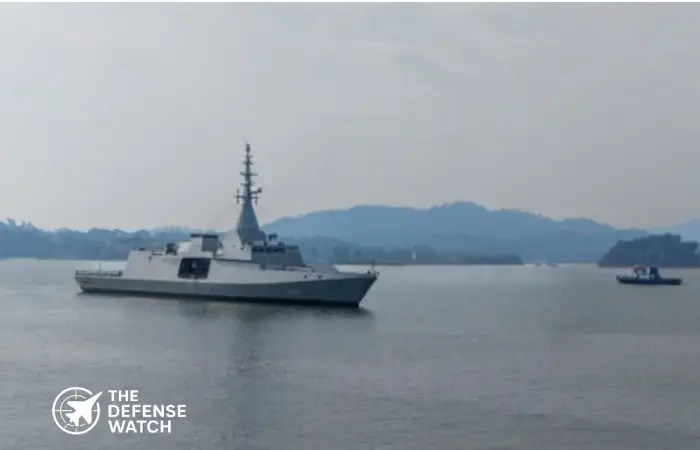
Malaysia is seeking diplomatic solutions after uncertainty emerged around a major naval missile contract linked to the Royal Malaysian Navy’s modernization efforts. The issue highlights broader regional security concerns and the growing importance of maritime deterrence in Southeast Asia.
Malaysia Missile Contract Faces Strategic Uncertainty
Malaysia Pursues Diplomacy To Protect Naval Modernization Plans
Malaysia is pursuing diplomatic engagement as uncertainty grows around a planned missile procurement tied to the modernization of the Royal Malaysian Navy, according to reporting from.
The development comes at a sensitive time for regional maritime security, particularly as Southeast Asian nations continue expanding naval capabilities amid rising tensions in contested waters across the Indo-Pacific.
While Malaysian officials have not publicly detailed the full scope of the diplomatic effort, the reported uncertainty surrounding the missile contract underscores the challenges many middle-power militaries face when balancing procurement requirements, international partnerships, export controls, and budget pressures.
The issue also reflects the increasing strategic importance of anti-ship missile systems in regional naval planning. Across Asia, governments are investing heavily in long-range precision strike capabilities designed to strengthen deterrence and improve sea denial operations.
Maritime Security Remains Central To Malaysia’s Defense Strategy
Malaysia has steadily expanded its naval modernization agenda over the past decade, focusing on maritime surveillance, coastal defense, and fleet recapitalization. The country’s strategic geography along critical sea lanes, including the Strait of Malacca and parts of the South China Sea, has elevated the importance of naval readiness.
The uncertainty surrounding the missile contract arrives as regional security dynamics continue evolving. Neighboring countries, including China, Vietnam, Indonesia, and Philippines, are all investing in maritime strike and coastal defense capabilities.
For Malaysia, anti-ship missile systems are viewed as a critical force multiplier. Such systems allow smaller naval fleets to project deterrence against larger maritime forces while protecting territorial waters and economic zones.
Defense analysts have increasingly pointed to missile-based maritime denial strategies as cost-effective alternatives to larger fleet expansion programs. In Southeast Asia, this trend has accelerated amid concerns over gray-zone operations, naval incursions, and freedom of navigation disputes.
Procurement Delays Could Affect Naval Capability Timelines
The Malaysia missile contract issue could potentially affect broader naval modernization timelines if procurement uncertainty continues. Modern naval programs are often interconnected, with weapons integration linked to ships, sensors, combat management systems, and training pipelines.
Any prolonged disruption could create capability gaps or delay planned operational readiness milestones for the Royal Malaysian Navy.
Malaysia has previously emphasized the need to modernize aging maritime assets while improving interoperability with regional and international defense partners. Procurement consistency is therefore viewed as essential for sustaining long-term force planning.
The diplomatic approach being pursued by Kuala Lumpur suggests officials are attempting to avoid escalation while preserving strategic relationships tied to the procurement process.
That approach aligns with Malaysia’s broader defense policy, which traditionally favors balanced diplomacy alongside measured military modernization.
Regional Navies Continue Expanding Missile Capabilities
The uncertainty surrounding the Malaysia missile contract also highlights a wider regional trend. Indo-Pacific navies are increasingly prioritizing stand-off strike weapons capable of operating in contested maritime environments.
Modern anti-ship missile systems now offer improved range, low-observable flight profiles, networked targeting, and multi-platform launch capability. These features have transformed maritime deterrence calculations across Asia.
Countries throughout the region are integrating missile systems onto surface combatants, coastal batteries, fast attack craft, aircraft, and unmanned platforms.
The growing emphasis on distributed lethality and sea denial operations has also increased demand for flexible missile architectures that can support layered maritime defense strategies.
For Malaysia, maintaining momentum in naval modernization remains important not only for national defense but also for regional maritime stability and protection of economic interests tied to shipping and offshore resources.
Strategic Implications Beyond The Contract
Although the immediate issue centers on procurement uncertainty, the broader implications extend into regional strategic competition and defense industrial cooperation.
Defense acquisitions in Southeast Asia are increasingly shaped by geopolitical considerations, technology transfer arrangements, industrial participation, and diplomatic alignment.
As competition intensifies across the Indo-Pacific, governments are under growing pressure to secure reliable defense supply chains while maintaining strategic autonomy.
Malaysia’s diplomatic effort may therefore represent more than a procurement dispute. It reflects the increasingly complex intersection between defense modernization, international relations, and regional deterrence planning.
The outcome of the missile contract discussions could influence future procurement decisions and partnership strategies within Malaysia’s broader naval modernization roadmap.