

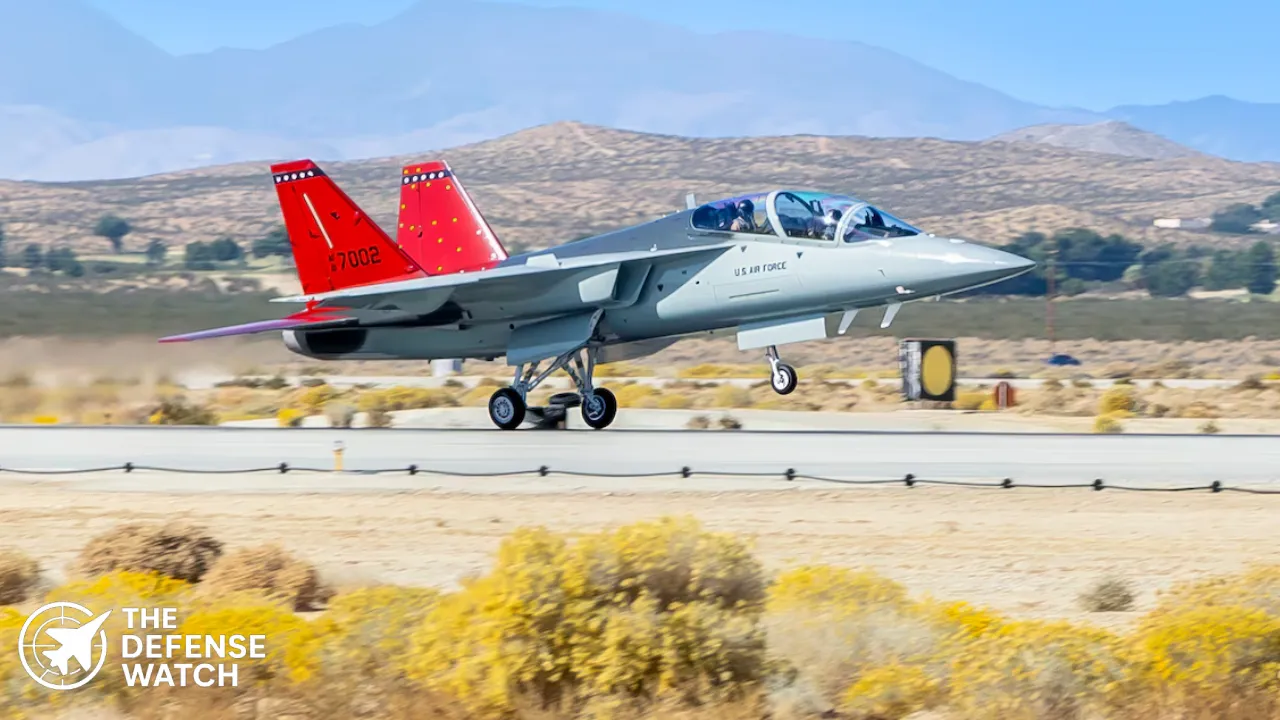
First T-7A Red Hawk lands at JBSA-Randolph
The United States Air Force (USAF) received its first production Boeing–Saab T-7 Red Hawk on December 5, 2025 at Joint Base San Antonio-Randolph (JBSA-Randolph), Texas. The aircraft touched down at the 12th Flying Training Wing, marking the beginning of a new generation in Air Force pilot training.
The delivery is a significant milestone in the USAF’s long-planned shift away from legacy trainers that have served for decades.
Background: Why the T-7A matters
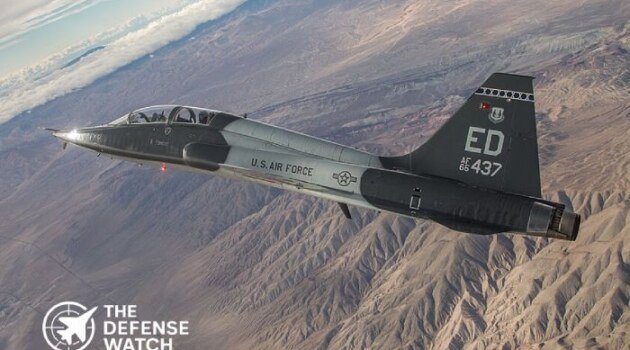
For more than six decades, the USAF has relied on the aging Northrop T-38 Talon as its advanced jet trainer — a platform first introduced in the 1960s.
In 2018, the Air Force awarded a roughly USD 9.2 billion contract to Boeing for a new fleet: 351 T-7A trainers, along with 46 simulators and associated training infrastructure.
The T-7A Red Hawk is built using modern digital design and manufacturing methods. Its architecture supports a fully integrated training system combining live, virtual, and constructive (LVC) elements such as advanced simulators and mission software — capabilities that better prepare pilots for fifth- and future-generation fighters and bombers.
What the Arrival Means — Details
According to official statements, the arrival of the first T-7A at JBSA-Randolph is the “first physical representation of progress” within the program.
The jet will be assigned to the 99th Flying Training Squadron (99 FTS), known as the “Red Tails,” which will spearhead integration of the trainer into the USAF pilot pipeline.
While the aircraft has arrived, full-scale training has yet to begin. According to the USAF, instructor pilots must first familiarize themselves with the new platform and maintainers must be trained on logistics, maintenance, and support.
The full Program of Record envisions 351 T-7A aircraft supported by ground- and simulator-based training systems. Over several years, as more jets are delivered, the plan is to phase out the legacy T-38C fleet and eventually consider replacing even the turboprop T-6 Texan II for some training missions.
Brig. Gen. Matthew Leard, director of AETC Plans, Program, Requirements and International Affairs, said this delivery is the first tangible indicator that the long-awaited transformation of pilot training is beginning. He emphasized that training and maintenance infrastructure is being built in parallel with deliveries — a shift from past programs that waited for full production before ramping up support.
What Makes the T-7A Red Hawk Different
The T-7A Red Hawk brings several significant improvements over the T-38C:
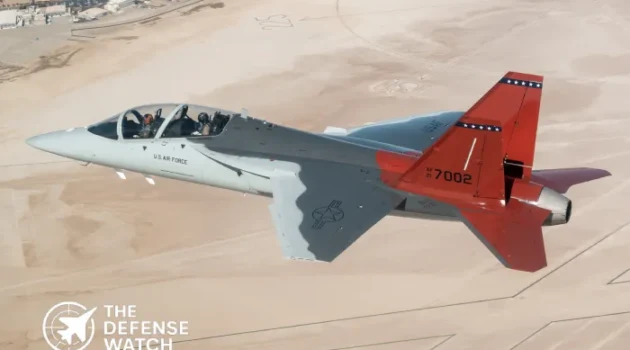
- Modern Design & Performance: The Red Hawk features twin tails, leading-edge root extensions and slats for improved handling at low speeds — better approximating the flight envelope of modern fighters.
- Increased Power: Its single engine produces nearly three times the thrust of the twin engines on the T-38C Talon.
- Digital, Integrated Training System: Whereas older trainers were primarily airframes with limited avionics, the T-7A comes with state-of-the-art integrated flight simulators, advanced visual systems, mission-system software, and facilitates live-virtual-constructive training.
- Future-Proof and Upgradable: The aircraft’s open-architecture software and digital systems are designed to evolve, enabling integration of new training modules or mission profiles such as aggressor or light attack variants if required.
According to Boeing, the T-7A represents a “multi-generational leap” in pilot training, offering low-risk, cost-effective, and highly capable training — a major upgrade over legacy platforms that are decades old.
Strategic Implications and What Comes Next
The delivery of the first T-7A Red Hawk marks a critical turning point in how the USAF trains its future fighter and bomber pilots. For decades, new pilots have had to transition from training jets such as the T-38 or T-6 directly to high-performance fourth-, fifth-, or sixth-generation combat aircraft — a steep leap that often requires additional on-the-job training. The T-7A fills that gap by better bridging training to operational jets.
Over the next several years, as more T-7As arrive and simulators come online, the USAF can expect reduced training bottlenecks, improved readiness, and a pipeline better aligned with modern and future air combat demands. The program’s roadmap foresees deliveries ramping up through the early 2030s; once fully fielded, the T-7A will become the backbone of advanced pilot training across multiple USAF bases.
Additionally, the growth of the T-7A program lays the groundwork for potential expansion: given its flexible digital architecture, the trainer could adapt over time to evolving mission requirements — providing the USAF with a long-term training and preparation platform.
Conclusion
The arrival of the first production T-7A Red Hawk at JBSA-Randolph on December 5, 2025, represents a landmark achievement for the U.S. Air Force and its pilot training enterprise. As the cornerstone of a broader modernization effort, the Red Hawk promises to deliver more realistic, flexible, and future-ready training for the next generation of aircrew — enhancing readiness for fifth- and sixth-generation fighters and beyond. As deliveries scale over the coming years, the impact will steadily reshape the structure and effectiveness of USAF pilot training for decades.

11 comments
[…] GBU-39/B is a 250‑lb class, GPS/INS‑guided glide bomb developed by Boeing to meet a 1997 requirement from U.S. Air Combat Command for a “miniaturized smart bomb” capable of carrying more munitions per […]
[…] from simple interception exercises to complex multi-domain engagements. This ensures that the U.S. Air Force maintains a competitive edge against evolving aerial […]
[…] defense officials have indicated a preference for a delivery window that aligns with the aircraft’s production schedule and the country’s long term capability development plan. Any acquisition would be […]
[…] agreement also covers helicopter pilot training. Starting this summer, eight Polish military helicopter pilots will train in the UK under NATO […]
[…] any shift from a single F-35 fleet to a mix of aircraft types would have implications for pilot training, logistics, sustainment, and interoperability with U.S. and NORAD forces. Those factors remain […]
[…] UK and Qatar have maintained close defense ties for decades, including joint pilot training, shared basing, and collaborative operational […]
[…] Oman. Private broadcaster NTV reports the first delivery is expected by the end of February, with pilot training already […]
[…] arms around the world for decades. The RAF’s Hawk T1 model, in particular, has been a mainstay of pilot training, though it is gradually being replaced by newer models such as the Hawk T2 in advanced training […]
[…] support for the M-346 F Block 20 variant. It includes provisions for local maintenance, overhaul, pilot training, and workforce development in Indonesia. The parties said they will move toward a full procurement […]
[…] Martin has delivered, including the U.K. Military Flight Training System, Australia’s AIR5428 Pilot Training System, and Singapore’s Basic Wings Course. These programs demonstrate the company’s capability […]
[…] Over the past year, Babcock France won a major 17-year Mentor 2 contract to modernize initial pilot training using 22 Pilatus PC-7 MKX aircraft and deliver advanced flight simulation systems at […]