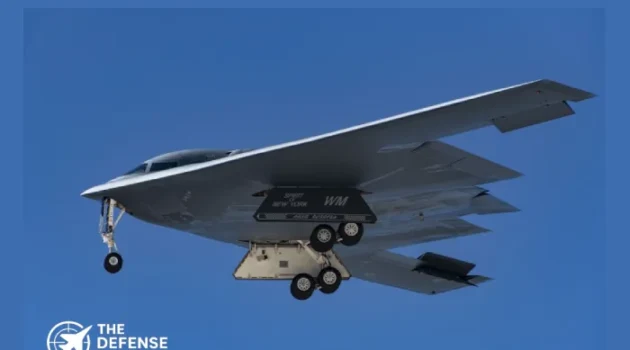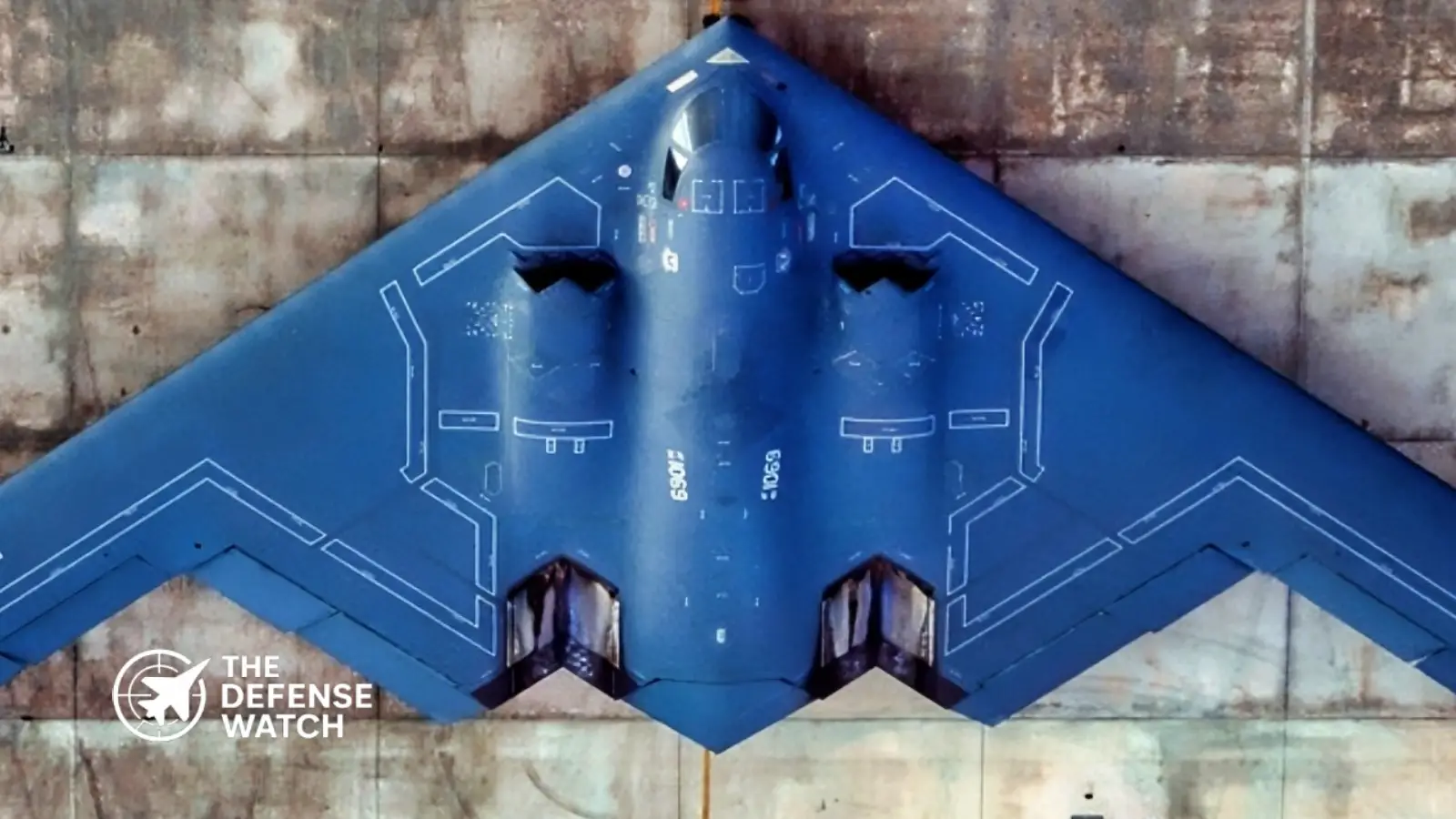
China’s B-2-Sized Stealth Drone Spotted at Secret Xinjiang Base — And It’s Not Alone
China’s stealth flying-wing drone program crossed a significant milestone in the spring of 2026, when commercial satellite imagery captured two large unmanned aircraft simultaneously operating outside their hangars at a highly secretive military installation deep in the Xinjiang desert. One of those aircraft carries a wingspan that puts it in the same physical category as the United States Air Force’s B-2 Spirit stealth bomber — an aircraft that has long represented the pinnacle of long-range airpower. The images, sourced from Planet Labs and first reported by multiple defense publications, mark the most detailed public glimpse yet into a program that Beijing has worked hard to keep under wraps.
- Satellite imagery taken on March 26, 2026 shows two large stealth flying-wing drones simultaneously operating outside hangars at China’s Malan Air Base in Xinjiang — a first-of-its-kind observation.
- The larger drone, referred to by analysts as the WZ-X, carries an estimated wingspan of approximately 173 feet (52 meters) — placing it in the same size class as the U.S. Air Force’s B-2 Spirit stealth bomber.
- A second aircraft featuring a cranked-kite wing design with a roughly 137-foot (42-meter) wingspan suggests a heavier strike-oriented mission profile with a larger payload capacity.
- A third smaller tailless, fighter-like drone was also observed on the apron alongside a Xi’an Y-20 transport aircraft, indicating multi-platform parallel testing.
- China’s drone activity at Malan coincides with the U.S. Air Force’s Collaborative Combat Aircraft (CCA) program, which targets initial operational fielding around 2028.
The development is not merely a symbolic data point. It reflects a deliberate, well-funded, and accelerating push by the People’s Liberation Army Air Force (PLAAF) to field a new generation of unmanned aircraft capable of conducting long-range surveillance, deep-strike, and electronic warfare missions — with or without a human pilot in the loop. For American defense planners already grappling with the challenge of China’s manned fifth-generation fighters and expanding naval footprint, the maturation of this drone fleet adds a new and complex layer to the strategic calculus in the Pacific.
What the March 2026 Imagery Revealed
The satellite images, taken on March 26, 2026, show two previously identified large stealth drones operating simultaneously at China’s Malan test base in Xinjiang, alongside a third fighter-like unmanned aircraft. This was the first confirmed observation of both large flying-wing platforms outside their hangars at the same time, suggesting a meaningful uptick in test tempo at the facility.
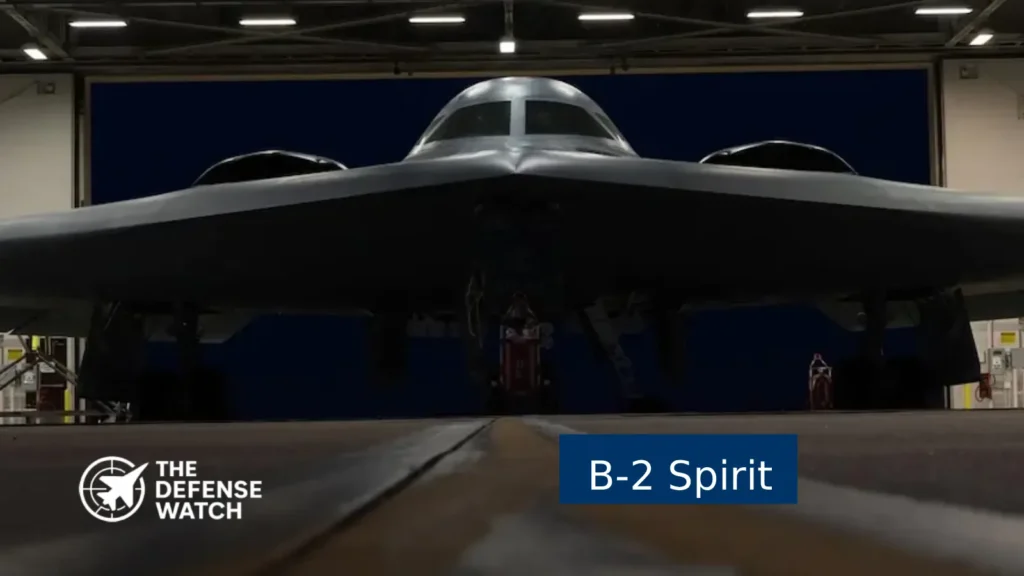
The larger of the two aircraft, sometimes referred to by analysts as the WZ-X, carries an estimated wingspan of roughly 52 meters — approximately 173 feet — placing it in the same general class as the Northrop Grumman B-2 Spirit. Its long, slender wing geometry points toward high-altitude, long-endurance missions, most likely strategic intelligence, surveillance, and reconnaissance (ISR) operations. At that wingspan, the aircraft would be capable of persistent overwatch across vast stretches of ocean or contested territory.
The second aircraft features a cranked-kite wing configuration with a wingspan of approximately 42 meters, or 137 feet. Its broader fuselage and internal volume suggest it is optimized for strike missions and could carry significant weapons payloads or additional fuel for extended-range operations.
Rounding out the scene were a smaller tailless fighter-like drone, roughly comparable to a light tactical aircraft, and a Xi’an Y-20 heavy transport. The fighter-type drone has appeared in prior imagery captured over the past year, confirming it is part of an active and recurring test program rather than a one-off prototype evaluation.
Malan: China’s Most Secretive Aerospace Laboratory
The aircraft are being tested at Malan Air Base, a remote and heavily secured facility in western China that has become a central hub for advanced aerospace programs. The base’s isolated desert location provides both operational security and access to large volumes of restricted airspace, making it ideal for experimental platforms. Historically, Malan has been linked to nuclear weapons development and ballistic missile testing, which underscores the sensitivity and strategic priority attached to everything that happens within its perimeter.
Satellite imagery over the past year has shown a steady increase in activity at the site, including large-scale exercises involving multiple unmanned systems operating alongside conventional aircraft. The presence of several distinct drone types operating concurrently indicates that China is not hedging its bets on a single design but is instead running parallel programs across different mission profiles — ISR, strike, and potentially electronic warfare. That approach carries higher development costs but reduces the risk of a single program failure derailing the entire unmanned air combat agenda.
A Broader Pattern: China’s Unmanned Air Combat Push
The aircraft spotted at Malan do not exist in isolation. They are the most visible manifestations of a broader and highly deliberate Chinese effort to build a full-spectrum unmanned air force.
China has already fielded or tested several similar platforms, including the GJ-11 Sharp Sword, a flying-wing unmanned combat aircraft that was shown in semi-operational configurations only recently. The GJ-11 represents the operational leading edge of China’s stealth drone fleet, but the aircraft at Malan are significantly larger, suggesting that Beijing is not content to stop at tactical-range systems. It is reaching for a strategic unmanned capability.
Other programs — including the CH-7 flying-wing stealth drone and additional loyal wingman-type drones — reveal China’s ambition to integrate unmanned aircraft into future air combat formations, complementing fifth-generation and upcoming sixth-generation fighters by providing additional sensors and weapons capacity. China underscored this intent publicly when it displayed multiple drone concepts during its September 2025 military parade.
Analysis: Why the WZ-X Matters More Than Its Size
The natural headline angle here is the wingspan comparison to the B-2, but the real strategic significance goes deeper than physical dimensions. A drone the size of the B-2 Spirit does not automatically inherit the B-2’s mission — the Spirit carries nuclear gravity bombs and is optimized for penetrating the most sophisticated air defense environments on earth. Whether the WZ-X can replicate that level of low observability remains genuinely unknown from open-source data alone.
What the imagery does confirm, however, is that China is investing in the infrastructure and flight testing required to eventually field such a capability. Development programs of this scale — involving multiple large aircraft types testing simultaneously at a high-security facility — do not emerge overnight. The resources, engineering talent, and organizational commitment behind what is visible at Malan suggest this has been years in the making and that Beijing intends to see it through to operational status.
Equally significant is the parallel development of smaller loyal wingman-type drones at the same site. This mirrors the U.S. Air Force’s Collaborative Combat Aircraft concept almost exactly: pairing autonomous unmanned wingmen with manned or semi-manned aircraft to multiply combat effectiveness and absorb attrition in high-threat environments. China appears to be building toward the same architecture, potentially on a compressed timeline.
How the U.S. Is Responding
Washington is not standing still. The U.S. Air Force’s Collaborative Combat Aircraft program — designed to produce autonomous loyal wingman drones that operate alongside manned fighters — is expected to begin fielding operational systems before the end of the decade, with initial increments projected around 2028.
Those systems are designed to operate in concert with the Next Generation Air Dominance platform, which will provide additional sensors and electronic warfare capabilities, among other upgrades. The F-47, as the NGAD has come to be known, combined with CCA drones, represents the American answer to exactly the kind of manned-unmanned teaming concept now visible at Malan.
On the ISR side, the U.S. has been operating the highly classified Northrop Grumman RQ-180 for high-altitude, stealthy reconnaissance missions, with its existence now publicly confirmed. Earlier in 2026, the secretive platform was spotted flying over Greek airspace. Unlike many of its Chinese counterparts, the RQ-180 is understood to have completed over a decade of operational development and is likely already integrated into combatant command intelligence architecture.
The gap between the two nations’ programs is narrowing, but the United States retains meaningful advantages in operational maturity, systems integration experience, and the depth of institutional knowledge that comes from decades of running large stealth programs through full development cycles. The critical variable in the coming years will be whether China’s accelerated parallel development approach can close that experience gap before U.S. programs fully mature.
Strategic Implications for the Indo-Pacific
The emergence of B-2-class stealth drones in China’s test inventory arrives at a moment when the Indo-Pacific is already under intense strategic strain. A long-range, high-altitude stealth ISR drone operating from mainland China could extend persistent surveillance coverage deep into the Philippine Sea, the second island chain, and potentially well beyond, all without the political and diplomatic risk associated with deploying manned aircraft in contested or ambiguous airspace.
A credible long-range unmanned strike capability would compound this challenge significantly. It would complicate American force projection planning, increase the demands on allied integrated air defense networks, and potentially shift deterrence calculations in a crisis. The U.S. and its regional partners — Japan, Australia, South Korea, and the Philippines in particular — will be watching the pace of operational testing at Malan very closely in the months ahead.
The aircraft spotted in those March 26 satellite frames are not yet operational weapons systems. But they are closing in on that threshold, and the trajectory is unmistakable.
FAQs
What is the WZ-X drone and why does its wingspan matter?The WZ-X is an undesignated large Chinese stealth flying-wing drone observed at Malan Air Base. Its estimated 173-foot wingspan places it in the same physical class as the B-2 Spirit, signaling China’s ambition to develop long-range, strategic unmanned aircraft.
Where is Malan Air Base and why is it significant?Malan is a remote, heavily secured military installation in China’s Xinjiang region. It has historically hosted some of China’s most sensitive aerospace programs, including nuclear and hypersonic development, making it a primary hub for advanced experimental aircraft.
How does this compare to U.S. stealth drone programs?The U.S. operates the classified RQ-180 high-altitude stealth reconnaissance drone and is developing CCA loyal wingman systems under the Air Force’s collaborative combat aircraft program. The U.S. holds advantages in operational maturity, but China’s parallel program structure is compressing the development timeline.
Does China’s drone fleet threaten U.S. assets in the Pacific?Not immediately in operational terms, but the strategic trend is significant. Long-range stealth drones capable of persistent ISR and potential strike missions would expand China’s reach across the Indo-Pacific and complicate U.S. force projection planning considerably.
What is the Cranked-Kite wing design seen on the second drone?A cranked-kite wing is a specific flying-wing geometry that balances aerodynamic efficiency with internal volume, making it well-suited for carrying heavy payloads such as weapons or fuel. It has been used on concepts like the canceled U.S. Navy UCLASS program and is a common design choice for long-range unmanned combat aircraft.