Executive Summary:
The United States has approved the transfer of Bell 505 training helicopters to the Philippine Air Force to expand pilot training capacity. The move supports Manila’s ongoing military modernization and addresses growing demand for trained aircrew amid regional security pressures.
US Approves Bell 505 Helicopters For Philippine Air Force Training Expansion
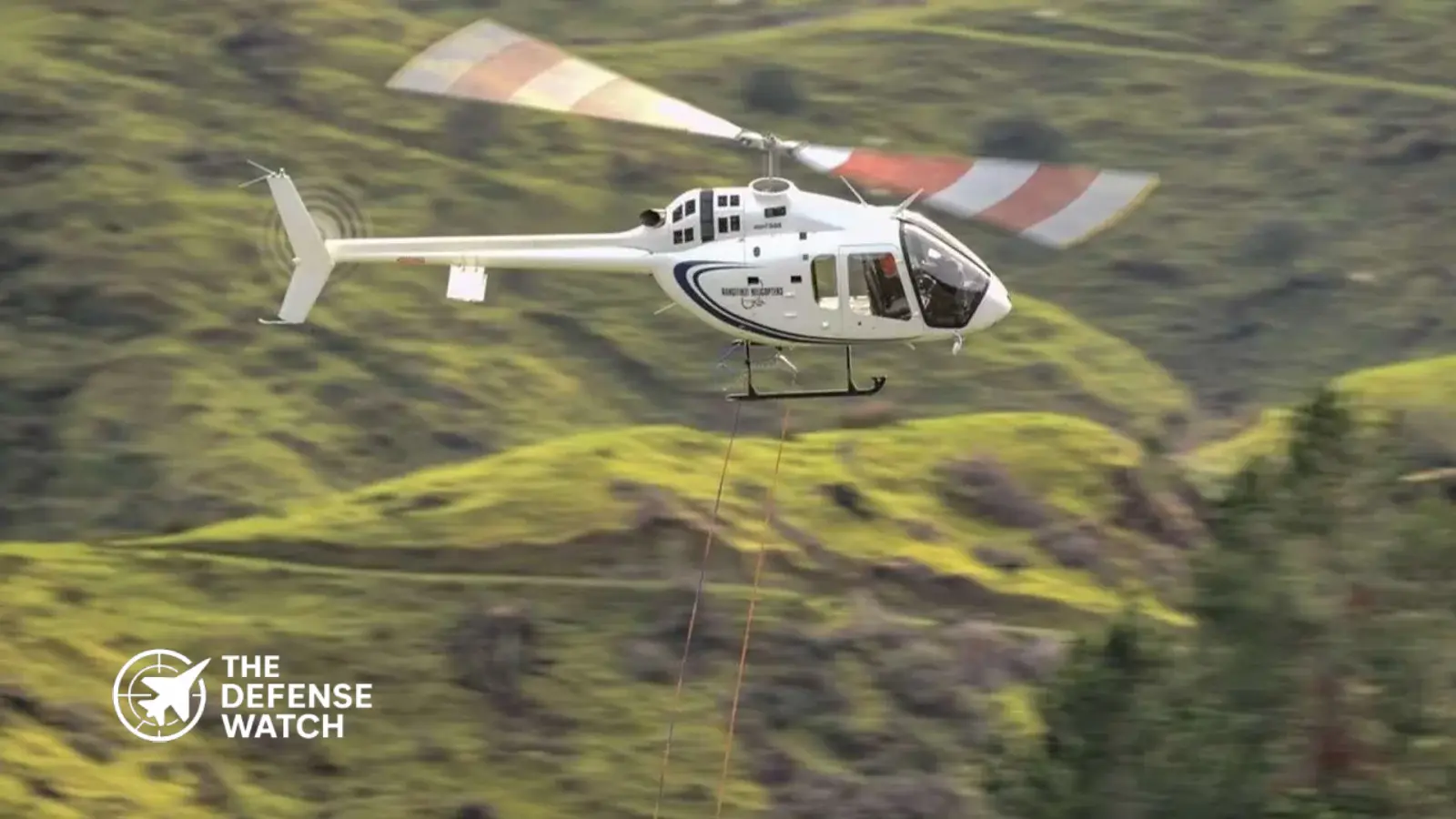
The Bell 505 helicopters Philippines program marks a significant step in strengthening the Philippine Air Force’s pilot training pipeline, as Washington authorizes the transfer of light training helicopters produced by Bell Textron.
The approval supports Manila’s broader effort to modernize its air capabilities while addressing a persistent shortage of trained rotary-wing pilots. The Bell 505, a lightweight, single-engine helicopter, is widely used for basic and advanced flight training due to its modern avionics and cost efficiency.
Addressing A Critical Training Bottleneck
The Philippine Air Force training expansion comes at a time when the service is increasing its operational tempo across multiple mission sets, including maritime security, disaster response, and counterinsurgency.
Training capacity has emerged as a limiting factor. Even as the Philippines acquires new aircraft, pilot production has struggled to keep pace. The Bell 505 fleet is expected to ease this bottleneck by providing a reliable, modern training platform.
The aircraft features a fully digital glass cockpit and advanced flight controls, allowing trainee pilots to transition more easily to frontline platforms. Compared to legacy trainers, the Bell 505 reduces maintenance demands while improving training efficiency.
From an operational perspective, this investment reflects a shift from platform acquisition alone toward building sustainable human capital in aviation units.
Strategic Context: Modernization Amid Regional Pressure
The Bell 505 helicopters Philippines deal aligns with Manila’s ongoing military modernization program, which has gained urgency amid rising tensions in the South China Sea.
While the helicopters themselves are not combat assets, their impact is strategic. Increasing the number of qualified pilots directly enhances the Philippine Air Force’s ability to deploy and sustain operations across its archipelagic territory.
The United States has steadily expanded defense cooperation with the Philippines in recent years, including increased access to bases under the Enhanced Defense Cooperation Agreement (EDCA). This approval reinforces that partnership through practical capability development rather than high-profile weapons systems.
In this context, training platforms like the Bell 505 serve as force multipliers, enabling more effective use of existing and future aircraft.
Technical Overview Of The Bell 505 Platform
The Bell 505, also known as the Jet Ranger X, is designed for versatility and ease of operation. Key features include:
- Single-engine configuration optimized for training and light utility missions
- Garmin G1000H NXi avionics suite for advanced pilot instruction
- High visibility cockpit, improving situational awareness for trainees
- Low operating costs compared to larger training helicopters
These characteristics make the Bell 505 particularly suitable for nations seeking to scale pilot training without significantly increasing sustainment burdens.
For the Philippine Air Force, the platform bridges the gap between basic flight instruction and transition to more complex helicopters used in operational roles.
Operational Impact And Long-Term Benefits
The Philippine Air Force training expansion enabled by the Bell 505 is expected to deliver several long-term benefits:
First, it increases annual pilot output, reducing reliance on limited training slots and shortening qualification timelines.
Second, it standardizes training using modern avionics, aligning pilot skills with contemporary aircraft systems.
Third, it enhances readiness across multiple mission areas by ensuring a steady pipeline of qualified aircrew.
From a defense planning perspective, investments in training infrastructure often yield higher returns than additional platform acquisitions alone. Without trained personnel, new aircraft cannot be effectively utilized.
Analysis: Training As A Strategic Enabler
The approval of the Bell 505 helicopters Philippines program highlights a broader trend in U.S. security assistance: prioritizing capacity building over purely hardware-focused transfers.
Rather than supplying high-end combat systems, Washington is enabling partner nations to strengthen foundational capabilities. In the Philippine case, pilot training directly supports:
- Maritime domain awareness operations
- Rapid disaster response in a typhoon-prone region
- Distributed air operations across island chains
This approach also improves interoperability with U.S. forces, as pilots trained on modern systems can integrate more easily into joint exercises and missions.
At the same time, the relatively low-profile nature of training helicopter transfers reduces escalation risks in sensitive regions, offering a pragmatic balance between capability enhancement and geopolitical stability.
Conclusion
The Bell 505 helicopters Philippines approval underscores the importance of training infrastructure in modern military capability development. By expanding pilot training capacity, the Philippine Air Force is positioning itself to better utilize current and future aviation assets.
For the United States, the move reinforces a strategy focused on sustainable partner capacity rather than short-term capability boosts. As regional dynamics continue to evolve, investments in training platforms like the Bell 505 may prove as critical as frontline systems in shaping long-term defense readiness.
Executive Summary:
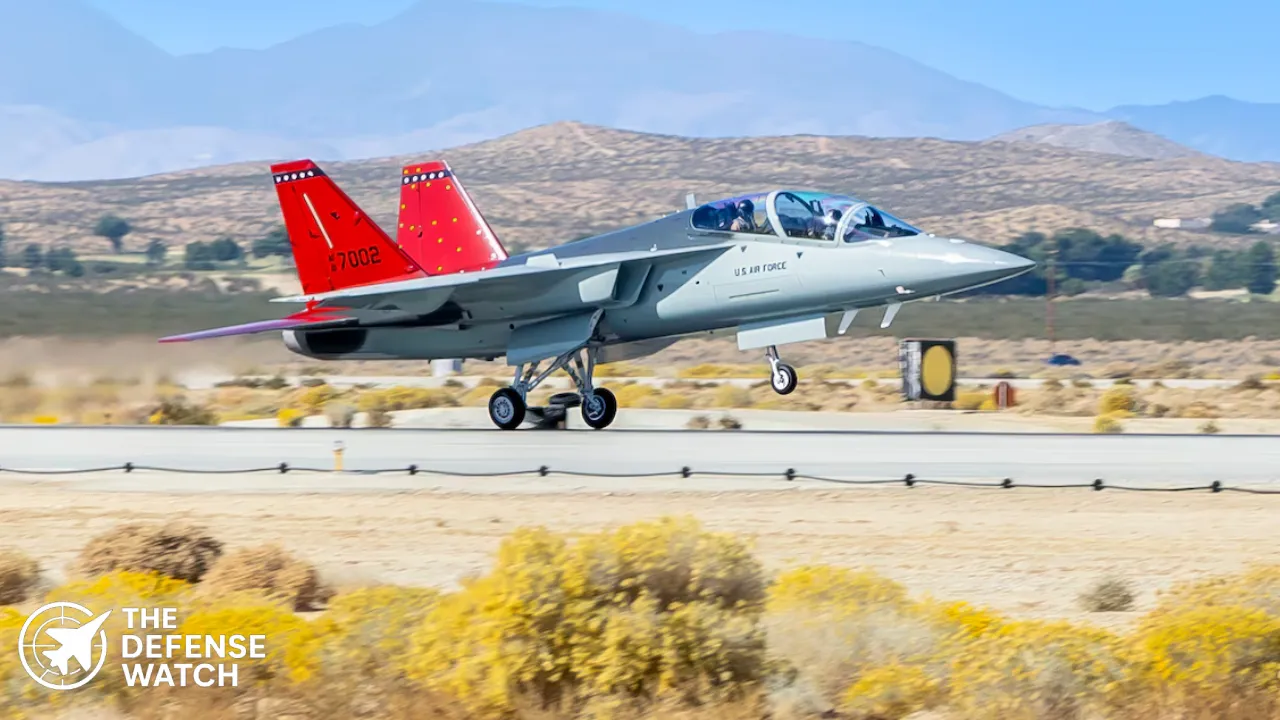
The U.S. Air Force has approved the T-7A Red Hawk for full-rate production, marking a critical milestone in its pilot training modernization program. Developed by Boeing, the aircraft will replace the aging T-38 Talon fleet. The move is intended to align pilot training with the demands of fifth-generation combat aircraft.
T-7A Red Hawk Cleared for Production
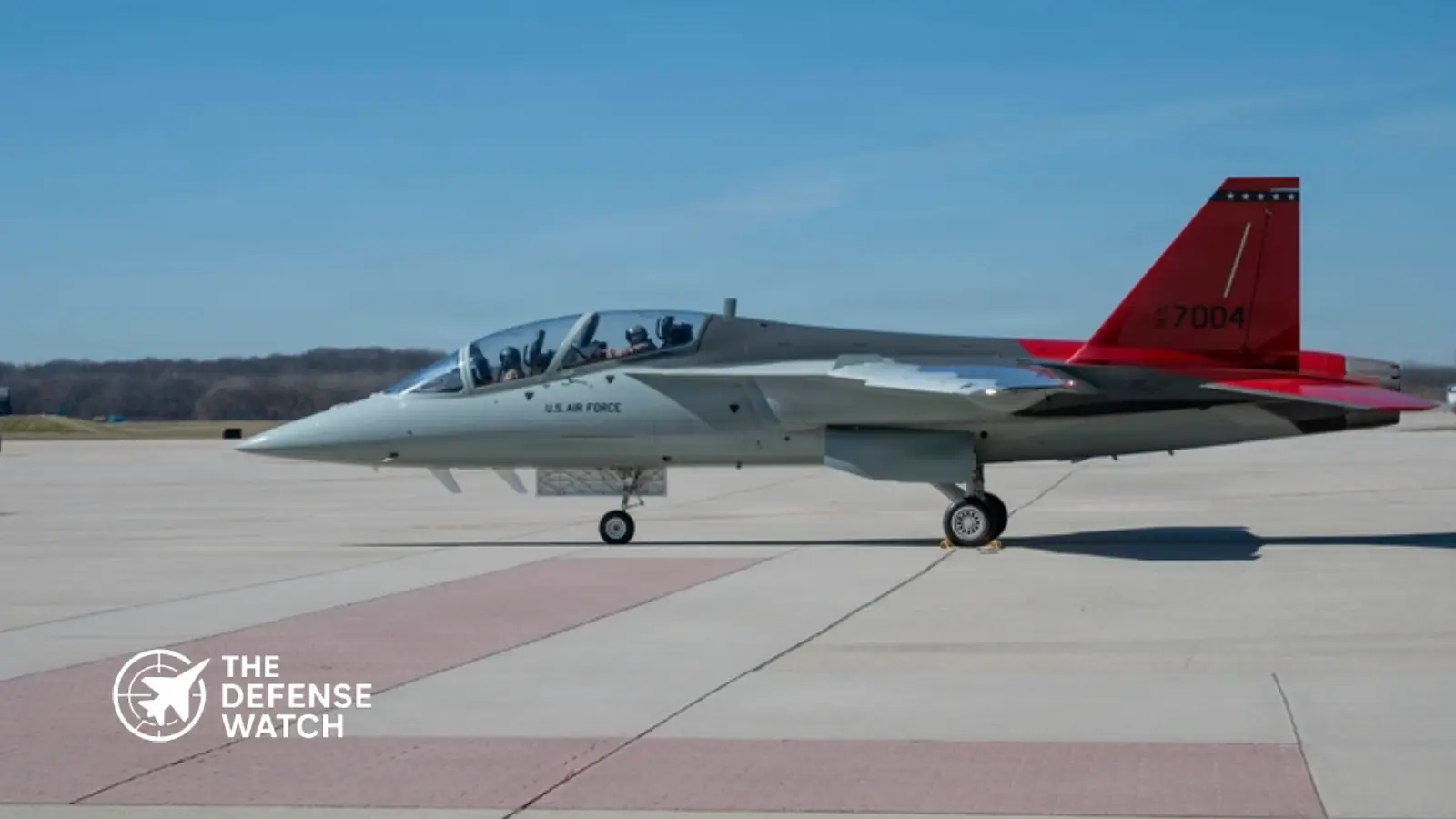
The T-7A Red Hawk program has reached a decisive stage, with the U.S. Air Force authorizing full-rate production following years of development and testing. The approval confirms that the aircraft meets operational requirements for advanced pilot training.
The T-7A is designed to prepare pilots for modern combat platforms such as the F-35 and F-22. It introduces a digital architecture, advanced avionics, and embedded simulation systems that reflect real-world combat environments.
This milestone follows extensive flight testing and system validation, ensuring the platform is ready for scaled manufacturing and operational deployment.
Replacing the Legacy T-38 Talon
The T-7A will replace the long-serving Northrop T-38 Talon, which has been in service since the 1960s.
Key limitations of the T-38:
- Aging airframes with rising maintenance costs
- Limited ability to simulate modern combat scenarios
- Outdated cockpit and avionics systems
The T-7A addresses these gaps with a modern, flexible training system designed for current and future air combat requirements.
Comparison: T-7A Red Hawk vs T-38 Talon
Feature T-7A Red Hawk T-38 Talon Range ~1,830 km ~1,800 km Payload Training systems, simulation suite Limited training payload Status Approved for full production (2026) Operational, nearing retirement Key Technology Digital engineering, embedded simulation Analog systems, legacy avionics Advanced Features and Training Capabilities
The T-7A introduces several technological improvements that redefine pilot training.
Key advantages:
- Digital engineering design, reducing development time and lifecycle costs
- Open architecture systems for rapid upgrades
- Embedded virtual simulation, allowing pilots to train for complex combat scenarios without additional aircraft
- Glass cockpit with large-area displays similar to fifth-generation fighters
- High-G performance envelope to better prepare pilots for frontline aircraft
These features allow the Air Force to compress training timelines while improving pilot readiness.
Industrial and Program Significance
The T-7A program is notable for its use of digital engineering from inception. Boeing and its partners leveraged model-based design to accelerate development and reduce production risks.
The aircraft is expected to be produced at scale, with dozens of units planned annually as the Air Force transitions away from legacy trainers.
The program also supports long-term sustainment efficiency, with maintainability and modular upgrades built into the design.
Strategic Context: Preparing for Future Air Warfare
The approval of the T-7A comes amid growing emphasis on peer competition and high-end warfare scenarios.
Modern air combat requires pilots trained to operate:
- Fifth-generation fighters like the F-35
- Network-centric warfare systems
- Multi-domain operations involving cyber and space assets
The legacy T-38 cannot replicate these conditions. The T-7A bridges that gap by integrating live, virtual, and constructive training environments.
This aligns with broader U.S. defense priorities focused on readiness against near-peer adversaries such as China and Russia.
Outlook
With full-rate production approved in 2026, the T-7A Red Hawk is set to become the backbone of U.S. Air Force pilot training for decades. Initial operational units are expected to expand as production ramps up.
The platform’s modular design also positions it for potential export opportunities, as allied nations seek modern training solutions compatible with advanced fighter fleets.
Overall, the T-7A represents a generational shift in how air forces prepare pilots for increasingly complex combat environments.
Babcock Wins French Military Pilot Training Contract To Expand Air Force And Navy Flight Instruction
Babcock Wins French Military Pilot Training Contract
Babcock secures French military pilot training contract to provide theoretical and flight instruction for student pilots, weapons systems officers, and simulator instructors, reinforcing its role in French military aviation training.
Contract Details And Scope
British defence and aerospace firm Babcock France has been awarded a new pilot training contract by the French Armed Forces Commissariat Service to support both the French Air and Space Force and the French Navy.
Under the agreement, Babcock will deliver classroom instruction and hands-on flight training for student pilots, weapons systems officers, and personnel training to instruct on simulators.
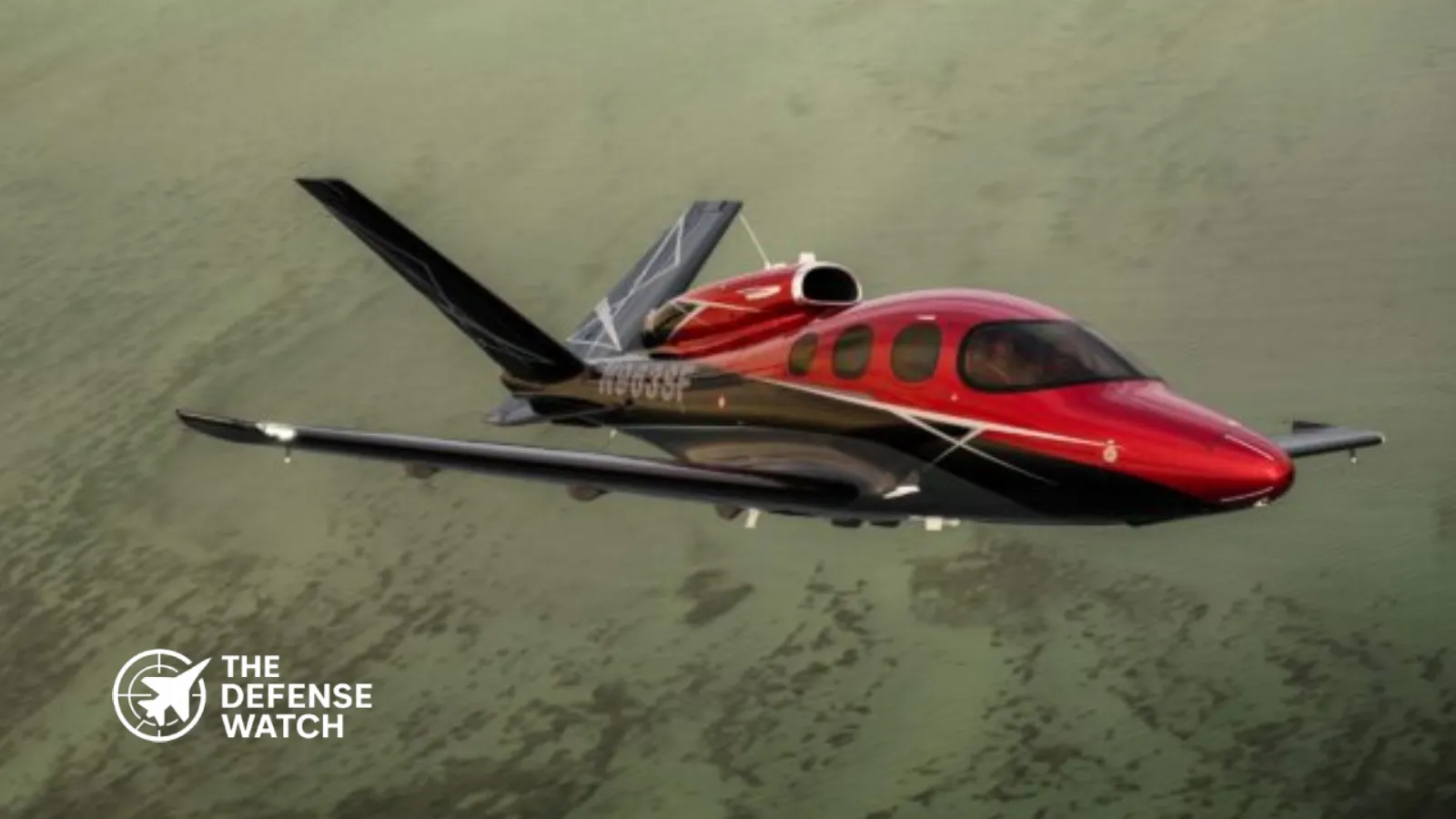
Training will take place using light aircraft at key French air bases. At Salon-de-Provence Air Base, Babcock will use Cirrus SR22 aircraft for early stage pilot instruction, while advanced training will build on experience with Grob 120 trainers at Cognac Air Base.
Pierre Basquin, Chief Executive aviation and CEO France at Babcock, said the award reflects the company’s established expertise in aviation training and expands its role within French military aviation support.
Context Within Broader French Training Modernization
This latest contract builds on Babcock’s long-term involvement in French military pilot education. Over the past year, Babcock France won a major 17-year Mentor 2 contract to modernize initial pilot training using 22 Pilatus PC-7 MKX aircraft and deliver advanced flight simulation systems at Salon-de-Provence.
Under Mentor 2, advanced simulators supplied by French firm Exail are part of the training pipeline, integrating mixed-reality technology to enhance realism and reduce training times.
France’s Direction Générale de l’Armement announced the Mentor 2 award in January 2025, aiming to centralize early pilot instruction and take advantage of modern aircraft and simulator technology.
Strategic Importance
The new Babcock training contract aligns with ongoing efforts by the French Armed Forces to update and expand their military aviation training systems. Reinforcing pilot and weapons systems officer education supports France’s broader readiness and interoperability goals within NATO and international missions.
By combining classroom work, light aircraft training, and advanced simulators, the contract reflects a comprehensive approach to developing military aviators able to operate modern platforms. Babcock’s role as a key training partner underscores the importance of industry expertise in sustaining long-term defense preparedness.
U.S. Air Force T-7A Red Hawk Delivery Marks Key Training Milestone
The U.S. Air Force has received its second T-7A Red Hawk trainer aircraft, marking another step in the service’s effort to modernize pilot training and replace the decades-old T-38 Talon fleet. The delivery was confirmed by industry and defense sources, which reported the aircraft’s arrival as part of the Air Force’s ongoing test and evaluation program.
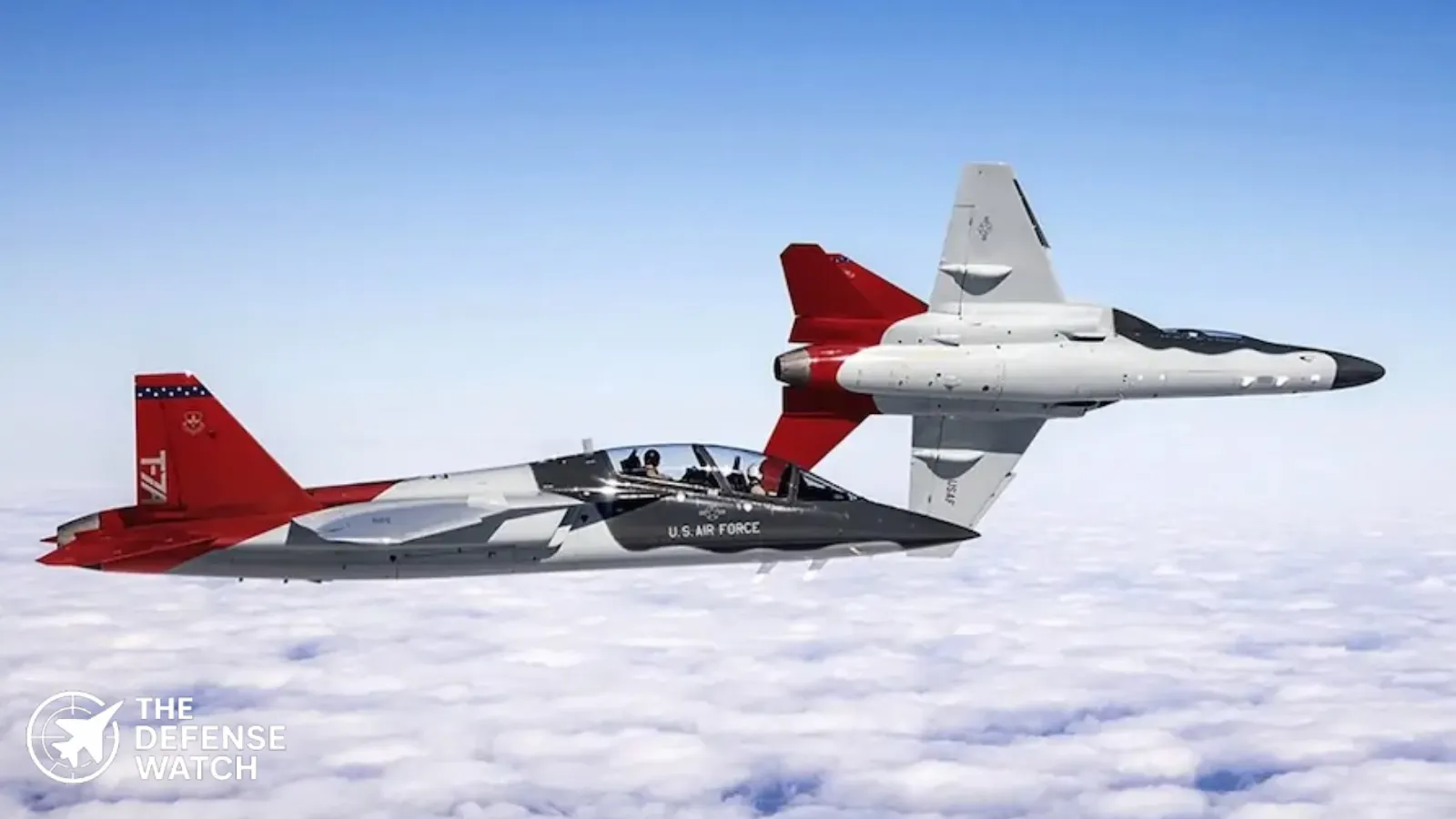
Developed by Boeing in partnership with Sweden’s Saab, the T-7A Red Hawk is designed to prepare pilots for fifth-generation and future combat aircraft, including the F-35 and the Next Generation Air Dominance platform. The program is a cornerstone of the Air Force’s broader training modernization push.
Building Momentum After First Delivery
The second T-7A follows the initial delivery made earlier under the Engineering and Manufacturing Development phase of the program. Together, the first two aircraft will support developmental testing, software validation, and early training system integration.
According to the U.S. Air Force, the T-7A Red Hawk introduces a digital-first design approach. The aircraft was developed using advanced model-based engineering, allowing rapid updates to software and avionics. This approach is intended to shorten development timelines and reduce long-term sustainment costs.
The Air Force plans to acquire more than 350 T-7A aircraft to fully replace the T-38, which entered service in the early 1960s and is increasingly expensive to maintain.
Designed for Modern Air Combat Training
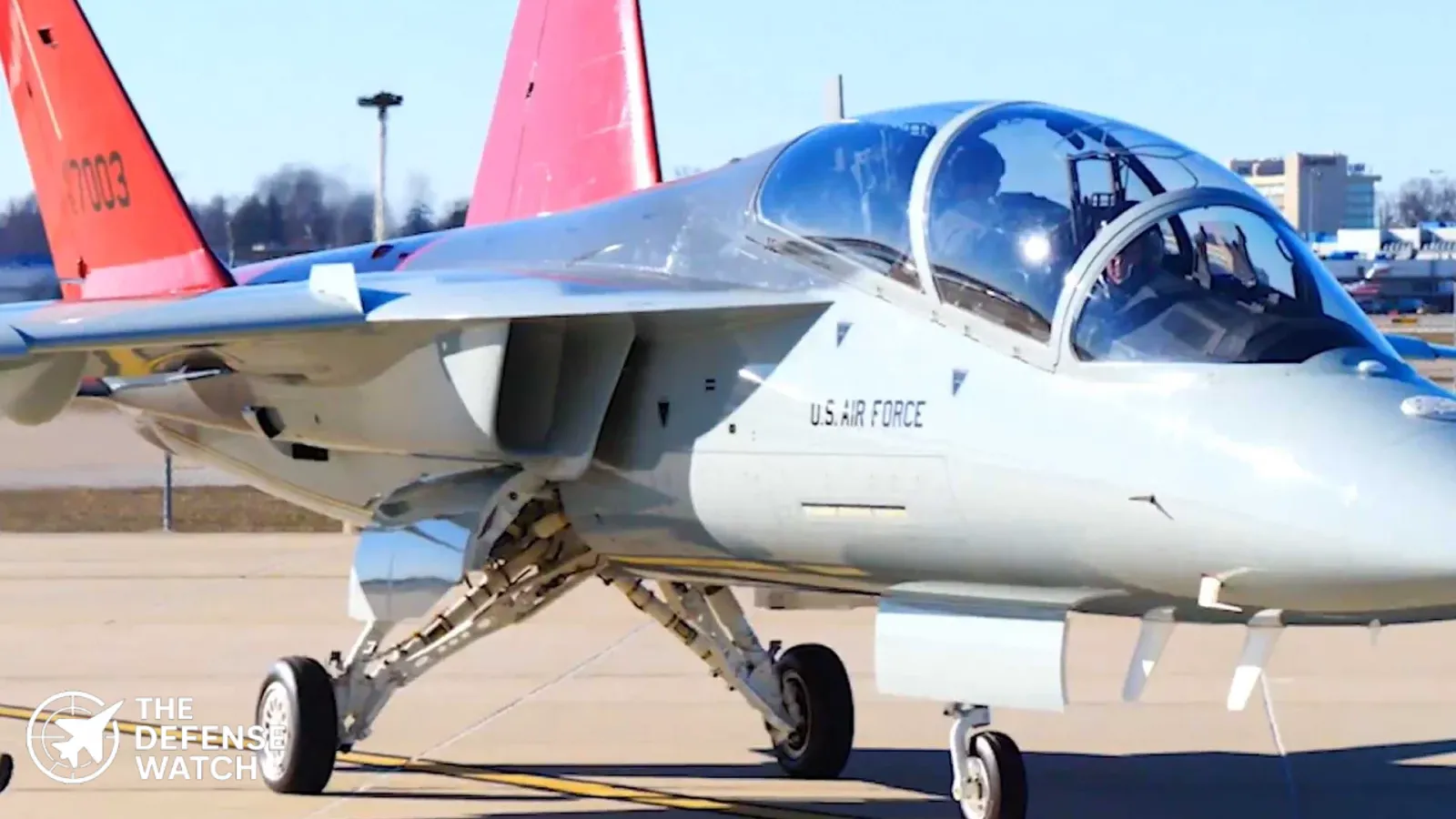
The T-7A Red Hawk trainer aircraft is built to replicate the handling, sensors, and workload of modern fighter jets. It features an open-architecture avionics system, embedded training capability, and advanced human-machine interfaces.
These features allow student pilots to train in a more realistic environment before transitioning to frontline aircraft. Air Force officials have emphasized that legacy trainers can no longer adequately prepare pilots for the demands of modern air combat, particularly against near-peer competitors.
The U.S. Air Force T-7A Red Hawk is also expected to reduce training bottlenecks by improving aircraft availability and reliability, a persistent challenge with the aging T-38 fleet.
Program Challenges and Adjustments
While the delivery marks progress, the T-7A program has faced schedule pressures in recent years. Issues related to ejection seat design, software maturity, and certification requirements have contributed to delays.
Boeing has acknowledged these challenges and stated that corrective actions are underway. The company has also taken a financial charge on the program, reflecting higher-than-expected development costs. Despite these setbacks, the Air Force has reaffirmed the importance of the T-7A as a long-term investment in pilot readiness.
The arrival of the second aircraft suggests incremental recovery and continued confidence in the platform’s future role.
Strategic Importance for the Air Force
Modernizing pilot training is a strategic priority for the U.S. Air Force as it prepares for high-end conflict scenarios. Advanced aircraft such as the F-35 demand pilots who are comfortable with sensor fusion, data-heavy cockpits, and networked operations from day one.
The T-7A Red Hawk is intended to serve as the foundation of that training pipeline. Once fully fielded, it will be paired with ground-based simulators and academic systems to create an integrated training ecosystem.
Defense analysts note that delays in trainer modernization can have downstream effects on force readiness, making each delivery a closely watched milestone.
What Comes Next
With two aircraft now delivered, the Air Force and Boeing will continue flight testing and system validation through 2026. Additional deliveries are expected as the program moves toward initial operational capability later in the decade.
If successful, the T-7A Red Hawk could also attract international interest, particularly from air forces seeking to replace older jet trainers and align training with fifth-generation fighters.
Textron Systems has won a U.S. Air Force order to deliver maintenance training system elements for the T-7A advanced pilot training program, the company announced Dec. 30. The award covers design, development, and production of critical trainer components that will help maintainers build skills for the new training aircraft.
The T-7A Red Hawk is the Air Force’s next-generation advanced pilot trainer, set to replace the legacy T-38C Talon and boost pilot readiness.
Contract Details
Under the work order from Pinnacle Solutions, an Akima company prime on the larger training system effort, Textron Systems will produce the common fuselage structure for three maintenance trainers and complete the Mid-Integrated System Maintenance Trainer and Aft-Integrated System Maintenance Trainer. The base period covers three years and is valued at about $41 million, with options for additional units raising the total to up to $62 million.
The trainers are part of the T-7A Maintenance Training System (MTS), aimed at giving maintainers hands-on practice with removal and installation tasks, visual inspections, subsystem checks, and other skills needed to support the aircraft in service.
Context in Air Force Training Modernization
The broader T-7A training system contract awarded to Pinnacle Solutions last year was reported at about $369 million to design and deliver the full maintenance and training ecosystem for the Red Hawk program. That effort includes advanced simulation, smart classrooms, immersive training technology, and sustainment support.
Textron Systems’ role strengthens the maintenance training element of that overall effort, linking advanced trainer hardware with the Air Force’s push to field a complete pilot and maintainer training infrastructure.
Industry and Program Importance
The T-7A Red Hawk is central to Air Force pilot training modernization. It introduces digital design and manufacturing methods and aims to improve training throughput and readiness for fourth- and fifth-generation aircraft pilots.
Textron Systems brings experience in simulation and sustainment training solutions across military domains. Work on this contract will take place at the company’s maintenance and simulation facility in Goose Creek, South Carolina.
First T-7A Red Hawk lands at JBSA-Randolph
The United States Air Force (USAF) received its first production Boeing–Saab T-7 Red Hawk on December 5, 2025 at Joint Base San Antonio-Randolph (JBSA-Randolph), Texas. The aircraft touched down at the 12th Flying Training Wing, marking the beginning of a new generation in Air Force pilot training.
The delivery is a significant milestone in the USAF’s long-planned shift away from legacy trainers that have served for decades.
Background: Why the T-7A matters
For more than six decades, the USAF has relied on the aging Northrop T-38 Talon as its advanced jet trainer — a platform first introduced in the 1960s.
In 2018, the Air Force awarded a roughly USD 9.2 billion contract to Boeing for a new fleet: 351 T-7A trainers, along with 46 simulators and associated training infrastructure.
The T-7A Red Hawk is built using modern digital design and manufacturing methods. Its architecture supports a fully integrated training system combining live, virtual, and constructive (LVC) elements such as advanced simulators and mission software — capabilities that better prepare pilots for fifth- and future-generation fighters and bombers.
What the Arrival Means — Details
According to official statements, the arrival of the first T-7A at JBSA-Randolph is the “first physical representation of progress” within the program.
The jet will be assigned to the 99th Flying Training Squadron (99 FTS), known as the “Red Tails,” which will spearhead integration of the trainer into the USAF pilot pipeline.
While the aircraft has arrived, full-scale training has yet to begin. According to the USAF, instructor pilots must first familiarize themselves with the new platform and maintainers must be trained on logistics, maintenance, and support.
The full Program of Record envisions 351 T-7A aircraft supported by ground- and simulator-based training systems. Over several years, as more jets are delivered, the plan is to phase out the legacy T-38C fleet and eventually consider replacing even the turboprop T-6 Texan II for some training missions.
Brig. Gen. Matthew Leard, director of AETC Plans, Program, Requirements and International Affairs, said this delivery is the first tangible indicator that the long-awaited transformation of pilot training is beginning. He emphasized that training and maintenance infrastructure is being built in parallel with deliveries — a shift from past programs that waited for full production before ramping up support.
What Makes the T-7A Red Hawk Different
The T-7A Red Hawk brings several significant improvements over the T-38C:
- Modern Design & Performance: The Red Hawk features twin tails, leading-edge root extensions and slats for improved handling at low speeds — better approximating the flight envelope of modern fighters.
- Increased Power: Its single engine produces nearly three times the thrust of the twin engines on the T-38C Talon.
- Digital, Integrated Training System: Whereas older trainers were primarily airframes with limited avionics, the T-7A comes with state-of-the-art integrated flight simulators, advanced visual systems, mission-system software, and facilitates live-virtual-constructive training.
- Future-Proof and Upgradable: The aircraft’s open-architecture software and digital systems are designed to evolve, enabling integration of new training modules or mission profiles such as aggressor or light attack variants if required.
According to Boeing, the T-7A represents a “multi-generational leap” in pilot training, offering low-risk, cost-effective, and highly capable training — a major upgrade over legacy platforms that are decades old.
Strategic Implications and What Comes Next
The delivery of the first T-7A Red Hawk marks a critical turning point in how the USAF trains its future fighter and bomber pilots. For decades, new pilots have had to transition from training jets such as the T-38 or T-6 directly to high-performance fourth-, fifth-, or sixth-generation combat aircraft — a steep leap that often requires additional on-the-job training. The T-7A fills that gap by better bridging training to operational jets.
Over the next several years, as more T-7As arrive and simulators come online, the USAF can expect reduced training bottlenecks, improved readiness, and a pipeline better aligned with modern and future air combat demands. The program’s roadmap foresees deliveries ramping up through the early 2030s; once fully fielded, the T-7A will become the backbone of advanced pilot training across multiple USAF bases.
Additionally, the growth of the T-7A program lays the groundwork for potential expansion: given its flexible digital architecture, the trainer could adapt over time to evolving mission requirements — providing the USAF with a long-term training and preparation platform.
Conclusion
The arrival of the first production T-7A Red Hawk at JBSA-Randolph on December 5, 2025, represents a landmark achievement for the U.S. Air Force and its pilot training enterprise. As the cornerstone of a broader modernization effort, the Red Hawk promises to deliver more realistic, flexible, and future-ready training for the next generation of aircrew — enhancing readiness for fifth- and sixth-generation fighters and beyond. As deliveries scale over the coming years, the impact will steadily reshape the structure and effectiveness of USAF pilot training for decades.