Executive Summary:
The UK Ministry of Defence has opened the procurement process for a new Royal Air Force advanced jet trainer, beginning a technical dialogue with potential suppliers on Aug. 7, 2026. The program is intended to replace the RAF’s Hawk fleet while preparing pilots for future fourth, fifth and sixth-generation combat aircraft, with the Boeing Saab T-7A Red Hawk among the aircraft positioned for the competition.
UK Opens RAF Advanced Jet Trainer Procurement
The RAF advanced jet trainer replacement program has formally entered the procurement process as the UK prepares to replace its aging Hawk fleet and update the training pipeline for future combat aircraft.
According to Defence Industry Europe, the Ministry of Defence began a technical dialogue with prospective suppliers on Aug. 7, with interested companies required to submit documentation by Sept. 11. The process could lead to a relatively rapid procurement decision as the RAF approaches the planned retirement of its Hawk aircraft.
The move follows the UK’s 2025 Strategic Defence Review, which specifically called for the Hawk T1 and Hawk T2 to be replaced with a cost-effective fast jet trainer and said the existing fast jet training arrangements needed urgent revision.
The requirement is broader than simply replacing an aircraft. The future system will have to support the training of pilots destined for increasingly sophisticated combat aircraft, while integrating modern synthetic and digital training technologies.
Hawk Replacement Becomes a Priority
The RAF currently uses the Hawk T2 as its advanced fast jet trainer. The aircraft provides two-seat training and uses advanced avionics and synthetic radar to replicate aspects of frontline combat aircraft such as the Eurofighter Typhoon.
BAE Systems describes the Hawk as a training platform capable of simulating radar, weapons and defensive systems associated with frontline fighters, helping pilots transition from training aircraft to operational fast jets.
The UK has continued to invest in Hawk support. In 2022, BAE Systems received an 11-year, £590 million contract covering support for the RAF Hawk fleet, including availability support for Hawk T2 aircraft and maintenance for the Red Arrows’ Hawk T1s.
But continued support does not eliminate the longer-term requirement for a replacement.
The older Hawk T1 aircraft used by the Red Arrows are scheduled to leave service by the end of 2030, according to the latest reporting on the procurement program. That creates a second requirement alongside conventional pilot training: the RAF must identify a future platform capable of supporting its aerobatic display team.
T-7A Red Hawk Emerges as a Major Contender
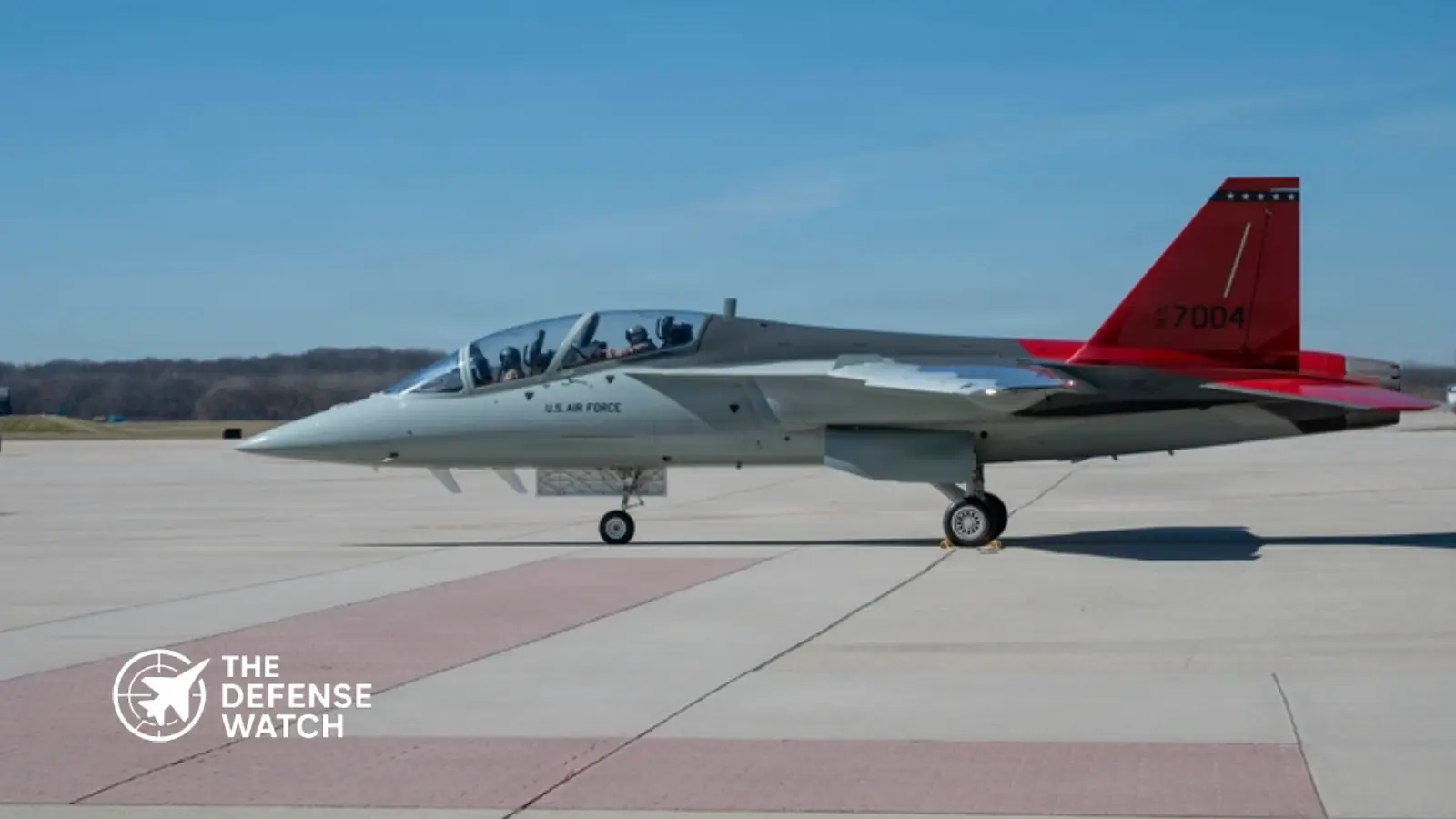
The Boeing Saab T-7A Red Hawk is one of the most significant potential candidates because it already exists as a modern advanced jet training system and has been selected by the U.S. Air Force.
In May 2026, the T-7A received U.S. Air Force Milestone C approval, clearing the program to enter low-rate initial production. Boeing’s current U.S. program calls for 351 aircraft, supported by 46 training systems and associated infrastructure under the original $9.2 billion contract awarded in 2018.
The first T-7A was formally inducted into U.S. Air Force service at Joint Base San Antonio Randolph in January 2026. The aircraft is intended to replace the T-38 Talon and train future fighter and bomber crews.
T-7A Red Hawk at a Glance
Area T-7A Red Hawk Primary role Advanced pilot training Manufacturer Boeing, with Saab as development partner U.S. customer U.S. Air Force U.S. planned fleet 351 aircraft Configuration Single engine, two-seat Cockpit Stadium seating Training architecture Live, virtual and constructive Controls Digital fly-by-wire Production status Low-rate initial production authorized UK industrial proposal Boeing, Saab and BAE Systems The T-7A’s importance to the British competition also comes from its digital architecture. Boeing describes the aircraft as a digitally designed, built and tested training system with an open architecture and integrated live, virtual and constructive training capabilities.
That approach could allow the UK to connect aircraft flying with ground-based simulation and other synthetic training environments rather than treating the trainer as a standalone aircraft.
Boeing, Saab and BAE Systems Build UK Industrial Offer
Boeing and Saab are not approaching the UK requirement alone.
BAE Systems, Boeing and Saab announced in 2025 that they would collaborate on a UK fast jet trainer proposal centered on the T-7 platform. The companies said the proposed arrangement would integrate live and synthetic training and explore expansion of the UK supply chain. BAE Systems would lead the UK activity, including a proposed UK-based final assembly capability.
The partnership is significant because UK industrial participation is an explicit consideration in the new procurement process.
The latest reporting indicates that Leonardo is another potential participant, while Korea Aerospace Industries is seeking British partners for a possible proposal. Turkish Aerospace Industries could also compete with the Hürjet advanced trainer.
This means the RAF competition is likely to assess more than aircraft performance.
The Ministry of Defence will have to consider training-system integration, delivery schedules, through-life support, industrial participation, infrastructure requirements and the ability of each candidate to fit into Britain’s broader fast jet training architecture.
Training Requirements Are Changing
The RAF’s requirement is emerging at a time when pilot training is becoming increasingly dependent on synthetic environments.
The service introduced mixed-reality technology at RAF Valley in 2026 to upgrade 11 training devices used by Hawk T2 and Texan aircraft students. The system allows trainees to practice activities such as formation flying and low-level navigation while interacting with physical cockpit equipment and virtual environments. The RAF said the program could save up to £4 million annually in training costs.
That development provides important context for the new trainer competition.
The next RAF trainer is unlikely to be evaluated only on traditional measures such as speed, handling characteristics and cockpit layout. Its ability to work within a connected training environment could be equally important.
For pilots destined for aircraft such as the F-35B, Eurofighter Typhoon and eventually next-generation combat aircraft, the training system needs to introduce increasingly complex sensor, information-management and tactical concepts before students reach operational conversion units.
The UK government’s earlier Military Flight Training System followed a similar philosophy, using multiple aircraft types and synthetic training to progressively prepare pilots for frontline aircraft.
Why the Competition Matters to U.S. Defense Strategy
The British trainer competition also has implications beyond the RAF.
The T-7A is already a U.S. Air Force program, giving Washington and London an opportunity to potentially align parts of their pilot-training architecture around a common aircraft and broader training ecosystem.
That could offer advantages in areas such as interoperability, instructor familiarity, logistics, training development and future upgrades, although any UK acquisition would still require a separate assessment of British requirements and industrial arrangements.
The T-7A’s development is also relevant because the U.S. Air Force has now moved the aircraft into low-rate initial production. That reduces one major procurement risk compared with an aircraft that remains entirely at the design or prototype stage.
At the same time, the UK would need to evaluate the aircraft independently. A platform designed primarily around U.S. Air Force requirements does not automatically satisfy RAF operational, training, industrial or support requirements.
Delivery Timing Could Shape the Competition
Schedule is one of the most important factors in the British requirement.
The RAF must maintain a credible advanced fast jet training pipeline while transitioning away from its existing Hawk fleet. The Red Arrows’ Hawk T1 retirement timetable adds another deadline to the overall requirement.
The UK’s Strategic Defence Review has already identified replacement of the Hawk T1 and T2 as a priority. The government’s Defence Investment Plan also allocates £860 million for Hawk T1 and T2 capability during fiscal years 2026-27 through 2029-30, underscoring the continuing cost of sustaining the existing fleet during the transition.
For the competing manufacturers, this makes delivery credibility a central issue.
An aircraft with strong performance characteristics but a long introduction schedule could be less attractive than a platform with an established production line and mature training infrastructure.
What Comes Next
The immediate milestone is the Sept. 11 deadline for companies interested in participating in the technical dialogue. The UK will then have to refine its requirement and determine which potential suppliers advance toward the formal competition.
The T-7A enters that process with several advantages, including U.S. Air Force selection, an established Boeing Saab industrial partnership and recent authorization for low-rate production.
Other candidates could compete on different combinations of aircraft capability, cost, industrial participation and delivery schedules.
For the RAF, however, the central objective is clear: replace the Hawk without creating a gap in advanced fast jet training and establish a training system capable of preparing pilots for a combat fleet that is moving toward increasingly connected and digitally enabled operations.
The decision will therefore shape not only which aircraft RAF instructors and students fly, but also how Britain prepares combat pilots for the next generation of air warfare.
Executive Summary:
Saab expects production of the Boeing T-7A Red Hawk advanced trainer to accelerate following the U.S. Air Force’s Milestone C approval, which formally cleared the program to enter low rate initial production. The decision is expected to improve production stability at Saab’s Indiana manufacturing facility, which has experienced reduced activity while the aircraft completed development and testing.
Saab T-7A Red Hawk Production Enters A New Phase After Milestone C
Saab’s T-7A Red Hawk production program is entering a more stable manufacturing phase after the U.S. Air Force approved Milestone C, allowing the advanced trainer aircraft to transition from development into low rate initial production. The approval, announced by the Air Force in May 2026, authorized Boeing to begin building the first production aircraft under a $219 million contract covering 14 aircraft, associated support equipment, simulators, and spares.
For Saab, which manufactures the aircraft’s aft fuselage at its West Lafayette, Indiana facility, the decision represents an important industrial milestone. Company executives have indicated that higher production rates are expected to support a multi year financial recovery for the U.S. operation after several years of lower than anticipated output during program delays.
The T-7A is being jointly developed by Boeing and Saab to replace the U.S. Air Force’s aging T-38 Talon fleet, which has served as the primary advanced jet trainer for more than six decades.
Indiana Factory Positioned For Higher Output
Saab invested heavily in its purpose built manufacturing facility in West Lafayette to support long term T-7A production. The site now serves as the exclusive production location for all production aft fuselage sections after manufacturing transitioned from Sweden to the United States.
Earlier program delays affected manufacturing schedules, resulting in lower factory utilization than originally planned. With Milestone C completed, Saab expects aircraft deliveries to gradually increase as Boeing begins assembling production aircraft.
According to previous Saab statements, the Indiana facility was designed specifically around advanced digital manufacturing techniques developed jointly with Boeing, allowing highly automated assembly and improved production precision.
What Milestone C Actually Means
Milestone C is one of the most significant decision points in the U.S. Department of Defense acquisition process.
Rather than representing full rate production, it authorizes Low Rate Initial Production (LRIP) after developmental testing demonstrates sufficient maturity.
For the T-7A program, the Air Force adopted an incremental production strategy that differs from many previous acquisition programs.
Milestone Significance Development Complete Major engineering and testing objectives achieved Milestone C Approval for Low Rate Initial Production Initial Production First 14 production aircraft ordered IOC Target Operational service beginning in 2027 Full Rate Production Expected after additional operational evaluation The Air Force has stated that each of the first three LRIP production lots will receive separate approval, allowing engineers to incorporate lessons learned before committing to larger production quantities. That phased approach is intended to reduce technical and manufacturing risk while maintaining delivery schedules.
Why The T-7A Matters To The U.S. Air Force
The Red Hawk represents a substantial modernization of pilot training.
Unlike the T, 38 Talon, which entered service during the Cold War, the T-7A was designed using digital engineering techniques and incorporates modern avionics, open architecture systems, and training capabilities intended to prepare pilots for fifth and future sixth generation aircraft.
The aircraft supports training for future operators of platforms including:
- F, 35 Lightning II
- F, 22 Raptor
- F, 15EX Eagle II
- B, 21 Raider
Its digital design also enables software updates and future capability enhancements more efficiently than legacy trainer aircraft.
Industrial And Strategic Importance
Beyond replacing the T-38, the T-7A has become an important example of how the Pentagon is attempting to modernize defense acquisition.
The program has faced challenges, including ejection seat redesigns, flight control software improvements, and schedule delays. Rather than immediately transitioning into large scale manufacturing, the Air Force adopted an incremental production strategy intended to reduce concurrency risk.
That approach reflects broader acquisition reforms emphasizing testing before large procurement commitments. While it slows initial production growth, it reduces the likelihood of expensive retrofits after aircraft enter service.
For Saab, sustained production at the Indiana facility also strengthens its long term U.S. industrial footprint. The company has invested significantly in domestic manufacturing capacity, positioning itself as a supplier within the American defense industrial base rather than solely as a foreign defense contractor.
Outlook For Production
With Milestone C complete, Boeing and Saab can now begin increasing production in line with Air Force procurement decisions.
Initial Operational Capability remains targeted for 2027, while the full program is expected to eventually replace hundreds of T, 38 trainers across multiple Air Education and Training Command bases.
Although production will expand gradually rather than immediately reaching full capacity, Saab’s Indiana facility is expected to benefit from more predictable manufacturing schedules and improved financial performance as additional production lots are approved.
Executive Summary:
The U.S. Air Force has pushed the full-rate production decision for the Boeing T-7A Red Hawk advanced jet trainer to January 2029, a two-year delay from prior projections, according to the Government Accountability Office (GAO). Developmental testing has been slowed by aircraft availability issues stemming from maintenance personnel shortages, spare parts constraints, and software finalization delays. The service approved low-rate initial production (LRIP) in April 2026 for an initial batch of 14 aircraft while continuing testing, as it seeks to replace its aging T-38 Talon fleet to better prepare pilots for fifth-generation fighters.
Developmental Testing Delays Prompt Schedule Replan
The primary news hook centers on the USAF’s T-7A program encountering persistent sustainment hurdles with its test aircraft. A July 2026 GAO Weapon Systems Annual Assessment detailed significant delays in completing developmental testing, directly impacting the timeline for full-rate production.
The GAO noted that the program is experiencing less-than-anticipated aircraft availability due to a lack of spare parts and maintainers, alongside delays in finalizing onboard software. As a result, major developmental testing milestones are now expected to wrap by April 2028, with lower-priority items extending to May 2029.
The USAF made its Milestone C low-rate production decision in April 2026 based on limited test information, a move the GAO flagged for introducing high levels of concurrency between testing and production.
Program Background and Strategic Imperative
Boeing, in partnership with Saab, won the T-X competition in 2018 to deliver a modern advanced trainer. The T-7A Red Hawk features digital engineering advancements, a General Electric F404 engine, and capabilities designed to bridge the gap between legacy trainers and frontline fighters like the F-35A.
The USAF plans to acquire 351 T-7As plus associated ground-based training systems to replace approximately 476 T-38C Talons, many of which are over 60 years old. The T-38 fleet struggles to replicate the sensor fusion, data-sharing, and high-performance handling required for modern combat aircraft.
Key Program Specifications (Planned):
- Total Aircraft: 351
- Unit Cost Target: Approximately $28 million
- Initial LRIP Lot: 14 aircraft (FY2026 funding)
- Follow-on: 23 in FY2027, ramping to ~60 annually by 2030
- Initial Operational Capability: Targeted for 2027-2028 timeframe
Technical and Sustainment Challenges
Sustainment issues with the initial test fleet of five T-7As have been central to the delays. Shortages of maintenance personnel and spare parts have reduced daily aircraft availability below expectations. Additional engineering analysis and software maturation have further extended timelines.
The GAO highlighted risks associated with concurrency, a common pitfall in defense programs where production begins before testing concludes, often leading to costly retrofits. The T-7A program has already seen an 11% increase in total acquisition costs over the past year.
Other reported concerns include incomplete qualification of the escape system at the time of LRIP approval and broader data rights and technical documentation issues affecting long-term sustainment.
Operational Implications for U.S. Air Force Pilot Training
The T-7A delay occurs against a backdrop of urgent need. The T-38’s limitations hinder effective training for pilots destined for advanced fighters and bombers. In June 2026, the Air Education and Training Command (AETC) qualified its first class of T-7A instructor pilots, marking incremental progress despite the broader schedule slip.
Why This Matters: Delays in fielding the T-7A risk extending reliance on the T-38, potentially affecting pilot throughput and readiness. However, the phased LRIP approach—requiring separate approvals for early lots—allows the USAF to incorporate testing insights and mitigate risks before committing to higher production rates. This balances the imperative to modernize training with prudent acquisition oversight.
Original analysis: The T-7A’s challenges underscore broader systemic issues in U.S. defense procurement, including supply chain vulnerabilities, workforce shortages in maintenance specialties, and the difficulties of fixed-price development contracts. Boeing has absorbed significant losses (reportedly over $1.8 billion) on the program, highlighting the financial pressures on industry partners. For U.S. strategy, accelerating a capable trainer remains critical to maintaining qualitative edges in airpower amid peer competition, particularly with China’s advancing aviation capabilities.
International Interest and Program Outlook
Despite U.S. delays, international interest persists. BAE Systems has expressed confidence in offering a T-7 derivative to the UK Royal Air Force. Boeing has withdrawn from the U.S. Navy’s Undergraduate Jet Training System competition.
The USAF continues active management of the program in collaboration with Boeing to address issues iteratively. Production of the first LRIP aircraft is underway, with deliveries expected to begin in 2027.
- Analysis: The concurrency risks noted by GAO are not unique to the T-7A but reflect a pattern in recent major programs. Successful mitigation could validate a more agile acquisition model; failure risks amplifying costs and delaying pilot readiness at a time when great-power competition demands rapid modernization.
Executive Summary:
The U.S. Air Force has approved the T-7A Red Hawk for full-rate production, marking a critical milestone in its pilot training modernization program. Developed by Boeing, the aircraft will replace the aging T-38 Talon fleet. The move is intended to align pilot training with the demands of fifth-generation combat aircraft.
T-7A Red Hawk Cleared for Production
The T-7A Red Hawk program has reached a decisive stage, with the U.S. Air Force authorizing full-rate production following years of development and testing. The approval confirms that the aircraft meets operational requirements for advanced pilot training.
The T-7A is designed to prepare pilots for modern combat platforms such as the F-35 and F-22. It introduces a digital architecture, advanced avionics, and embedded simulation systems that reflect real-world combat environments.
This milestone follows extensive flight testing and system validation, ensuring the platform is ready for scaled manufacturing and operational deployment.
Replacing the Legacy T-38 Talon
The T-7A will replace the long-serving Northrop T-38 Talon, which has been in service since the 1960s.
Key limitations of the T-38:
- Aging airframes with rising maintenance costs
- Limited ability to simulate modern combat scenarios
- Outdated cockpit and avionics systems
The T-7A addresses these gaps with a modern, flexible training system designed for current and future air combat requirements.
Comparison: T-7A Red Hawk vs T-38 Talon
Feature T-7A Red Hawk T-38 Talon Range ~1,830 km ~1,800 km Payload Training systems, simulation suite Limited training payload Status Approved for full production (2026) Operational, nearing retirement Key Technology Digital engineering, embedded simulation Analog systems, legacy avionics Advanced Features and Training Capabilities
The T-7A introduces several technological improvements that redefine pilot training.
Key advantages:
- Digital engineering design, reducing development time and lifecycle costs
- Open architecture systems for rapid upgrades
- Embedded virtual simulation, allowing pilots to train for complex combat scenarios without additional aircraft
- Glass cockpit with large-area displays similar to fifth-generation fighters
- High-G performance envelope to better prepare pilots for frontline aircraft
These features allow the Air Force to compress training timelines while improving pilot readiness.
Industrial and Program Significance
The T-7A program is notable for its use of digital engineering from inception. Boeing and its partners leveraged model-based design to accelerate development and reduce production risks.
The aircraft is expected to be produced at scale, with dozens of units planned annually as the Air Force transitions away from legacy trainers.
The program also supports long-term sustainment efficiency, with maintainability and modular upgrades built into the design.
Strategic Context: Preparing for Future Air Warfare
The approval of the T-7A comes amid growing emphasis on peer competition and high-end warfare scenarios.
Modern air combat requires pilots trained to operate:
- Fifth-generation fighters like the F-35
- Network-centric warfare systems
- Multi-domain operations involving cyber and space assets
The legacy T-38 cannot replicate these conditions. The T-7A bridges that gap by integrating live, virtual, and constructive training environments.
This aligns with broader U.S. defense priorities focused on readiness against near-peer adversaries such as China and Russia.
Outlook
With full-rate production approved in 2026, the T-7A Red Hawk is set to become the backbone of U.S. Air Force pilot training for decades. Initial operational units are expected to expand as production ramps up.
The platform’s modular design also positions it for potential export opportunities, as allied nations seek modern training solutions compatible with advanced fighter fleets.
Overall, the T-7A represents a generational shift in how air forces prepare pilots for increasingly complex combat environments.
U.S. Air Force T-7A Red Hawk Delivery Marks Key Training Milestone
The U.S. Air Force has received its second T-7A Red Hawk trainer aircraft, marking another step in the service’s effort to modernize pilot training and replace the decades-old T-38 Talon fleet. The delivery was confirmed by industry and defense sources, which reported the aircraft’s arrival as part of the Air Force’s ongoing test and evaluation program.
Developed by Boeing in partnership with Sweden’s Saab, the T-7A Red Hawk is designed to prepare pilots for fifth-generation and future combat aircraft, including the F-35 and the Next Generation Air Dominance platform. The program is a cornerstone of the Air Force’s broader training modernization push.
Building Momentum After First Delivery
The second T-7A follows the initial delivery made earlier under the Engineering and Manufacturing Development phase of the program. Together, the first two aircraft will support developmental testing, software validation, and early training system integration.
According to the U.S. Air Force, the T-7A Red Hawk introduces a digital-first design approach. The aircraft was developed using advanced model-based engineering, allowing rapid updates to software and avionics. This approach is intended to shorten development timelines and reduce long-term sustainment costs.
The Air Force plans to acquire more than 350 T-7A aircraft to fully replace the T-38, which entered service in the early 1960s and is increasingly expensive to maintain.
Designed for Modern Air Combat Training
The T-7A Red Hawk trainer aircraft is built to replicate the handling, sensors, and workload of modern fighter jets. It features an open-architecture avionics system, embedded training capability, and advanced human-machine interfaces.
These features allow student pilots to train in a more realistic environment before transitioning to frontline aircraft. Air Force officials have emphasized that legacy trainers can no longer adequately prepare pilots for the demands of modern air combat, particularly against near-peer competitors.
The U.S. Air Force T-7A Red Hawk is also expected to reduce training bottlenecks by improving aircraft availability and reliability, a persistent challenge with the aging T-38 fleet.
Program Challenges and Adjustments
While the delivery marks progress, the T-7A program has faced schedule pressures in recent years. Issues related to ejection seat design, software maturity, and certification requirements have contributed to delays.
Boeing has acknowledged these challenges and stated that corrective actions are underway. The company has also taken a financial charge on the program, reflecting higher-than-expected development costs. Despite these setbacks, the Air Force has reaffirmed the importance of the T-7A as a long-term investment in pilot readiness.
The arrival of the second aircraft suggests incremental recovery and continued confidence in the platform’s future role.
Strategic Importance for the Air Force
Modernizing pilot training is a strategic priority for the U.S. Air Force as it prepares for high-end conflict scenarios. Advanced aircraft such as the F-35 demand pilots who are comfortable with sensor fusion, data-heavy cockpits, and networked operations from day one.
The T-7A Red Hawk is intended to serve as the foundation of that training pipeline. Once fully fielded, it will be paired with ground-based simulators and academic systems to create an integrated training ecosystem.
Defense analysts note that delays in trainer modernization can have downstream effects on force readiness, making each delivery a closely watched milestone.
What Comes Next
With two aircraft now delivered, the Air Force and Boeing will continue flight testing and system validation through 2026. Additional deliveries are expected as the program moves toward initial operational capability later in the decade.
If successful, the T-7A Red Hawk could also attract international interest, particularly from air forces seeking to replace older jet trainers and align training with fifth-generation fighters.
The US Air Force has officially welcomed the first T-7A Red Hawk into service during a Jan 9 arrival ceremony at Joint Base San Antonio-Randolph, marking a key step in modernizing pilot training with the next-generation trainer aircraft.
Ceremony Highlights
Air Education and Training Command hosted the ceremony for the T-7A Red Hawk, celebrating its delivery from Boeing to the 99th Flying Training Squadron, part of the 12th Flying Training Wing. Senior Air Force leaders including Lt Gen Scott Pleus, acting vice chief of staff, and Lt Gen Clark Quinn, AETC commander, attended and spoke on the aircraft’s importance.
Modernizing the Training Fleet
The T-7A Red Hawk is set to replace the aging T-38 Talon, which has served as the Air Force’s primary jet trainer for more than six decades. Its design uses modern digital engineering, updated avionics and an open systems architecture meant to support future training needs and emerging technologies.
AETC and Future Operations
According to service leaders, the Red Hawk will play a vital role in preparing pilots for fifth and sixth generation aircraft by offering a training platform aligned with modern operational demands. The 99th Flying Training Squadron, inheriting the “Red Tails” legacy, will lead early operational efforts and help refine training concepts as more units integrate the T-7A.
Looking Ahead
Senior commands emphasize that the Red Hawk’s arrival is not the end of modernization but the start of transforming the training pipeline to produce pilots ready for future challenges.
First T-7A Red Hawk lands at JBSA-Randolph
The United States Air Force (USAF) received its first production Boeing–Saab T-7 Red Hawk on December 5, 2025 at Joint Base San Antonio-Randolph (JBSA-Randolph), Texas. The aircraft touched down at the 12th Flying Training Wing, marking the beginning of a new generation in Air Force pilot training.
The delivery is a significant milestone in the USAF’s long-planned shift away from legacy trainers that have served for decades.
Background: Why the T-7A matters
For more than six decades, the USAF has relied on the aging Northrop T-38 Talon as its advanced jet trainer — a platform first introduced in the 1960s.
In 2018, the Air Force awarded a roughly USD 9.2 billion contract to Boeing for a new fleet: 351 T-7A trainers, along with 46 simulators and associated training infrastructure.
The T-7A Red Hawk is built using modern digital design and manufacturing methods. Its architecture supports a fully integrated training system combining live, virtual, and constructive (LVC) elements such as advanced simulators and mission software — capabilities that better prepare pilots for fifth- and future-generation fighters and bombers.
What the Arrival Means — Details
According to official statements, the arrival of the first T-7A at JBSA-Randolph is the “first physical representation of progress” within the program.
The jet will be assigned to the 99th Flying Training Squadron (99 FTS), known as the “Red Tails,” which will spearhead integration of the trainer into the USAF pilot pipeline.
While the aircraft has arrived, full-scale training has yet to begin. According to the USAF, instructor pilots must first familiarize themselves with the new platform and maintainers must be trained on logistics, maintenance, and support.
The full Program of Record envisions 351 T-7A aircraft supported by ground- and simulator-based training systems. Over several years, as more jets are delivered, the plan is to phase out the legacy T-38C fleet and eventually consider replacing even the turboprop T-6 Texan II for some training missions.
Brig. Gen. Matthew Leard, director of AETC Plans, Program, Requirements and International Affairs, said this delivery is the first tangible indicator that the long-awaited transformation of pilot training is beginning. He emphasized that training and maintenance infrastructure is being built in parallel with deliveries — a shift from past programs that waited for full production before ramping up support.
What Makes the T-7A Red Hawk Different
The T-7A Red Hawk brings several significant improvements over the T-38C:
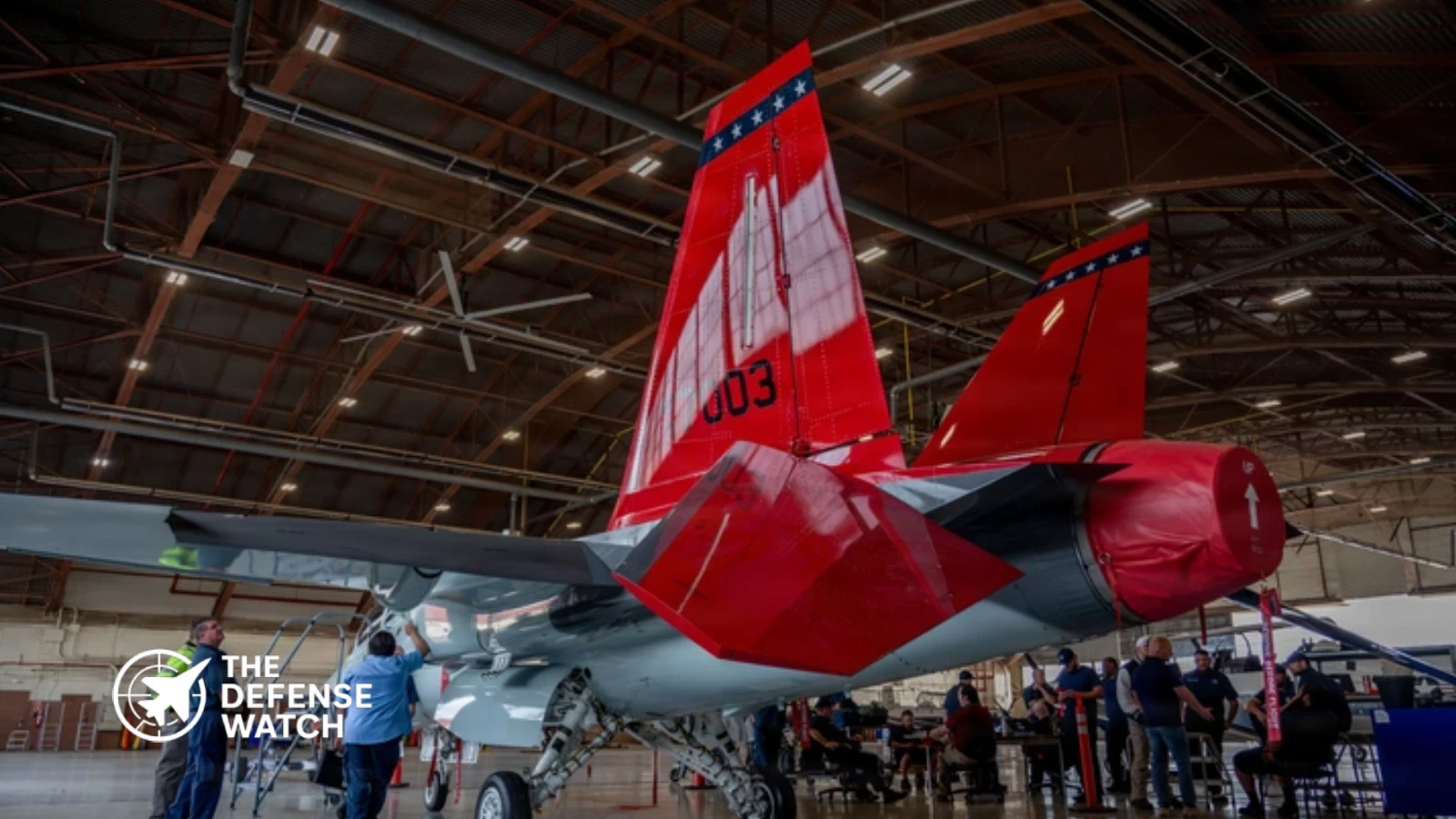
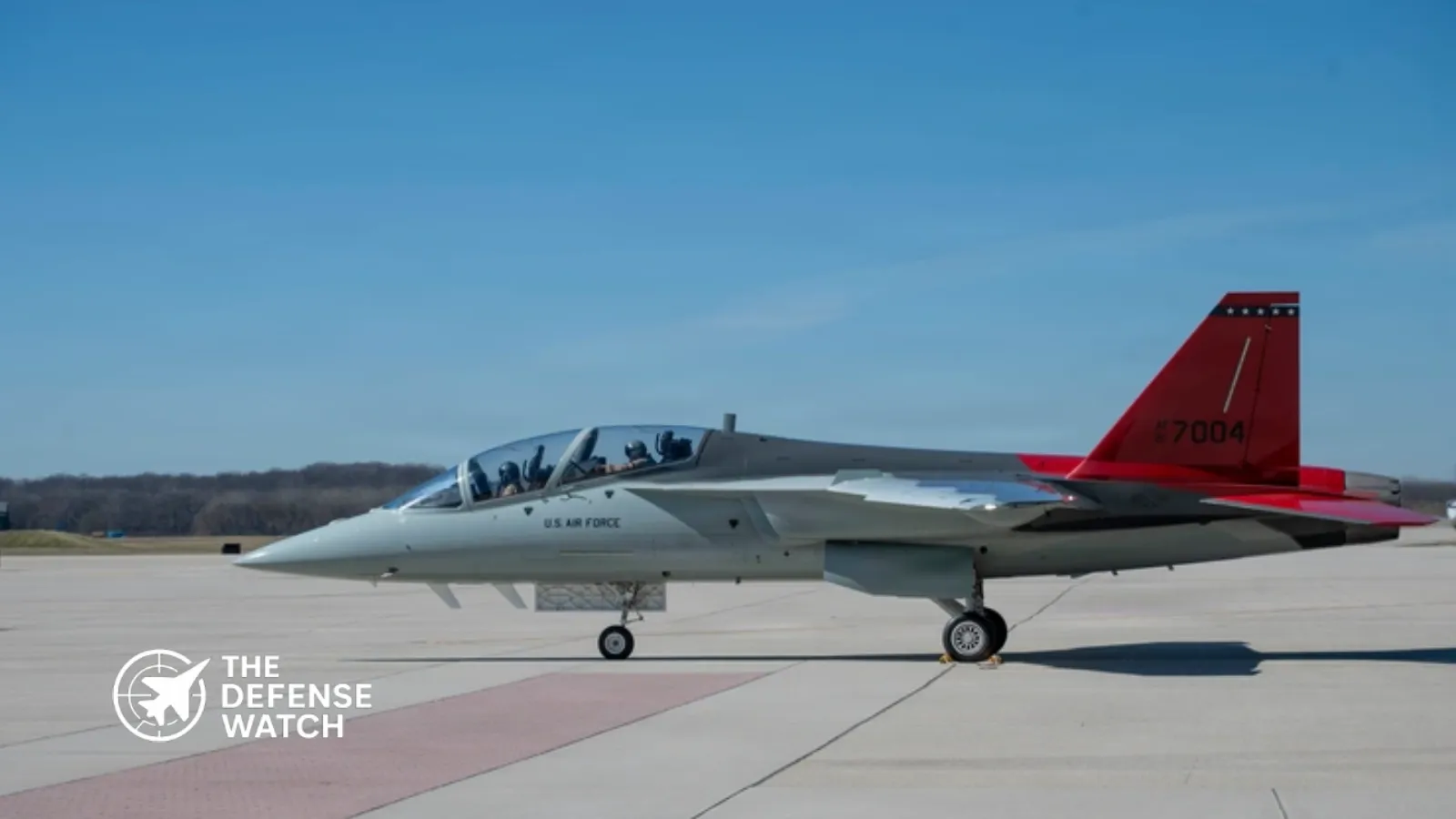
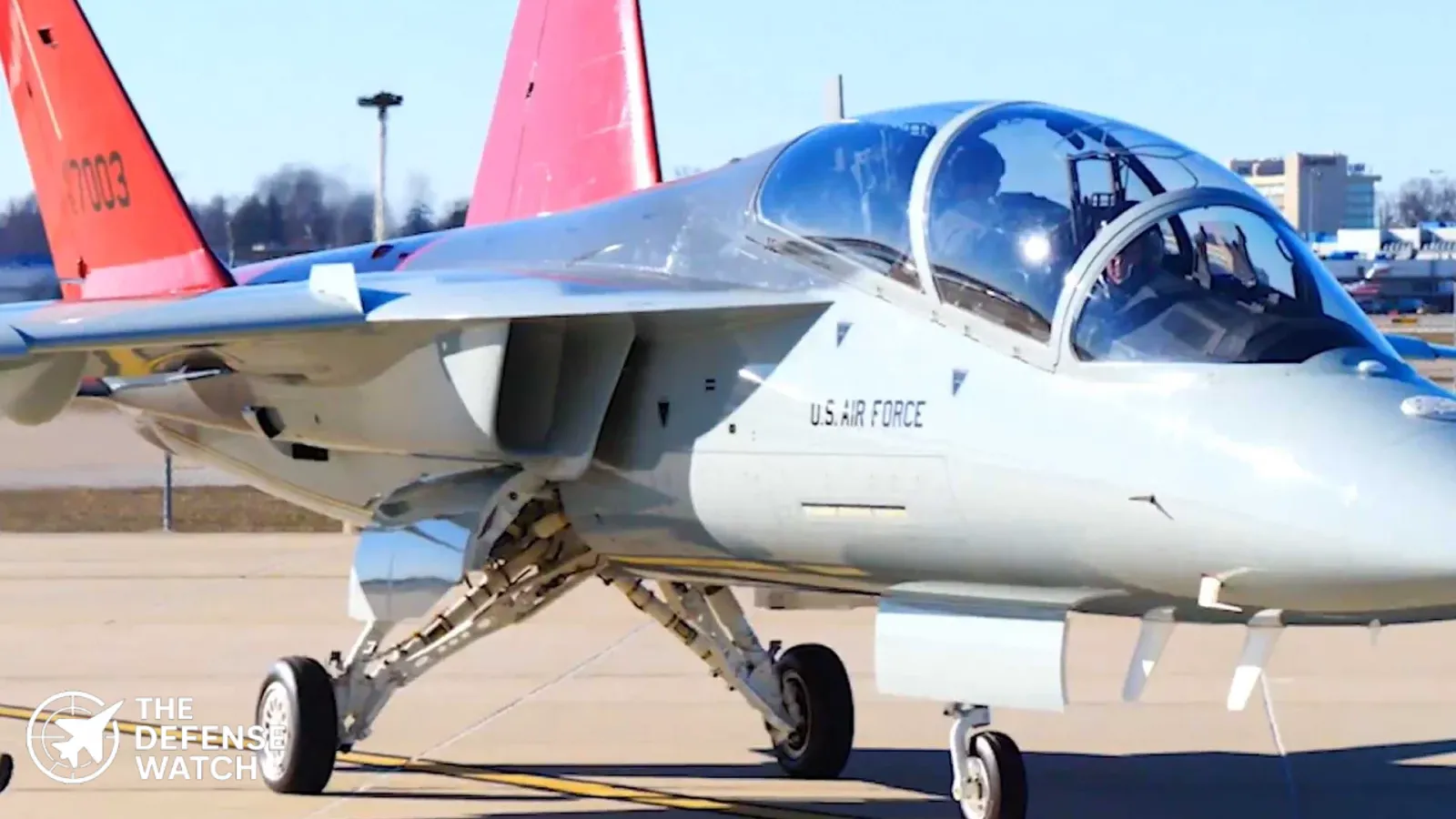
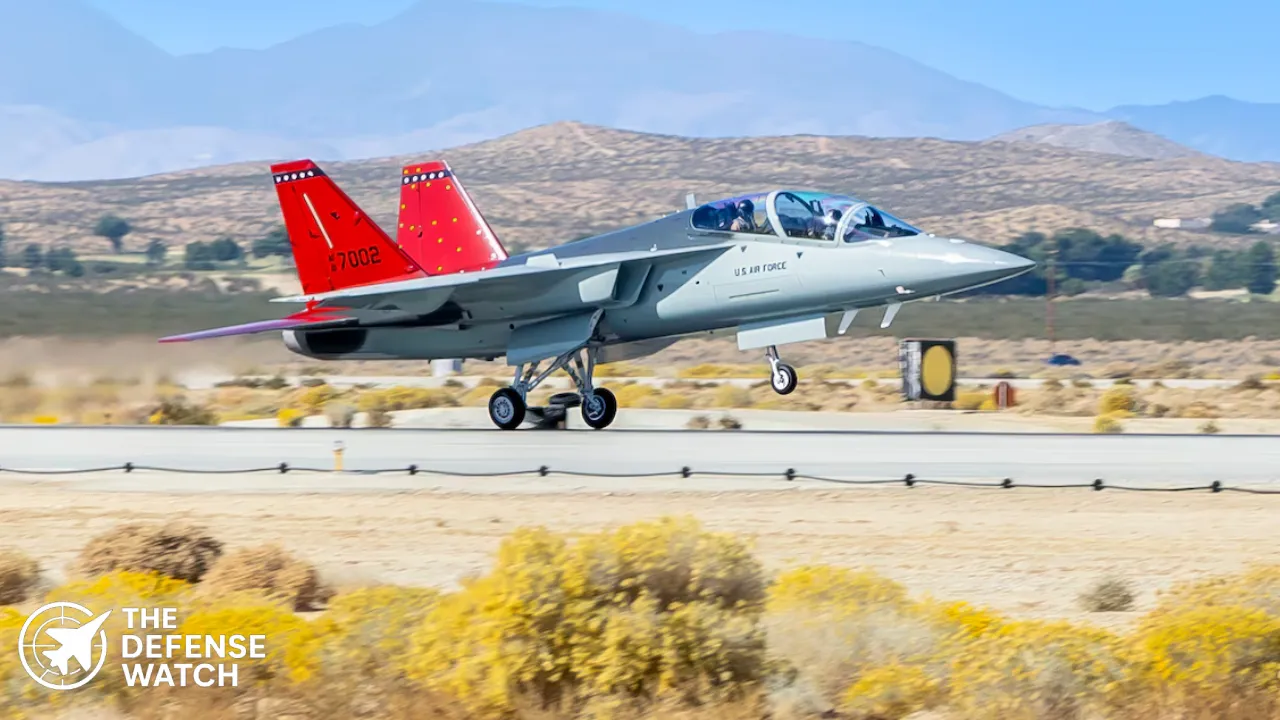
- Modern Design & Performance: The Red Hawk features twin tails, leading-edge root extensions and slats for improved handling at low speeds — better approximating the flight envelope of modern fighters.
- Increased Power: Its single engine produces nearly three times the thrust of the twin engines on the T-38C Talon.
- Digital, Integrated Training System: Whereas older trainers were primarily airframes with limited avionics, the T-7A comes with state-of-the-art integrated flight simulators, advanced visual systems, mission-system software, and facilitates live-virtual-constructive training.
- Future-Proof and Upgradable: The aircraft’s open-architecture software and digital systems are designed to evolve, enabling integration of new training modules or mission profiles such as aggressor or light attack variants if required.
According to Boeing, the T-7A represents a “multi-generational leap” in pilot training, offering low-risk, cost-effective, and highly capable training — a major upgrade over legacy platforms that are decades old.
Strategic Implications and What Comes Next
The delivery of the first T-7A Red Hawk marks a critical turning point in how the USAF trains its future fighter and bomber pilots. For decades, new pilots have had to transition from training jets such as the T-38 or T-6 directly to high-performance fourth-, fifth-, or sixth-generation combat aircraft — a steep leap that often requires additional on-the-job training. The T-7A fills that gap by better bridging training to operational jets.
Over the next several years, as more T-7As arrive and simulators come online, the USAF can expect reduced training bottlenecks, improved readiness, and a pipeline better aligned with modern and future air combat demands. The program’s roadmap foresees deliveries ramping up through the early 2030s; once fully fielded, the T-7A will become the backbone of advanced pilot training across multiple USAF bases.
Additionally, the growth of the T-7A program lays the groundwork for potential expansion: given its flexible digital architecture, the trainer could adapt over time to evolving mission requirements — providing the USAF with a long-term training and preparation platform.
Conclusion
The arrival of the first production T-7A Red Hawk at JBSA-Randolph on December 5, 2025, represents a landmark achievement for the U.S. Air Force and its pilot training enterprise. As the cornerstone of a broader modernization effort, the Red Hawk promises to deliver more realistic, flexible, and future-ready training for the next generation of aircrew — enhancing readiness for fifth- and sixth-generation fighters and beyond. As deliveries scale over the coming years, the impact will steadily reshape the structure and effectiveness of USAF pilot training for decades.