Executive Summary:
The United States is repositioning F-22 stealth fighters closer to China to improve response times in a potential Taiwan crisis. The move underscores growing tensions and a renewed focus on air superiority in the Indo-Pacific.
US Moves F-22 Stealth Fighters Closer To China
The F-22 stealth fighters deployment marks a significant step in U.S. efforts to strengthen rapid-response capabilities near Taiwan, as tensions with China continue to shape regional military planning.
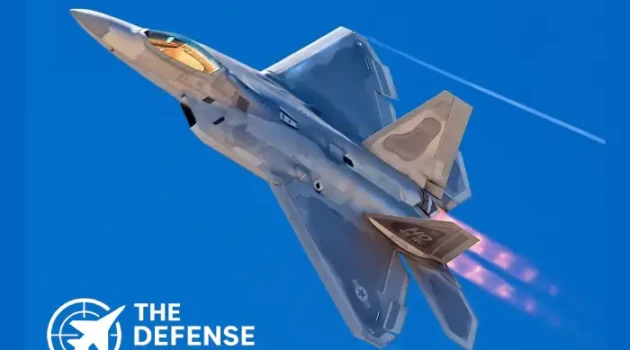
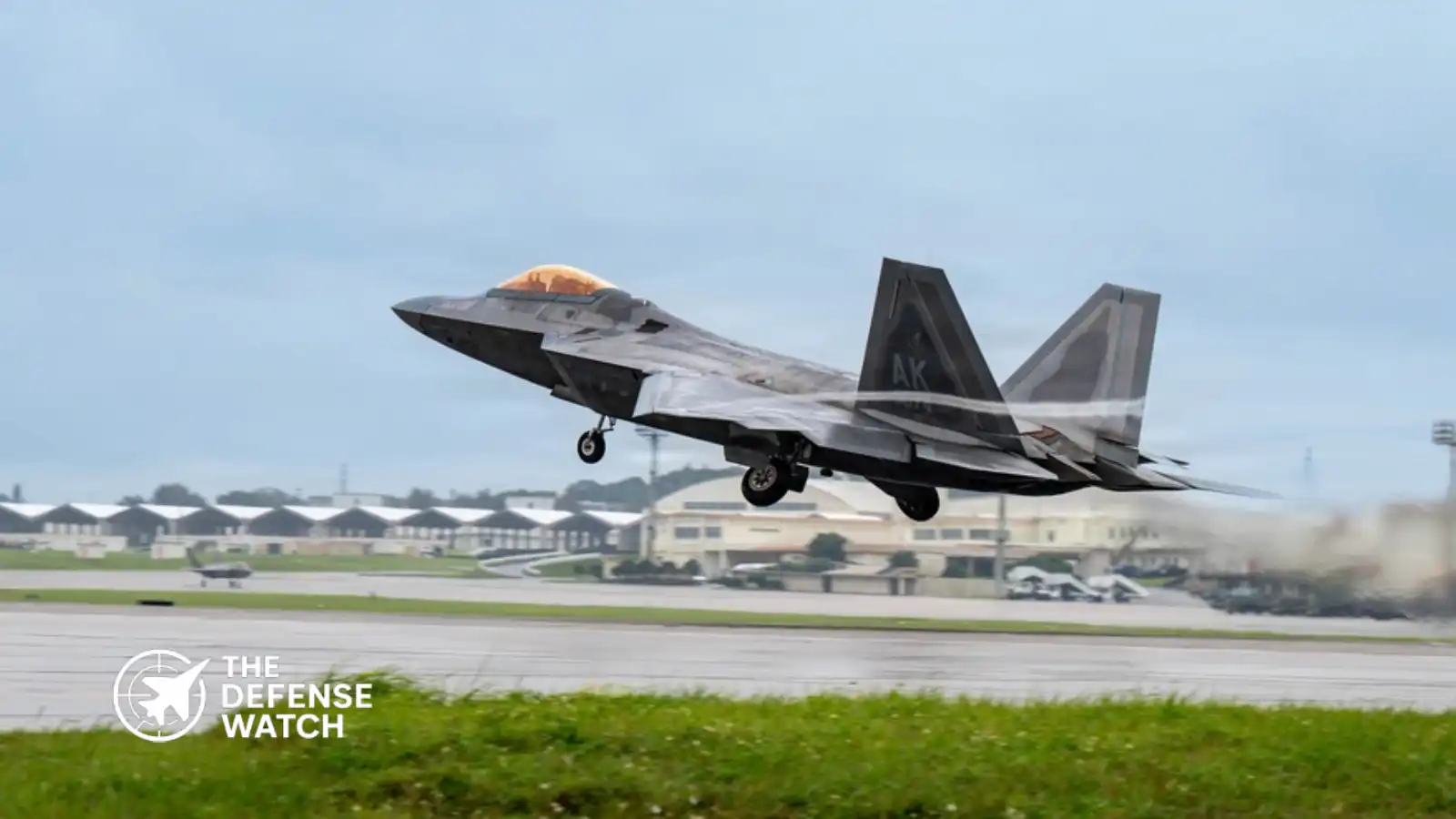
The U.S. Air Force has moved F-22 Raptors closer to the western Pacific theater, reducing operational distance to potential hotspots around the Taiwan Strait. This forward positioning is designed to enable faster sortie generation and immediate air dominance in the early stages of a conflict.
The F-22 Raptor, developed by Lockheed Martin, remains the U.S. military’s premier air superiority fighter. Its low observable design, advanced avionics, and supercruise capability allow it to penetrate contested airspace and engage high-end threats, including advanced Chinese fighters and integrated air defense systems.
Strategic Context: Taiwan And The Indo-Pacific Balance
The F-22 stealth fighters deployment comes amid increasing military activity by China around Taiwan, including large-scale air and naval exercises. Beijing continues to assert sovereignty over the island, while Washington maintains a policy of strategic ambiguity backed by growing military presence in the region.
Forward deployment of fifth-generation fighters reflects a broader U.S. shift toward distributed and resilient force posture across the Indo-Pacific. By positioning assets closer to potential flashpoints, the Pentagon aims to complicate adversary planning and ensure rapid escalation control.
From an operational perspective, reducing transit time for high-value assets like the F-22 can significantly impact early-phase combat effectiveness. In a Taiwan contingency, the first 24 to 72 hours are widely assessed by defense analysts as critical for establishing air superiority.
Operational Advantages Of Forward-Deployed F-22s
The F-22 stealth fighters deployment enhances several key operational capabilities:
- Reduced Response Time: Aircraft can reach contested zones faster, improving reaction speed to emerging threats.
- Increased Sortie Rates: Shorter distances allow for more frequent missions per aircraft.
- Enhanced Deterrence: Visible presence of advanced stealth fighters signals readiness and capability.
- Survivability In Contested airspace: The F-22’s stealth and electronic warfare suite provide a decisive edge against modern air defenses.
In addition, forward basing supports integration with allied forces, including Japan and other regional partners, enabling joint operations and interoperability in complex scenarios.
U.S. Airpower Strategy Against China
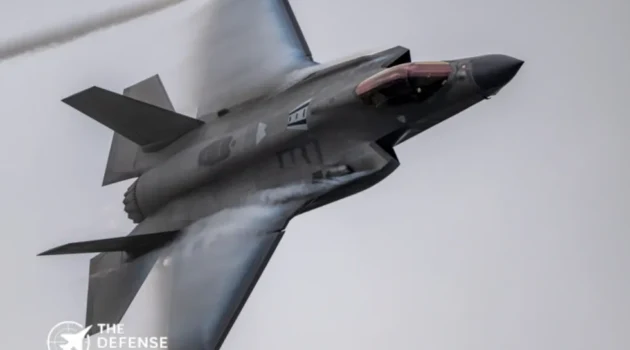
The F-22 stealth fighters deployment aligns with the Pentagon’s broader modernization and deterrence strategy focused on peer competition with China. While newer platforms like the F-35 are more widely distributed, the F-22 remains unmatched in pure air-to-air combat performance.
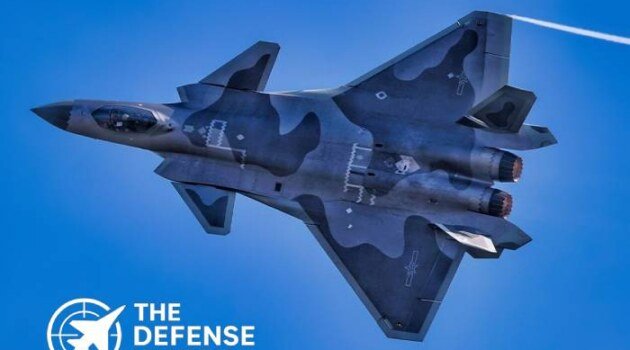
China, for its part, continues to field advanced systems such as the J-20 stealth fighter and long-range surface-to-air missile networks. This evolving threat environment has driven the U.S. to prioritize survivable, high-end capabilities in forward positions.
Defense analysts note that positioning F-22s closer to China also supports the concept of agile combat employment (ACE), which emphasizes dispersal, mobility, and rapid redeployment across multiple bases to reduce vulnerability.
Analysis: Speed, Deterrence, And Escalation Risks
The F-22 stealth fighters deployment reflects a calculated balance between deterrence and escalation management. On one hand, forward positioning strengthens U.S. credibility and reassures regional allies. On the other, it increases the proximity of high-end military assets between competing powers.
From a strategic standpoint, this move signals that the U.S. is prioritizing readiness for high-intensity conflict scenarios, particularly in the Taiwan Strait. It also highlights the importance of air superiority as a foundational element of any potential operation.
However, closer deployments may also heighten risks of miscalculation, especially during periods of increased military activity. Encounters between U.S. and Chinese aircraft have become more frequent, raising concerns among policymakers and military leaders.
Conclusion
The F-22 stealth fighters deployment closer to China underscores a clear shift toward faster, more responsive U.S. airpower in the Indo-Pacific. As tensions over Taiwan persist, the ability to rapidly project advanced combat capability will remain central to deterrence and crisis response.