Executive Summary:
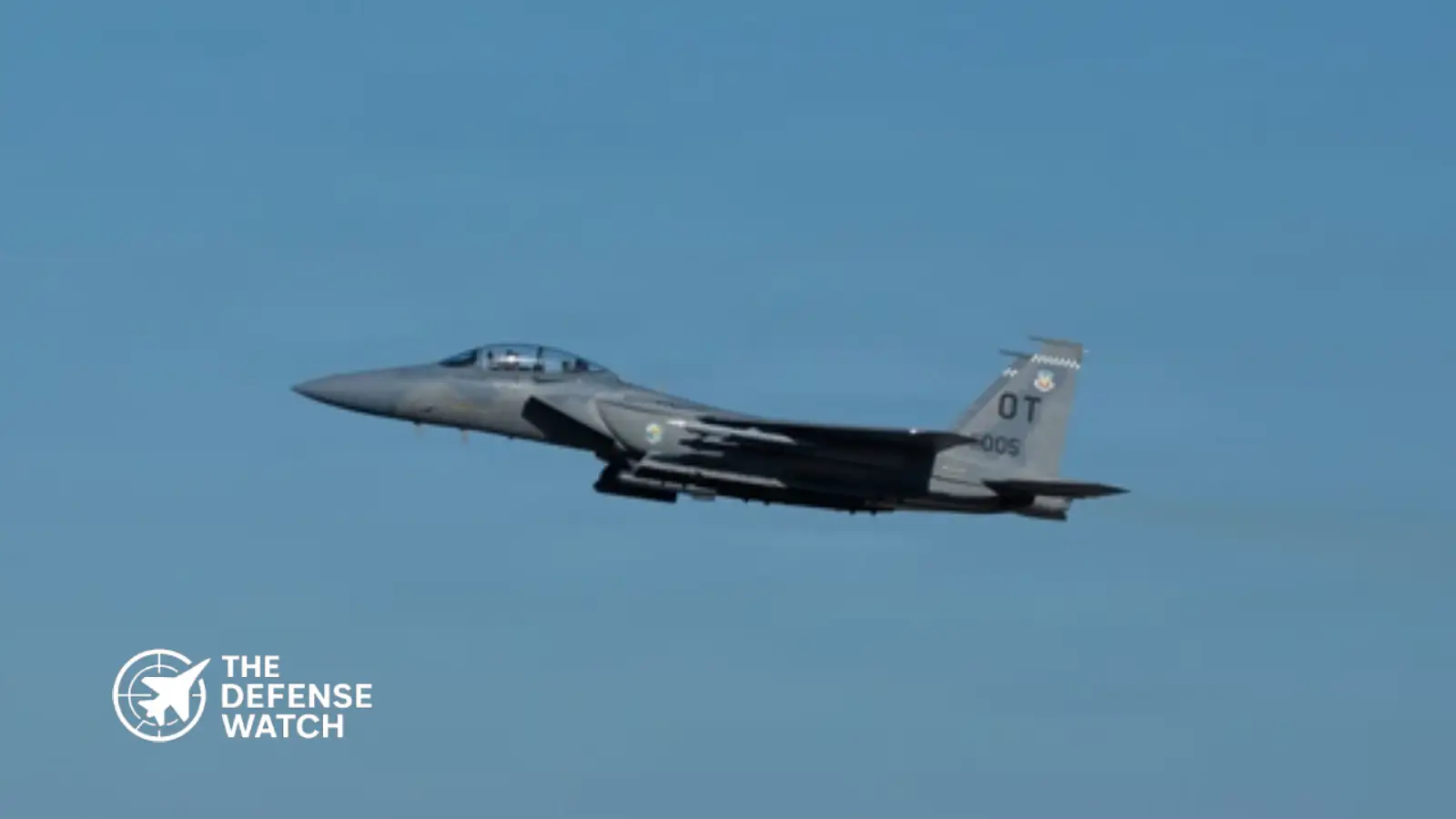
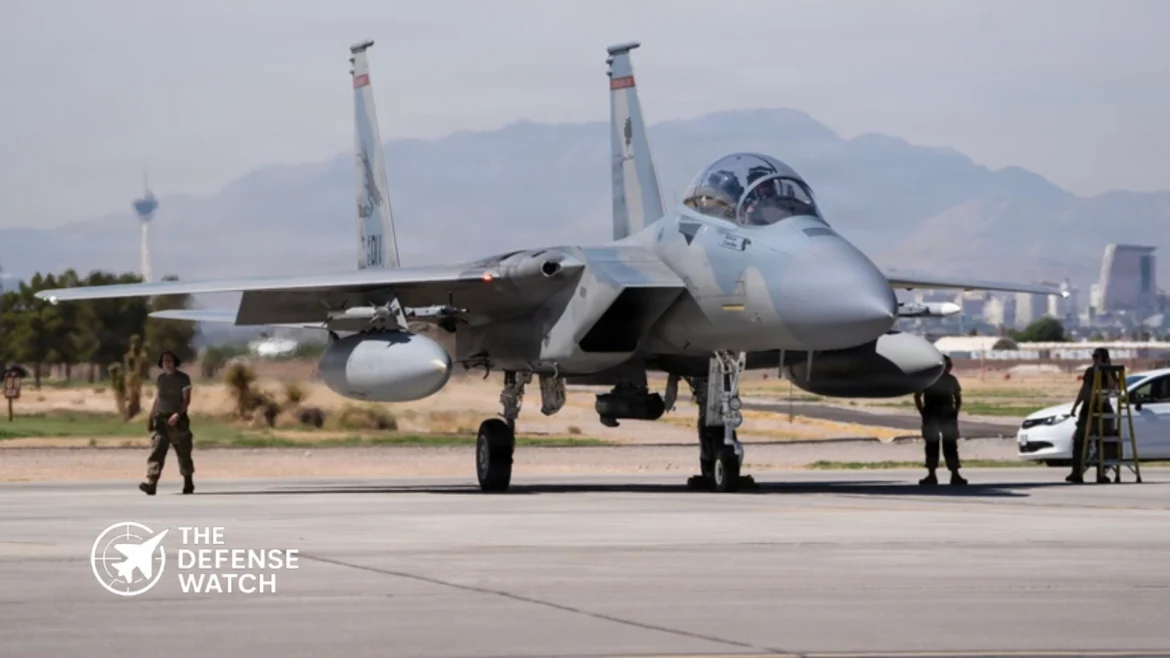
The U.S. Air Force’s first 16 F-15EX Eagle II fighters achieved an average materiel availability rate of 72.4% in fiscal 2026, according to a Department of War acquisition report. The result is 12.4 percentage points above the program’s 60% minimum sustainment threshold but 7.6 points below its 80% objective. The finding comes as the Air Force prepares to expand the planned F-15EX fleet to 268 aircraft, making sustainment performance increasingly important as production scales.
F-15EX Eagle II Availability Reaches 72.4%
The F-15EX Eagle II availability rate for the first 16 aircraft averaged 72.4% in fiscal 2026, according to an acquisition report cited in a Sept. 14 report by Defence Industry Europe. The reported performance applies to aircraft EX1 through EX16 and reflects demonstrated performance through Feb. 24, 2026.
The 72.4% figure clears the program’s minimum materiel availability threshold of 60%. However, it remains below the Air Force’s 80% objective established under the program’s acquisition baseline. The acquisition assessment characterized the result as slightly below the objective and reported no formal performance deviation.
That distinction matters. A threshold represents the minimum acceptable performance level, while an objective establishes the level the program is intended to achieve. The early F-15EX fleet therefore met its formal minimum requirement but has not yet demonstrated the higher availability level the Air Force ultimately wants.
Availability Gap Is 7.6 Percentage Points
The reported figures put the early F-15EX fleet in a relatively clear position:
| F-15EX Sustainment Measure | Reported Result |
|---|---|
| Average materiel availability | 72.4% |
| Program threshold | 60% |
| Program objective | 80% |
| Margin above threshold | 12.4 percentage points |
| Gap to objective | 7.6 percentage points |
| Aircraft covered | EX1 through EX16 |
| Performance date | Feb. 24, 2026 |
The most important point is that 72.4% should not be interpreted as a failure of the aircraft to meet its acquisition requirement. The reported rate is above the established threshold.
The more significant issue is whether the Air Force can improve availability as the fleet grows from a small initial population into a much larger operational force.
Why F-15EX Sustainment Matters
Materiel availability measures whether an aircraft is available for its intended mission rather than simply counting how many aircraft have been delivered.
For a fighter fleet, that distinction is important. An aircraft can be physically present in the inventory but unavailable because it is undergoing scheduled maintenance, awaiting parts, receiving repairs or otherwise unavailable for operational use.
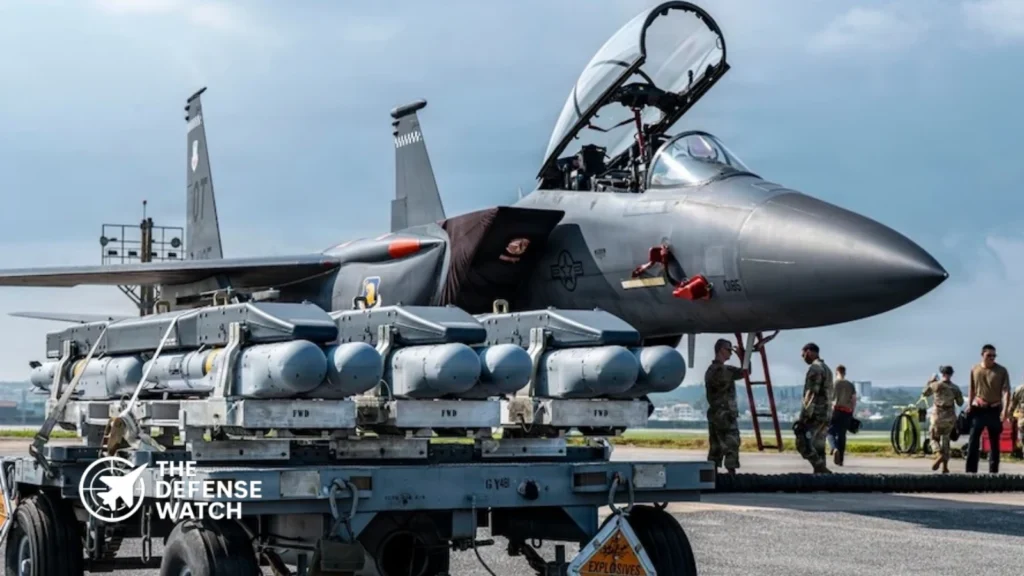
The Air Force is now relying on the F-15EX for more than a limited replacement program. The aircraft was initially intended to replace aging F-15C and F-15D fighters, while also complementing fifth-generation aircraft in missions where its payload, range and weapons capacity provide useful additional capacity. The Air Force says the aircraft is designed around a digital backbone, open architecture and advanced electronic warfare capabilities.
That makes sustainment performance increasingly important as procurement expands.
Air Force Plans a Much Larger F-15EX Fleet
The availability result comes at a significant point in the program’s development.
The Air Force has substantially expanded its planned F-15EX procurement. A fiscal 2027 acquisition report identifies a planned fleet of 268 aircraft, a major increase from earlier procurement plans. Defence Industry Europe reported that 18 aircraft had been delivered as of April 14, 2026.
The expansion means that sustainment performance demonstrated by the first aircraft will become increasingly important.
A small early fleet can produce different maintenance dynamics from a mature fleet. As more aircraft enter operational units, the Air Force gains a larger pool of maintainers, spare parts, technical experience and maintenance data. At the same time, the larger fleet creates a much greater demand for engines, components, depot capacity and trained personnel.
The challenge will be converting a 72.4% early availability result into a consistently higher rate across a much larger operational population.
F-15EX Has Already Passed Major Operational Milestones
The availability result should also be viewed alongside the aircraft’s broader acquisition progress.
The F-15EX completed initial operational test and evaluation and live-fire testing in November 2023. The program subsequently achieved full-rate production approval in June 2024 and initial operational capability in July 2024, according to the acquisition reporting cited by Defence Industry Europe.
The Air Force has described the aircraft as a replacement for aging F-15C/D fighters and as a complementary platform to fifth-generation aircraft.
The service’s operational testing has included air-superiority missions and defensive and offensive counter-air missions. Testing also established a basic air-to-ground capability.
This is important because availability is only one part of combat capability. A modern fighter must combine mission effectiveness with the ability to generate sorties repeatedly.
Maintenance Is the Largest Sustainment Cost
The acquisition assessment also highlights the financial importance of maintaining the F-15EX fleet.
Annual operating and support costs are estimated at approximately $13.1 million per aircraft in constant fiscal 2020 dollars. Maintenance accounts for the largest portion at about $7.2 million per aircraft, followed by unit operations at roughly $3 million and unit-level manpower at approximately $1.9 million.
F-15EX Operating and Support Cost Annual Estimate Per Aircraft Total operating and support $13.1 million Maintenance $7.2 million Unit operations $3.0 million Unit-level manpower $1.9 million Other sustainment and improvements Remaining balance The maintenance figure is particularly relevant to the availability issue because improvements in reliability, parts availability and maintenance turnaround can directly influence the number of aircraft available for operations.
Production Growth Adds Another Sustainment Test
The Air Force’s F-15EX program is also dealing with production expansion and industrial-base challenges.
The Air Force previously reported that deliveries resumed after a strike at Boeing’s St. Louis facility disrupted production between August and November 2025. Aircraft 14, 15 and 16 were subsequently delivered to Portland Air National Guard Base.
The production issue is separate from the 72.4% availability figure, but both point to the same broader challenge: scaling a fighter program requires more than producing airframes.
The Air Force needs a supporting industrial system capable of supplying engines, avionics, electronic warfare equipment, structural components and other parts at the rate required by an expanding fleet.
F-15EX Is Becoming More Important in the Indo-Pacific
The availability question is particularly relevant as the F-15EX moves toward a larger role in the Indo-Pacific.
The Air Force has been preparing the aircraft for permanent deployment to Kadena Air Base, Japan. In September 2026, the first F-15EX designated for Kadena departed Boeing’s St. Louis facility for Portland, where it was scheduled to receive additional preparation before moving to Japan.
The Air Force has also used F-15EX deployments to Kadena to familiarize local personnel with the aircraft and validate maintenance, logistics and combat-generation procedures.
This gives the availability metric greater operational significance. Forward-based fighters must be supported in environments where maintenance capacity, spare parts and transportation can be more constrained than at U.S. bases.
For the Indo-Pacific, where distances between operating locations can be considerable, aircraft availability directly affects the number of sorties a force can generate over time.
What 72.4% Means for the Program
The current result does not indicate that the F-15EX program has failed its sustainment requirement. It indicates that the early fleet has cleared the minimum threshold while still leaving room to improve toward the 80% objective.
The key question is therefore not whether the first 16 aircraft reached 80%. They did not.
The more important question is whether the Air Force can improve availability as the fleet matures and expands.
That will depend on several factors, including maintenance turnaround times, spare-parts availability, supply-chain performance, technical workforce capacity and the maturity of the aircraft’s support infrastructure.
The program’s future scale makes those factors more important than the performance of a 16-aircraft sample alone.
F-15EX Expansion Raises the Stakes
The Air Force’s decision to expand the planned F-15EX fleet makes sustainment a central issue for the program.
The aircraft offers the service a large, modern weapons platform that can complement F-35 and F-22 aircraft rather than performing exactly the same role. The Air Force has specifically described the F-15EX as a complementary platform for fifth-generation fighters, while its large weapons capacity provides additional options for long-range fires and air operations.
But a fighter’s value depends on its ability to generate sorties when required.
For that reason, the 72.4% availability figure is best understood as an early sustainment indicator rather than a verdict on the aircraft. Clearing the 60% threshold is a positive program result, while the 7.6 percentage-point gap to the 80% objective identifies an area the Air Force will need to monitor closely as procurement accelerates.
The next stages of the F-15EX program will therefore test not only Boeing’s ability to deliver aircraft, but also the Air Force’s ability to sustain a rapidly expanding fleet at the readiness levels expected from a front-line fighter force.
Bottom Line
The first 16 F-15EX Eagle II fighters recorded a 72.4% average materiel availability rate in fiscal 2026, exceeding the program’s 60% threshold but falling short of the 80% objective. The result does not represent a formal program failure, but it provides an important early measure of the aircraft’s sustainment performance.
With the Air Force now planning for a fleet of 268 F-15EX aircraft, improving availability will become increasingly important. The aircraft is moving from an initial fielding phase toward a much larger operational role, including planned deployment to Japan.
For the F-15EX program, the central sustainment test is now clear: maintain and improve availability while the fleet expands substantially in size and geographic scope.
Executive Summary:
The U.S. Air Force is preparing for a major technical refresh of the F-15EX Eagle II as it extends the fighter’s planned production from eight to 12 lots and more than doubles the planned fleet to 267 aircraft. A new Pentagon acquisition report warns that the longer production timeline could make the aircraft’s radar, mission computer, electronic warfare suite and engines obsolete before the final jets are delivered. The service plans to manage the problem through future Operational Flight Program releases and phased integration of upgraded subsystems between 2031 and 2035. At the same time, current F-15EX production faces shortages involving displays, GE F110 engines and ejection-system components, while Boeing’s 2025 St. Louis strike has created delivery delays.
F-15EX Technical Refresh Becomes a Program Priority
The F-15EX technical refresh is emerging as one of the central engineering challenges created by the U.S. Air Force’s decision to expand the Eagle II fleet.
The Air Force originally structured the F-15EX acquisition around eight production lots. The revised plan extends procurement to 12 lots, creating a substantially longer production window and increasing the possibility that key components will reach the end of their manufacturing life before the program is complete.
The Pentagon’s selected acquisition report identifies four major areas that could require replacement or redesign:
| System | Future Concern | Planned Approach |
|---|---|---|
| Radar | Component obsolescence | New-generation radar integration |
| Mission computer | Hardware and technology obsolescence | Updated mission computing |
| Electronic warfare suite | Evolving threats and component availability | New EW architecture |
| Engines | Manufacturing and supply risks | Future engine replacement or redesign |
The report describes the required work as a major technical refresh and warns that replacing these systems would constitute a significant redesign effort.
Why the F-15EX Needs a Longer-Term Upgrade Path
The issue is not that the current F-15EX configuration is considered inadequate.
The Eagle II already incorporates an AN/APG-82 AESA radar, digital fly-by-wire flight controls, an advanced mission system and the Eagle Passive Active Warning Survivability System, or EPAWSS. Boeing describes the aircraft as an open-mission-system platform designed to accommodate future upgrades.
The problem is the length of the production program.
A fighter assembled in the early 2030s will encounter a different technology and supply environment from one built in the 2020s. Electronics suppliers may discontinue older processors, displays or components, while radar and electronic warfare technologies will continue to evolve.
This creates a familiar defense acquisition problem: keeping a production line open can eventually require redesigning the aircraft around components that remain available.
The Pentagon therefore intends to integrate major subsystem changes through future Operational Flight Program releases scheduled between 2031 and 2035. According to the acquisition report, this approach is intended to allow testing and fielding without creating a production-line gap.
Radar Upgrade Could Shape the Future F-15EX
Radar is one of the most important areas identified for future modernization.
The current F-15EX uses the Raytheon AN/APG-82 AESA radar, which provides electronically scanned air-to-air and air-to-ground sensing. The system is already part of the aircraft’s broader sensor and weapons architecture.
Raytheon has also publicly discussed the APG-82(V)X, an enhanced version incorporating gallium nitride technology intended to increase radar effectiveness without requiring additional aircraft power. The company says the system is designed to improve detection, tracking and multifunction operation, including electronic warfare functions.
The Pentagon report does not establish that the APG-82(V)X will become the selected future F-15EX radar.
That distinction matters. The acquisition report identifies the need for a future radar refresh, but it does not publicly identify a final replacement configuration. Any specific future radar selection should therefore be treated as an open requirement rather than an awarded upgrade.
Mission Computing Is Equally Important
The F-15EX’s mission computer is another potential obsolescence point.
Modern fighters increasingly depend on software-defined mission systems to combine radar, electronic warfare, communications, navigation and weapons information. For the F-15EX, maintaining the computing architecture is particularly important because the aircraft is intended to operate alongside fifth-generation fighters and future collaborative combat aircraft.
Boeing says the Eagle II uses an open mission systems architecture that supports future software and hardware upgrades. The company has also highlighted the aircraft’s networking capabilities and its ability to support manned-unmanned operations.
The Air Force’s approach of incorporating future hardware through Operational Flight Program releases is therefore significant.
Rather than treating the F-15EX as a fixed configuration, the service is effectively planning for the aircraft to evolve during production.
Electronic Warfare Will Remain a Core Requirement
The electronic warfare system presents another long-term modernization challenge.
The F-15EX was designed around the EPAWSS survivability suite, which provides integrated threat warning, electronic protection and electronic attack capabilities. Air Force testing has demonstrated the importance of integrating radar, electronic warfare and mission systems in realistic contested environments.
The Air Force has previously described EPAWSS as a system intended to improve the aircraft’s ability to operate against advanced air-defense and electronic threats.
For future production aircraft, however, the requirement is not simply to preserve today’s electronic warfare capability.
Threat emitters, radar modes and electronic attack techniques change over time. A production aircraft entering service in the early 2030s will need an electronic warfare architecture capable of receiving updates throughout its operational life.
That makes software architecture, processing capacity and access to replacement hardware as important as the individual electronic warfare sensors themselves.
Engine Supply Is Already a Production Risk
The engine issue is more immediate.
The F-15EX uses two General Electric F110 engines per aircraft, and the Pentagon’s FY2027 budget documentation specifically identifies engine procurement as part of the aircraft’s recurring production cost.
The latest acquisition reporting also identifies GE F110 engines among components affected by supply-chain pressure. Other shortages include large-area displays, low-profile heads-up displays and Collins Aerospace cartridges associated with the aircraft’s ejection system.
This illustrates the difference between an aircraft’s technical modernization requirement and its immediate production problem.
The long-term concern is whether current components remain viable through later production lots. The near-term concern is whether suppliers can provide enough components to maintain the required aircraft delivery rate.
Both problems must be managed simultaneously.
Boeing Production Delays Add Pressure
The F-15EX expansion comes while the existing production schedule is already under pressure.
A strike at Boeing’s St. Louis facility from August through November 2025 disrupted production. According to the Pentagon acquisition report, the disruption created delays that cannot be fully recovered.
Lot 3 provides a clear example.
Boeing’s contract required delivery of all 12 Lot 3 aircraft in early 2026. The Pentagon now expects only six of those aircraft to be delivered by the end of 2026.
Lot 4 has also slipped, with deliveries previously expected in 2026 now forecast to begin in 2028. The program needs Boeing to reach a production rate of approximately two F-15EX aircraft per month to meet its delivery requirements.
The first F-15EX intended for permanent deployment at Kadena Air Base in Japan departed Boeing’s St. Louis facility in August 2026, but the aircraft is now expected to arrive at Kadena during fiscal 2027.
F-15EX Expansion Has Strategic Implications
The Air Force’s decision to increase the planned F-15EX fleet from 129 to 267 aircraft represents a major change in the service’s future fighter mix.
The additional aircraft are intended not only to complete existing F-15EX units but also to begin replacing aging F-15E Strike Eagles. The Air Force has said it needs a mix of F-15EX and F-35A capabilities rather than relying exclusively on one fighter type.
The F-15EX provides a different force structure option from the F-35A.
Its large weapons capacity, long range and substantial aircraft size make it particularly useful as a capacity platform operating alongside lower-observable aircraft. Boeing also emphasizes its ability to carry large weapons loads and operate within networked formations.
The planned deployment of F-15EX aircraft to Kadena is particularly important for the Indo-Pacific. The Air Force has described the aircraft as providing additional capacity for long-range fires, sensors and electronic warfare while complementing fifth-generation fighters.
What the Technical Refresh Means for Future Lots
The key point is that the F-15EX modernization plan is not simply an equipment upgrade.
It is a production-management strategy designed to keep an existing fourth-generation-derived fighter relevant as its manufacturing program extends into the 2030s.
The approach can be summarized as follows:
- Continue producing the current configuration while maintaining the production line.
- Identify components approaching obsolescence or facing diminishing manufacturing sources.
- Develop replacement radar, computing, electronic warfare and propulsion solutions.
- Test those systems through future Operational Flight Program releases.
- Introduce the upgraded systems into later production aircraft without creating a prolonged production gap.
This approach reduces the risk of abruptly stopping production for a complete redesign. It also allows the Air Force to spread engineering and testing work over several years.
The challenge is cost and integration risk. The Pentagon has not yet completed a detailed cost assessment for the additional aircraft and associated redesign work. Officials have begun a rapid cost-estimation process to support future budget planning.
F-15EX Program at a Glance
| Item | Current Plan |
|---|---|
| Aircraft | F-15EX Eagle II |
| Manufacturer | Boeing |
| Planned fleet | 267 aircraft |
| Previous planned fleet | 129 aircraft |
| Production strategy | 12 lots |
| Current radar | AN/APG-82 AESA |
| Electronic warfare | EPAWSS |
| Engine | Two GE F110 engines |
| Future modernization | Radar, mission computer, EW suite and engines |
| Planned upgrade window | 2031 to 2035 |
| Key overseas location | Kadena Air Base, Japan |
| Primary role | Air superiority, counter-air and high-capacity weapons carriage |
Current program and budget information from the Air Force, Pentagon and Boeing supports the basic configuration and acquisition figures above.
The Bottom Line
The F-15EX expansion gives the U.S. Air Force a much larger capacity fighter fleet, but it also creates a long-term technology management problem.
Keeping production open through 12 lots means the aircraft cannot remain frozen in its current configuration. Radar electronics, mission computing, electronic warfare equipment and engines will have to evolve as components become obsolete and new technologies become available.
The Air Force’s planned 2031 to 2035 upgrade pathway provides a way to introduce those changes without shutting down the production line. The harder challenge will be controlling redesign costs, maintaining supplier capacity and avoiding additional delivery delays while the service simultaneously expands the fleet.
For U.S. airpower planning, the F-15EX is therefore becoming more than a replacement for aging Eagles. Its future value will depend on whether the Air Force can maintain the aircraft’s open, upgradeable architecture while sustaining production through a period of rapid change in radar, electronic warfare, computing and propulsion technology.
Executive Summary:
The U.S. Air Force has deployed the F-15EX Eagle II back to Kadena Air Base, Japan, as the service prepares the installation for its future permanent fighter force. The deployment also included operational training with the MQ-28 Ghost Bat during Exercise Valiant Shield, highlighting the Air Force’s growing emphasis on manned and unmanned teaming across the Indo-Pacific.
F-15EX Eagle II Returns To Strengthen Kadena’s Future Mission
The F-15EX Eagle II has returned to Kadena Air Base in Japan, marking another major step in the U.S. Air Force’s long term modernization of its premier fighter base in the Indo-Pacific. According to the U.S. Air Force, aircraft from the 85th Test and Evaluation Squadron arrived on June 29 alongside two F-15E Strike Eagles to support integration and familiarization activities before the Eagle II enters permanent service at the base.
The deployment builds on the F-15EX’s first visit to Kadena in 2025 and allows pilots, maintainers, and support personnel to gain practical experience with the aircraft’s systems, maintenance requirements, and operational procedures before it officially replaces the aging F-15C/D Eagle fleet.
Lt. Col. Casey Watts, commander of the 85th Test and Evaluation Squadron, said early familiarity with the aircraft will help ensure a smooth transition while improving combat readiness across the Indo-Pacific.
Kadena’s Fighter Transition Continues
The F-15EX forms a central element of the Department of the Air Force’s modernization strategy for Kadena Air Base, one of America’s most strategically important forward operating locations in the Western Pacific.
The 67th Fighter Squadron, which will become Kadena’s first operational F-15EX unit, is using the deployment to build operational knowledge before receiving its own aircraft. Maintenance teams are also validating logistics procedures, combat generation capabilities, and sustainment requirements necessary for long term operations.
Brig. Gen. John Gallemore, commander of the 18th Wing, described the Eagle II as the next chapter of airpower at Kadena, emphasizing its role in supporting combat operations throughout the Indo-Pacific.
MQ-28 Ghost Bat Demonstrates Future Human Machine Teaming
One of the deployment’s most significant developments occurred during Exercise Valiant Shield, where an F-15EX aircrew operated alongside an MQ-28 Ghost Bat uncrewed aircraft over the Philippine Sea.
The mission represented another milestone in the development of Collaborative Combat Aircraft (CCA), an emerging operational concept that pairs crewed fighters with semi autonomous aircraft capable of conducting reconnaissance, electronic warfare, and strike support missions under human supervision.
Maj. Daniel Pesich, Experimental Operations Unit CCA detachment officer in charge, said future airpower will increasingly rely on partnerships between highly trained aircrews and autonomous technologies to improve survivability and combat effectiveness.
Why The F-15EX Remains Important
Although the F-15EX is not a stealth fighter, it has been designed to complement fifth generation platforms rather than replace them.
Key capabilities include:
Capability F-15EX Eagle II Maximum payload Nearly 30,000 pounds of weapons Crew One or two pilots Radar AN/APG-82 AESA radar Electronic warfare EPAWSS digital electronic warfare suite Network capability Advanced data links for joint operations Mission Air superiority, long range strike, homeland defense, missile carrier Its large payload capacity allows the aircraft to carry significantly more air to air missiles and stand off weapons than stealth fighters, making it particularly valuable in high intensity operations where magazine depth becomes critical.
Strategic Analysis: What This Means For Indo-Pacific Deterrence
The latest deployment reflects more than a routine training event.
Kadena Air Base sits at the center of the First Island Chain, placing U.S. fighters within operational reach of the East China Sea, Taiwan Strait, and much of the Western Pacific. As regional military competition continues to intensify, the Air Force is investing in aircraft capable of sustaining high sortie rates while integrating with advanced command and control networks.
The combination of the F-15EX and Collaborative Combat Aircraft points toward a future force structure that emphasizes distributed operations rather than relying solely on stealth. Instead of every aircraft penetrating contested airspace independently, future missions are expected to distribute sensing, electronic warfare, and weapons delivery across both crewed and autonomous platforms.
The MQ-28 Ghost Bat demonstration illustrates this concept in practice. Loyal wingman aircraft can extend sensor coverage, increase available weapons capacity, conduct high risk reconnaissance, or absorb threats that would otherwise endanger crewed fighters. When combined with the F-15EX’s substantial payload and advanced networking systems, the result is a more resilient and scalable combat force capable of operating across vast Indo-Pacific distances.
The deployment also demonstrates that modernization extends beyond acquiring new aircraft. Building maintenance expertise, validating logistics networks, and integrating operations personnel before permanent fielding reduces operational risk and accelerates readiness once the F-15EX enters frontline service at Kadena.

atOptions = { ‘key’ : ‘3d48d603f906e3fe9f205be3c4433835’, ‘format’ : ‘iframe’, ‘height’ : 250, ‘width’ : 300, ‘params’ : {} };Executive Summary:
The U.S. Air Force plans to expand its Boeing F-15EX Eagle II fleet from 129 to 267 aircraft, according to FY2027 budget planning and statements from Air Force officials. The move represents one of the largest fighter procurement expansions in recent years and reflects a broader strategy focused on rebuilding combat mass, replacing aging F-15E Strike Eagles, and sustaining airpower for future high-intensity conflicts.
U.S. Air Force Expands F-15EX Fleet Under Revised Fighter Strategy
The U.S. Air Force is preparing to more than double its planned F-15EX Eagle II fleet, increasing total procurement from 129 aircraft to 267 fighters as part of its evolving force structure strategy. Air Force officials confirmed the revised objective during discussions surrounding the FY2027 budget request, which includes funding for 24 additional F-15EX aircraft.
The expansion marks a significant shift from previous plans that viewed the F-15EX primarily as a replacement for aging F-15C and F-15D air superiority fighters. Under the new strategy, the aircraft will also begin replacing portions of the F-15E Strike Eagle fleet while serving as a key component of the Air Force’s future fighter inventory.
According to Air Force officials, the enlarged fleet will help complete the fielding of existing F-15EX squadrons before transitioning toward recapitalization of older F-15E aircraft. The service currently operates approximately 25 F-15EX fighters and has already contracted for more than 100 aircraft.
(adsbygoogle = window.adsbygoogle || []).push({});FY2027 Budget Signals Long-Term Commitment
The FY2027 budget request includes approximately 24 F-15EX fighters, valued at roughly $3 billion, alongside planned procurement of 38 F-35A Lightning II aircraft. Together, these purchases demonstrate the Air Force’s continued commitment to maintaining a mixed fighter force composed of fourth-generation, fifth-generation, and future sixth-generation aircraft.
Planned FY2027 Fighter Procurement
Aircraft Planned FY2027 Quantity F-15EX Eagle II 24 F-35A Lightning II 38 Total New Fighters 62 The procurement profile also supports broader Air Force goals aimed at reversing decades of fighter inventory decline and maintaining annual acquisition rates sufficient to sustain force readiness.
Why The F-15EX Remains Important
The decision to expand the F-15EX program reflects operational realities rather than a departure from stealth-centric modernization.
While aircraft such as the F-35A and future Next Generation Air Dominance systems are designed to penetrate heavily defended airspace, the F-15EX offers advantages in payload capacity, range, endurance, and weapons carriage. Air Force officials have repeatedly emphasized that the Eagle II fulfills a different operational requirement within the overall force structure.
Key F-15EX capabilities include:
- Advanced digital fly-by-wire flight controls
- Modern open mission systems architecture
- AN/APG-82 active electronically scanned array (AESA) radar
- Eagle Passive/Active Warning and Survivability System (EPAWSS)
- Large air-to-air and air-to-ground weapons capacity
- Compatibility with future long-range weapons and hypersonic systems
The aircraft’s large payload capacity allows it to carry significantly more missiles than stealth fighters, making it particularly valuable in homeland defense missions and large-scale Indo-Pacific operations.
(adsbygoogle = window.adsbygoogle || []).push({});Strategic Implications For Future Conflict
One of the most significant aspects of the expanded procurement plan is what it reveals about how Air Force planners view future warfare.
For much of the past decade, modernization efforts focused heavily on survivability and stealth. The revised F-15EX acquisition plan suggests increasing recognition that future conflicts could also require sustained combat operations, large missile inventories, and the ability to generate high sortie rates over extended periods.
Original Analysis: Rebuilding Combat Mass
The F-15EX expansion reflects a broader shift toward rebuilding combat mass within the U.S. fighter force.
Modern air campaigns are increasingly expected to involve long-range precision weapons, distributed operations across vast theaters, and sustained attrition. While stealth aircraft remain essential for penetrating advanced air defenses, they are expensive assets available in limited numbers.
The F-15EX offers a complementary capability. It can carry larger missile loads, operate from existing infrastructure, and integrate rapidly into current maintenance and training ecosystems. This reduces transition risk while expanding available combat capacity.
The decision to grow the fleet to 267 aircraft indicates that Air Force planners are placing greater emphasis on maintaining sufficient numbers of combat-ready fighters rather than relying exclusively on a smaller fleet of highly sophisticated platforms.
Indo-Pacific Relevance
The aircraft’s range and payload characteristics are particularly relevant for operations across the Indo-Pacific region.
Potential future operations in the Pacific would involve vast distances, dispersed basing, and significant demands on logistics networks. In such environments, heavily armed fighters capable of carrying large numbers of air-to-air missiles and long-range strike weapons can play an important role in distributed force packages.
Air Force officials have specifically highlighted the F-15EX’s weapons carriage capacity and operational role within Pacific theater planning.
(adsbygoogle = window.adsbygoogle || []).push({});Industrial Base Benefits
The expanded procurement plan also provides stability for the U.S. defense industrial base.
Continued F-15EX production sustains Boeing’s tactical aircraft manufacturing line in St. Louis while preserving critical aerospace engineering and production expertise. Maintaining multiple fighter production lines is increasingly viewed as important for long-term industrial resilience and surge capacity.
At a time when defense planners are emphasizing readiness and industrial scalability, the continuation of F-15EX production supports broader national security objectives beyond the aircraft itself.
Looking Ahead
The Air Force’s decision to increase planned F-15EX procurement to 267 aircraft represents one of the most significant fighter acquisition shifts of the decade. Rather than serving solely as a replacement for aging legacy aircraft, the Eagle II is emerging as a permanent element of the service’s future force structure.
As the Air Force balances investments across F-35A, F-15EX, Collaborative Combat Aircraft, and future sixth-generation systems, the enlarged Eagle II fleet highlights a growing emphasis on combat mass, weapons capacity, and long-term operational sustainability.
The move underscores a broader conclusion shaping U.S. airpower planning: future conflicts may require not only advanced technology, but also sufficient fighter capacity to sustain operations across extended and highly contested campaigns.