Executive Summary:
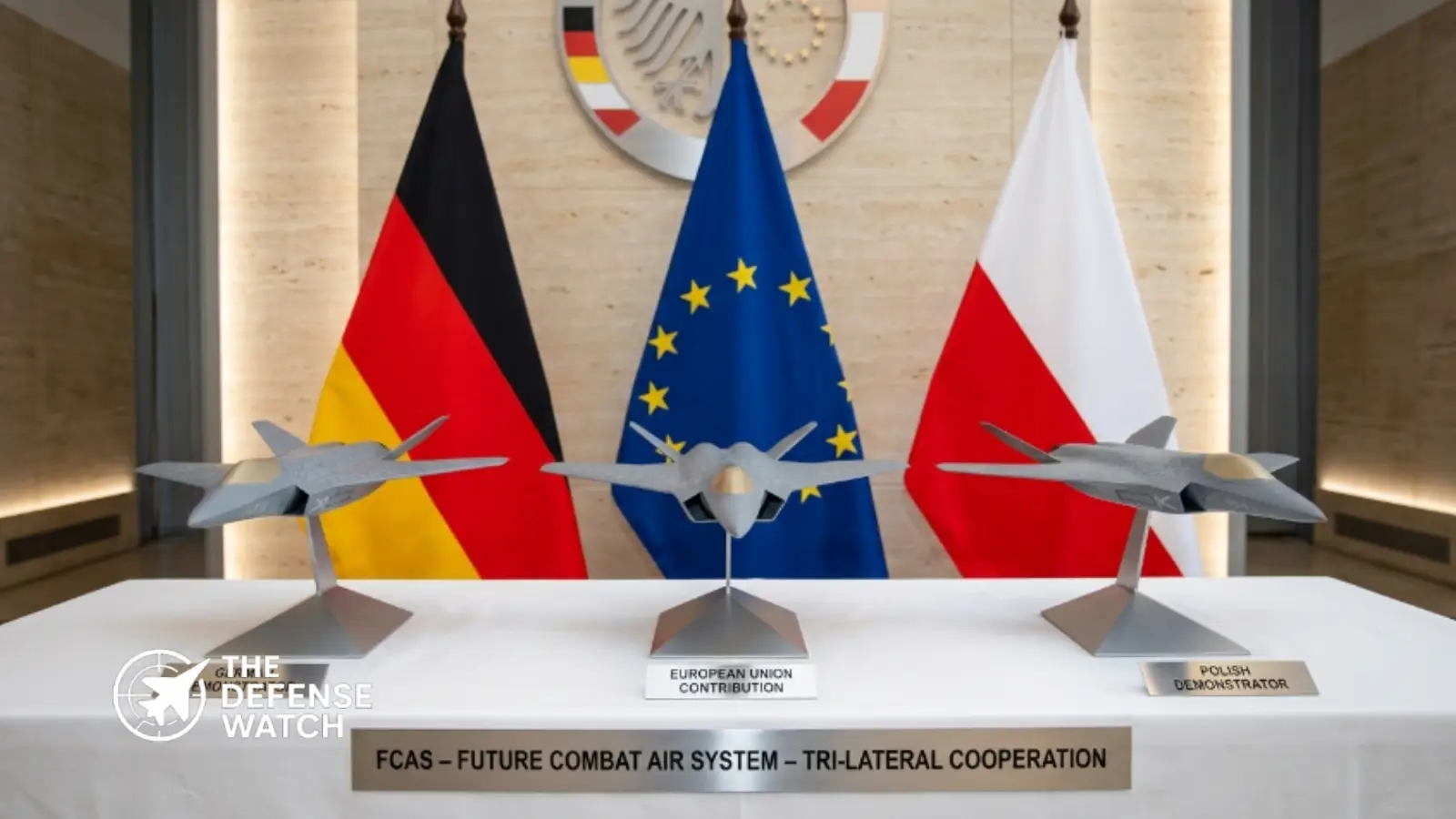
Germany and France have effectively terminated development of the fighter aircraft at the center of the Future Combat Air System (FCAS) program after failing to resolve long running industrial disagreements between Airbus and Dassault Aviation.
While the fighter jet component is ending, participating nations are expected to continue work on related technologies, including collaborative drones and the FCAS combat cloud network.
FCAS Fighter Jet Program Faces Major Setback
The FCAS fighter jet program, Europe’s most ambitious future air combat initiative, has suffered a major blow after German Chancellor Friedrich Merz and French President Emmanuel Macron reportedly concluded that industry partners are unable to overcome disagreements surrounding development of the next generation fighter aircraft.
Officials from both governments determined that months of negotiations failed to bridge differences between Airbus, representing German and Spanish interests, and Dassault Aviation, the French company leading fighter aircraft development efforts.
The decision marks a significant turning point for the Future Combat Air System (FCAS), a program valued at approximately €100 billion ($116 billion) and originally intended to deliver a sixth generation combat aircraft by the 2040s.
What Is FCAS?
Launched in 2017 and later joined by Spain, FCAS was designed as a “system of systems” rather than a single aircraft.
The broader architecture included:
- A sixth generation manned fighter aircraft
- Collaborative combat drones
- Advanced sensors and networking technologies
- A secure combat cloud linking platforms across the battlefield
- Artificial intelligence enabled decision support capabilities
The fighter aircraft served as the centerpiece of the entire concept, making its cancellation a substantial setback for the program’s original vision.
Airbus And Dassault Could Not Reach Agreement
The collapse of the fighter element stems primarily from disagreements over leadership, intellectual property rights, technology sharing, and program management.
Dassault, leveraging its experience developing the Dassault Rafale, sought primary control over fighter design and development. Airbus, representing German and Spanish industrial interests, pushed for a more balanced distribution of responsibilities and access to critical technologies.
Efforts to mediate the dispute continued for months. Earlier reports indicated that official mediation initiatives had failed to produce a compromise acceptable to both sides.
The inability to align industrial priorities ultimately proved stronger than political efforts to preserve the program.
Drone And Combat Cloud Development To Continue
Despite the collapse of the fighter aircraft portion, the broader FCAS framework is not disappearing entirely.
Officials indicated that participating countries will continue developing key enabling technologies, particularly:
- Collaborative combat aircraft (CCA) drones
- The FCAS combat cloud network
- Data sharing and battlefield connectivity systems
These capabilities are increasingly viewed as essential elements of future air warfare and may continue under revised cooperative structures.
Airbus executives had previously emphasized that these components represented some of the most technologically valuable aspects of FCAS and could survive even if the fighter aircraft element failed.
Strategic Implications For Europe
The end of the FCAS fighter aircraft project represents more than an industrial disagreement.
It raises broader questions about Europe’s ability to execute large scale multinational defense programs at a time when European governments are increasing military spending and seeking greater strategic autonomy.
The project had become a symbol of European defense integration and technological independence. Its failure highlights persistent challenges in balancing national requirements, industrial interests, export policies, and intellectual property concerns across multiple countries.
The outcome may also influence future cooperation efforts across the continent, including decisions surrounding next generation combat aviation programs and advanced defense technologies.
DefenseWatch Analysis
The collapse of the fighter aircraft component demonstrates a recurring challenge in European defense procurement. While nations often share strategic objectives, differences over industrial leadership and sovereign control frequently become decisive obstacles.
The continuation of drone and combat cloud development suggests that Europe still recognizes the importance of collaborative defense innovation. However, the inability to sustain the core fighter program could push countries toward more nationally controlled solutions or alternative multinational partnerships in the coming years.
For European air power modernization, the outcome underscores that technological ambition alone is insufficient. Successful sixth generation programs require long term political alignment, clear industrial governance, and agreement on intellectual property ownership from the outset.