Executive Summary:
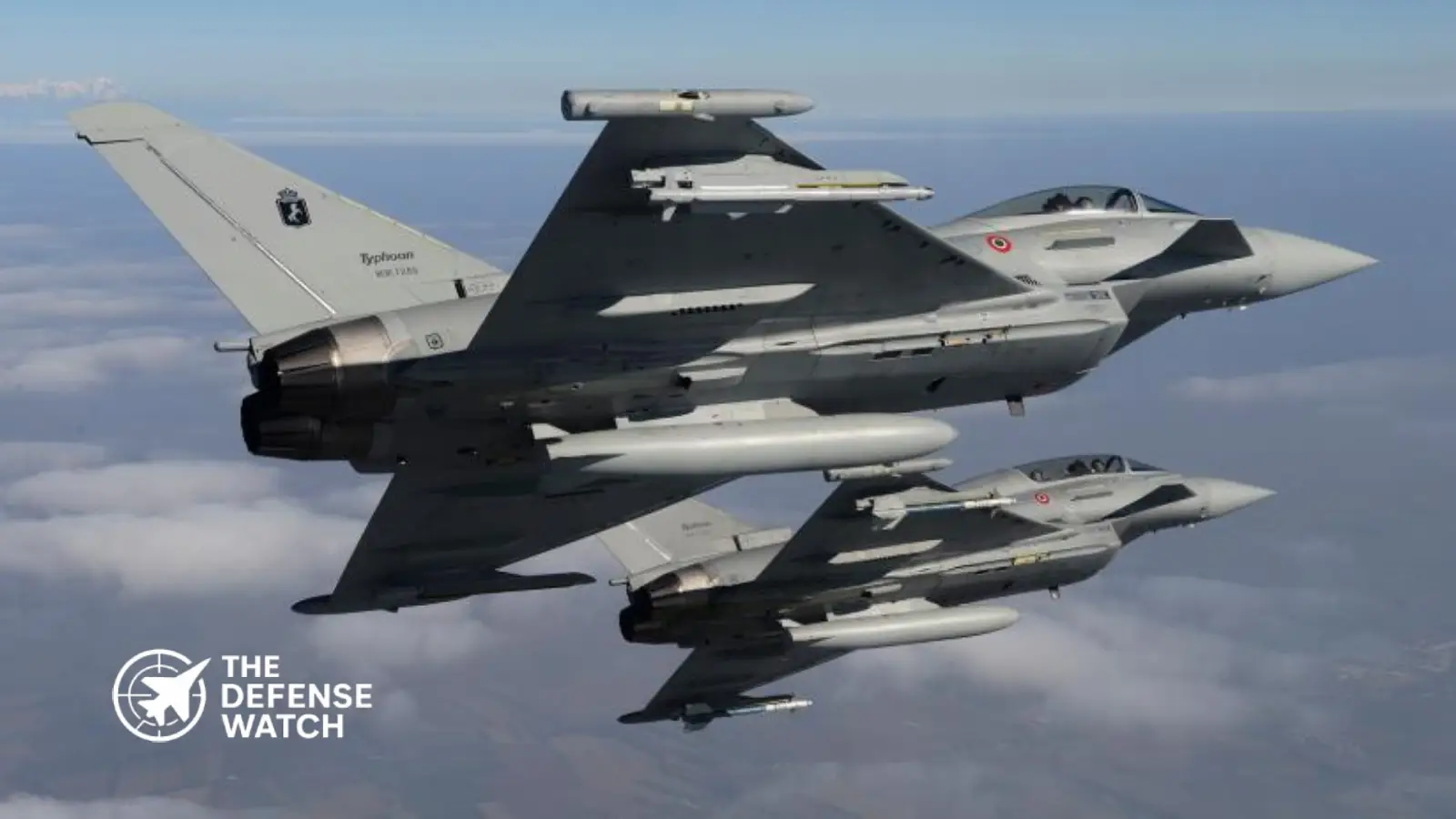
The Eurofighter Typhoon is Europe’s most operationally active multirole fighter, flown by nine air forces and now accumulating more than one million flying hours across combat, air policing, and NATO interoperability missions. With the Tranche 5 standard and ECRS Mk2 AESA radar in development, the platform is no longer a legacy 4th-gen holdout — it is being transformed into a 4.5+ generation electromagnetic warfare node with a service horizon extending past 2040. New orders placed in 2025 alone totalled over €15 billion across Germany, Italy, Spain, Turkey, and Bangladesh.
Forty-four Typhoons for Turkey. Twenty Tranche 5 jets for Germany approved at €3.75 billion. A Bangladesh letter of intent signed December 2025. An Italian order worth €7.5 billion finalized the same month. In a year when Europe’s defense procurement machine accelerated to a pace not seen since the Cold War, the Eurofighter Typhoon was the aircraft everyone wanted most.
That’s not a coincidence. The Typhoon has spent two decades quietly accumulating one of the most operationally diverse combat records of any Western fighter — and its upgrade roadmap is now threatening to make it more capable than several fifth-generation platforms in contested electromagnetic environments.
The Hard Numbers: What Makes the Typhoon Different
The Typhoon is a twin-engine, canard-delta multirole fighter designed from the start to be aerodynamically unstable — a deliberate engineering choice that gives it exceptional agility at the cost of requiring fly-by-wire computers to keep it airborne every millisecond. That instability is a feature.
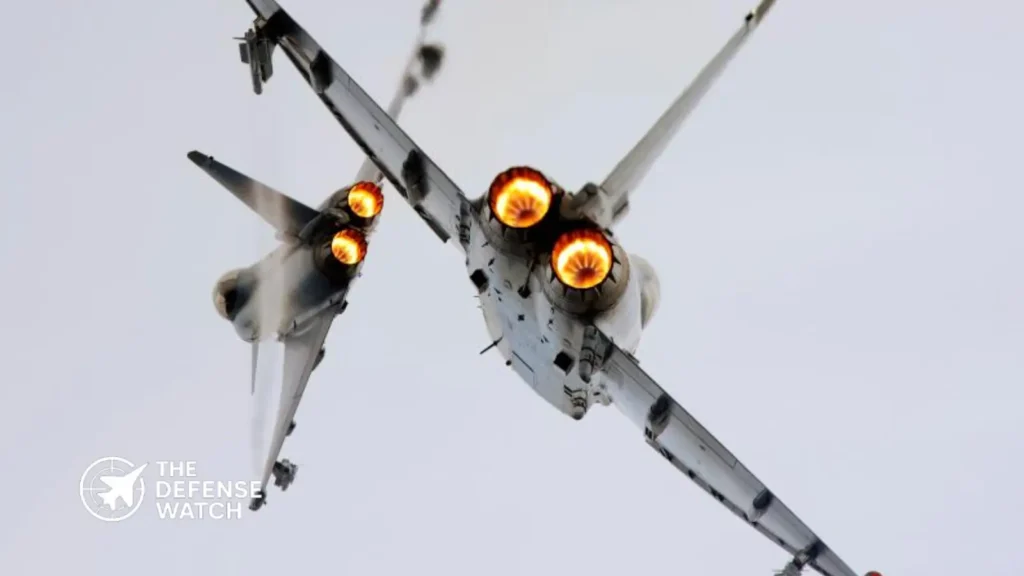
At maximum performance, the aircraft hits Mach 2.35 at altitude — faster than the F-35A (Mach 1.6) and the Dassault Rafale (Mach 1.8). Its EJ200 engines enable supercruise: sustained supersonic flight without afterburner, extending both range and survivability by reducing the aircraft’s infrared signature during cruise. Engine health monitoring is rated at 1,200 flying hours between unscheduled maintenance events.
The airframe uses composite materials for roughly 85% of its surface area, reducing radar cross-section compared to conventional metal construction while cutting structural weight by approximately 30%. Only 15% of the aircraft’s outer mold line is traditional metal. That’s a stealth-adjacent design philosophy built into the bones of a platform that predates the modern stealth era.

Weapons carriage is genuinely multi-role. The Typhoon fields up to 13 external hardpoints, capable of simultaneously carrying Meteor BVR missiles (the longest-ranged Western air-to-air missile in service), Brimstone 2 precision strike munitions, Storm Shadow/SCALP cruise missiles, and Paveway IV GPS/laser-guided bombs — all in a single sortie when configured for swing-role operations.
Technical Data: Eurofighter Typhoon vs. Primary Competitors
Metric Eurofighter Typhoon (T4/T5) Dassault Rafale F4 F-35A Lightning II Max Speed Mach 2.35 Mach 1.8 Mach 1.6 Unit Cost (approx.) ~€140M (T5) ~€120M (F4, French AF) ~$82M (FY2024 LRIP) Engine 2× EJ200 (20,000 lbf each) 2× M88-4E (16,900 lbf each) 1× F135 (43,000 lbf with AB) Radar (current/future) Captor-M → ECRS Mk0/Mk1/Mk2 RBE2-AA AESA APG-81 AESA Supercruise Yes (Mach ~1.2–1.3) Limited No SEAD/EW Role Yes (EK/ECRS Mk2) Limited No dedicated variant Operators (2026) 9 nations, 700+ aircraft 9 nations, ~220 on order 20+ nations, ~1,000+ delivered Service Horizon 2040s+ (with upgrades) 2040s (Rafale F5 planned) 2070s (platform lifecycle) Combat Debut 2011 Libya 2015 Syria 2019 USAF Cost data: Germany Tranche 5 contract (Breaking Defense, Oct 2025); Rafale French AF estimate (2025 French parliamentary review); F-35 FY2024 Selected Acquisition Report.
The ECRS Mk2: Why This Radar Changes the Calculus
Radar defines the modern air combat kill chain. The Typhoon’s long-standing weakness — its legacy mechanical Captor-M radar — is being corrected in the most aggressive terms possible.
The ECRS Mk2 (European Common Radar System Mark 2), developed by Leonardo UK and integrated by BAE Systems, is not simply a better radar. It is a multi-function active electronically scanned array that combines air-to-air search, ground targeting, and offensive electronic jamming into a single aperture. Its field of regard extends to approximately 200 degrees — about 50% wider than a conventional fixed-plate AESA — enabled by a mechanical steering pivot behind the array.
The radar uses gallium nitride (GaN) transmitter/receiver modules rather than the older gallium arsenide (GaAs) technology. GaN delivers higher power density, wider bandwidth, and better thermal efficiency. In practical terms, this allows the Mk2 to simultaneously track multiple targets, jam enemy radar emitters, and conduct SEAD (Suppression of Enemy Air Defenses) missions — all in one weapon system integration.
The ECRS Mk2 completed its first flight on a UK test and evaluation Typhoon at BAE Systems’ Warton facility in late 2024. The RAF’s Tranche 5 aircraft will receive Mk2 as standard. For Germany and Spain, the ECRS Mk1 from Hensoldt/Indra fills the same generation slot with GaN modules and enhanced signal processing.
When fully fielded, a Mk2-equipped Typhoon will be able to enter contested airspace, blind enemy integrated air defense systems, designate targets for follow-on forces, and egress — without a dedicated electronic attack aircraft in the flight package. That is a capability currently unique to the EA-18G Growler in the Western inventory.
Combat Record: What the Typhoon Has Actually Done
The Typhoon’s combat history is longer than most people realize, and more varied.
In 2011, RAF Typhoons conducted their combat debut over Libya, dropping Paveway IV bombs on armored targets — a mission that required rapid capability integration to even happen. In January 2024, four RAF Typhoons struck Houthi military facilities in Yemen with Paveway IVs during Operation Shader’s Red Sea operations. In April 2024, RAF Typhoons based in Cyprus and Romania intercepted Iranian UAVs during the 2024 Iranian drone strikes on Israel, engaging targets in Iraqi and Syrian airspace — a live ADIZ defense mission over a third-party state.
Most recently, in March 2026, an RAF Typhoon from 12 Squadron operating out of Qatar shot down an Iranian UAV approaching Qatari airspace. That engagement is not a footnote. It is proof that the Typhoon is the primary Western fighter conducting live air defense intercepts in the Persian Gulf theater right now.

During NATO Steadfast Dart 26 in February 2026, German Typhoons conducted manned-unmanned teaming (MUM-T) exercises with Turkish Bayraktar TB3 drones — the UAV provided ISTAR data to Typhoon pilots who then prosecuted precision strikes. It was the first public validation of the Typhoon’s MUM-T architecture in a NATO exercise context.
The Strategic Insight: Adaptability as the Core Doctrine
Here’s the angle that separates Typhoon operators from operators of most other fourth-generation platforms: the aircraft was designed to be upgraded in layers, not replaced in blocks.
In competitive gaming, the teams that win championships over consecutive seasons rarely do so on mechanical skill alone. They win on meta-adaptation — reading the evolving threat environment faster than opponents and restructuring their composition before the enemy can counter. Organizations like Team Liquid or FaZe Clan maintain longevity not by sticking to a single playstyle, but by systematically expanding their toolkit while preserving core strengths.
The Typhoon operates on exactly this doctrine. Its Tranche upgrade system — from Tranche 1’s basic air defense configuration through Tranche 3’s full swing-role capability to Tranche 5’s open software architecture and MUM-T integration — has kept a single airframe relevant across three decades of threat evolution. The avionics computing power in the Tranche 5/ECRS Mk2 configuration is reported to represent a 200-fold increase over Tranche 1 standard. Same aircraft. Completely different brain.
Germany’s decision in October 2025 to approve 20 Tranche 5 Typhoons at €3.75 billion — with deliveries running 2031 to 2034 — and simultaneously fund a €1.13 billion electronic warfare upgrade for 15 existing Typhoon EK aircraft illustrates this doctrine in budget form. The platform is not being retired. It is being restructured as an electromagnetic warfare node while the sixth-generation GCAP/Tempest program matures.
“The Eurofighter Typhoon is predestined to become a bridge for the next generation combat air system.” — Eurofighter GmbH Programme Directorate
That statement is no longer aspirational. With GCAP (the UK-Italy-Japan sixth-generation program) unlikely to reach initial operational capability before the mid-2030s, the Typhoon will carry NATO’s European air superiority burden for at least another 15 years. Every upgrade invested now — ECRS Mk2, Meteor integration, Striker II helmet, AREXIS EW suite — extends that bridge.
The Export Story: Why Nine Nations Have Said Yes
The Typhoon’s export trajectory tells a story that pure capability numbers cannot. Austria, Saudi Arabia, Oman, Qatar, and Kuwait all operate the platform. Turkey signed a £5.4 billion deal with the UK in October 2025 for 20 aircraft — Britain’s largest fighter export deal in nearly two decades, and Turkey’s first combat aircraft purchase from a non-American supplier.
Bangladesh signed a letter of intent with Leonardo in December 2025. The Philippines is evaluating a 32-aircraft Tranche 5 package. Egypt and Italy are negotiating 24 aircraft for approximately $3 billion.
The common thread across these customers is not price — at roughly €140 million per Tranche 5 unit, the Typhoon is not cheap. The common thread is industrial partnership. Every Typhoon sale comes with technology transfer agreements, local maintenance training, national workshare arrangements, and access to a supply chain that supports over 100,000 skilled jobs across Europe. For nations building sovereign defense industries, that package is worth the premium.
Conclusion: The Typhoon in 2026
The Eurofighter Typhoon arrived at its 2026 position through a combination of genuine capability and relentless adaptation. Its combat record spans Libya, Syria, Iraq, Yemen, and the Persian Gulf. Its order books are fuller now than they were five years ago. Its radar is being rebuilt from first principles with GaN AESA technology that puts it ahead of most competitors in the electromagnetic domain.
The narrative that the Typhoon is a transitional platform waiting to be replaced by GCAP or F-35 misses the operational reality. NATO’s European air forces cannot wait for sixth-generation fighters. The Typhoon is what they have, and the Tranche 5 program is ensuring it remains worth having.
One million flying hours logged. Hundreds of live intercepts completed. More than €15 billion in new orders signed in a single calendar year.
The storm isn’t passing. It’s intensifying.
Frequently Asked Questions
How much does a Eurofighter Typhoon cost in 2026?A Tranche 5 Eurofighter Typhoon costs approximately €140 million per unit, based on reported figures from late 2025 program reviews. Germany’s October 2025 contract for 20 Tranche 5 jets was valued at €3.75 billion (~€187 million per aircraft when including associated simulators and support equipment). Export unit pricing varies significantly by contract structure and offset agreements.
How fast is the Eurofighter Typhoon?The Typhoon reaches a maximum speed of Mach 2.35 at altitude. It also has supercruise capability — sustained supersonic flight without afterburner — which reduces the aircraft’s infrared signature during transit and extends operational range compared to non-supercruising platforms.
Has the Eurofighter Typhoon been used in combat?Yes. The Typhoon has a confirmed combat record spanning Libya (2011), Syria and Iraq (2015–present), Yemen (2024), and the Persian Gulf (2024–2026). RAF Typhoons conducted live intercepts of Iranian drones during the April 2024 Israeli strikes and shot down an Iranian UAV over Qatar in March 2026.
What is the ECRS Mk2 radar on the Typhoon?The ECRS Mk2 (European Common Radar System Mark 2) is a next-generation AESA radar developed by Leonardo UK and integrated by BAE Systems. It combines air-to-air targeting, air-to-surface modes, and offensive electronic jamming in a single system. The radar uses gallium nitride modules and has a 200-degree field of regard, making it one of the most capable radar/EW systems fitted to any 4th or 4.5th generation fighter.
How many countries operate the Eurofighter Typhoon?As of 2026, nine countries operate the Typhoon: the United Kingdom, Germany, Italy, Spain, Saudi Arabia, Oman, Qatar, Kuwait, and Austria. Turkey, Bangladesh, and the Philippines are in various stages of procurement discussions or signed agreements.
Will the Eurofighter Typhoon be replaced by GCAP?The UK and Italy plan to replace their Typhoons with the sixth-generation GCAP (Global Combat Air Programme), developed jointly with Japan. However, GCAP is not expected to reach operational service before the mid-2030s at the earliest. Tranche 5 Typhoons being ordered now will bridge that gap, with a projected service life extending into the 2040s.
Executive Summary:
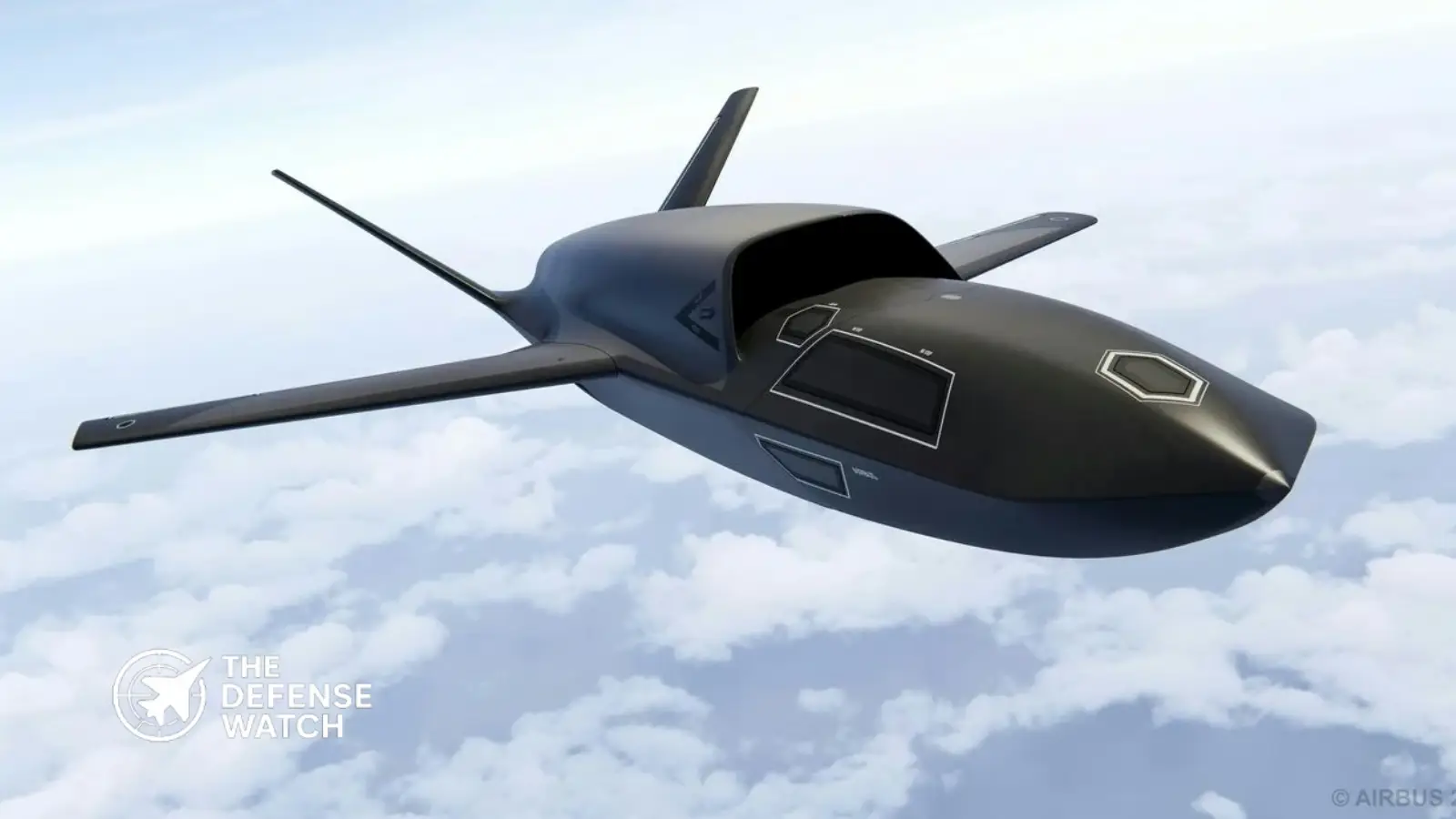
Airbus has unveiled its most comprehensive military drone portfolio to date at ILA Berlin 2026, led by the new U760 Ravenstorm combat drone and autonomous U145 helicopter.
The announcement highlights Europe’s growing focus on sovereign unmanned systems, collaborative combat aircraft, and AI-enabled defense technologies amid rising security demands.
Airbus Drone Portfolio Takes Center Stage At ILA Berlin 2026
Airbus drone portfolio capabilities were on full display at ILA Berlin 2026 as the European aerospace giant showcased a broad range of unmanned systems designed for surveillance, reconnaissance, intelligence gathering, and future multi-domain operations.
The exhibition comes as European governments continue investing in defense modernization programs following years of increased security concerns across the continent. Airbus positioned its unmanned systems lineup as a key component of Europe’s effort to strengthen technological sovereignty while expanding operational flexibility for military forces.
The company presented platforms covering multiple mission categories, ranging from small tactical drones to long-endurance strategic systems capable of supporting joint military operations.
Broad UAV Portfolio Targets Multiple Mission Sets
At the center of Airbus’ display was the company’s growing family of unmanned aerial systems designed to support land, air, and maritime operations.
The portfolio includes tactical reconnaissance drones, larger intelligence and surveillance platforms, and collaborative systems intended to operate alongside manned aircraft. Airbus emphasized interoperability and mission adaptability, reflecting the evolving requirements of modern armed forces.
Military planners increasingly seek UAVs capable of conducting intelligence, surveillance, target acquisition, reconnaissance, communications relay, and battle damage assessment missions within a single operational framework. Airbus’ presentation highlighted how its systems can contribute to these requirements across varying operational environments.
The company’s unmanned systems strategy aligns with broader NATO and European defense priorities focused on improving situational awareness and accelerating decision-making during military operations.
Eurodrone Remains A Key Strategic Program
A major element of the Airbus drone portfolio is the Eurodrone program, one of Europe’s most significant collaborative defense aviation projects.
Developed jointly by Germany, France, Italy, and Spain, Eurodrone is intended to provide a sovereign medium-altitude, long-endurance (MALE) capability for European armed forces. Airbus serves as the program’s industrial lead alongside major European defense partners.
The aircraft is designed to perform long-duration intelligence, surveillance, reconnaissance, and target acquisition missions while operating in controlled airspace. The program aims to provide European nations with an alternative to reliance on imported strategic UAV systems.
Eurodrone continues to be viewed as a cornerstone of Europe’s future airborne intelligence architecture and remains one of the continent’s most closely watched defense aviation programs.
Growing Demand For Autonomous And Unmanned Systems
The Airbus drone portfolio arrives at a time when military organizations worldwide are accelerating investments in autonomous and remotely operated systems.
Recent conflicts have demonstrated the growing importance of drones across tactical and strategic levels of warfare. UAVs are increasingly used for reconnaissance, electronic warfare support, targeting assistance, and operational intelligence.
European governments have responded by increasing procurement budgets and supporting domestic industrial capabilities. Airbus’ emphasis on a fully European drone ecosystem reflects these trends and addresses concerns about supply chain security, operational independence, and long-term sustainment.
From a strategic perspective, the company’s approach extends beyond individual platforms. Airbus is positioning itself as a provider of integrated unmanned solutions capable of supporting networked military operations and future multi-domain battle management systems.
Analysis: Why The Airbus Drone Portfolio Matters
The significance of Airbus’ showcase extends beyond product marketing.
Europe’s defense sector is entering a period of rapid transformation driven by higher military spending, changing security requirements, and increasing demand for indigenous defense technologies. In this environment, unmanned systems have become a central pillar of modernization efforts.
Airbus’ decision to present its entire UAV ecosystem at ILA Berlin demonstrates how drone technology is moving from a niche capability to a core military requirement.
The company’s strategy also reflects a broader industrial competition underway between European manufacturers and established global drone producers. While many nations continue to procure proven foreign systems, European governments increasingly seek locally developed alternatives that provide greater control over technology, maintenance, and operational data.
Another notable aspect is the emphasis on scalability. Modern militaries require drone fleets spanning multiple operational levels, from small tactical units to strategic intelligence platforms. Airbus appears focused on addressing this full spectrum rather than relying on a single flagship program.
As European defense budgets continue to rise, companies capable of offering integrated and sovereign unmanned solutions may gain a significant advantage in upcoming procurement competitions.
Outlook For European UAV Development
The Airbus drone portfolio showcased at ILA Berlin 2026 highlights the company’s ambition to play a leading role in Europe’s expanding unmanned aviation sector.
With programs such as Eurodrone advancing and demand for military UAVs continuing to grow, Airbus is positioning itself to support future European requirements across surveillance, reconnaissance, intelligence gathering, and multi-domain operations.
The exhibition also reinforces a broader trend within European defense policy: strengthening indigenous industrial capabilities while reducing dependence on external suppliers for critical military technologies.
As governments across Europe continue modernizing their armed forces, unmanned systems are expected to remain a major investment priority, creating opportunities for both established aerospace firms and emerging defense technology providers.
Executive Summary:
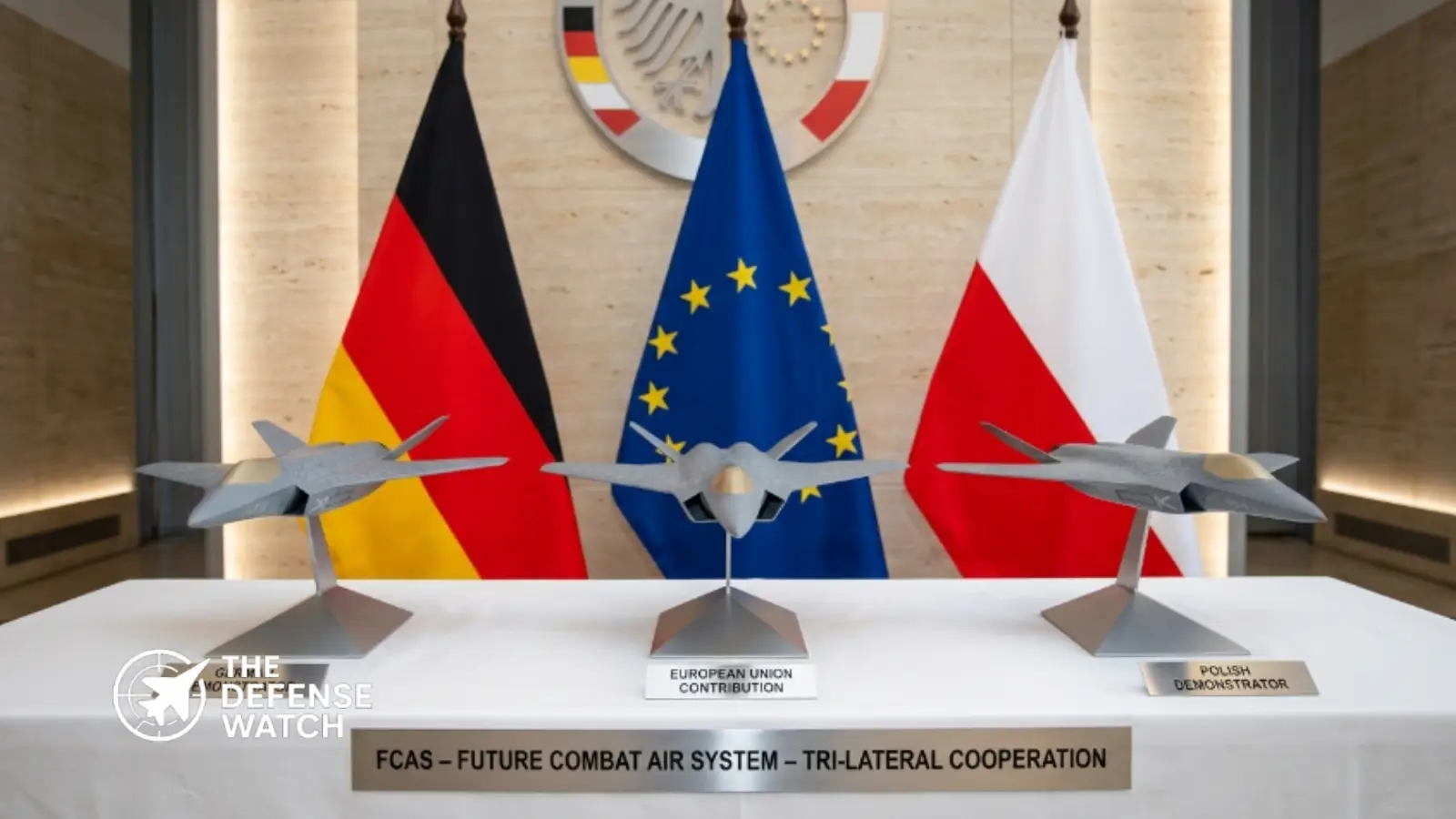
Germany and France have effectively terminated development of the fighter aircraft at the center of the Future Combat Air System (FCAS) program after failing to resolve long running industrial disagreements between Airbus and Dassault Aviation.
While the fighter jet component is ending, participating nations are expected to continue work on related technologies, including collaborative drones and the FCAS combat cloud network.
FCAS Fighter Jet Program Faces Major Setback
The FCAS fighter jet program, Europe’s most ambitious future air combat initiative, has suffered a major blow after German Chancellor Friedrich Merz and French President Emmanuel Macron reportedly concluded that industry partners are unable to overcome disagreements surrounding development of the next generation fighter aircraft.
Officials from both governments determined that months of negotiations failed to bridge differences between Airbus, representing German and Spanish interests, and Dassault Aviation, the French company leading fighter aircraft development efforts.
The decision marks a significant turning point for the Future Combat Air System (FCAS), a program valued at approximately €100 billion ($116 billion) and originally intended to deliver a sixth generation combat aircraft by the 2040s.
What Is FCAS?
Launched in 2017 and later joined by Spain, FCAS was designed as a “system of systems” rather than a single aircraft.
The broader architecture included:
- A sixth generation manned fighter aircraft
- Collaborative combat drones
- Advanced sensors and networking technologies
- A secure combat cloud linking platforms across the battlefield
- Artificial intelligence enabled decision support capabilities
The fighter aircraft served as the centerpiece of the entire concept, making its cancellation a substantial setback for the program’s original vision.
Airbus And Dassault Could Not Reach Agreement
The collapse of the fighter element stems primarily from disagreements over leadership, intellectual property rights, technology sharing, and program management.
Dassault, leveraging its experience developing the Dassault Rafale, sought primary control over fighter design and development. Airbus, representing German and Spanish industrial interests, pushed for a more balanced distribution of responsibilities and access to critical technologies.
Efforts to mediate the dispute continued for months. Earlier reports indicated that official mediation initiatives had failed to produce a compromise acceptable to both sides.
The inability to align industrial priorities ultimately proved stronger than political efforts to preserve the program.
Drone And Combat Cloud Development To Continue
Despite the collapse of the fighter aircraft portion, the broader FCAS framework is not disappearing entirely.
Officials indicated that participating countries will continue developing key enabling technologies, particularly:
- Collaborative combat aircraft (CCA) drones
- The FCAS combat cloud network
- Data sharing and battlefield connectivity systems
These capabilities are increasingly viewed as essential elements of future air warfare and may continue under revised cooperative structures.
Airbus executives had previously emphasized that these components represented some of the most technologically valuable aspects of FCAS and could survive even if the fighter aircraft element failed.
Strategic Implications For Europe
The end of the FCAS fighter aircraft project represents more than an industrial disagreement.
It raises broader questions about Europe’s ability to execute large scale multinational defense programs at a time when European governments are increasing military spending and seeking greater strategic autonomy.
The project had become a symbol of European defense integration and technological independence. Its failure highlights persistent challenges in balancing national requirements, industrial interests, export policies, and intellectual property concerns across multiple countries.
The outcome may also influence future cooperation efforts across the continent, including decisions surrounding next generation combat aviation programs and advanced defense technologies.
DefenseWatch Analysis
The collapse of the fighter aircraft component demonstrates a recurring challenge in European defense procurement. While nations often share strategic objectives, differences over industrial leadership and sovereign control frequently become decisive obstacles.
The continuation of drone and combat cloud development suggests that Europe still recognizes the importance of collaborative defense innovation. However, the inability to sustain the core fighter program could push countries toward more nationally controlled solutions or alternative multinational partnerships in the coming years.
For European air power modernization, the outcome underscores that technological ambition alone is insufficient. Successful sixth generation programs require long term political alignment, clear industrial governance, and agreement on intellectual property ownership from the outset.
Executive Summary:
Honeywell and a local Polish defense industry partner will establish a new AGT1500 engine maintenance center in Poland to support the country’s M1 Abrams tank fleet. The move is designed to improve operational readiness, reduce sustainment timelines, and strengthen NATO-aligned armored capabilities on Europe’s eastern flank.
Honeywell Expands Abrams Tank Support Infrastructure In Poland
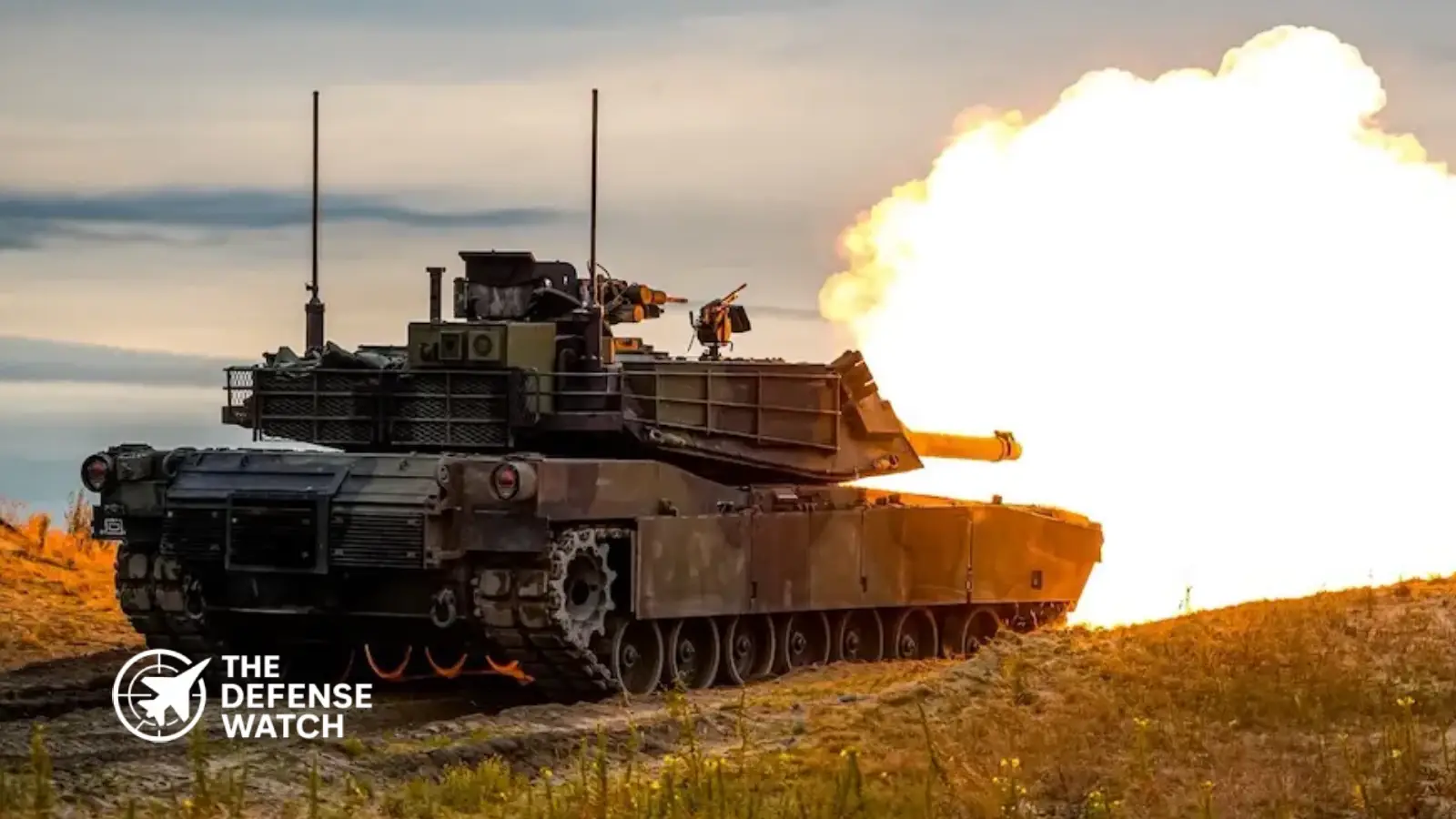
The AGT1500 engine maintenance center in Poland marks another major step in Warsaw’s long term effort to sustain and modernize its armored forces around the American-made M1 Abrams platform.
Honeywell announced it will partner with a local Polish company to establish maintenance, repair, and overhaul capabilities for the AGT1500 gas turbine engine that powers the Abrams main battle tank. The facility will support Poland’s growing fleet of M1A1 Abrams and newer M1A2 SEPv3 variants acquired from the United States.
The development comes as Poland rapidly expands its defense spending and military modernization programs amid heightened security concerns across Eastern Europe following Russia’s invasion of Ukraine.
According to Honeywell, the new maintenance center is expected to improve fleet readiness while reducing dependence on overseas engine servicing. Localized sustainment infrastructure is increasingly viewed as essential for NATO frontline states operating advanced Western combat systems.
Strategic Importance Of The AGT1500 Engine Maintenance Center
The AGT1500 engine maintenance center is strategically important because the Abrams platform relies on a highly specialized turbine propulsion system that differs significantly from conventional diesel-powered tanks used across Europe.
The AGT1500 gas turbine engine delivers high acceleration and operational mobility for the Abrams platform, but it also requires advanced maintenance expertise and dedicated logistics support. Establishing this capability inside Poland could significantly shorten repair cycles and reduce operational downtime for frontline armored units.
Poland has become one of the largest international Abrams operators after signing multiple procurement agreements with the United States. Warsaw ordered 250 M1A2 SEPv3 Abrams tanks in 2022 and later acquired 116 refurbished M1A1 Abrams tanks as an interim capability enhancement.
These acquisitions are part of a broader Polish defense modernization strategy focused on deterring potential aggression along NATO’s eastern flank.
The establishment of local sustainment infrastructure also aligns with wider NATO goals emphasizing readiness, interoperability, and regional industrial resilience.
Poland’s Expanding Role In NATO Armored Defense
Poland is rapidly emerging as one of NATO’s leading land warfare powers in Europe.
In addition to the Abrams fleet, Poland is procuring South Korean K2 Black Panther tanks, K9 self-propelled howitzers, HIMARS rocket artillery systems, Patriot air defense batteries, and F-35 fighter aircraft. The country has also significantly increased defense spending, targeting expenditures above NATO’s 2% GDP benchmark.
The addition of an AGT1500 engine maintenance center supports this broader force expansion by ensuring long term sustainment capacity for high-end armored systems.
Military analysts increasingly note that sustainment and logistics infrastructure are becoming just as critical as procurement itself. Modern armored warfare places heavy demands on maintenance networks, spare parts availability, and industrial support chains.
By developing domestic maintenance capability, Poland reduces potential vulnerabilities tied to international transport delays or external repair bottlenecks during periods of crisis or conflict.
Honeywell Strengthens European Defense Sustainment Presence
For Honeywell, the agreement further expands the company’s role in European defense sustainment operations.
The AGT1500 engine has powered Abrams tanks for decades and remains one of the most recognizable turbine propulsion systems in armored warfare. Honeywell has continued upgrading and supporting the engine as Abrams fleets remain operational across the U.S. Army and allied nations.
The company has increasingly focused on localized defense partnerships in Europe as NATO members accelerate rearmament and modernization efforts.
Defense industrial cooperation between American firms and European partners has expanded sharply since 2022, particularly in areas involving maintenance, munitions production, and sustainment infrastructure.
The new Polish facility may also position the country as a future regional maintenance hub for Abrams operators in Central and Eastern Europe if additional allied fleets emerge in the region.
Operational Readiness And Long Term Sustainment
The AGT1500 engine maintenance center could provide Poland with greater operational independence while improving long term fleet availability.
Abrams tanks are among the most capable armored combat systems in NATO service, but sustaining advanced platforms requires specialized technical support and trained personnel. Building domestic expertise around turbine engine maintenance represents an important capability multiplier for the Polish Armed Forces.
The initiative also reflects broader lessons from the war in Ukraine, where logistics, sustainment, and repair capacity have proven decisive factors in maintaining combat effectiveness over prolonged operations.
As NATO members continue modernizing their armored formations, localized maintenance infrastructure is likely to become an increasingly important element of alliance defense planning.
Executive Summary: South Korean defense giant Hanwha used BSDA 2026 in Romania to highlight its growing portfolio of AI-enabled military systems and autonomous platforms. The company’s presence reflects increasing European demand for unmanned technologies, air defense solutions, and industrial defense partnerships amid rising regional security pressures.
Hanwha Highlights AI Defense Technologies At BSDA 2026
South Korean defense manufacturer Hanwha Aerospace used BSDA 2026 in Bucharest to showcase a broad portfolio of AI defense technologies and unmanned systems as the company accelerates its expansion into the European defense market.
The exhibition comes as NATO members across Eastern Europe continue increasing defense spending and prioritizing modernization programs focused on autonomous systems, integrated air defense, and battlefield networking. Hanwha’s display reflected these priorities, combining unmanned ground systems, artillery capabilities, and AI-enabled battlefield technologies designed for modern high-intensity operations.
BSDA 2026, one of Eastern Europe’s largest defense exhibitions, has become an increasingly important venue for global defense firms seeking industrial partnerships and procurement opportunities within NATO-aligned states.
Focus On Autonomous And Unmanned Warfare Systems
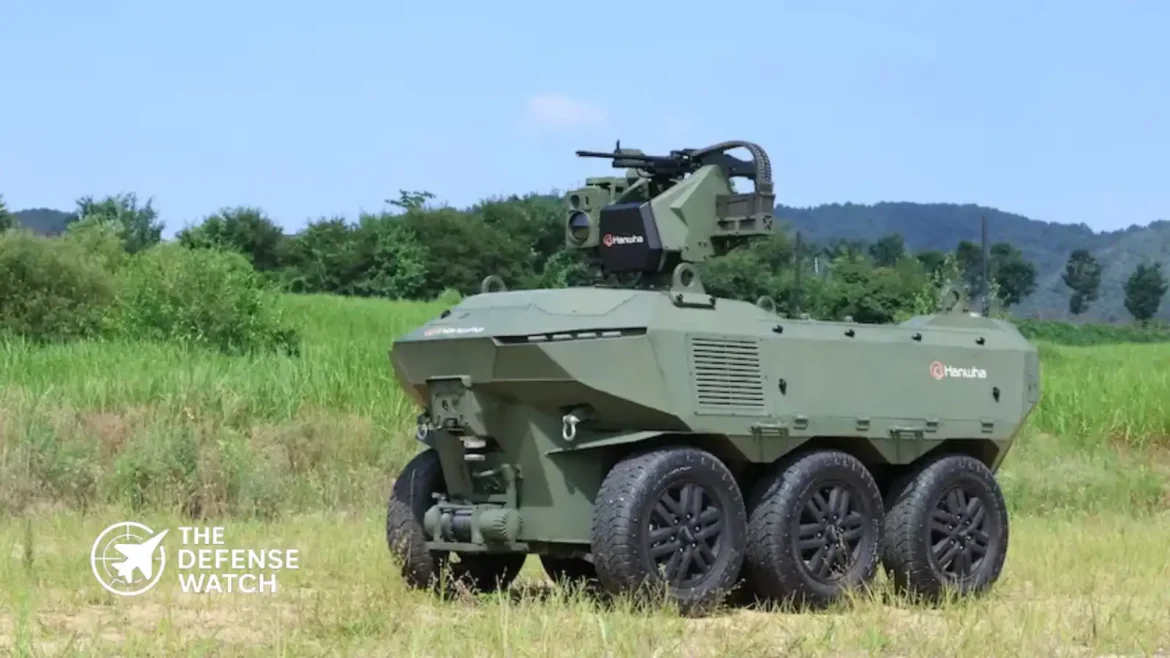
A major element of Hanwha’s presentation centered on unmanned and autonomous military platforms intended to support reconnaissance, logistics, and combat operations.
The company highlighted unmanned ground vehicles designed to reduce soldier exposure in contested environments while supporting intelligence gathering and resupply missions. These systems are part of a broader global trend toward human-machine teaming, where autonomous platforms operate alongside conventional forces.
Hanwha also emphasized AI-enabled command and control technologies intended to improve battlefield awareness and accelerate operational decision-making. Defense companies across the United States, Europe, and Asia are increasingly investing in similar capabilities as militaries seek faster sensor-to-shooter integration.
The focus on autonomous military technologies reflects lessons observed in recent conflicts, particularly in Ukraine, where drones, loitering munitions, and AI-assisted targeting systems have reshaped battlefield operations. European governments are now accelerating procurement programs tied to unmanned warfare and layered defense architectures.
European Expansion Strategy Gains Momentum
Hanwha’s appearance at BSDA 2026 also underscored its long-term strategy to deepen industrial cooperation across Europe.
The company has steadily expanded its footprint within NATO member states through defense partnerships, localized production initiatives, and technology transfer agreements. Eastern Europe has become a particularly important market due to growing security concerns linked to Russia’s military posture and the need to replenish defense inventories.
Romania, Poland, and other regional states are investing heavily in artillery systems, armored vehicles, missile defense, and autonomous capabilities. Hanwha has positioned itself as a competitive supplier by offering rapid production timelines and industrial cooperation packages.
The company’s growing visibility in Europe mirrors broader competition among global defense manufacturers seeking contracts tied to NATO modernization requirements. South Korean defense firms, including Hanwha, have increasingly emerged as major suppliers due to their ability to scale production and deliver systems quickly.
AI Defense Technologies Become Central To Modernization
The AI defense technologies presented by Hanwha align with a wider shift toward digitally connected military operations.
Modern armed forces are prioritizing artificial intelligence for battlefield analysis, threat detection, predictive maintenance, and autonomous operations. AI-driven systems are increasingly viewed as critical force multipliers capable of improving operational tempo and reducing manpower burdens.
Hanwha’s portfolio demonstrated how AI is becoming integrated across multiple defense sectors rather than remaining limited to experimental programs. This includes applications in surveillance systems, autonomous navigation, targeting support, and networked command systems.
Defense analysts increasingly view AI integration as one of the defining factors shaping future military competition. NATO countries are now accelerating investments in secure military AI frameworks while balancing operational effectiveness with cybersecurity and ethical concerns.
BSDA 2026 Reflects Eastern Europe’s Defense Priorities
BSDA 2026 highlighted how Eastern Europe has become a central region for defense procurement and industrial expansion.
The exhibition featured companies focused on missile defense, artillery modernization, drones, armored systems, and electronic warfare. Many participating firms emphasized interoperability with NATO standards and rapid battlefield deployment capabilities.
Hanwha’s participation demonstrated the company’s intent to compete directly within this evolving security environment. Its emphasis on unmanned systems and AI-enabled defense technologies aligns closely with the operational lessons emerging from ongoing regional conflicts and NATO modernization plans.
The company’s strategy also reflects growing global demand for scalable defense manufacturing and resilient supply chains. European states increasingly seek suppliers capable of delivering systems quickly while supporting local industrial participation.
Strategic Implications For NATO Defense Modernization
Hanwha’s expanding European presence illustrates how defense procurement is becoming more globally competitive as NATO members accelerate military modernization efforts.
South Korean defense manufacturers are increasingly challenging established U.S. and European suppliers across artillery, armored vehicle, and advanced technology sectors. Their rise is supported by strong domestic industrial capacity and proven export performance.
The emphasis on AI defense technologies and autonomous systems at BSDA 2026 also signals where future procurement priorities are heading. European militaries are expected to continue investing heavily in networked warfare systems, autonomous platforms, and integrated battlefield management technologies over the coming decade.
For NATO allies facing evolving security threats, these capabilities are becoming essential components of future force structures rather than optional enhancements.
Executive Summary:
Intelic has launched a new European defense procurement platform designed to accelerate the acquisition and deployment of drone capabilities. The initiative focuses on improving interoperability, reducing procurement timelines, and strengthening collective defense integration across European armed forces.
Intelic Introduces Digital Procurement Platform for UAV Integration
European defense technology firm Intelic has unveiled a new digital procurement platform aimed at transforming how military forces acquire and deploy unmanned aerial systems. Announced in 2026, the platform provides a centralized ecosystem where governments, defense contractors, and technology providers can collaborate more efficiently.
The initiative responds to growing demand for rapid drone deployment, driven by evolving battlefield requirements and lessons learned from recent conflicts where unmanned systems played a decisive role.
Key Features of the Intelic Platform
Accelerated Procurement Cycles
The platform reduces traditional acquisition timelines by digitizing vendor selection, compliance checks, and contract processes.
Interoperability Across NATO and EU Forces
It is designed to align with NATO standards, enabling seamless integration of UAV systems across multinational operations.
Real-Time Capability Matching
Military users can quickly identify drone systems based on mission needs, including surveillance, strike, and logistics roles.
Technical Advantages Over Legacy Procurement Systems
- Centralized digital interface replacing fragmented national procurement channels
- AI-driven analytics to match operational requirements with available drone systems
- Secure data-sharing architecture supporting classified and multi-national collaboration
- Modular integration framework allowing rapid adoption of new UAV technologies
Comparison: Intelic Platform vs Legacy Procurement Systems
| Feature | Intelic Platform | Legacy Procurement Systems |
|---|---|---|
| Range | Not platform-limited | Platform-specific constraints |
| Payload | Multi-vendor configurable | Fixed per program |
| Status | Operational (2026) | Fragmented, often outdated |
| Key Technology | AI-driven digital marketplace | Manual, paper-based processes |
Strategic Context: Responding to Modern Battlefield Demands
The launch of Intelic’s platform reflects a broader shift in defense procurement strategy. European militaries are under pressure to rapidly scale drone capabilities in response to:
- Increased use of UAVs in high-intensity conflicts
- Demand for persistent surveillance along NATO’s eastern flank
- The need for cost-effective force multiplication
Recent conflicts have demonstrated that procurement speed can directly impact battlefield effectiveness. Traditional acquisition cycles, often spanning years, are no longer compatible with rapidly evolving drone technologies.
Strengthening European Defense Integration
A central goal of the Intelic platform is to enhance coordination among European allies. By providing a shared procurement environment, the system supports:
- Standardization of UAV fleets across nations
- Improved logistics and maintenance interoperability
- Faster joint capability deployment in crisis scenarios
This aligns with ongoing EU and NATO efforts to build a more cohesive and responsive defense posture.
Outlook: Digital Procurement as a Force Multiplier
As defense ecosystems become more data-driven, platforms like Intelic’s are expected to play a critical role in future military readiness. By combining procurement, analytics, and integration into a single system, the platform represents a shift toward agile, technology-enabled defense management.
If widely adopted, it could significantly reduce capability gaps and ensure that European forces remain competitive in an increasingly drone-centric battlespace.
Executive Summary : The Swedish Armed Forces has launched its first military surveillance satellite, marking a major step into space-based intelligence. The system is designed to strengthen real-time ISR (Intelligence, Surveillance, Reconnaissance) capabilities and reduce reliance on external data sources. This move reflects growing European focus on sovereign space assets amid rising geopolitical tensions.
Sweden Enters Military Space Domain with First Surveillance Satellite
The Swedish Armed Forces has successfully launched its first dedicated military surveillance satellite, a milestone in the country’s defense modernization strategy. The satellite is expected to provide persistent Earth observation, enabling Sweden to independently collect high-resolution intelligence data.
This development reduces Stockholm’s dependence on allied or commercial satellite imagery and enhances decision-making speed in crisis scenarios.
Key Program Details
- Launch marks Sweden’s entry into sovereign military space operations
- Focus on real-time ISR data collection
- Supports national security, border monitoring, and maritime surveillance
- Enhances integration with NATO-aligned intelligence frameworks
Technical Advantages of the New Satellite System
Enhanced ISR Capabilities
- High-resolution imaging for tactical and strategic intelligence
- Near real-time data transmission to ground stations
- Improved target tracking and situational awareness
Operational Benefits
- Greater data sovereignty and security
- Reduced reliance on foreign satellite providers
- Increased resilience in contested environments
Strategic Flexibility
- Supports multi-domain operations, including air, land, and sea
- Enables faster threat detection and response cycles
Comparison: New Swedish Satellite vs Legacy ISR Sources
| Feature | New Military Satellite | Legacy ISR (Allied/Commercial) |
|---|---|---|
| Range | Global coverage | Limited or access-dependent |
| Payload | Advanced EO sensors | Mixed, often non-military |
| Status | Operational (2026) | Pre-existing external systems |
| Key Technology | Real-time ISR, secure comms | Delayed data access, shared networks |
Strategic Context: Europe’s Push for Space-Based Defense
Sweden’s move aligns with a broader European trend toward independent space capabilities. Countries across the EU are investing in military satellites to counter:
- Increasing great power competition in space
- Risks to critical infrastructure and communication networks
- Dependence on U.S. or commercial ISR providers
The launch also complements NATO’s growing emphasis on space as an operational domain, where satellites play a central role in modern warfare.
Implications for Regional Security
- Strengthens Nordic and Baltic surveillance coverage
- Improves monitoring of Arctic and maritime activity
- Enhances Sweden’s contribution to collective defense intelligence
European Defense Sector Challenges Intensify Amid Rising Demand
The European defense sector challenges are becoming increasingly visible as governments attempt to expand military capabilities in response to shifting security dynamics. While defense budgets across Europe have risen sharply since 2022, industrial capacity, coordination, and supply chains have struggled to keep pace.
- Europe faces major defense production bottlenecks despite rising military spending since 2022.
- Fragmented procurement across EU states limits economies of scale and slows modernization.
- Supply chain constraints, especially in munitions and electronics, remain a critical vulnerability.
- Workforce shortages and regulatory delays are hindering rapid industrial expansion.
- Strategic dependence on U.S. systems continues to shape Europe’s defense posture.
According to data from NATO and the European Defence Agency, many European nations are still working to translate financial commitments into deployable capability. The result is a widening gap between political intent and operational readiness.
Fragmentation Undermines Efficiency
One of the most persistent European defense sector challenges is fragmentation across national industries. Unlike the United States, where procurement is largely centralized, Europe operates through a patchwork of national programs and competing industrial champions.
This leads to duplication of platforms, inconsistent standards, and reduced economies of scale. For example, Europe fields multiple main battle tank designs, fighter aircraft programs, and naval platforms, often developed in parallel rather than jointly.
The European Commission has acknowledged this issue, noting that collaborative procurement accounts for a relatively small share of total defense spending. Efforts such as the European Defence Fund aim to address this, but progress remains gradual.
Analysis:
Fragmentation is not just an economic inefficiency. It directly affects interoperability within NATO. In high-intensity conflict scenarios, differences in equipment, logistics, and maintenance systems can complicate joint operations, slowing response times and increasing costs.
Production Bottlenecks Limit Output
A second major factor shaping European defense sector challenges is limited industrial production capacity. The war in Ukraine exposed critical shortages in artillery shells, air defense systems, and spare parts.
Despite increased orders, scaling production has proven difficult. Defense manufacturers face long lead times for expanding facilities, securing raw materials, and hiring skilled labor.
For instance, European ammunition production has struggled to meet demand targets set by the European Union. Reports from industry groups indicate that output increases are constrained by both infrastructure and supply chain limitations.
Analysis:
This bottleneck highlights a structural issue. European defense industries were optimized for peacetime efficiency, not sustained high-volume conflict. Reconfiguring production lines for wartime output requires long-term investment and policy consistency, which cannot be achieved quickly.
Supply Chain Vulnerabilities Persist
Supply chain disruptions remain a central element of European defense sector challenges. Critical components such as semiconductors, explosives, and specialized metals often depend on global suppliers.
The COVID-19 pandemic and subsequent geopolitical tensions exposed these vulnerabilities. Defense firms now face delays in sourcing key inputs, which slows production timelines across multiple programs.
In some cases, reliance on non-European suppliers raises strategic concerns. Governments are increasingly focused on reshoring or diversifying supply chains, but such transitions are complex and costly.
Analysis:
Supply chain resilience is becoming as important as platform capability. Without secure access to components, even advanced systems cannot be produced or maintained at scale. This shifts defense planning toward industrial security as a core priority.
Workforce and Skills Gap
Another pressing issue within European defense sector challenges is the shortage of skilled labor. Expanding production requires engineers, technicians, and specialized manufacturing personnel, many of whom are in short supply.
Industry reports indicate that aging workforces and limited recruitment pipelines are slowing expansion efforts. Training new workers takes time, further delaying production increases.
Governments and companies are investing in workforce development programs, but results will take years to materialize.
Analysis:
The skills gap reflects a broader trend across advanced manufacturing sectors. Defense industries compete with commercial technology firms for talent, often facing disadvantages in salary and flexibility. Addressing this imbalance is essential for long-term growth.
Regulatory and Procurement Delays
Complex regulatory frameworks and lengthy procurement processes also contribute to European defense sector challenges. Approval timelines for new programs can stretch over several years, delaying deployment.
While oversight is necessary, excessive bureaucracy can hinder responsiveness, particularly in rapidly evolving threat environments.
Recent initiatives aim to streamline procurement and accelerate decision-making, but implementation varies across member states.
Analysis:
Speed is increasingly a strategic factor. Adversaries capable of rapid innovation and deployment can exploit delays in Western procurement systems. Reforming these processes is critical to maintaining technological and operational parity.
Strategic Dependence on External Suppliers
Despite efforts to strengthen autonomy, Europe remains reliant on external partners, particularly the United States, for key defense capabilities. This includes advanced missile systems, intelligence assets, and certain aircraft platforms.
This dependence shapes procurement decisions and limits strategic flexibility. While transatlantic cooperation remains strong, European policymakers continue to debate the balance between autonomy and alliance integration.
Analysis:
Strategic dependence is not inherently negative, but it introduces risk in scenarios where priorities diverge. Building indigenous capabilities is therefore seen as both an economic and security imperative.
Outlook: Structural Reform Required
The European defense sector challenges are unlikely to be resolved in the short term. Addressing fragmentation, scaling production, securing supply chains, and closing skills gaps will require sustained political commitment and coordinated policy action.
Efforts at the EU and NATO levels are beginning to align priorities, but implementation remains uneven. The coming years will test whether Europe can translate increased spending into tangible military capability.
European Defense Industry Developments Accelerate Amid Strategic Pressure
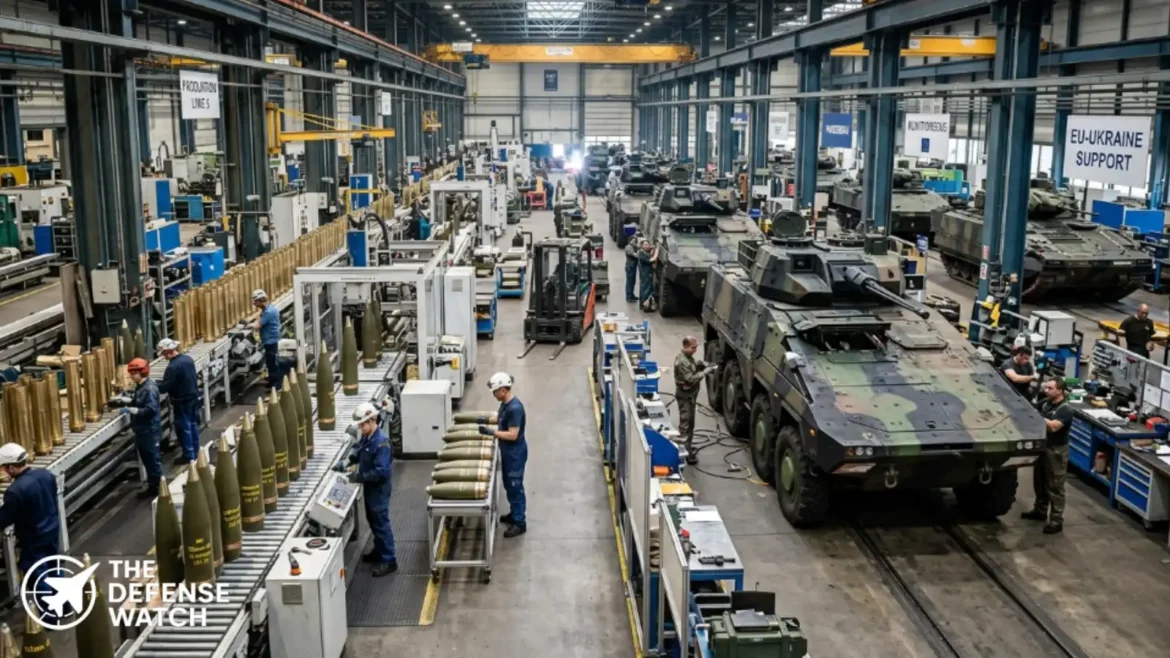
European defense industry developments are entering a new phase of expansion, driven by sustained demand linked to the war in Ukraine and broader NATO readiness requirements. Governments across Europe are moving beyond short-term aid measures toward long-term industrial scaling, with a focus on ammunition, air defense, and next-generation platforms.
According to recent reporting from defense and industry sources including the European Commission and NATO, the shift reflects a structural change rather than a temporary surge. Production timelines are being extended, contracts are increasing in size, and cross-border cooperation is becoming more common.
- European nations are increasing defense spending and industrial output following Russia’s invasion of Ukraine.
- Joint procurement programs and EU-backed funding mechanisms are expanding across multiple domains.
- Ammunition production, air defense systems, and armored vehicle manufacturing are priority areas.
- Defense firms are scaling capacity to address long-term supply shortages identified since 2022.
- The shift reflects a structural transformation in Europe’s defense industrial base.
This transition marks one of the most significant reorganizations of Europe’s defense industrial base since the end of the Cold War.
Ammunition Production Becomes Top Priority
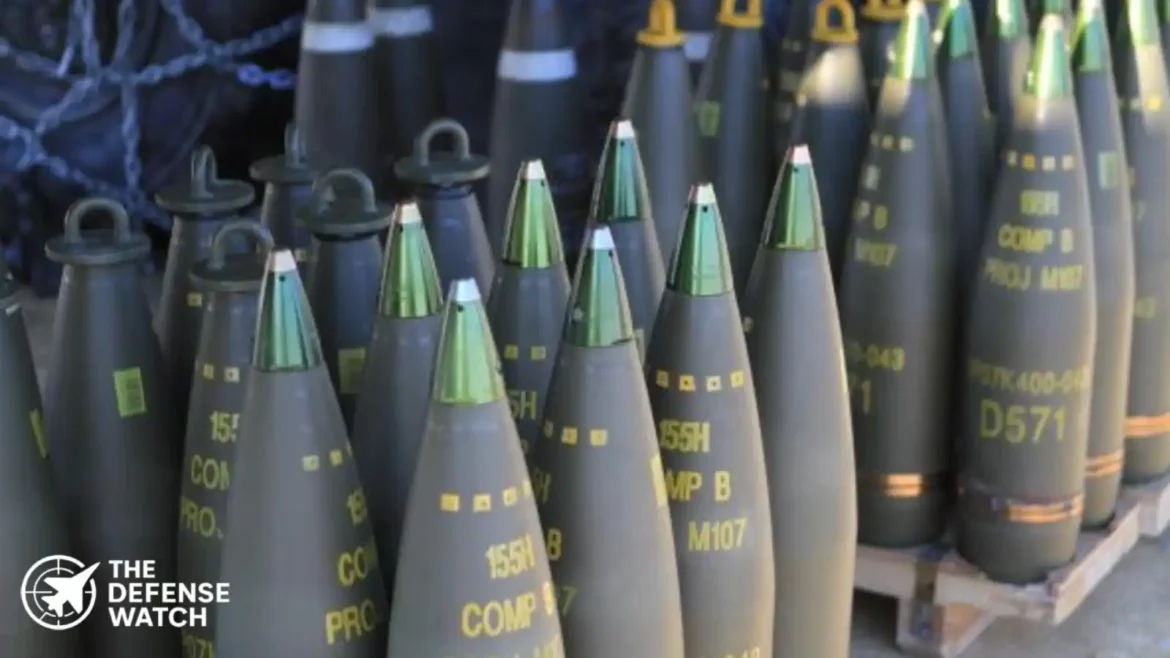
A central element of recent European defense industry developments is the rapid expansion of ammunition production capacity. European nations have faced persistent shortages, particularly in 155mm artillery shells, which are heavily used in Ukraine.
The European Union launched initiatives such as the Act in Support of Ammunition Production (ASAP) to boost output. The goal is to reach production levels of over one million rounds annually, although timelines have faced delays due to supply chain constraints and workforce limitations.
Major defense manufacturers are investing in new facilities and reopening dormant production lines. Industry analysts note that scaling production is not only about funding but also about securing raw materials, skilled labor, and long-term contracts to ensure sustainability.
Air Defense and Missile Systems Expand Rapidly
Air and missile defense systems are another key focus area. European countries are investing heavily in layered air defense networks to counter threats ranging from drones to ballistic missiles.
Germany’s European Sky Shield Initiative continues to gain traction, with multiple countries joining the program. The initiative aims to integrate systems such as IRIS-T, Patriot, and Arrow into a coordinated defensive architecture.
At the same time, countries like Poland and the Baltic states are accelerating national procurement programs. These efforts highlight a shift toward both collective and sovereign defense capabilities, reflecting differing threat perceptions across the region.
Armored Vehicles and Land Systems See Renewed Demand
The demand for armored vehicles has surged as European armies reassess their readiness for high-intensity conflict. Programs involving main battle tanks, infantry fighting vehicles, and artillery systems are expanding.
Countries including Norway, Germany, and the United Kingdom are modernizing their armored fleets. Recent contracts for upgraded main battle tanks and combat engineering vehicles underscore the scale of investment.
This trend also reflects lessons learned from Ukraine, where heavy armor remains critical despite the growing role of drones and precision weapons.
Defense Budgets Reach Historic Levels
European defense spending has increased significantly since 2022, with many NATO members meeting or exceeding the alliance’s 2 percent GDP target. According to NATO data, total European defense expenditure continues to rise year over year.
This funding supports both procurement and industrial expansion. Governments are placing multi-year orders to provide industry with predictable demand, reducing the risk of production slowdowns once immediate operational needs are met.
Analysts note that sustained funding will be essential to maintain momentum, particularly as inflation and rising costs impact defense programs.
Joint Procurement and EU-Level Coordination
Another defining feature of current European defense industry developments is the emphasis on joint procurement and coordination at the EU level.
Programs under the European Defence Fund (EDF) and Permanent Structured Cooperation (PESCO) are facilitating collaboration on research, development, and procurement. These initiatives aim to reduce fragmentation and improve interoperability among European forces.
However, challenges remain. Differences in national requirements, industrial interests, and procurement timelines continue to complicate joint efforts. Despite this, the overall trend points toward greater integration compared to previous decades.
Industrial Challenges and Supply Chain Constraints
While growth is evident, the European defense industry faces several constraints. Supply chain bottlenecks, particularly in electronics and specialized materials, continue to affect production timelines.
Workforce shortages are another issue, as the industry requires skilled labor in engineering, manufacturing, and maintenance. Companies are investing in training programs, but scaling the workforce takes time.
In addition, regulatory and export control frameworks can slow down cross-border cooperation. Efforts are underway to streamline these processes, but progress varies across countries.
Strategic Implications for NATO and Global Defense
The ongoing expansion of Europe’s defense industrial base has broader implications for NATO and global security. Increased European production capacity reduces reliance on external suppliers, particularly the United States, while strengthening the alliance’s overall readiness.
At the same time, the shift signals a more balanced transatlantic defense relationship. European nations are taking greater responsibility for regional security, which could influence future NATO planning and burden-sharing discussions.
From a geopolitical perspective, the developments reflect a long-term response to Russia’s actions in Ukraine and a recognition of evolving threat environments.
Outlook
Looking ahead, European defense industry developments are expected to continue along the current trajectory, with sustained investment and increasing coordination. The focus will likely remain on scaling production, improving interoperability, and integrating emerging technologies such as artificial intelligence and autonomous systems.
However, the pace of progress will depend on political commitment, industrial capacity, and the evolution of the security environment. For now, Europe’s defense sector is undergoing a transformation that is reshaping its role within NATO and the global defense landscape.
Saab’s Q1 2026 Results Reflect Accelerating European Defense Demand
Saab reported Q1 2026 sales of SEK 19,164 million, representing organic growth of 23.6% compared to SEK 15,792 million in the same period last year. The results confirm the Swedish defense contractor is capitalizing on a historic surge in European defense procurement, driven by persistent security pressures across NATO’s eastern flank and growing urgency among allied governments to expand their military capabilities.
- Saab reported Q1 2026 sales of SEK 19,164 million, up from SEK 15,792 million in Q1 2025 — representing 23.6% organic growth.
- EBIT rose 32% year-over-year to SEK 1,920 million, with an EBIT margin improving to 10.0% from 9.2%.
- All business areas — including Surveillance, Aeronautics, Weapons, and Combitech — posted double-digit sales growth.
- Order bookings reached SEK 18,243 million in Q1 2026, with strong growth in medium-sized orders across NATO and partner nations.
- Operational cash flow turned sharply positive, reaching SEK 1,017 million compared to negative SEK 14 million in Q1 2025.
The Big Picture
European defense spending has entered a structural expansion phase not seen since the Cold War. NATO members collectively pledged to meet and exceed the 2% of GDP defense spending target following Russia’s 2022 invasion of Ukraine, and many are now committing to 3% or higher. This fiscal shift is producing tangible industrial results across the continent’s defense sector — and Saab stands among the clearest beneficiaries.
The company’s product portfolio spans air, land, naval, and security domains, aligning directly with the modernization priorities of both European governments and international partners seeking sovereign defense capabilities. Saab’s Gripen fighter, GlobalEye airborne early warning system, Giraffe radar family, AT4 anti-armor weapons, and Carl-Gustaf recoilless rifles are all in active procurement cycles across multiple NATO and partner nations.
This is not a temporary demand spike — it reflects a structural reorientation of European defense investment that analysts expect to persist through the end of the decade.
What’s Happening
Saab CEO and President Micael Johansson stated that the company delivered strong organic sales growth, a higher operating margin, and solid cash flow in the first quarter, adding that Saab’s product offering is well aligned with the defense priorities of many nations globally.
EBITDA reached SEK 2,731 million in Q1 2026, up from SEK 2,140 million, with the EBITDA margin improving to 14.3% from 13.6%. Net income rose to SEK 1,466 million from SEK 1,277 million, and earnings per share increased to SEK 2.65 from SEK 2.35.
Operational cash flow increased sharply to SEK 1,017 million, compared to negative SEK 14 million in the same quarter of 2025 — a turnaround that signals improved delivery execution and billing cycles across major contracts.
Order bookings in the quarter amounted to SEK 18,243 million, down slightly from SEK 19,144 million in Q1 2025. Saab noted that growth was strong for medium-sized orders, but that fewer large orders were received in the quarter.
Why It Matters
The 23.6% organic sales growth figure is exceptional by any standard in the defense industry. Most Western defense primes operate on multi-year procurement cycles with incremental annual revenue growth. Saab’s acceleration at this pace reflects two converging forces: an expanded backlog built from recent years of order wins, and the company’s deliberate investment in production capacity to actually convert that backlog into delivered revenue.
Saab noted particularly strong development in its Surveillance business area, which includes airborne surveillance systems, ground-based radar, and air traffic management — product lines that are currently among the highest procurement priorities for NATO members filling critical ISR gaps.
The double-digit growth across all business units is strategically significant. It indicates Saab is not dependent on a single platform or contract vehicle, but is generating broad demand across its entire portfolio. That diversification makes the company more resilient to procurement delays or cancellations in any one program.
Strategic Implications
Saab’s financial performance carries direct implications for NATO’s collective defense posture. Sweden’s formal entry into NATO in March 2024 effectively transformed Saab from a Nordic defense supplier into an embedded NATO industrial partner. Allied governments can now structure procurement with greater confidence in interoperability, information sharing, and political alignment.
The strong Surveillance segment performance deserves particular attention. Europe and NATO collectively face persistent gaps in ground-based air defense, early warning radar coverage, and counter-drone capability. Saab recently received an order from the Swedish Defence Materiel Administration (FMV) valued at approximately SEK 2.6 billion for a mobile and modular counter-unmanned aerial system (C-UAS), with deliveries planned for 2027 to 2028. This contract illustrates exactly the kind of capability gap that Saab’s current product roadmap targets.
Saab’s growing U.S. market presence also warrants attention. The company operates a significant footprint in the United States through subsidiaries involved in training systems, combat vehicles, and weapons. As the U.S. Defense Department seeks to diversify its supplier base and deepen allied industrial cooperation, Saab represents an increasingly credible non-domestic source.
Competitor View
Russia will interpret accelerating Western European defense production as confirmation that its strategic gambit in Ukraine has failed to fracture NATO cohesion — and may in fact have strengthened it. Saab’s growth numbers, alongside equivalent expansions at BAE Systems, Rheinmetall, Leonardo, and Thales, illustrate that Europe’s defense industrial base is now genuinely scaling up rather than simply pledging to do so.
China will monitor Saab’s Surveillance and airborne early warning programs closely. The GlobalEye multi-role surveillance aircraft and Giraffe radar family provide persistent, long-range detection capabilities that hold direct relevance to the Indo-Pacific security debate. Several of Saab’s regional customers — including nations in Southeast Asia — operate in areas of active Chinese strategic competition.
What To Watch Next
Saab’s Q2 2026 results will serve as the next key indicator of whether the company can sustain this growth trajectory. Several factors will influence the outcome: the timing and size of new large contract awards, continued execution on existing deliveries, and the trajectory of the Swedish krona against the euro and dollar.
Investors and defense analysts will also track whether Saab announces additional capacity investments. CEO Johansson has consistently noted the need to balance near-term delivery obligations with longer-term capability development — a challenge that every major defense prime is navigating as order books outpace physical production capacity.
The company’s C-UAS order from Sweden, with deliveries running through 2027 and 2028, highlights an emerging product line that could generate significant follow-on revenue as drone threats proliferate across European and NATO operational environments.
Capability Gap
Saab’s surge in Surveillance revenue directly addresses one of NATO’s most persistent operational shortfalls: the lack of scalable, mobile early warning and tracking systems capable of operating across contested electromagnetic environments.
Fixed radar installations remain vulnerable to suppression and precision strike. Saab’s mobile Giraffe radar variants and airborne GlobalEye platform offer survivable, deployable alternatives that aligning with NATO’s emphasis on multi-domain resilience.
The newly ordered C-UAS system addresses a separate but equally urgent gap. Drone proliferation — demonstrated extensively in Ukraine — has exposed the inadequacy of legacy air defense against low-cost, high-volume UAS threats. Saab’s modular C-UAS approach, combining detection, tracking, and effector systems, positions the company at the center of what is becoming one of the highest-priority procurement categories across allied defense ministries.
One realistic limitation: Saab, like all European defense primes, faces a constrained skilled labor market and supply chain bottlenecks in critical components including semiconductors, precision optics, and energetic materials. Sustained 20%-plus growth rates will eventually require continued investment in both workforce and industrial infrastructure to avoid delivery delays that could pressure margins.
The Bottom Line
Saab’s Q1 2026 results confirm that European defense rearmament has moved from political commitment to measurable industrial output, with the Swedish company positioned as one of the primary beneficiaries of NATO’s most significant military buildup in a generation.