(adsbygoogle = window.adsbygoogle || []).push({});Executive Summary:
Brazilian aerospace manufacturer Embraer has confirmed it has no plans to develop an indigenous fighter jet, choosing instead to expand its partnership with Saab on the Gripen program. The decision reinforces Brazil’s role in international combat aircraft production while avoiding the financial and technological risks associated with launching a new fighter aircraft project.
Embraer Reaffirms Commitment To Saab Gripen Partnership
Embraer Saab partnership remains central to Brazil’s military aviation strategy after Embraer CEO Francisco Gomes Neto stated that the company has no intention of developing its own fighter aircraft.
Speaking to reporters in São José dos Campos on June 10, Gomes Neto said Embraer is satisfied with its cooperation with Swedish defense company Saab and sees no need to enter the highly competitive fighter jet development market independently.
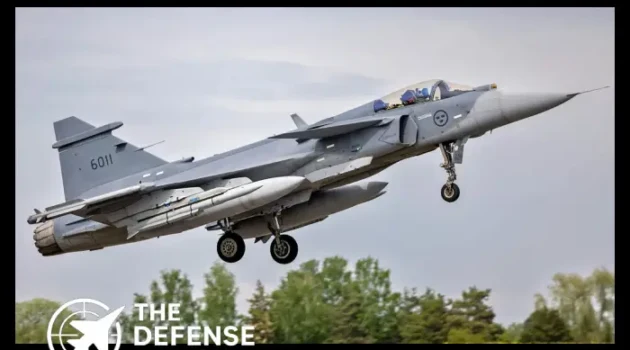
The announcement comes only months after Embraer and Saab unveiled the first Gripen fighter assembled in Brazil at Embraer’s Gavião Peixoto facility, a milestone that highlighted the success of technology transfer agreements between the two companies.
According to Embraer, the facility could support additional production if Saab secures future aircraft orders in South America or other export markets requiring expanded manufacturing capacity.
Focus Remains On C-390 Millennium And Super Tucano
Rather than pursuing a costly fighter development effort, Embraer continues to prioritize platforms where it already holds strong market positions.
The company remains focused on expanding exports of the C-390 Millennium tactical airlifter and the A-29 Super Tucano light attack and training aircraft. Both platforms have generated growing international demand in recent years, particularly among NATO and allied nations seeking cost effective military aviation solutions.
This strategy reflects a broader industry reality. Developing a modern combat aircraft requires decades of investment, advanced industrial capabilities, and extensive government support. Even major aerospace powers often rely on multinational partnerships to share costs and technological risks.
(adsbygoogle = window.adsbygoogle || []).push({});By leveraging Saab’s fighter expertise while concentrating on transport and light attack aircraft, Embraer avoids duplicating capabilities already available through its existing alliance.
Brazil’s Gripen Program Continues To Expand
The Saab Gripen program remains one of the most significant defense industrial partnerships in Latin America.
Brazil selected the Gripen in 2014 to modernize its air force fleet. Under the agreement, Saab transferred technology and established local production capabilities through cooperation with Embraer. Fifteen aircraft from the original order are scheduled to be assembled in Brazil.
The program reached a major milestone in March 2026 when Brazil unveiled its first domestically assembled Gripen fighter, making it the first country in Latin America to assemble a supersonic combat aircraft locally.
Brazil may also expand the fleet. Swedish officials recently stated that Brazil has expressed interest in purchasing an additional 20 Gripen E and F fighters beyond the original 36 aircraft order. If approved, the aircraft would be manufactured in Brazil, further strengthening local aerospace capabilities.
-
(adsbygoogle = window.adsbygoogle || []).push({});
Strategic Implications For Global Fighter Markets
The timing of Embraer’s announcement is significant.
It comes amid major uncertainty within Europe’s next generation fighter aircraft sector following the collapse of the Franco-German Future Combat Air System (FCAS) project. The program, valued at approximately €100 billion, was intended to produce a sixth generation combat aircraft for several European nations.
Following FCAS’s breakdown, Reuters reported that Airbus has increasingly explored deeper cooperation with Saab as European aerospace companies reassess future fighter development partnerships.
Against that backdrop, Embraer’s decision highlights a pragmatic approach increasingly adopted across the defense aerospace industry. Rather than launching independent fighter programs, many manufacturers are choosing collaborative models that reduce costs while preserving industrial participation.
For Brazil, continued cooperation with Saab provides access to advanced combat aviation technology while maintaining domestic manufacturing and engineering expertise.
(adsbygoogle = window.adsbygoogle || []).push({});Why Embraer’s Decision Matters
The decision underscores the growing importance of international defense industrial partnerships.
While some nations view indigenous fighter programs as symbols of strategic autonomy, such efforts often require enormous financial commitments and sustained political support. Even established aerospace powers face challenges funding next generation combat aircraft independently.
Embraer’s position suggests the company sees greater value in expanding production, technology transfer, and export opportunities through the Saab Gripen program than in pursuing a separate fighter design.
(adsbygoogle = window.adsbygoogle || []).push({});For Saab, the partnership provides a manufacturing hub in Latin America and potentially additional production capacity for future export campaigns. For Brazil, it secures long term participation in advanced combat aircraft production without assuming the risks of a standalone fighter development effort.
Conclusion
Embraer has made clear that its future in military aviation does not include developing a new fighter jet. Instead, the company is doubling down on its successful partnership with Saab, expanding Brazil’s role in Gripen production while focusing its own resources on proven platforms such as the C-390 Millennium and Super Tucano.
As global defense budgets tighten and combat aircraft programs become increasingly expensive, Embraer’s strategy reflects a broader industry trend toward international collaboration rather than independent fighter development.
-
(adsbygoogle = window.adsbygoogle || []).push({});