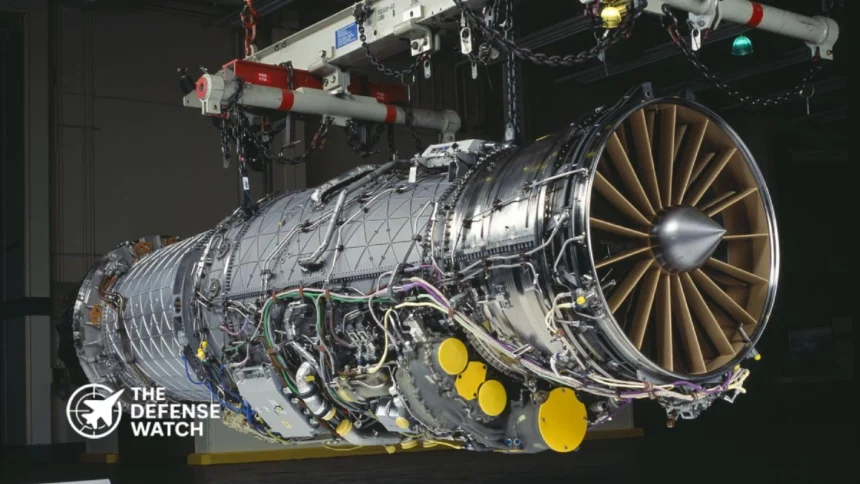
Pratt & Whitney has started construction of a $100 million manufacturing facility in Rzeszów, southeastern Poland, expanding its ability to produce critical components for military and commercial aircraft engines, including the F135 powerplant used by the F-35 Lightning II.
The project, announced by the company on October 23, 2026, is expected to enter service in 2028 and create more than 120 jobs. It forms part of a wider manufacturing investment program intended to increase output of specialized engine components.
The expansion adds production capacity rather than introducing a new engine design. Its significance lies in the manufacturing processes and components it will support, particularly as Pratt & Whitney works to meet demand across several engine programs.
New facility adds a critical stage of engine manufacturing
The Rzeszów facility is backed by a $100 million investment, equivalent to approximately 375 million Polish zloty. Pratt & Whitney plans to introduce specialized processing capabilities for isothermally forged engine parts, including heat treatment, machining and inspection operations.
These processes support the production of components that must withstand demanding temperatures, mechanical loads and operating conditions inside aircraft engines. Rotating compressor and turbine components are particularly important because their manufacturing quality affects engine durability, reliability and service life.
The site already manufactures components for several engine families, including F135 parts, F100 static structures and the fan drive gear system used in Pratt & Whitney’s geared turbofan, or GTF, engines. The new building will add capabilities to this existing industrial base.
Pratt & Whitney has not publicly specified how many F135 components the expanded facility will produce annually, nor has it disclosed what proportion of its new capacity will be allocated to the F-35 program.
How the Polish investment connects to U.S. production
The Rzeszów project is one part of a two-location investment plan announced in April 2026.
In the United States, Pratt & Whitney is investing $200 million in a seventh isothermal forging press at its Columbus Forge facility in Georgia. The Polish expansion will complement that investment by adding processing capabilities at another stage of the manufacturing chain.
According to Pratt & Whitney, the two projects are expected to increase output of critical engine parts, including rotating compressor and turbine disks, by 30% once both are fully operational.
That figure is a company projection for the combined investments, not a confirmed increase in F135 engine deliveries or completed F-35 aircraft. The announcement also does not establish how much of the projected gain will come from F135 components rather than parts for other engine programs.
The distinction matters because producing additional engine components does not automatically translate into more complete engines. Output also depends on other manufacturing stages, component availability, assembly capacity, quality testing and the timing of customer demand.
Why F135 component production matters to the F-35 program
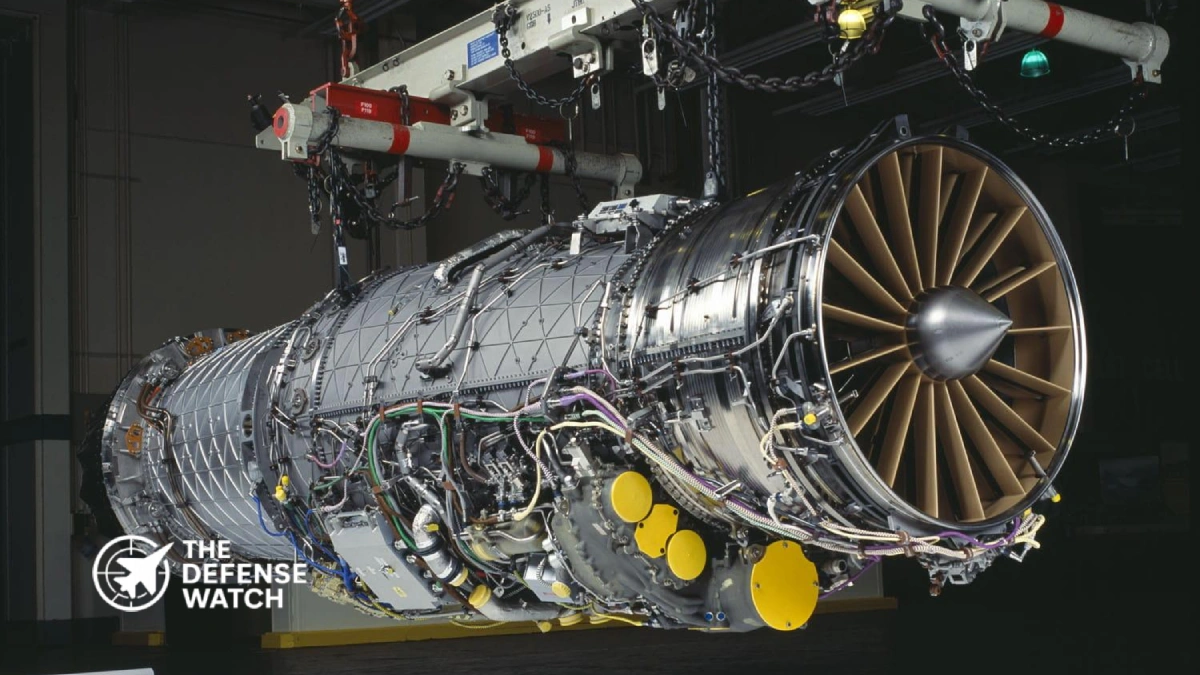
The F135 engine
The F135, developed by Pratt & Whitney, powers all three variants of the F-35 Lightning II: the F-35A, F-35B and F-35C.
Its production depends on a network of specialized suppliers and manufacturing facilities. Component availability is therefore one factor in the program’s ability to sustain engine production and support the growing international fleet.
The F-35 program serves the U.S. military and multiple allied air forces, creating demand for engines, spare parts and long-term sustainment support. The F-135’s production base must serve both new aircraft deliveries and the needs of aircraft already in service.
Additional component capacity can help reduce manufacturing constraints, but its actual effect will depend on which parts are in short supply and whether other production bottlenecks remain.
The Polish investment does not, by itself, demonstrate that the F-35 program is experiencing a specific engine-component shortage. Pratt & Whitney has described the investment as a response to growing demand across its commercial and military engine portfolio.
Nor does the project mean that complete F135 engines will be manufactured in Poland. The announcement concerns a facility for processing specialized engine components.
Poland’s role in the wider aerospace supply chain
Poland has become an established manufacturing location for RTX, the parent company of Pratt & Whitney, Collins Aerospace and Raytheon. RTX reported that it had more than 9,400 employees in the country in its April announcement, with the figure rising to more than 9,500 in its September update.
The Rzeszów expansion also follows a separate $25 million investment announced in September 2026 to expand Pratt & Whitney’s precision-parts manufacturing facility in Niepołomice, Poland. That project is intended to increase capacity for complex tubular assemblies used in commercial and military engines and is also expected to become operational in 2028.
Together, the two Polish investments total $125 million in announced spending during 2026. They cover different manufacturing activities and should not be treated as a single production line or as an exclusively military investment.
The approach gives Pratt & Whitney additional capacity within its established European manufacturing network while retaining a complementary role for its U.S. operations. It also places more specialized production work within Poland’s aerospace industry.
For Poland, the benefits include new industrial capabilities and employment. For the F-35 program, the relevant question is whether these additional capabilities help deliver the right engine components at the required rate.
What remains unconfirmed
The expansion has a stated investment value, a planned operating date and an announced employment target. However, several details needed to measure its direct effect on F-35 production remain unavailable.
Pratt & Whitney has not disclosed the facility’s expected annual output, the number of F135 components it will manufacture, or a specific production target for the F-35 engine program. The company has also not quantified how much the Rzeszów facility alone will contribute to the projected 30% increase in output from the two investments.
The planned 2028 opening is a future milestone, not evidence that the new capacity is already available. Its contribution to aircraft and engine deliveries will become clearer as the facility enters operation and production volumes are established.
For now, the project is best understood as an expansion of the industrial capacity behind the F-35 and other aircraft engine programs, rather than a direct increase in fighter deliveries.