France and the United Arab Emirates have revived plans to cooperate on the development of the Dassault Rafale F5 fighter upgrade, opening a potential route to share the cost of modernizing one of Europe’s principal combat aircraft.
The renewed effort follows a period of stalled negotiations and comes as France faces pressure to finance long-term defense programs while managing a strained public budget. The partnership could give Paris additional financial support for the Rafale’s next development phase while offering Abu Dhabi a greater role in shaping the aircraft’s future capabilities.
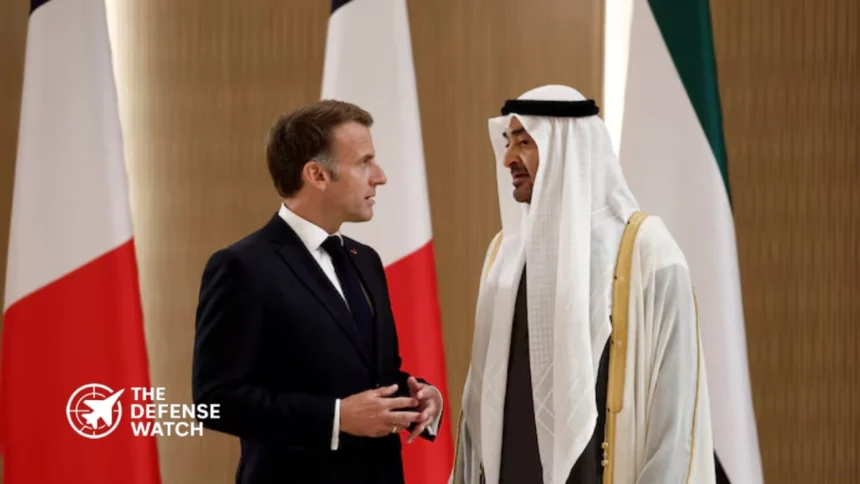
French President Emmanuel Macron confirmed the broader agreement during his October 21, 2026, visit to the Gulf. He said France and the UAE had signed an intergovernmental agreement and additional agreements establishing a common strategy for the Rafale’s fifth generation. The full technical and financial arrangements have not been publicly disclosed.
According to Reuters, France’s draft 2027 budget allocates €3 billion to the Rafale F5 program. Earlier reporting by the French newspaper La Tribune put the program’s potential cost at approximately €5 billion, with the UAE expected to cover around two-thirds. Those figures should be treated as reported funding estimates, not as a confirmed final bilateral financing agreement.
Why the Rafale F5 matters to France
The Rafale F5 is intended to extend the combat capabilities of an existing fighter rather than replace it with an entirely new aircraft.
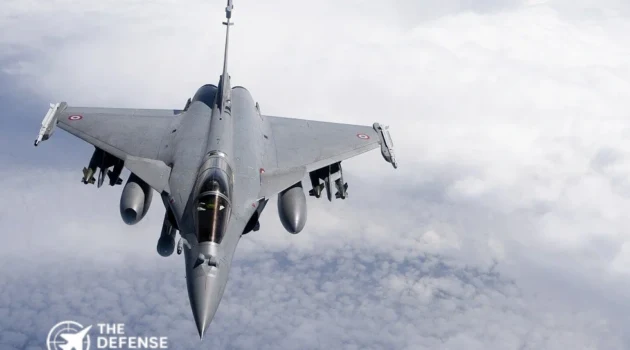
Developed by Dassault Aviation, the twin-engine Rafale serves the French Air and Space Force and French Navy. Its multirole design supports air defense, air superiority, reconnaissance and strike missions. France also relies on the aircraft as part of its nuclear deterrent.
The F5 standard is intended to prepare the aircraft for a more demanding combat environment, where fighters must exchange information with other platforms, operate alongside uncrewed systems and employ increasingly sophisticated weapons.
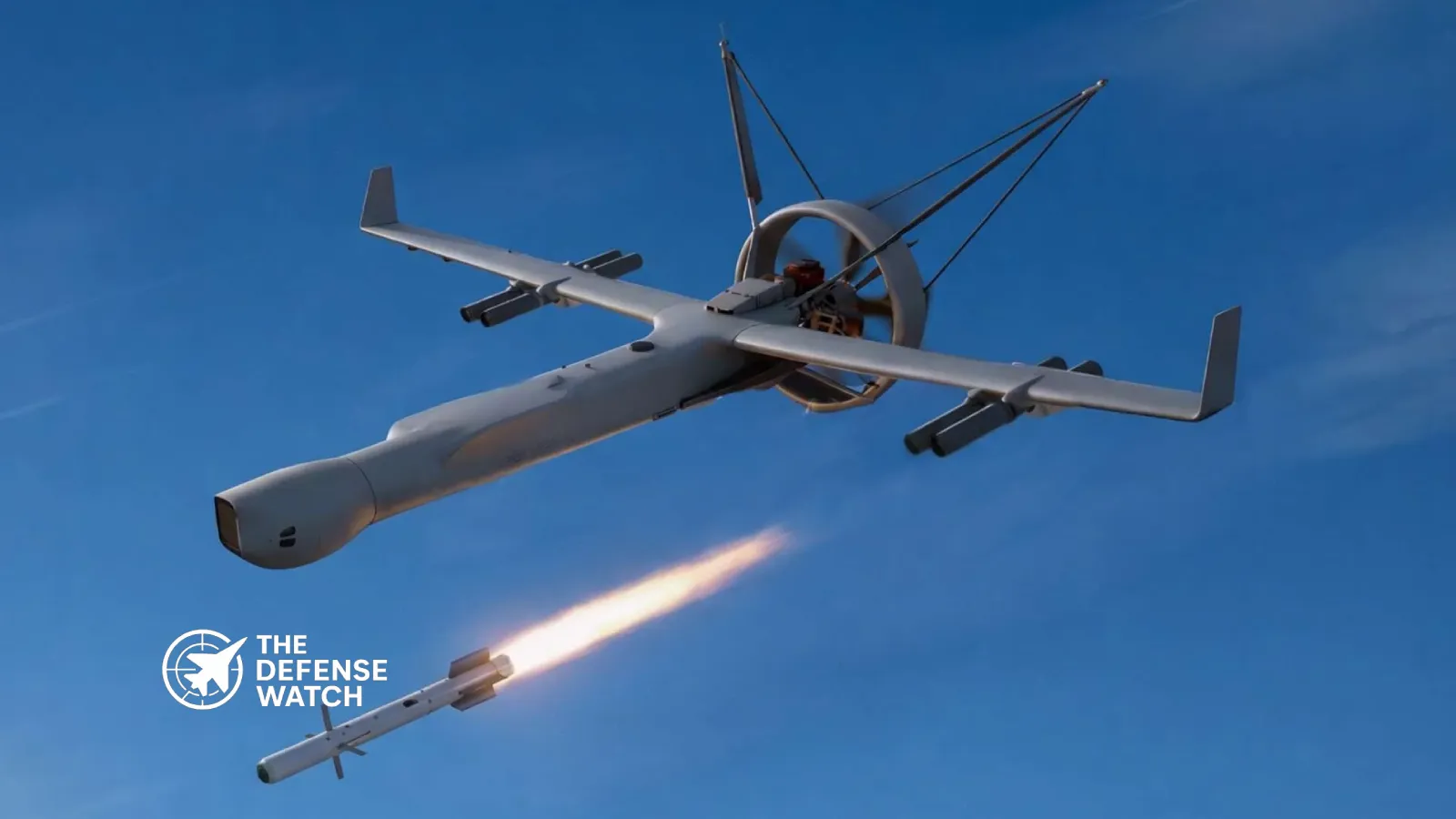
Dassault has described collaborative combat as a central feature of the upgrade. The company also says the F5 will support a future uncrewed combat aerial system derived from experience with its nEUROn stealth demonstrator. Planned capabilities include integration of future weapon systems, including France’s next-generation nuclear missile.
These plans matter because fighter modernization increasingly involves more than improving an aircraft’s flight performance. Sensors, communications, electronic warfare, mission software and integration with other platforms can determine how effectively a fighter operates within a wider force.
However, the detailed configuration of the Rafale F5 remains under development. The publicly available information does not establish the final specifications of its radar, electronic warfare suite, propulsion system or weapons integration.
A bridge between existing fighters and future combat aircraft
France has pursued a step-by-step Rafale modernization strategy while developing technologies for future combat aviation.
The F4 standard focuses on enhanced connectivity and networked combat capabilities. The F5 is intended to take that approach further by enabling collaborative operations with uncrewed aircraft and integrating more advanced weapons.
Dassault’s published program information identifies the F5 as a distinct development stage, with work on the standard launched in 2024. The company’s broader roadmap links the fighter with a future combat drone rather than treating the manned aircraft as a standalone platform.
For France, this approach offers a way to continue developing combat-aircraft technology while maintaining an established fighter production and support base.
It also creates a financial challenge. Advanced combat aircraft require sustained investment in software, sensors, engines, weapons and testing. The cost of developing these technologies must be managed alongside procurement of aircraft for operational squadrons.
A foreign partner could help distribute some of that burden, provided both governments agree on how development costs, industrial responsibilities and technology access will be divided.
The industrial bargain behind the partnership
The central question is how much funding and technical responsibility the UAE will assume in exchange for a role in the program.
Reuters reported on October 23 that Dassault Aviation was working with EDGE Group, the Emirati defense conglomerate, as discussions resumed. The next stage is expected to address costs and technical arrangements. Neither company has publicly disclosed the complete division of responsibilities under the revived initiative.
For France, Emirati participation could reduce the amount of development funding that must come directly from the French government. It could also help maintain work across the domestic defense industry, which supplies the aircraft’s engines, radar, communications, electronic warfare equipment and weapons.
The French defense procurement agency, the Direction générale de l’armement (DGA), said in September that it had placed preliminary development contracts with Dassault Aviation, Thales, Safran and MBDA. These contracts cover important technologies intended for the F5 standard, although their individual values were not disclosed.
The partnership nevertheless raises questions about industrial sovereignty.
The UAE may seek access to selected technologies, a greater role for its own defense companies or some production activity within the country. Reuters reported that technology transfers and possible production relocation could become subjects of negotiation. The precise Emirati demands have not been established in public documentation.
France must balance the financial benefits of cooperation against its interest in retaining control over sensitive military technology. This is particularly important for systems connected to electronic warfare, mission software, advanced sensors and nuclear deterrence.
Any final arrangement will therefore need to define not only how much each partner contributes, but also which technologies can be shared, who controls intellectual property and how future modifications will be managed.
What the French procurement agency has already confirmed
The Rafale F5 is moving forward independently of the renewed UAE negotiations. France has already begun preparatory work on several major subsystems.
In its September 10 announcement, the DGA identified five areas covered by preliminary contracts:
- Radar: The RBE2-XG is intended to improve detection capabilities and signal processing compared with the existing RBE2 active electronically scanned array radar.
- Communications: Thales is developing the Inter-Vehicle Data Link, designed to support discreet, high-bandwidth and more resilient exchanges between aircraft.
- Electronic warfare: The SPECTRA F5 self-protection suite is intended to improve threat detection and jamming capabilities.
- Propulsion: Safran is conducting preliminary design work on the M88 T-REX engine, a proposed development of the Rafale’s existing M88 engine family.
- Navigation: Dassault Aviation has received work covering a high-precision inertial navigation unit designed to support the upgraded aircraft.
These are development objectives, not evidence that the upgraded systems are already operational. Their final performance will depend on engineering work, integration, testing and qualification.
The DGA expects the F5 standard to be qualified around 2033, followed by entry into service with the French Air and Space Force and French Navy. The agency has not announced a confirmed operational entry date for the UAE’s future F5-equipped aircraft.
The distinction matters because an aircraft modernization program can involve several years between the start of subsystem development, flight testing, formal qualification and operational introduction.
Why the UAE is an important partner
The UAE is already a major Rafale customer. In January 2025, Dassault unveiled the first aircraft built for the Emirati air force under the country’s order for 80 fighters.
According to Aviation Week, those aircraft are intended to be delivered in the F4 configuration. The renewed F5 partnership could therefore give the UAE a role in the next stage of the platform’s evolution, although the details of any future Emirati F5 acquisition or upgrade arrangement have not been made public
For Abu Dhabi, participation could provide closer industrial links with French aerospace companies and an opportunity to influence the future direction of an aircraft it has selected for its air force.
It would also fit the UAE’s wider interest in developing domestic defense-industrial capabilities. The extent to which the country will receive access to sensitive Rafale technologies remains uncertain.
France and the UAE have also deepened their defense relationship through cooperation on regional security. During his October visit, Macron confirmed the broader defense agreement and additional arrangements concerning the Rafale’s fifth generation. He did not publish the complete terms of the aircraft-development partnership.
The agreement consequently has both industrial and diplomatic significance. However, it should not be interpreted as confirmation that the UAE will receive unrestricted access to French military technology.
The wider European fighter-program problem
The renewed Rafale cooperation comes as France reassesses its future combat-aircraft plans following the breakdown of its partnership with Germany on the next-generation fighter project.
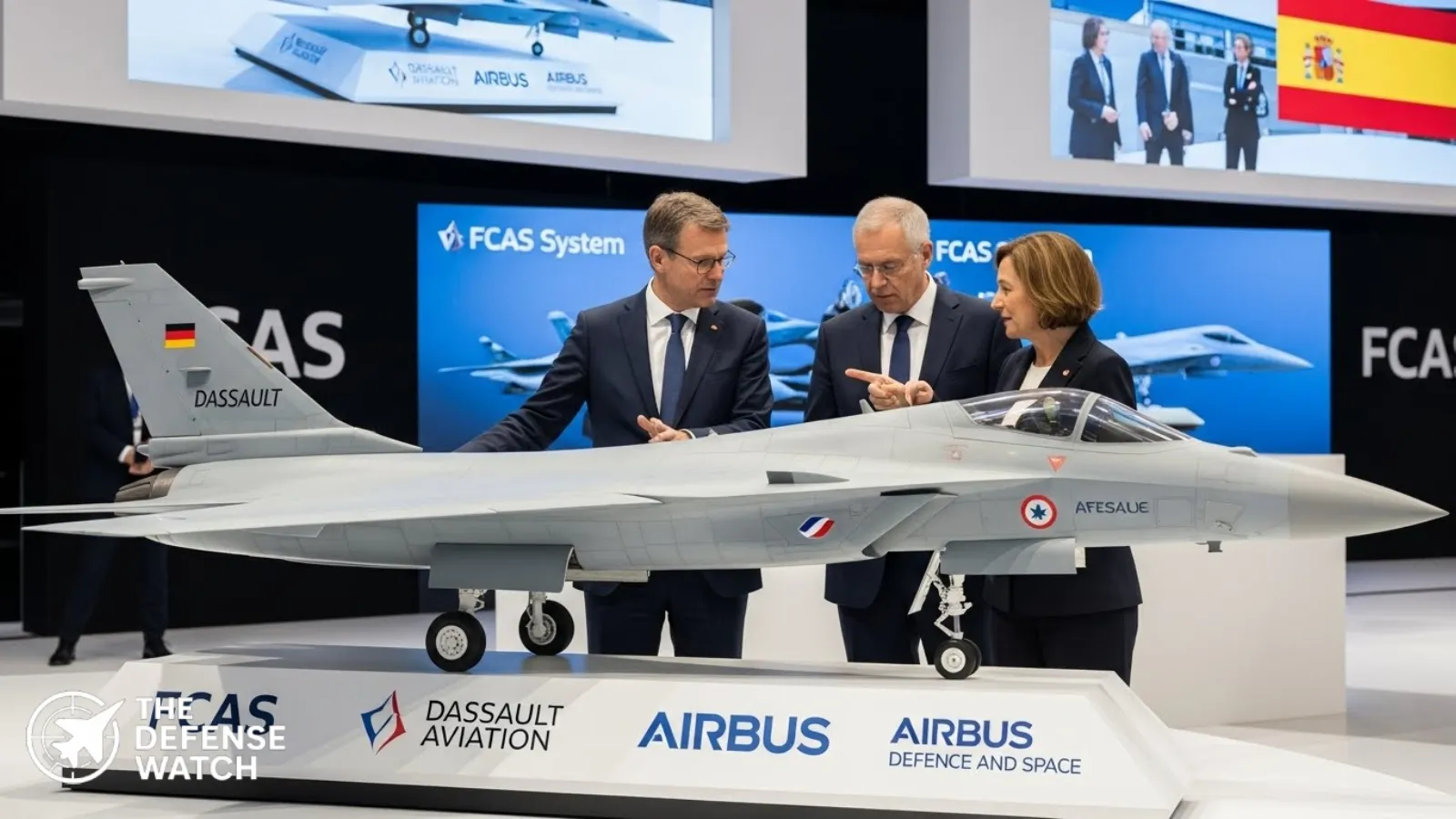
France had participated in the Future Combat Air System (FCAS), a multinational effort centered on a next-generation fighter and a wider network of connected combat systems. The breakdown of the French-German fighter partnership has increased the importance of preserving France’s ability to develop advanced combat-aircraft technologies independently.
The Rafale F5 cannot simply replace every capability envisioned for a sixth-generation aircraft. Its role is different: it extends an existing platform while France continues work on technologies for future combat aviation.
The upgrade’s planned collaboration with an uncrewed combat aircraft is particularly relevant. Future air operations are expected to place greater emphasis on distributing sensors, weapons and mission tasks among crewed fighters, uncrewed aircraft and other networked assets.
Dassault’s proposed uncrewed combat aerial system is intended to complement the Rafale rather than operate as an unrelated program. The company has linked its development to lessons from the nEUROn demonstrator and its broader work on autonomous technologies.
An Emirati contribution could help sustain investment in some of these technologies. However, cooperation on the Rafale F5 does not establish that the UAE will participate in every French future-combat-aircraft project.
What remains unresolved
The revived partnership is an important step, but the public announcements do not yet establish the complete financial or industrial arrangement.
Several questions remain open:
- Total program cost: The approximately €5 billion figure cited in earlier reporting has not been confirmed as the final approved cost.
- UAE contribution: The reported expectation that Abu Dhabi would cover roughly two-thirds of development costs has not been established as a signed financial commitment.
- Technology transfers: The specific technologies that France may share with the UAE have not been disclosed.
- Industrial responsibilities: The division of development and production work between French and Emirati companies remains unclear.
- Aircraft deliveries: The partnership announcement does not establish a confirmed delivery schedule for Rafale F5 aircraft.
These details will determine how much the agreement changes the economics of the program and how much influence the UAE gains over its development.
The French government has already committed to preparatory F5 work, so the central issue is no longer whether the country intends to modernize the Rafale. It is how the program will be financed, how its industrial workload will be distributed and whether the partners can reach terms that protect France’s sensitive technologies while giving the UAE a meaningful role.
For Dassault and its industrial partners, the revived negotiations offer a potential source of additional support for a major modernization effort. For France, the outcome could help sustain its combat-aircraft capabilities while reducing pressure on public finances. The actual benefit will depend on the agreement’s final terms, which remain undisclosed.